Travel To Mercury On Ion Power

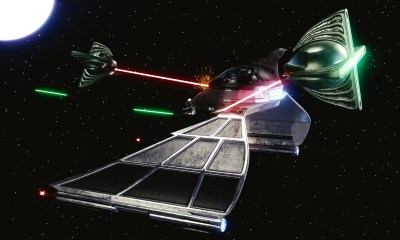
Star Trek — as much as we love it — was guilty sometimes of a bit of hyperbole and more than its share of inconsistency. In some episodes, ion drives were advanced technology and in others they were obsolete. Make up your mind!

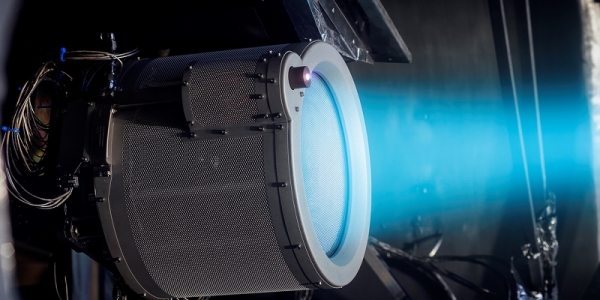
The ESA-JAXA BepiColombo probe is on its way to Mercury riding on four ion thrusters developed by a company called QinetiQ. But unlike the ion drive featured in the infamous “Spock’s Brain” episode, BepiColombo will take over seven years to get to Mercury. That’s because these ion drives are real.

The craft is actually two spacecraft in one with two different Mercury missions. The Mercury planetary orbiter will study the surface while the magnetosphere orbiter will study the little planet’s magnetic field. Check out a video about the mission, below. The second video shows [Neil Wallace] talking about how the ion propulsion — also known as solar electric engines — differ from traditional chemical thrusters.

Continue reading “Travel To Mercury On Ion Power”

Real Time Satellite Tracker Shows You What’s Going Over Your Head

Whilst modern technology relies heavily on satellites, it’s easy to forget they’re there; after all, it’s hard to comprehend mostly-invisible lumps of high-density tech whizzing around above you at ludicrous speeds. Of course, it’s not hard to comprehend if you’ve built a real-time satellite tracker which displays exactly what’s in orbit above your head at any given time. [Paul Klinger]’s creation shows the position of satellites passing through a cylinder of 200 km radius above the tracker.

Each layer of LEDs represents a specific band of altitude, whilst the colour of the LEDs and text on the screen represent the type of object. The LEDs themselves are good old WS2812b modules, soldered to a custom PCB and mounted in a 3D-printed stand. The whole thing is a really clean build and looks great – you can see it in action in the video after the break

On the software side, a Raspberry Pi is in charge, running Python which makes use of pyorbital for some of the heavy lifting. The data is taken from space-track.org, who provide a handy API. All the code is on the project GitHub, which also includes the 3D print and PCB files.

[Paul] answers questions in the reddit thread, and gives more detail in this reddit comment. The project was inspired by one of our favorite sites: stuffin.space.

Some of the satellites the device displays are de-commisioned and inactive. Space junk is a significant problem, one which can only be tackled by a space garbage truck.

Continue reading “Real Time Satellite Tracker Shows You What’s Going Over Your Head”

Soyuz Rocket Emergency Landing, Everyone OK

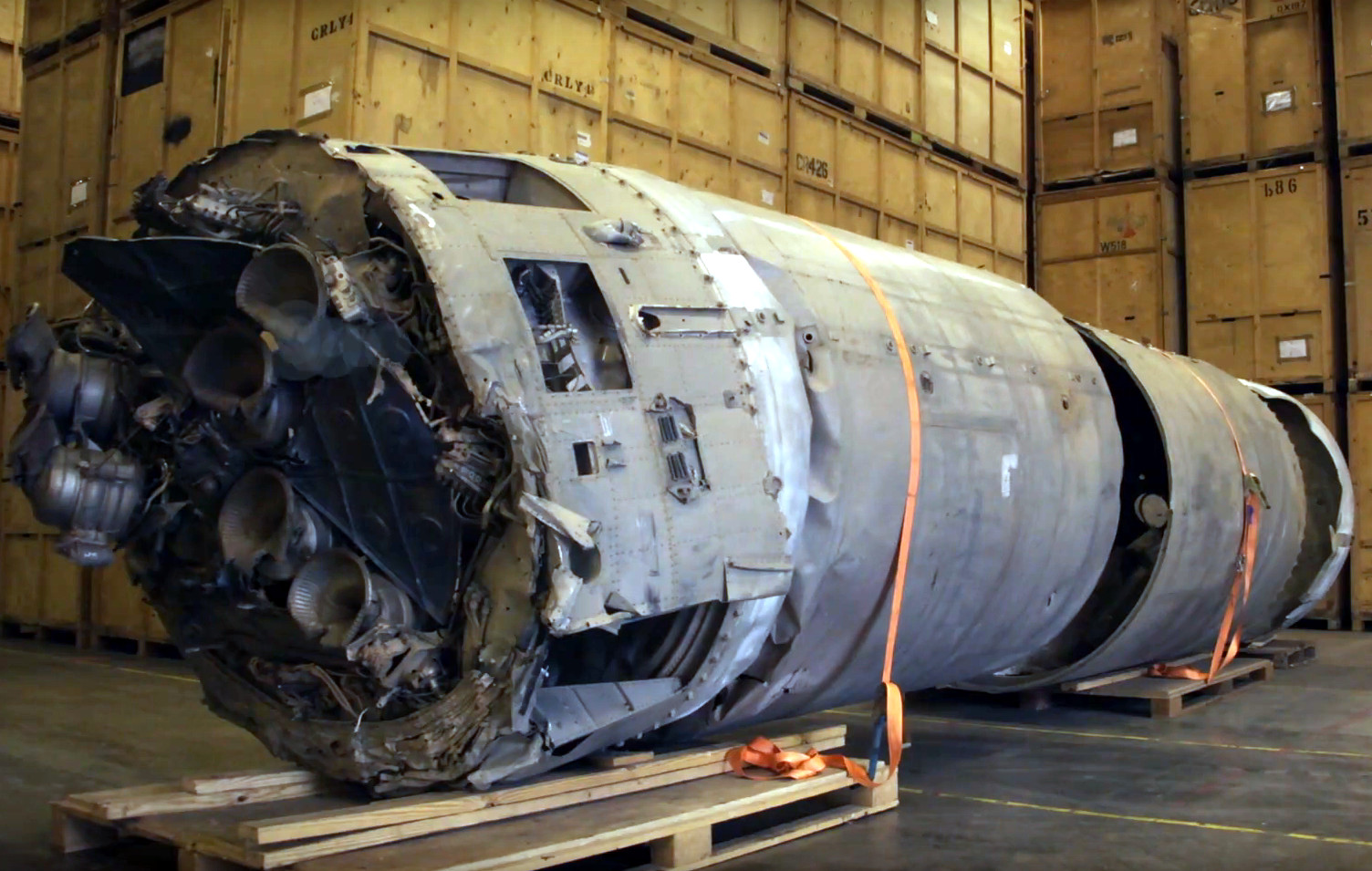
NASA spokesperson [Brandi Dean] summarized it succinctly: “Confirming again that today’s Soyuz MS10 launch did go into ballistic re-entry mode … That means the crew will not be going to the ISS today. Instead they will be taking a sharp landing, coming back to earth”. While nobody likes last-minute changes in plans, we imagine that goes double for astronauts. On the other hand, it’s always good news when we are able to joke about a flight that starts off with a booster separation problem.

Astronauts [Nick Hague] and [Aleksey Ovchinin] were on their way this morning to the International Space Station, but only made it as far as the middle of Kazakhstan. Almost as soon as the problem occurred, the rocket was re-pathed and a rescue team was sent out to meet them. Just an hour and a half after launch, they were on-site and pulled the pair out of the capsule unharmed. Roscosmos has already commissioned a report to look into the event. In short, all of the contingency plans look like they went to plan. We’ll have to wait and see what went wrong.

Watching the video (embedded below) the only obvious sign that anyone got excited is the simultaneous interpreter stumbling a bit when she has to translate [Aleksey] saying “emergency… failure of the booster separation”. Indeed, he reported everything so calmly that the NASA commentator didn’t even catch on for a few seconds. If you want to know what it’s like to remain cool under pressure, have a listen.

Going to space today is still a risky business, but thankfully lacks the danger factor that it once had. For instance, a Soyuz rocket hasn’t had an issue like this since 1975. Apollo 12 was hit by lightning and temporarily lost its navigation computer, but only the truly close call on Apollo 13 was made into a Hollywood Blockbuster. Still, it’s worth pausing a minute or two to think of the people up there floating around. Or maybe even sneak out and catch a glimpse when the ISS flies overhead.

Continue reading “Soyuz Rocket Emergency Landing, Everyone OK”

Maker Faire NY: Developing For The Final Frontier

The cost of getting a piece of hardware into space is now cheaper than ever, thanks in no small part to the rapid progress that’s been made by commercial launch providers such as SpaceX. In the near future, as more low-cost providers come online, it should get even cheaper. Within a few years, we could be seeing per kilogram costs to low Earth orbit that are 1/10th what they were on the Space Shuttle. To be sure, this is a very exciting time to be in the business of designing and building spacecraft.

But no matter how cheap launches to orbit get, it’ll never be cheaper than simply emailing some source code up to the International Space Station (ISS). With that in mind, there are several programs which offer students the closest thing to booking passage on a Falcon 9: the chance to develop software that can be run aboard the Station. At the 2018 World Maker Faire in New York we got a chance to get up close and personal with functional replicas of the hardware that’s already on orbit, known in space parlance as “ground units”.

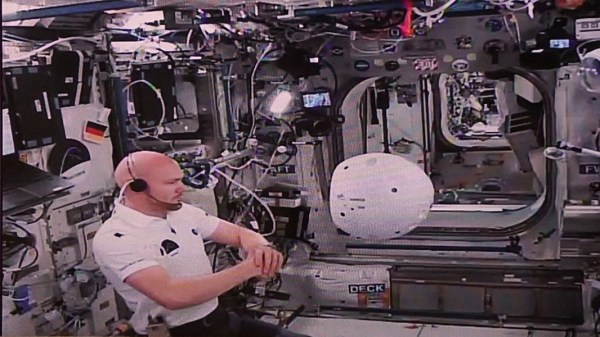
On display was a replica of one of the SPHERES free-flying satellites that have been on the ISS since 2006. They are roughly the size of a soccer ball and utilize CO2 thrusters and ultrasonic sensors to move around inside of the Station. Designed by MIT as a way to study spaceflight techniques such as docking and navigation without the expense and risk of using a full scale vehicle, the SPHERES satellites are perhaps the only operational spacecraft to have never been exposed to space itself.

MIT now runs the annual “Zero Robotics” competition, which tasks middle and high school students with solving a specific challenge using the SPHERES satellites. Competitors run their programs on simulators until the finals, which are conducted using the real hardware on the ISS and live-streamed to schools.

We also saw hardware from “Quest for Space”, which is a company offering curricula for elementary through high school students which include not only the ground units, but training and technical support when and if the school decides to send the code to the matching hardware on the Station. For an additional fee, they will even work with the school to design, launch, and recover a custom hardware experiment.

Their standard hardware is based on off-the-shelf platforms such as Arduino and LEGO Mindstorms EV3, which makes for an easy transition for school’s existing STEM programs. The current hardware in orbit is setup for experiments dealing with heat absorption, humidity, and convection, but “Quest for Space” notes they change out the hardware every two years to provide different experiment opportunities.

Projects such as these, along with previous efforts such as the ArduSat, offer a unique way for the masses to connect with space in ways which would have been unthinkable before the turn of the 21st century. It’s still up for debate if anyone reading Hackaday in 2018 will personally get a chance to slip Earth’s surly bonds, but at least you can rest easy knowing your software bugs can hitch a ride off the planet.

One Small Step For A Space Elevator

Space elevators belong to that class of technology that we all want to see become a reality within our lifetimes, but deep-down doubt we’ll ever get to witness firsthand. Like cold fusion, or faster than light travel, we understand the principles that should make these concepts possible, but they’re so far beyond our technical understanding that they might as well be fantasy.

Except, maybe not. When Japan Aerospace Exploration Agency (JAXA) launches their seventh Kounotori H-II Transfer Vehicle towards the International Space Station, riding along with the experiments and supplies for the astronauts, will be a very special pair of CubeSats. They make up the world’s first practical test of space elevator technology, and with any luck, will be one of many small steps that precedes the giant leap which access to space at a fraction of the cost will be.

Of course, they won’t be testing a fully functional space elevator; even the most aggressive of timelines put us a few decades out from that. This will simply be a small scale test of some of the concepts that are central to building a space elevator, as we need to learn to crawl before we can walk. But even if we aren’t around to see the first practical space elevator make it to the top, at least we can say we were there on the ground floor.

Continue reading “One Small Step For A Space Elevator”

Apollo 12 Was The Lucky Number Among Apollo Disasters

I recently saw Apollo 13 again — this time with the score played live by the Houston Symphony. What a crazy coincidence that thirteen has long been considered an unlucky number and that Apollo 13 would be the one we almost lost. However, Apollo 12 almost became a disaster which — after the ordeal with flight 13 — was largely forgotten.

When all was said and done, Apollo 12 would result in a second manned moon landing in November 1969, just four months after Apollo 11. Commanded by Pete Conrad, Alan Bean accompanied Conrad to the surface while Richard Gordon, Jr. kept the getaway vehicle running. But less than a minute after launch something happened that could have been a disaster. Lightning struck the vehicle.

Continue reading “Apollo 12 Was The Lucky Number Among Apollo Disasters”

Martian Dust Storm May Spell Doom For Rover

Everyone knows that space is an incredibly inhospitable place, but the surface of Mars isn’t a whole lot better. It’s a dim, cold, and dry world, with a wisp of an atmosphere that provides less than 1% of Earth’s barometric pressure. As the planet’s core no longer provides it with a magnetosphere, cosmic rays and intense solar flares bathe the surface in radiation. Human life on the surface without adequate environmental shielding is impossible, and as NASA’s fleet of rovers can attest, robotic visitors to the planet aren’t completely immune to the planet’s challenges.

Opportunity Mission Patch

As a planet-wide dust storm finally begins to settle, NASA is desperately trying to find out if the Red Planet has claimed yet another victim. The agency hasn’t heard from the Opportunity rover, which landed on Mars in 2004, since before the storm started on June 10th; and with each passing day the chances of reestablishing contact are diminished. While they haven’t completely given up hope, there’s no question this is the greatest threat the go-kart sized rover has faced in the nearly 15 years it has spent on the surface.

Opportunity was designed with several autonomous fail-safe systems that should have activated during the storm, protecting the rover as much as possible. But even with these systems in place, its twin Spirit succumbed to similar conditions in 2010. Will Opportunity make it through this latest challenge? Or has this global weather event brought the long-running mission to a dramatic close?

Continue reading “Martian Dust Storm May Spell Doom For Rover”