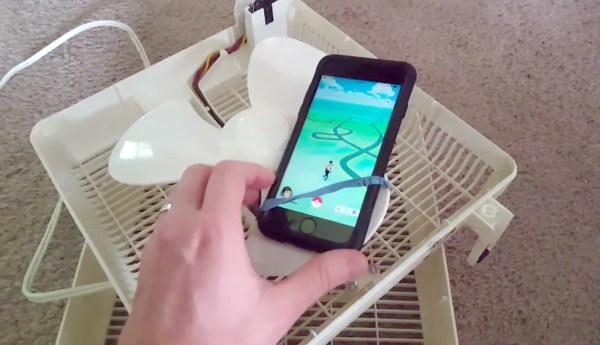
Pokemon Go has done a great service to the world health. Or would’ve done, if we wouldn’t hack it all the time. The game suggests, you breed Pokemon eggs by walking them around, but [DannyMcMurray] has a better idea: Strapping your smartphone to the propeller of a fan and taking them for spin that way.
All these fifty years of conscious brooding have brought me no nearer to the answer to the question, ‘What are light quanta?’ Nowadays every Tom, Dick and Harry thinks he knows it, but he is mistaken.
Albert Einstein, 1954
As 1926 was coming to a close, the physics world lauded Erwin Schrodinger and his wave mechanics. Schrodinger’s purely mathematical tool was being used to probe the internal structure of the atom and to provide predictable experimental outcomes. However, some deep questions still remained – primarily with the idea of discontinuous movements of the electron within a hydrogen atom. Niels Bohr, champion of and chief spokesperson for quantum theory, had developed a model of the atom that explained spectral lines. This model required an electron to move to a higher energy level when absorbing a photon, and releasing a photon when it moved to a lower energy level. The point of contention is how the electron was moving. This quantum jumping, as Bohr called it was said to be instantaneous. And this did not sit well with classical minded physicists, including Schrodinger.
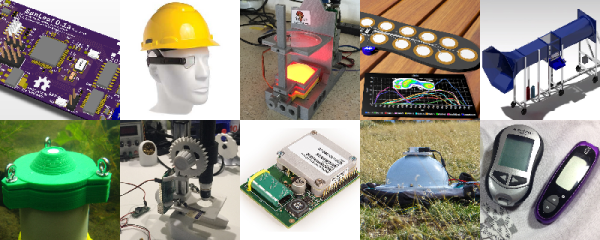
We live in a time of unparalleled access to technology and this has the power to make life better for everyone. Today we are excited to announce twenty spectacular builds that use access to technology to move scientific exploration within the reach of all. These are the winners of the Citizen Scientist challenge of the 2016 Hackaday Prize. Themes tackled in this round include blood glucose monitoring, insole sensing for analyzing your footfalls, lab equipment like automated microscopy, sensors to measure the world around us, and more.
The winners for the Citizen Scientist portion of the Hackaday Prize are, in no particular order:
The Hackaday Prize is the greatest hardware competition on earth. We want to see the next great Open Hardware project benefit everyone. We’re working toward that by recognizing people who build, make, and design the coolest and most useful devices around.
These twenty projects just won $1000 and will now move on to the final phase of The Hackaday Prize, to be judged by our fourteen celebrity judges. Awesome! Now get to work: there’s a lot the hackers behind these projects need to do before the final judging in October where they’ll compete for the grand prize of $150,000 and four other top prizes.
If your project didn’t make the cut, there’s still an opportunity for you to build the next great piece of hardware for The Hackaday Prize. The Automation Challenge is currently under way. It encourages everyone to build devices that make your life easier.
Automate your life; build a device that makes your breakfast, a robot to mow your lawn, or software that does your taxes. Build a device that automatically tracks laundry detergent, automates washing the dishes, or a robot that obeys every command.
Like the Design Your Concept, Anything Goes, and Citizen Science rounds of The Hackaday Prize, the top twenty projects will each win $1000, and move on to the Hackaday Prize finals for a chance to win $150,000 and a residency at the Supplyframe DesignLab in Pasadena.
If you don’t have a project up on Hackaday.io, you can start one right now and submit it to The Hackaday Prize. If you’re already working on the next great piece of hardware design, add it to the Automation challenge using the dropdown menu on the sidebar of your project page.
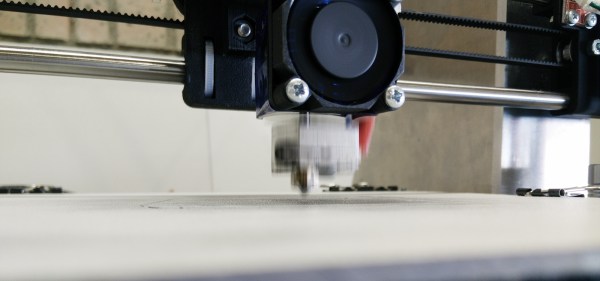
3D Printering: the final frontier. These are the voyages of another 3D printer hack. Its mission: to explore strange new ways of leveling a print bed.
So far, we’ve had servo probes, Allen key probes, Z-sled probes, inductive and capacitive contactless switches, just to name a few. All of them allow a 3D printer to probe its print bed, calculate a correction plane or mesh, and compensate for its own inherent, time variant, inaccuracies.
$32 billion USD doesn’t buy as much as it used to. Unless you convert it into British Pounds, battered by the UK’s decision to leave the European Union, and make an offer for ARM Holdings. In that case, it will buy you our favorite fabless chip-design company.
The company putting up 32 Really Big Ones is Japan’s SoftBank, a diversified technology conglomerate. SoftBank is most visible as a mobile phone operator in Japan, but their business strategy lately has been latching on to emerging technology and making very good investments. (With the notable exception of purchasing the US’s Sprint Telecom, which they say is turning around.) Recently, they’ve focused on wireless and IoT. And now, they’re going to buy ARM.
We suspect that this won’t mean much for ARM in the long term. SoftBank isn’t a semiconductor firm, they just want a piece of the action. With the Japanese economy relatively stagnant, a strong Yen and a weak Pound, ARM became a bargain. (SoftBank said in a press release that the Brexit didn’t affect their decision, and that they would have bought ARM anyway. Still, you can’t blame them for waiting until after the vote, and the fallout, to make the purchase.) It certainly won’t hurt SoftBank’s robotics, IoT, or AI strategies to have a leading processor design firm in their stable, but we predict business as usual for those of us way downstream in the ARM ecosystem.
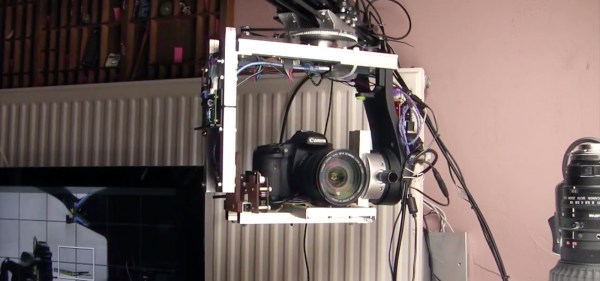
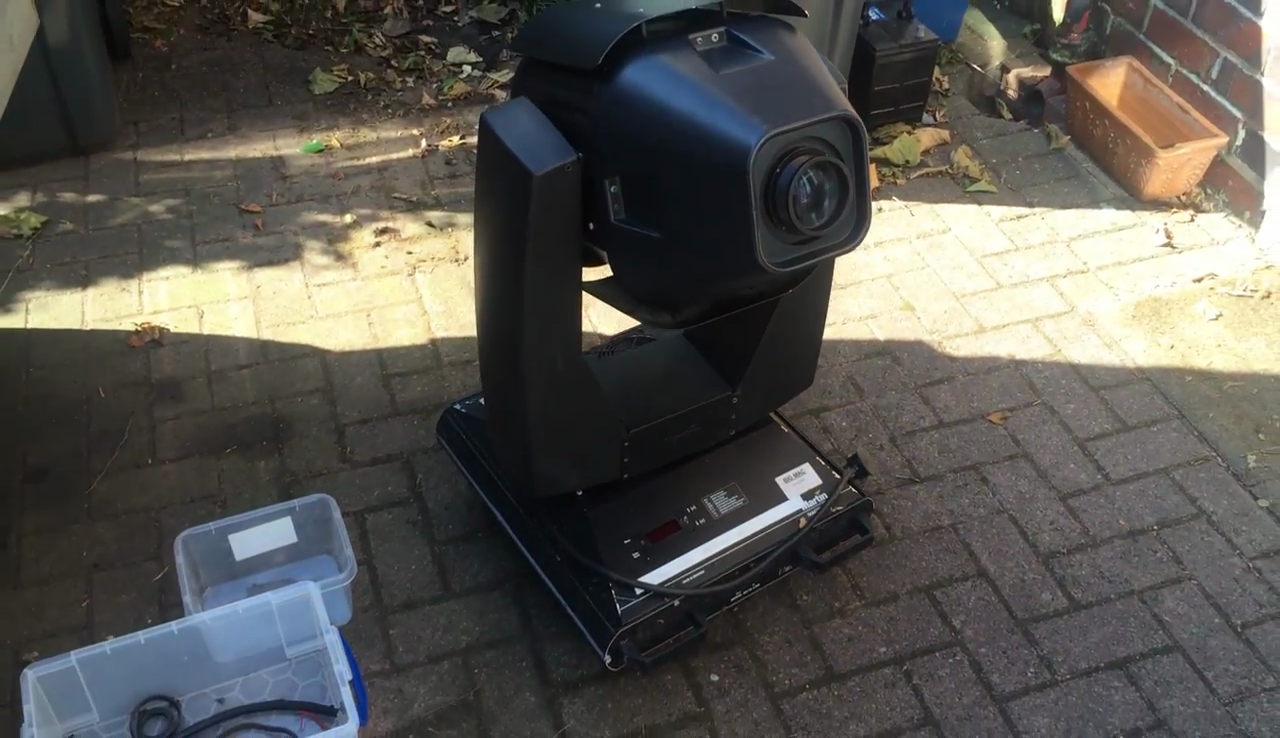
[Howard] started this project about a year ago by carrying out some targeted experiments. These would not only assess the suitability of components he gathered together from all directions, but also his own capacity in picking up enough knowledge on mechatronics to make the whole thing work. After making himself accustomed to stepper motors, Teensies and Arduinos, he converted an old moving-head disco light into a pan and tilt mount for the camera. A linear axis was added, and with more degrees of freedom, more sophisticated means of control became necessary.
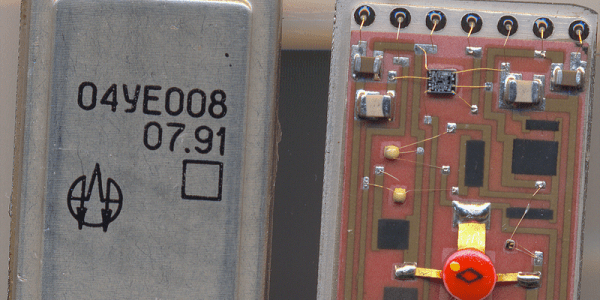
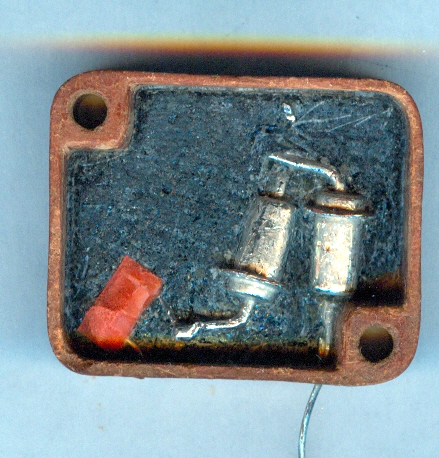
It all started off innocently enough. [mretro] was curious about what was inside a sealed metal box, took a hacksaw to it and posted photographs up on the Interwebs. Over one hundred forum pages and several years later, the thread called (at least in Google Translate) “dissecting room” continues to amaze.
If you like die shots, decaps, or teardowns of oddball Russian parts, this is like drinking from a firehose. You can of course translate the website, but it’s more fun to open it up in Russian and have a guess at what everything is before peeking. (Hint: don’t look at the part numbers. NE555 is apparently “NE555” in Russian.)
From a brief survey, a lot of these seem to be radio parts, and a lot of it is retro or obsolete. Forum user [lalka] seems to have opened up one of every possible Russian oscillator circuit. The website loads unfortunately slowly, at least where we are, but bear in mind that it’s got a lot of images. And if your fingers tire of clicking, note that the URL ends with the forum page number. It’d be a snap to web-scrape the whole darn thing overnight.


 If your project didn’t make the cut, there’s still an opportunity for you to build the next great piece of hardware for The Hackaday Prize. The