This Art Project’s Video Is Not A Time-Lapse

polarization-no-1-very-small

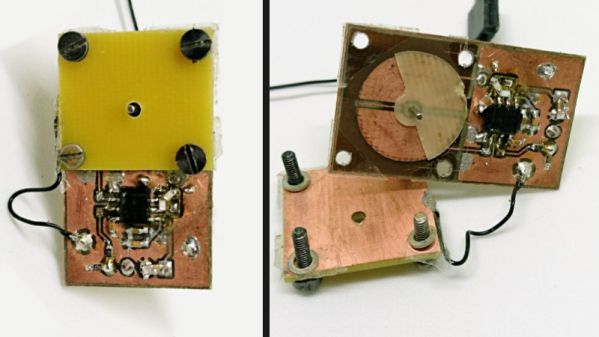
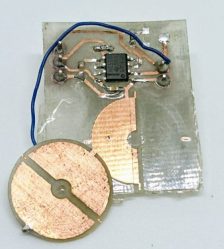
Artist Pe Lang uses linear polarization filters to create an unusual effect in his piece polarization | nº 1. The piece consists of a large number of discs made from polarizing film that partially overlap each other at the edges. Motors turn these discs slowly, and in the process the overlapping portions go from clear to opaque black and back again.

The disc rotation speed may be low but the individual transitions occur quite abruptly. Seeing a large number of the individual discs transitioning in a chaotic pattern — but at a steady rate — is a strange visual effect. About 30 seconds into the video there is a close up, and you can see for yourself that the motors and discs are all moving at a constant rate. Even so, it’s hard to shake the feeling of that one is watching a time-lapse. See for yourself in the video, embedded below.

Continue reading “This Art Project’s Video Is Not A Time-Lapse”

IPad Tossed Out For RetroPie Arcade Cabinet Redux

The naming and remixing in this project can get a little confusing to those unfamiliar with the different elements involved, but what [John Gerrard] has done is take a stylish mini arcade cabinet intended as a fancy peripheral for an iPad and turned it into an iPad-free retro arcade gaming cabinet. He also designed his own power controller for graceful startup and shutdown.

The project started with a peripheral called the iCade (originally conceived as a fake product for April Fool’s) and [John] observed it had good remix potential for use as a mini retro gaming cabinet. It was a good starting point: inexpensively purchased off eBay with suitable arcade-style joystick and buttons, a nice layout, and plenty of hacking potential. With a small variety of hardware from familiar sources like eBay and Aliexpress, [John] rounded up most of what he needed.

Continue reading “IPad Tossed Out For RetroPie Arcade Cabinet Redux”

IoT Device Pulls Its Weight In Home Brewing

floating-square
The iSpindel floating in a test solution.

Brewing beer or making wine at home isn’t complicated but it does require an attention to detail and a willingness to measure and sanitize things multiple times, particularly when tracking the progress of fermentation. This job has gotten easier thanks to the iSpindel project; an ESP8266 based IoT device intended as a DIY alternative to a costly commercial solution.

Hydrometer [Source: grapestompers.com]

Tracking fermentation normally involves a simple yet critical piece of equipment called a hydrometer (shown left), which measures the specific gravity or relative density of a liquid. A hydrometer is used by winemakers and brewers to determine how much sugar remains in a solution, therefore indicating the progress of the fermentation process. Using a hydrometer involves first sanitizing all equipment. Then a sample is taken from the fermenting liquid, put into a tall receptacle, the hydrometer inserted and the result recorded. Then the sample is returned and everything is cleaned. [Editor (and brewer)’s note: The sample is not returned. It’s got all manner of bacteria on/in it. Throw those 20 ml away!] This process is repeated multiple times, sometimes daily. Every time the batch is opened also increases the risk of contamination. Continue reading “IoT Device Pulls Its Weight In Home Brewing”

Using A Jewelry Kit To Resin-Encase Electronics

clear-cast-squareSome of us have looked at clear resin jewelry casting kits online and started to get ideas. Hackaday’s own [Nava Whiteford] decided to take the plunge and share the results. After purchasing a reasonably economical clear resin jewelry casting kit from eBay, a simple trial run consisted of embedding a solar lantern into some of the clear resin to see how it turned out. The results were crude, but promising. A short video overview is embedded below.

The big hangup was lack of a proper mold. [Nava]’s attempt to use a plastic bag and a cup as an expedient stand-in for a proper mold was not without its flaws, and the cup needed to be broken before the cured resin could be removed. Despite this, the results were good; the mixing needed careful measurement and the curing process was lengthy but the cured resin is as attractive as the advertisements promise. Mixing introduced many air bubbles into the mixture, but most of them seemed to disappear on their own during the curing process. The results of this quick test may not be pretty, but the resin seems to have held up its end of the bargain and delivered the expected smooth, clear finish.

Continue reading “Using A Jewelry Kit To Resin-Encase Electronics”

Does This Demo Remind You Of Mario Kart? It Should!

Here’s a slick-looking VGA demo written in assembly by [Yianni Kostaris]; it’s VGA output from an otherwise stock ATmega2560 at 16MHz with no external chips involved. If you’re getting some Super Mario Kart vibes from how it looks, there’s a good reason for that. The demo implements a form of the Super Nintendo’s Mode 7 graphics, which allowed for a background to be efficiently texture-mapped, rotated, and scaled for a 3D effect. It was used in racing games (such as Super Mario Kart) but also in many others. A video of the demo is embedded below.

[Yianni] posted the original demo a year earlier, but just recently added detailed technical information on how it was all accomplished. The AVR outputs VGA signals directly, resulting in 100×120 resolution with 256 colors, zipping along at 60 fps. The AVR itself is not modified or overclocked in any way — it runs at an entirely normal 16MHz and spends 93% of its time handling interrupts. Despite sharing details for how this is done, [Yianni] hasn’t released any code, but told us this demo is an offshoot from another project that is still in progress. It’s worth staying tuned because it’s clear [Yianni] knows his stuff.

Continue reading “Does This Demo Remind You Of Mario Kart? It Should!”

A Micro RC Plane Builder Shares His Tricks

There are individuals who push tools, materials, and craftsmanship to the limit in the world of micro RC aircraft, and [Martin Newell] gives some insight into the kind of work that goes into making something like a 1:96 scale P-51 Mustang from scratch. The tiny plane is 100% flyable. It even includes working navigation lights and flashing cannons (both done with 0402 LEDs) and functional, retractable landing gear. It weighs an incredible 2.9 grams. Apart from the battery, everything in the plane was built or assembled from scratch. A video is embedded below.

Continue reading “A Micro RC Plane Builder Shares His Tricks”

DIY Wire Spooler With Clever Auto-Tensioning System

[Solarbotics] have shared a video of their DIY wire spooler that uses OpenBeam hardware plus some 3D printed parts to flawlessly spool wire regardless of spool size mismatches. Getting wire from one spool to another can be trickier than it sounds, especially when one spool is physically larger than the other. This is because consistently moving wire between different sizes of spools requires that they turn at different rates. On top of that, the ideal rate changes as one spool is emptying and the other gets larger. The wire must be kept taut when moving from one spool to the next; any slack is asking for winding problems. At the same time, the wire shouldn’t be so taut as to put unnecessary stress on it or the motor on the other end.

There aren’t any build details but the video embedded below gives a good overview and understanding of the whole system. In the center is a tension bar with pulleys on both ends though which the wire feeds. This bar pivots at the center and takes up slack while its position is encoded by turning a pot via a 3D printed gear. Both spools are motor driven and the speed of the source spool is controlled by the position of the tension bar. As a result, the bar automatically takes up any slack while dynamically slowing or speeding the feed rate to match whatever is needed.

Continue reading “DIY Wire Spooler With Clever Auto-Tensioning System”