Hacking R/C Brushless Motor Controllers For Use In Big Robots

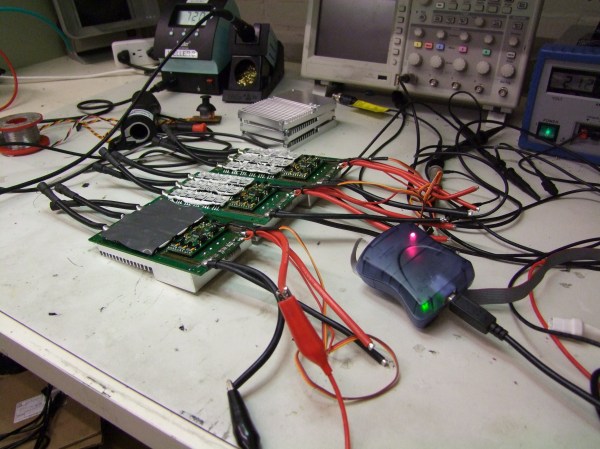
[professor churlz] wrote in to let us know his results with modifying radio control ESCs (Electronic Speed Controllers) for use in a large (250lb range) BattleBot’s drivetrain. It’s a very long and involved build log entry that is chock-full of details and background.

If you want something spinning hard and fast, brushless is where it’s at. Brushless motors offer much better power-to-weight ratios compared to brushed DC motors, but some applications – like a large robot’s drivetrain – are less straightforward than others. One of the biggest issues is control. Inexpensive brushless motors are promising, but as [professor churlz] puts it, “hobby motor control equipment is not well suited for the task. Usually created for model airplanes, the controllers are lightly built, rated to an inch of the components’ lives using unrealistic methods, and usually do not feature reversing or the ability to maintain torque at low speeds and near-stall conditions, which is where DC motors shine.” Taking into account the inertia of a 243 lb robot is a factor as well – the controller and motor want to start moving immediately, but the heavy robot on the other side of it doesn’t. The answer was a mixture of hardware and firmware tweaking with a lot of testing.

Continue reading “Hacking R/C Brushless Motor Controllers For Use In Big Robots” →
Smartphone-based Robotic Rover Project Goes Open Source

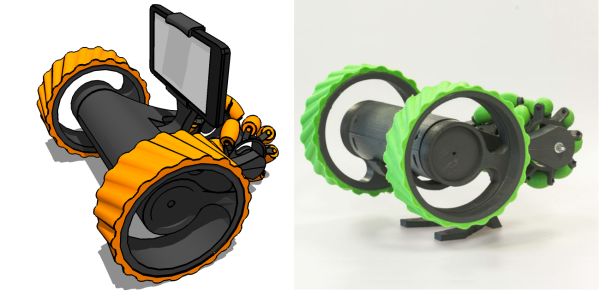
[Aldric Négrier] wrote in to let us know that his DriveMyPhone project has been open sourced. The project is a part telepresence, part remote-controlled vehicle, part robotic rover concept on which he says “I spent more time […] than I should have.” He has shared not just the CAD files, but every detail including tips on assembly. He admits that maybe a robotic chassis for a smartphone might not seem like a particularly new idea today, but it was “an idea with more potential” back in 2010 when he first started.

The chassis is made to cradle a smartphone. Fire up your favorite videoconferencing software and you have a way to see where you’re going as well as hear (and speak to) your surroundings. Bluetooth communications between the phone and the chassis provides wireless control. That being said, this unit is clearly designed to be able to deal with far more challenging terrain than the average office environment, and has been designed to not only be attractive, but to be as accessible and open to repurposing and modification as possible.

Continue reading “Smartphone-based Robotic Rover Project Goes Open Source” →

Improved Digital Caliper Interfacing, Including 3D Printed Connector

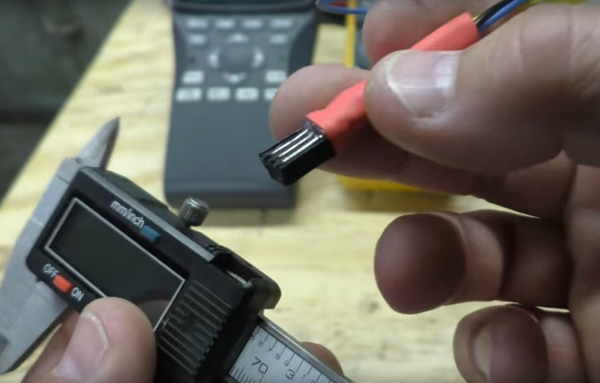
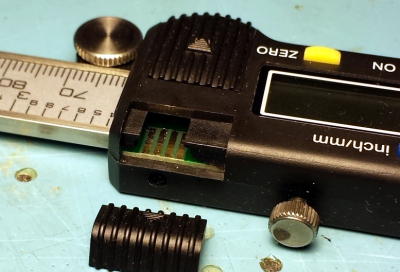
[MakinStuff] wrote in to let us know about a project he did for new and improved interfacing to the ubiquitous cheap Chinese digital calipers. Interfacing to this common caliper model is well-trod ground, but his project puts everything about interfacing and reading the data in one place along with some improvements: a 3D printed connector that makes mating to the pads much more stable and reliable, 3d-printed-plug-for-digital-calipersa simple interface circuit for translating the logic levels, and an interrupt-driven sample Arduino sketch to read the data. Making the sketch interrupt-driven means the Arduino never sits and waits for input from the calipers, making it easier have the Arduino do other meaningful work at the same time, ultimately making it easier to incorporate into other projects.
The connector has spaces to insert bare wires to use as contacts for the exposed pads inside the calipers. Add a little hot glue and heat shrink, and you’ll never have to fiddle with a hacked-together connection again.

This common caliper model has been hacked and re-purposed in interesting ways. We’ve seen them used as a Digital Read Out (DRO) on a lathe as well as being given the ability to wirelessly log their data over Bluetooth.

Continue reading “Improved Digital Caliper Interfacing, Including 3D Printed Connector” →

Raspberry Pi Zero Now With Camera Support, Still Only $5

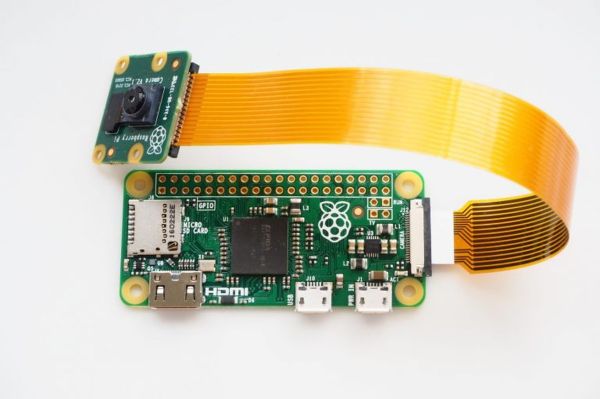
The latest version (1.3) of everyone’s favorite $5 computer now sports a frequently requested feature: a camera connector. The Pi Zero will now use the same economical camera modules available for the full-sized Raspberry Pi units.

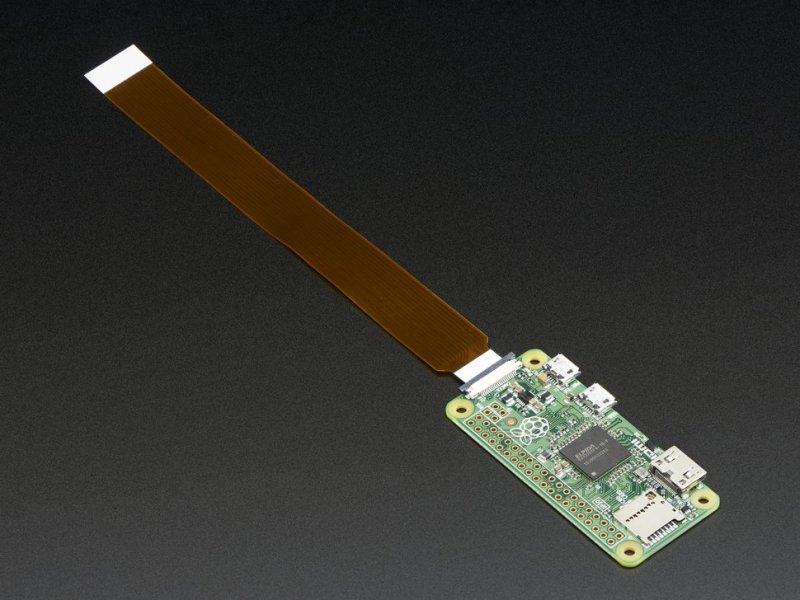
The price of the Pi Zero is unchanged at $5, but there is a small catch. While the Raspberry Pi camera modules themselves will work just fine on the Pi Zero, the usual camera cable they come with will not. The Pi Zero’s camera cable connector is a little smaller than the ones on the full-grown Pi, so it needs a special cable to interface the camera modules to the slightly smaller connector found on the Pi Zero.

This should be good news. The new connector has appeared because another production run is ramping up. Logic points to greater availability of the $5 wonder board, but we’re still not holding our breath.

Adafruit Pi Zero camera cable
Pi Zero with camera module connector cable. [Image source: Adafruit]
With the Pi Zero now able to use camera modules, perhaps camera-based Pi projects like these digital binoculars or time-lapse camera rigs can now get even smaller.

[via Engadget]

VR Telepresence Tank From Raspberry Pi, Google Cardboard, And Xbox Controller

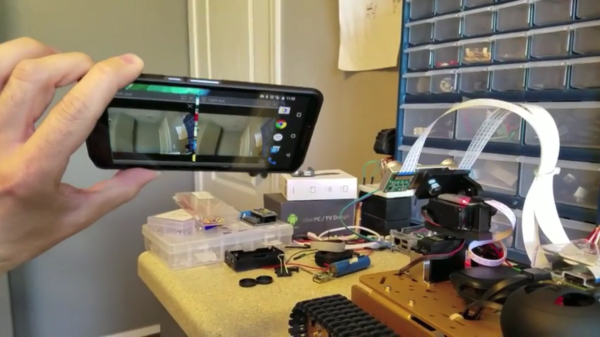
It’s great to see different kinds of hardware and software tossed into a project together, allowing someone to mix things that don’t normally go together into something new. [Freddy Kilo] did just that with a project he calls his VR Robot Tank. It’s a telepresence device that uses a wireless Xbox controller to drive a tracked platform, which is itself headed by a Raspberry Pi.

The Pi has two cameras on a pan-tilt mount, and those cameras are both aimed and viewed via a Google Cardboard-like setup. A healthy dose of free software glues it together, allowing things like video streaming (with U4VL) and steering via the wireless controller (with xboxdrv). A bit of fiddling was required for some parts – viewing the stereoscopic cameras for example is done by opening and positioning two video windows just right so as to see them through the headset lenses. It doesn’t warp the image to account for the lens distortion in the headset, and the wireless range might be limited, but the end result seems to work well enough.

The tank is driven with the wireless controller while a mobile phone mounted in a headset lets the user see through the cameras; motion sensing in the phone moves those cameras whenever you move your head to look around. Remote Control hobbyists will recognize the project as doing essentially the same job as FPV setups for model aircraft (for example, Drone Racing or even Snow Sleds) but this project uses a completely different hardware and software toolchain. It demonstrates the benefits of having access to open tools to use as virtual “duct tape”, letting people stick different things together to test a concept. It proves almost anything can be made to work if you have a willingness to fiddle!

Continue reading “VR Telepresence Tank From Raspberry Pi, Google Cardboard, And Xbox Controller” →

The Coming Wide-Spread Use Of Drones In Agriculture

Whether you call them UAVs (Unmanned Aerial Vehicles), UAS (Unmanned Aerial System), Drones, or something less polite – people are more familiar than ever with them. We’ll call them drones, and we’re not talking about the remote-controlled toy kind – we’re talking about the flying robot kind. They have sensors (GPS and more), can be given a Flight Plan (instructions on where to go), and can follow that plan autonomously while carrying out other instructions – no human pilot required. Many high-end tractors are already in service with this kind of automation and we’ve even seen automated harvesting assistance. But flying drones are small and they don’t plant seeds or pull weeds, so what exactly do they have to do with agriculture?

There are certain things that drones are very good at, and there are things in agriculture that are important but troublesome to do or get. Some of these things overlap, and in those spaces is where a budding industry has arisen.

Continue reading “The Coming Wide-Spread Use Of Drones In Agriculture” →

Soda Fridge Hack To Fix A Lazy People Problem

[Paul] participated in a hackathon at work and created a hack to help solve what was ultimately a people problem. A soda fridge at work wasn’t getting refilled when empty. Instead of trying to make people less lazy, [Paul] went with making the fridge more needy.

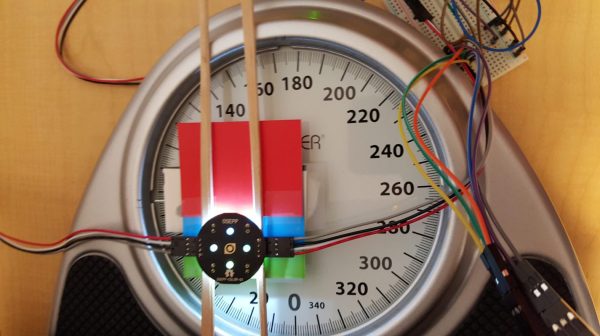
The first thing [Paul] did was make a soda fridge refill sensor from a scale. As the fridge got emptier, it got lighter. The scale senses that and can decide it’s time for a refill. The only part missing was how to read the output from the scale. To do that, he took an unusual approach.
Continue reading “Soda Fridge Hack To Fix A Lazy People Problem” →