Shipwreck Exploration Vessels Fit In Minivan; Stream To Internet

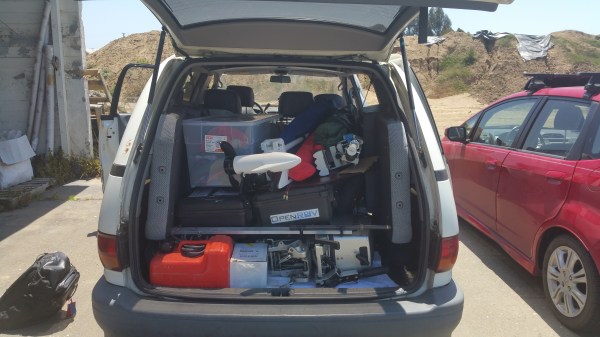
Having to work away from the convenience of a workshop can be tough. But it’s sometimes unavoidable and it always means planning ahead. When the work area also happens to be 150m under a lake’s surface, it’s much more of a challenge – but it’s both doable and more accessible than you might think. To prove it, this DIY research vessel will be part of the robotic exploration of an underwater shipwreck. It is complete with an Ethernet bridge, long-range wireless communications, remotely operated underwater vehicle (ROV), the ability to hold a position, and more. The best part? It can all be packed up and fit into a minivan. We can’t put it any better than the folks at the OpenROV Forums:

In just over a week (June 6th – 9th), a bunch of people from OpenROV are going to attempt to dive a set of specially modified deep-capable ROVs to a 50m-long shipwreck at a depth of 150m below lake Tahoe. We’ll be using a deployment architecture that we’ve been perfecting over the years that involves a very small boat keeping station over the dive site while the rest of the people on the expedition run the mission from a remote location via long-range broadband radio. Since the mission control site will have an internet connection, we’ll be able to live stream the entire dive over the internet.
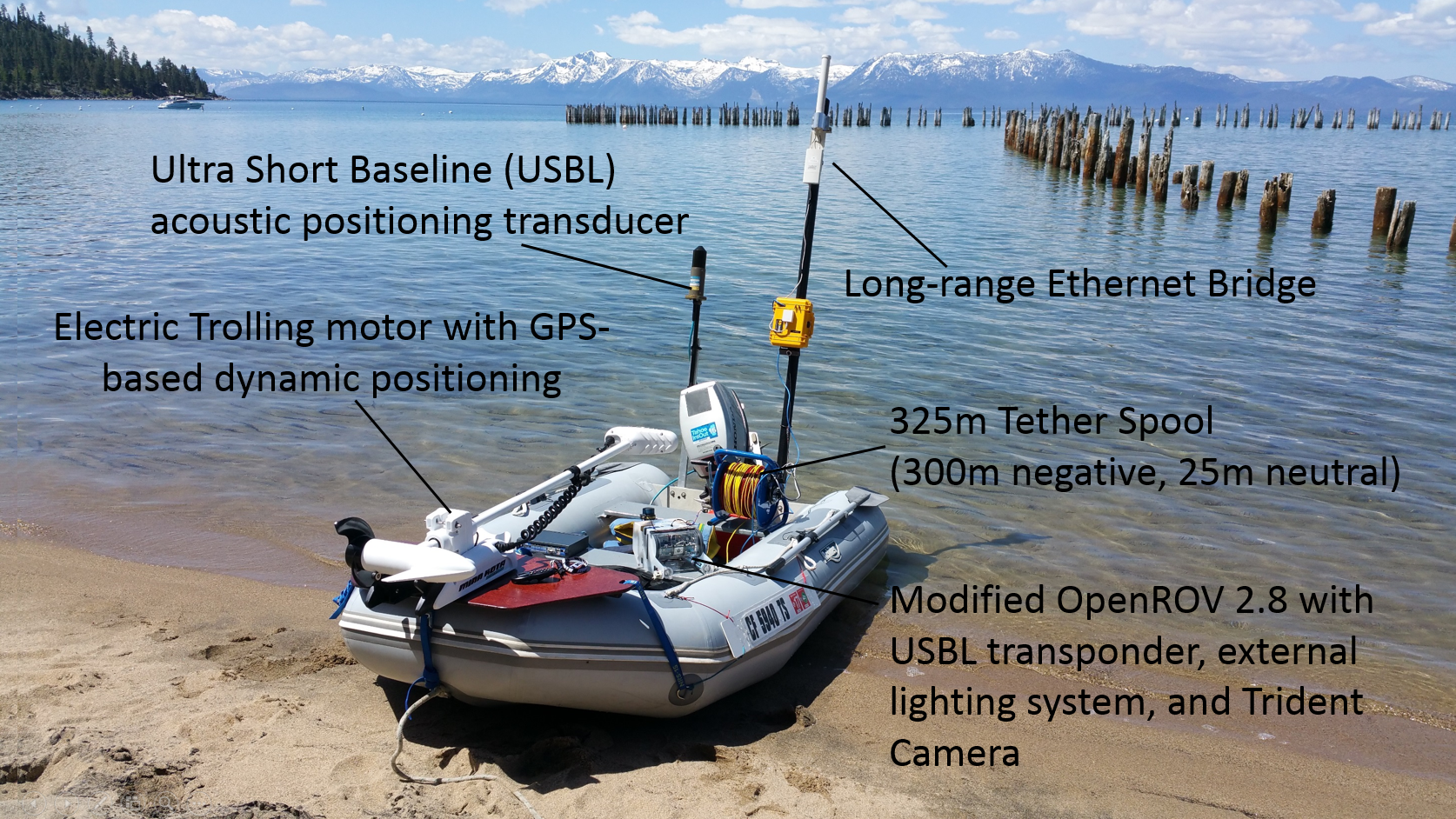
OpenROV DIY Research VesselThe purpose of the design was “to demonstrate that many of the capabilities one might think would require a large research vessel can actually be achieved with off-the-shelf parts that are more portable and much less expensive. […] There’s a lot to discover down there, and the technology readily available these days can allow us to explore it.” This mindset happens to wonderfully complement the kickoff of the Citizen Scientist Challenge portion of the 2016 Hackaday Prize.

For those times when your work can remain on solid ground, one method is to sidestep the entire issue of working away from the workshop by simply making your whole work area mobile like this incredible conversion of a truck trailer to a mobile lab.
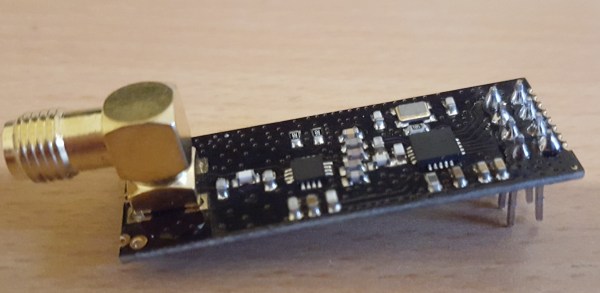
Fixing The Terrible Range Of Your Cheap NRF24L01+ PA/LNA Module

nRF24L01+ PA/LNA module specs look great on paper. Wireless communication up to 1000m in a small package readily available from a variety of cheap sources in China? The hard work of software connectivity already done by a variety of open source projects? Sounds great! But if you mashed BUY and are getting maybe 1% of that range, don’t worry because thanks to these clear directions, they can be fixed.

Continue reading “Fixing The Terrible Range Of Your Cheap NRF24L01+ PA/LNA Module” →

How To Fail At Laser Cutting

Laser cutters are CNC power tools, which means an operator uploads a job digitally and then pushes START to let the machine do all the work while they lie back in a hammock sipping a margarita, occasionally leaping out in a panic because the sound coming from the machine changed slightly.

Like other power tools, laser cutters are built around doing one thing very well, but they require an operator’s full attention and support. The operator needs to handle all the other things that go on before, during, and after the job. It’s not too hard to get adequate results, but to get truly professional and repeatable ones takes work and experience and an attention to detail.

People often focus on success stories, but learning from failures is much more educational. In the spirit of exploring that idea, here are my favorite ways to fail at laser cutting and engraving. Not all of these are my own personal experience, but they are all someone’s personal experience.

Continue reading “How To Fail At Laser Cutting” →

Why I Go Through So Many Arduinos

I make things for people that can’t be bought off a shelf, and in the past several years I have gone through a lot of Arduinos. More and more, they are simply the right tool for both the job and the client. This wasn’t always the case; what changed?

My clients today still include startups and other small businesses, but more and more they’re artists, hobbyists venturing into entrepreneurship, or people who make one-offs like the interactive displays you find in museums or science centers. The type of people I work for has changed, and because of this, the right tool for their job is almost always an Arduino.

Continue reading “Why I Go Through So Many Arduinos” →

Real-time Driving Of RGB LED Cube Using Unity3D

RGB LED cubes are great, but building the cube is only half the battle – they also need to be driven. The larger the cube, the bigger the canvas you have to exercise your performance art, and the more intense the data visualization headache. This project solves the problem by using Unity to drive an RGB LED cube in real-time.

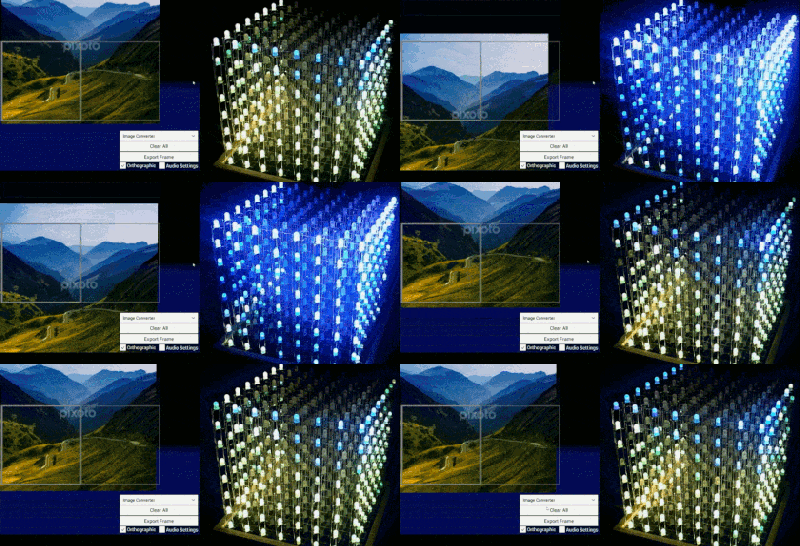
Landscape animation RGB Cube - smallWe’re not just talking about driving the LEDs themselves at a low level, but how you what you want to display in each of those 512 pixels.

In the video, you can see [TylerTimoJ]’s demo of an 8x8x8 cube being driven in real-time using the Unity engine. A variety of methods are demonstrated from turning individual LEDs on and off, coloring swaths of the cube as though with a paintbrush, and even having the cube display source image data in real-time (as shown on the left.)

Continue reading “Real-time Driving Of RGB LED Cube Using Unity3D” →

Networked Solar Birdhouses Deep In The Woods

[Oitzu] in Germany wrote in to let us know about a series of short but very informative blog posts in which he describes building a series of solar-powered, networked birdhouses with the purpose of spying on the life that goes on within them. He made just one at first, then expanded to a small network of them. They work wonderfully, and [Oitzu]’s documentation will be a big help to anyone looking to implement any of the same elements – which include a Raspberry Pi in one unit as a main gateway, multiple remote units in other birdhouses taking pictures and sending those to the Pi over an nRF24L01+ based radio network, and having the Pi manage uploading those images using access to the mobile network. All with solar power.

Continue reading “Networked Solar Birdhouses Deep In The Woods” →

$25 Satellite Tracker Boasts “Usefulness Optional”

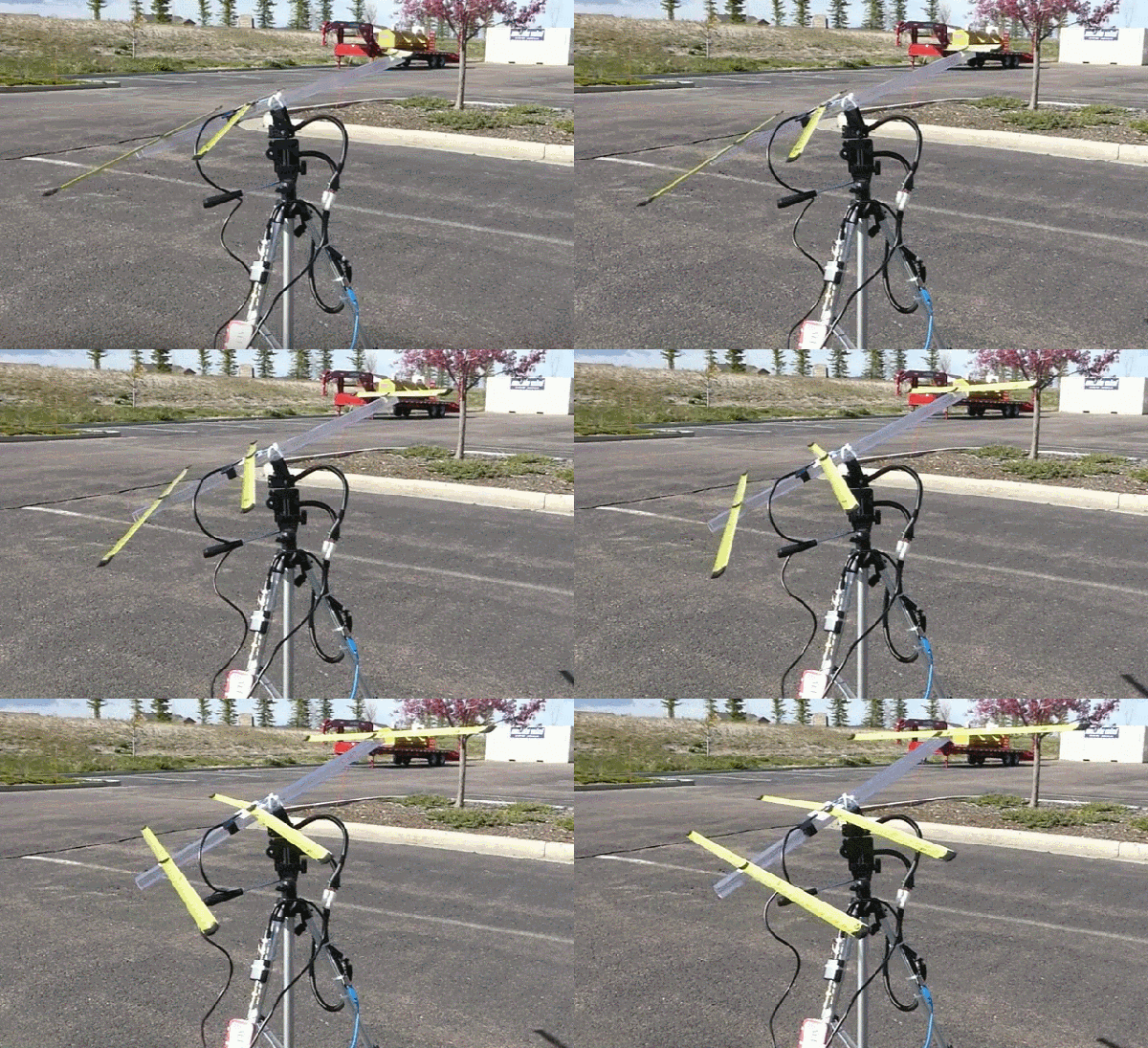
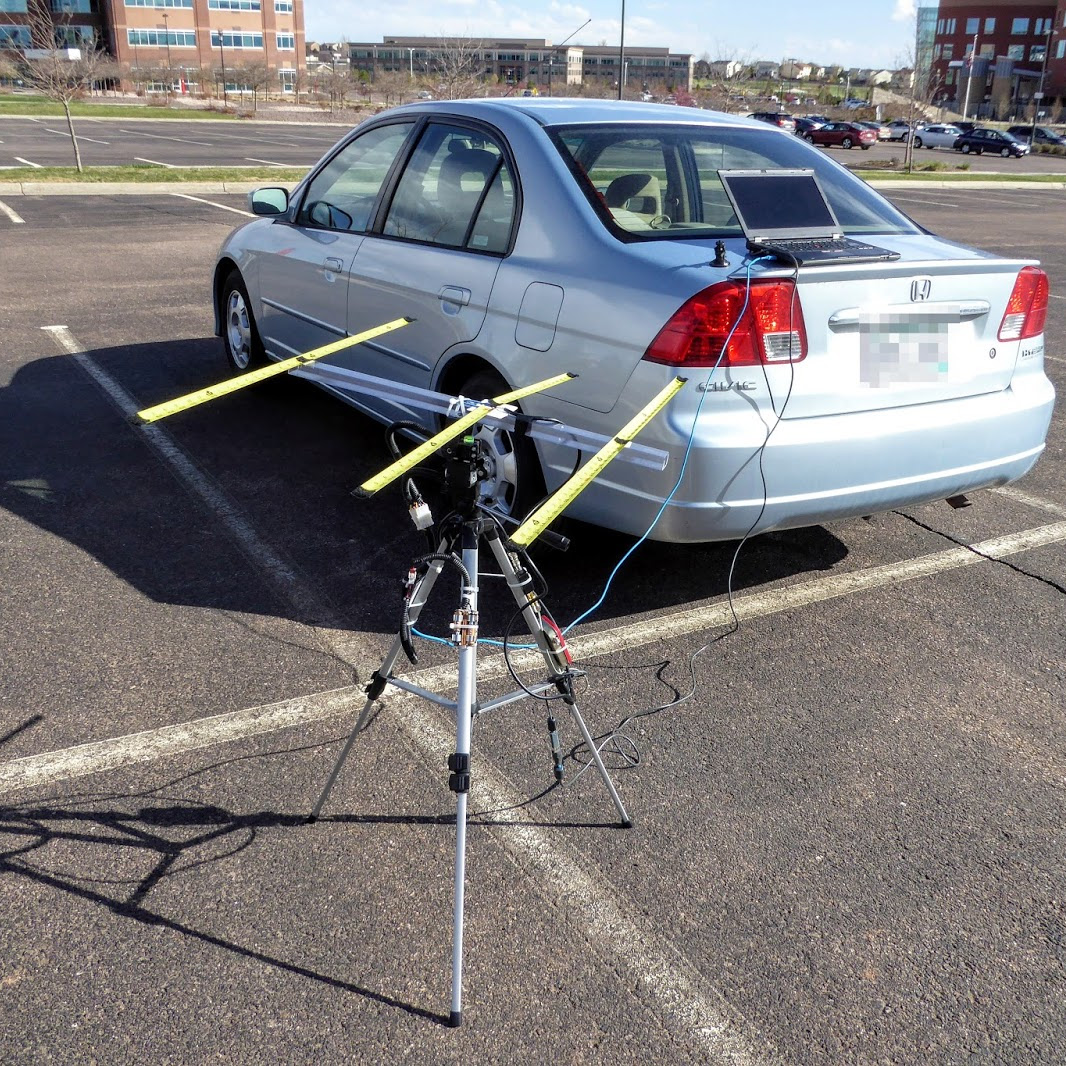
[Paul] is very up-front about the realities of his $25 Satellite Tracker, which aims a tape measure yagi antenna at a satellite of choice and keeps it tracking the satellite as it moves overhead. Does it work? Yes! Is it cheap? Of course! Is it useful? Well… did we mention it works and it’s cheap?

When [Paul] found himself wanting to see how cheaply he could make a satellite tracker he already had an RTL-SDR (which we have seen used for satellite communication before) and a yagi antenna made out of a tape measure, but wanted some way to automatically point the antenna at a satellite as it moved across the sky. He also wanted to see just how economically it could be done. Turns out that with some parts from China and code from SatNOGS (open-source satellite tracking network project and winner of the 2014 Hackaday Prize) you have most of what you need! A few modifications were still needed, and [Paul] describes them all in detail.

Satellite Tracker In Parking Lot ThumbnailSo is a $25 Satellite Tracker useful? As [Paul] says, “Probably not.” He explains, “Most people want satellite trackers so that they can put them outside and then control the antenna from inside, which someone probably can’t do with mine unless they live in a really nice place or build a radome. […] Driving somewhere, setting it up correctly (which involves reprogramming the Arduino for every satellite), and then sitting around is pretty much the opposite of useful.”

It might not be the most practical but it works, it’s cool, he learned a lot, and he wrote up the entire process for others to learn from or duplicate. If that’s not useful, we don’t know what is.

Satellite tracking is the focus of some interesting projects. We’ve even seen a project that points out satellite positions by shining a laser into the sky.