Mouse Charging Mod Shows Even Simple Hacks Can End Up Complex

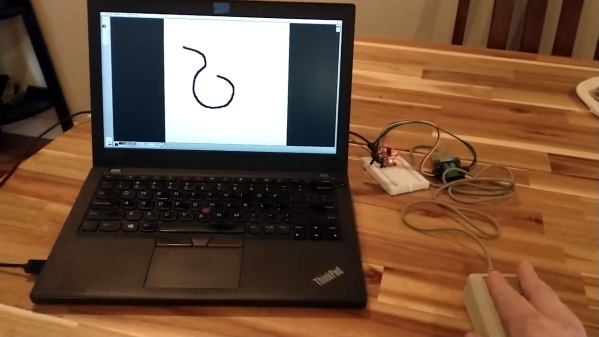
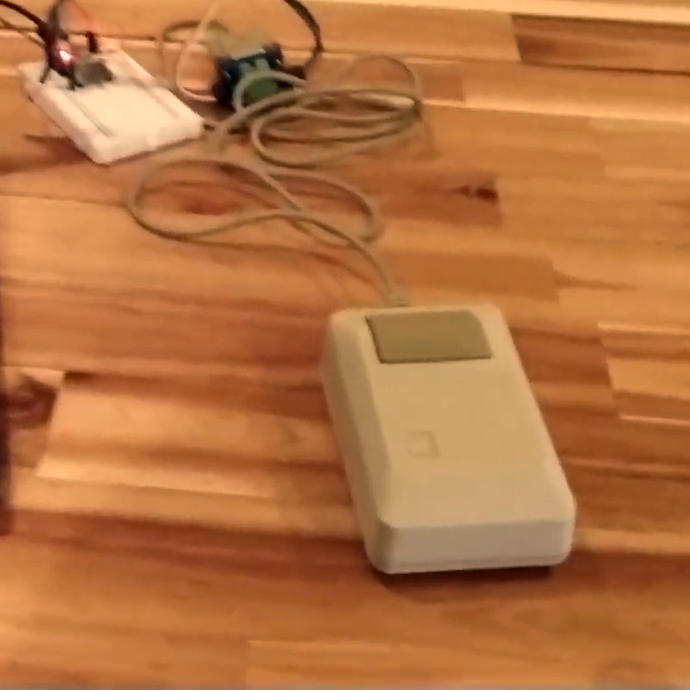
Hardware hacks have something in common with renovations that involve taking down a wall: until one actually gets started and opens things up, there’s no telling what kind of complications might be lurking. [voussoir] has a project that demonstrates this nicely: modifying a rechargeable mouse to use USB-C instead of micro-B turned out to have quite a few little glitches in the process. In fact, changing the actual receptacle was the simplest part!

On one hand, the mouse in question seems like a perfect candidate for easy modification. The enclosure isn’t too hard to open, there is ample space inside, and USB is used only for recharging the battery. So what was the problem? The trouble is something familiar to anyone who has worked on modifying an existing piece of hardware: existing parts are boundaries to hacking work, and some are less easily modified than others. Continue reading “Mouse Charging Mod Shows Even Simple Hacks Can End Up Complex”

The Ethics Of When Machine Learning Gets Weird: Deadbots

Everyone knows what a chatbot is, but how about a deadbot? A deadbot is a chatbot whose training data — that which shapes how and what it communicates — is data based on a deceased person. Now let’s consider the case of a fellow named Joshua Barbeau, who created a chatbot to simulate conversation with his deceased fiancee. Add to this the fact that OpenAI, providers of the GPT-3 API that ultimately powered the project, had a problem with this as their terms explicitly forbid use of their API for (among other things) “amorous” purposes.

[Sara Suárez-Gonzalo], a postdoctoral researcher, observed that this story’s facts were getting covered well enough, but nobody was looking at it from any other perspective. We all certainly have ideas about what flavor of right or wrong saturates the different elements of the case, but can we explain exactly why it would be either good or bad to develop a deadbot?

That’s precisely what [Sara] set out to do. Her writeup is a fascinating and nuanced read that provides concrete guidance on the topic. Is harm possible? How does consent figure into something like this? Who takes responsibility for bad outcomes? If you’re at all interested in these kinds of questions, take the time to check out her article.

[Sara] makes the case that creating a deadbot could be done ethically, under certain conditions. Briefly, key points are that a mimicked person and the one developing and interacting with it should have given their consent, complete with as detailed a description as possible about the scope, design, and intended uses of the system. (Such a statement is important because machine learning in general changes rapidly. What if the system or capabilities someday no longer resemble what one originally imagined?) Responsibility for any potential negative outcomes should be shared by those who develop, and those who profit from it.

[Sara] points out that this case is a perfect example of why the ethics of machine learning really do matter, and without attention being paid to such things, we can expect awkward problems to continue to crop up.

Softmod An Xbox, And Run Your Own Software

The original Xbox might be old hardware, but that doesn’t mean it’s not worth messing with. Wonder what it takes to softmod an original Xbox? Modding is essentially jailbreaking, and softmodding is doing it using an entirely software-driven process, with no need to crack open the case or mess with electronics.

Don’t let that fool you into thinking the process requires nothing more than pressing a button; it’s actually quite involved, but more accessible now that [ezContents] has published a comprehensive walkthrough for softmodding an original Xbox, complete with loads of screenshots and photos.

The process uses a softmodding tool but that’s only the first step. Making the magic happen comes from installing a carefully crafted save file to the console, booting with an exploited game disk, and then installing software that the manufacturer doesn’t want on the hardware, via a process that the manufacturer doesn’t want to happen. Considering that, it’s expected to have to jump through a few hoops.

Now that your original Xbox is freed from its shackles without having to crack open the case, maybe crack it open anyway and check it for leaking caps and internal RTC batteries before it dies a corrosive death.

Universal TFT Display Backpack Helps Small Displays Shine

TFT technology might be ancient news for monitors and TVs, but it’s alive and well when it comes to hobbyist electronics and embedded devices. They’ve now become even easier to integrate, thanks to the Universal TFT Display Backpack design by [David Johnson-Davies].

Breakout board, compatible with pinouts of most small TFT displays.

Such displays are affordable and easy to obtain, and [David] noticed that many seemed to have a lot in common when it came to pinouts and hookup info. The result is his breakout board design, a small and easy-to-assemble PCB breakout board that can accommodate the pinouts of a wide variety of TFT displays available from your favorite retailers or overseas sellers.

The board has a few quality-of-life features such as an optional connection for a backlight, and a staggered pin pattern so that different TFT boards can be pushed in to make a solid connection without soldering. That’s very handy for testing and evaluating different displays.

Interested? Head on over to the GitHub repository for the project, and while you’re at it, check out [David]’s Tiny TFT Graphics Library 2 which is a natural complement to the display backpack. [David] sure knows his stuff when it comes to cleverly optimized display work; we loved his solution for writing to OLED displays without needing a RAM buffer.

Gaze Inside These Nanopower Op-Amps

[Robo] over at Tiny Transistor Labs has a fascinating look at what’s inside these modern, ultra low-power devices that consume absolutely minuscule amounts of current. Crank up the magnification, and go take a look at the dies on these two similar (but internally very different) devices.

Texas Instruments LPV801, under the hood.

The first unit is the Texas Instruments LPV801, a single-channel op-amp that might not be very fast, but makes up for it by consuming only a few hundred nanoamps. Inside, [Robo] points out all the elements of the design, explaining how a part like this would be laser-trimmed to ensure it performs within specifications.

The second part is the Texas Instruments LPV821 which uses a wee bit more power, but makes up for it with a few extra features like zero-drift and EMI hardening. Peeking inside this device reveals the different manufacturing process this part used, and [Robo] points out things like the apparent lack of fuses for precise trimming of the part during the manufacturing process.

Seeing these structures up close isn’t an everyday thing for most of us, so take the opportunity to check out [Robo]’s photos. Tiny Transistor Labs definitely takes the “tiny” part of their name seriously, as we’ve seen with their 555 timer, recreated with discrete transistors, all crammed into a package that’s even the same basic size as the original.

DIY Keyboard Can’t Get Much Smaller

The PiPi Mherkin really, really can’t get much smaller. The diminutive keyboard design mounts directly to the Pi Pico responsible for driving it, has a similar footprint, and is only about 9 mm thick. It can’t get much smaller since it’s already about as small as the Pi Pico itself.

Running on the Pi Pico is the PRK firmware, a keyboard framework that makes the device appear as a USB peripheral, checking the “just works” box nicely. The buttons here look a little sunken, but the switches used are available in taller formats, so it’s just a matter of preference.

We have to admit the thing has a very clean look, but at such a small size we agree it is perhaps more of a compact macropad than an actual, functional keyboard. Still, it might find a place in the right project. Design files are online, if you’re interested.

If you like small, compact keyboards but would prefer normal-sized keys, check out the PiPi Mherkin’s big brother, the PiPi Gherkin which gets clever with dual-function tap/hold keys to provide full functionality from only 30 keys, with minimal hassle.

Keyboards are important, after all, and deserve serious attention, as our own [Kristina Panos] knows perfectly well.

3D Printed Flexure Shows Precision In Action

Here’s an older but fantastic video that is as edifying as it is short. [Topias Korpi] demonstrates a 3D printed flexure with a dial indicator on one end, and an M3 screw on the other. As the screw is turned, the dial indicator moves steadily with roughly a 15:1 reduction between the movement of the screw and the indicator. Stable deflections of 0.01 mm are easily dialed in, and it’s neat seeing it work while the flexure itself shows no perceptible movement. A demonstration is embedded below the page break and is less than a minute long, so give it a watch and maybe get some ideas.

Flexures are fantastic designs capable of a wide variety of physical functions, and just as [Topias]’s demonstration shows, they can be a natural complement to 3D printing. In fact, flexures are an important part of the design and function of JWST’s mirror actuators, which are responsible for making astonishingly small adjustments to each of the space telescope’s 18 mirror sections.

Continue reading “3D Printed Flexure Shows Precision In Action”