Benchtop Lathe Gets An Electronic Leadscrew Makeover

The king of machine tools is the lathe, and if the king has a heart, it’s probably the leadscrew. That’s the bit that allows threading operations, arguably the most important job a lathe can tackle. It’s a simple concept, really – the leadscrew is mechanically linked through gears to the spindle so that the cutting tool moves along the long axis of the workpiece as it rotates, allowing it to cut threads of the desired pitch.

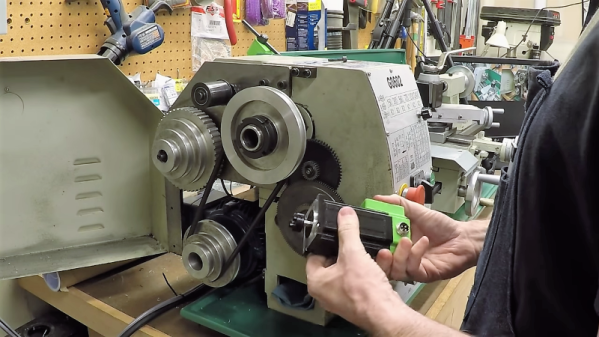
But what’s simple in concept can be complicated in reality. As [Clough42] points out, most lathes couple the lead screw to the spindle drive through a complex series of gears that need to be swapped in and out to accommodate different thread pitches, and makes going from imperial to metric a whole ball of wax by itself. So he set about building an electronic leadscrew for his lathe. The idea is to forgo the gear train and drive the leadscrew directly with a high-quality stepper motor. That sounds easy enough, but bear in mind that the translation of the tool needs to be perfectly synchronized with the rotation of the spindle to make threading possible. That will be accomplished with an industrial-grade quadrature encoder coupled to the spindle, which will tell software running on a TI LaunchPad how fast to turn the stepper – and in which direction, to control thread handedness. The video below has some great detail on real-time operating systems on microcontrollers as well as tests on all the hardware to be used.

This is only a proof of concept at this point, but we’re looking forward to the rest of this series. In the meantime, [Quinn Dunki]’s excellent series on choosing a lathe should keep you going.

Continue reading “Benchtop Lathe Gets An Electronic Leadscrew Makeover”

How 5G Is Likely To Put Weather Forecasting At Risk

If the great Samuel Clemens were alive today, he might modify the famous meteorological quip often attributed to him to read, “Everyone complains about weather forecasts, but I can’t for the life of me see why!” In his day, weather forecasting was as much guesswork as anything else, reading the clouds and the winds to see what was likely to happen in the next few hours, and being wrong as often as right. Telegraphy and better instrumentation made forecasting more scientific and improved accuracy steadily over the decades, to the point where we now enjoy 10-day forecasts that are at least good for planning purposes and three-day outlooks that are right about 90% of the time.

What made this increase in accuracy possible is supercomputers running sophisticated weather modeling software. But models are only as good as the raw data that they use as input, and increasingly that data comes from on high. A constellation of satellites with extremely sensitive sensors watches the planet, detecting changes in winds and water vapor in near real-time. But if the people tasked with running these systems are to be believed, the quality of that data faces a mortal threat from an unlikely foe: the rollout of 5G cellular networks.

Continue reading “How 5G Is Likely To Put Weather Forecasting At Risk”

Random Word Pairings Mark The Time On This Unusual Clock

Gosh, the fun we had when digital calculators became affordable enough that mere grade school students could bring one to class. The discovery that the numbers could be construed as the letters of various dirty words when viewed upside down was the source of endless mirth. They were simpler times.

This four-letter-word “clock” aims to recreate that whimsical time a bit, except with full control over the seven-segment displays and no need to look at it upside down. This descends from a word clock [WhiskeyTangoHotel] made previously and relies on a library of over 1000 four-letter words that can be reasonably displayed using seven-segment displays, most of them SFW but some mildly not. A PICAXE is used to select two of the four-letter words to display every second or so, making this a clock only by the loosest of definitions. Word selection is pseudorandom, seeded by noise from a floating ADC pin, but some of the word pairings in the video below seem to belie a non-random sense of humor. As is, there are over a million pairings possible; it might be fun to add in the full set of two- and three-letter words as well and see what sort of merriment ensues.

While we like the Back to the Future vibe here, we’ve seen some other really nice word clocks lately. There was the one that used PCBs as the mask for the characters, and then a rear-projection word clock that really looks great.

Continue reading “Random Word Pairings Mark The Time On This Unusual Clock”

Flexible PCB Contest Round Up

The 2019 Hackaday Prize, which was announced last week, is very much on everyone’s mind, so much so that we’ve already gotten a great response with a lot of really promising early entries. As much as we love that, the Prize isn’t the only show in town, and we’d be remiss to not call attention to our other ongoing contest: The Flexible PCB Contest.

The idea of the Flexible PCB Contest is simple: design something that needs a flexible PCB. That’s it. Whether it’s a wearable, a sensor, or a mechanism that needs to transmit power and control between two or more moving elements, if a flexible PCB solves a problem, we want to know about it.

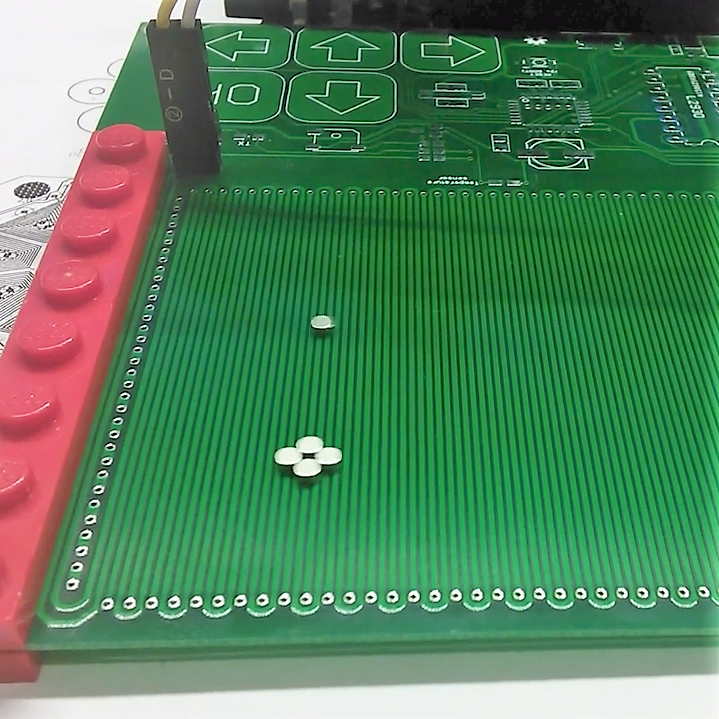
We’ve teamed up with Digi-Key for this contest, and 60 winners will receive free fabrication of three copies of their flexible PCB design, manufactured through the expertise of OSH Park. And here’s the beauty part: all you need is an idea! No prototype is necessary. Just come up with an idea and let us know about it. Maybe you have a full schematic, or just a simple Fritzing project. Heck, even a block diagram will do. Whatever your idea is for a flexible PCB project, we want to see it.

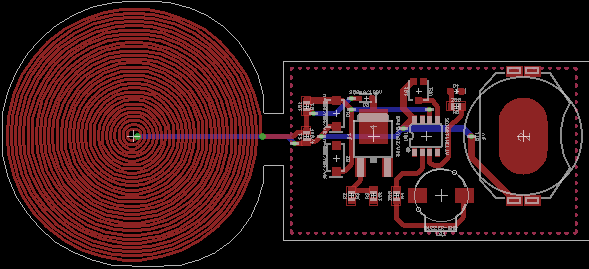
To get the creative juices going, here’s a look at a few of the current entries

The Flexible PCB Contest goes through May 29, so you’ve got plenty of time to get an idea together.

2019 Hackaday Prize Hack Chat

Join us Wednesday, April 17 at noon Pacific time for the 2019 Hackaday Prize Hack Chat!

The 2019 Hackaday Prize was just announced, and this year the theme is designing for manufacturing. The hacker community has come a long, long way in the last few years in terms of the quality of projects we turn out. Things that were unthinkable just a few short years ago are now reduced to practice, and our benches and breadboards are always stuffed with the latest and greatest components and modules, all teaming up to do wondrous things. But what about the next step? Do you have what it takes to turn that mess o’ wires into a product? What skills do you need to add to your repertoire to make sure you can actually capitalize on your prototype — or more importantly, to get your ideas into someone else’s hands where they can actually do some good? That’s what the Hackaday Prize is all about this year, and we want you taking your projects to the next level!

Majenta Strongheart will be hosting the Hack Chat as we discuss:

  • The importance of designing for manufacturing;
  • What tools we have available to turn prototypes into projects;
  • How the Hackaday Prize is set up this year, and why the theme was selected; and
  • Why you should participate in the 2019 Hackaday Prize

You are, of course, encouraged to add your own questions to the discussion. You can do that by leaving a comment on the 2019 Hackaday Prize Hack Chat and we’ll put that in the queue for the Hack Chat discussion.

join-hack-chatOur Hack Chats are live community events on the Hackaday.io Hack Chat group messaging. This week we’ll be sitting down on Wednesday, April 17, at noon, Pacific time. If time zones have got you down, we have a handy time zone converter.

Click that speech bubble to the right, and you’ll be taken directly to the Hack Chat group on Hackaday.io. You don’t have to wait until Wednesday; join whenever you want and you can see what the community is talking about.

Home-Brew CNC Router Mills A Wooden Mouse

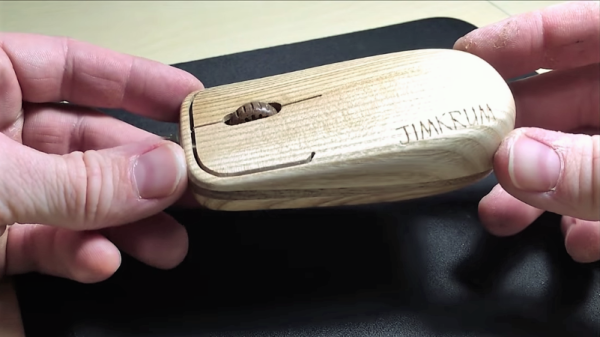
First off, we’ll admit that there no real practical reason for wanting a wooden mouse – unless of course the cellulose rodent in question is the one that kicked it all off in “The Mother of All Demos” fifty years ago. Simply putting a shell around the guts of a standard wireless optical mouse is just flexing, but we’re OK with that.

That said, [Jim Krum]’s design shows some impressive skills, both in the design of the mouse and the build quality of his machine. Starting with what looks like a block of white oak, [Jim] hogs out the rough shape of the upper shell and then refines it with a small ball-end mill before flipping it over to carve the other side. His registration seems spot on, because everything matches up well and the shell comes out to be only a few millimeters thick. The bottom plate gets the same treatment to create the complex shape needed to support the mouse guts and a battery holder. He even milled a little battery compartment cover. He used a contrasting dark wood for the scroll wheel and a decorative band to hold the top and bottom together and finished it with a light coat of sealer.

It’s a great look, and functional too as the video below reveals. We’ve seen a few other fancy mice before, like this wood and aluminum model or even one that would look at home on [Charles Babbage]’s desk.

Continue reading “Home-Brew CNC Router Mills A Wooden Mouse”

A Peek Inside A Typical British Residential Power Panel

No matter what field you’re in, it’s interesting and instructive to find out how others practice it. That’s especially true with electrical distribution systems, where standards and practices differ from country to country and even between regions. This tour of a typical British residential electrical panel is a great example of the different ways that the same engineering problems can be solved, and the compromises that always attend any design.

We’re used to seeing [Big Clive] tearing interesting devices to bits, but rest assured that this electrical panel remains largely intact as it gives up its secrets. Compared to the distribution panels and circuit breakers common in North American residential construction, the British consumer unit is a marvel of neatness and simplicity. True, the unit on display hasn’t been put into service yet, and things will no doubt change once an electrician is through with it, but the fact that everything is DIN rail mounted is pretty cool. [Clive] explains a few of the quirks of the panel, such as the fact that what looks like a main breaker is in fact just an isolation switch, and that there are a pair of residual current devices (RCDs), which we call ground-fault circuit interrupters (GFCIs) in North America, that also don’t act as circuit breakers, despite appearances. A stout bus bar is provided to link the RCDs to adjacent circuit breakers, forming two groups that are separately protected from ground faults.

[Clive] notes with dismay that the lugs of the bus bar can actually be inserted behind the rising clamp terminal on the breaker, resulting in poor connections and overheating. Still, we wouldn’t mind some of these concepts brought to panels in North America, which we covered a bit in a discussion on circuit protection a while back.

Continue reading “A Peek Inside A Typical British Residential Power Panel”