JTAG Hat Turns Raspberry Pi Into A Networked Debugger

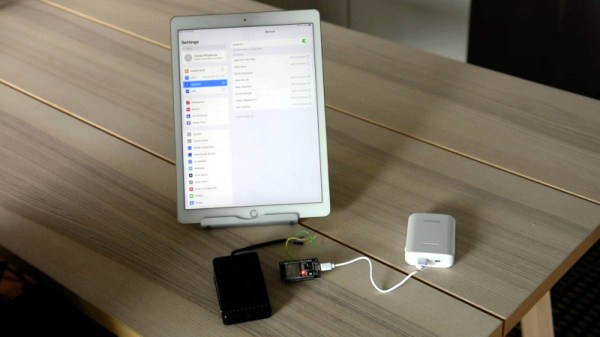
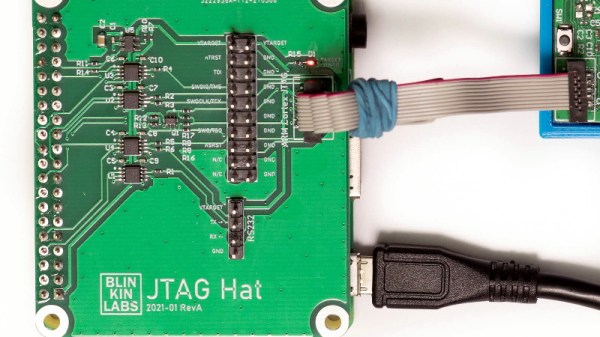
Over the last year or so we’ve noticed a definite uptick in the number of folks using OpenOCD on the Raspberry Pi. It’s a cheap and convenient solution for poking around with various microcontrollers and embedded devices, but not always the most elegant. Looking to improve on the situation somewhat, [Matthew Mets] has been working on a purpose-built JTAG Hat to clean things up a bit.

Onboard level shifters allow you connect to JTAG and SWD interfaces from 1.8 to 5 V, and if you power the target device from the Pi itself, there’s even support for measuring the voltage and current. To connect up to your target, the open hardware board features a “legacy” pin header perfect for jumper wires, as well as a dedicated 10-pin Cortex Debug Connector. Whether you spin up your own or buy one assembled, it certainly looks like a tool worth having around if you often find yourself working with the appropriate chips.

In addition to the design files for the hardware, [Matthew] has also provided some nice documentation on how to get the software side of things up and running. Starting with a blank SD card, it walks you through the initial setup of the Raspberry Pi all the way through the installation and configuration of a patched version of OpenOCD designed to support the JTAG Hat.

If you spend more time working with 8-bit AVR chips, don’t worry. Last year we covered a similar project to turn everyone’s favorite Linux SBC into an all-in-one microcontroller development powerhouse.


3D Printed Mars Rover Smiles For The Camera

You’d be forgiven for thinking these pictures of NASA’s Perseverance Mars rover were renderings of the real deal on the Red Planet, if it wasn’t for the golf ball tucked in for scale, anyway. What you’re actually looking at is a 3D printed model made by [Alex Givens] that he brought out to the desert for a photo shoot by his friend [Josh Jalil].

[Alex] printed the parts for the model on the Ender 5 Pro, while [Josh] snapped the shots using a Canon EOS 90D. The realism of the final shots serves as a testament to how well they’ve honed their respective tools, but credit for the 3D model itself has to go to the good folks over at NASA.

The highly detailed Perseverance model came from the space agency’s extensive “3D Resources” collection, which has models for an incredible array of present and historical spacecraft. They’ve also got models for a number of interesting astronomical objects, just in case you’re in the market for a 3D printed asteroid or two.

We know, this isn’t exactly a hack in the traditional sense. But it’s a fantastic reminder of a great resource from NASA, as well as a practical demonstration of how high quality photographs can really bring a project to life.

This ESP32 Bluetooth Page Turner Can’t Get Any Easier

Commercial Bluetooth pedals, designed to allow musicians to flip pages of sheet music on a tablet, have the sort of inflated price tag you’d expect for a niche electronic device. Rather than forking as much as $100 USD over for the privilege of hands-free page flipping, [Joonas Pihlajamaa] decided to build his own extremely low cost version using an ESP32 and a cheap foot pedal switch.

In terms of hardware, it does’t get much easier than this. All [Joonas] had to do was hook the pedal up to one of the ESP32’s digital pins, and plug the microcontroller into a USB power bank. From there, it became a software project. With the ESP32-BLE-Keyboard library, it only took a few lines of code to send RIGHT_ARROW or LEFT_ARROW depending on whether the pedal was quickly tapped or held down for a bit; allowing him to navigate back and forth through the pages with just one button.

[Joonas] mentions that the ESP32 development board he’s using is too large to fit inside the pedal itself, though we wonder if the bare module could get slipped in there someplace. Of course you could always build your own pedal with a bit of extra room to fit the electronics, but for less than $2 USD on AliExpress, it’s hard to go wrong with this turn-key unit.

Looking for an alternate approach? We covered a Bluetooth page turner last month that doubled the inputs and packed it all into a handsome wooden enclosure.

Continue reading “This ESP32 Bluetooth Page Turner Can’t Get Any Easier”

ESP8266 Adds WiFi To A 433 MHz Weather Station

There’s no shortage of cheap weather stations on the market that pull in data from several wireless sensors running in the 433 to 900 MHz range and present you with a slick little desktop display, but that’s usually where the flow of information stops. Looking to bridge the gap and bring all that local climate data onto the Internet, [Jonathan Diamond] decided to reverse engineer how his weather station worked.

The first phase of this project involved an RTL-SDR receiver, GNURadio, and a sprinkling of Python. [Jonathan] was able to lock onto the signal and piece together the data packets that reported variables such as temperature, wind speed, and rainfall. Each one of these was a small puzzle in itself, and in the end, there’s still a few bits which he hasn’t quite figured out. But he at least had enough to move onto the next step.

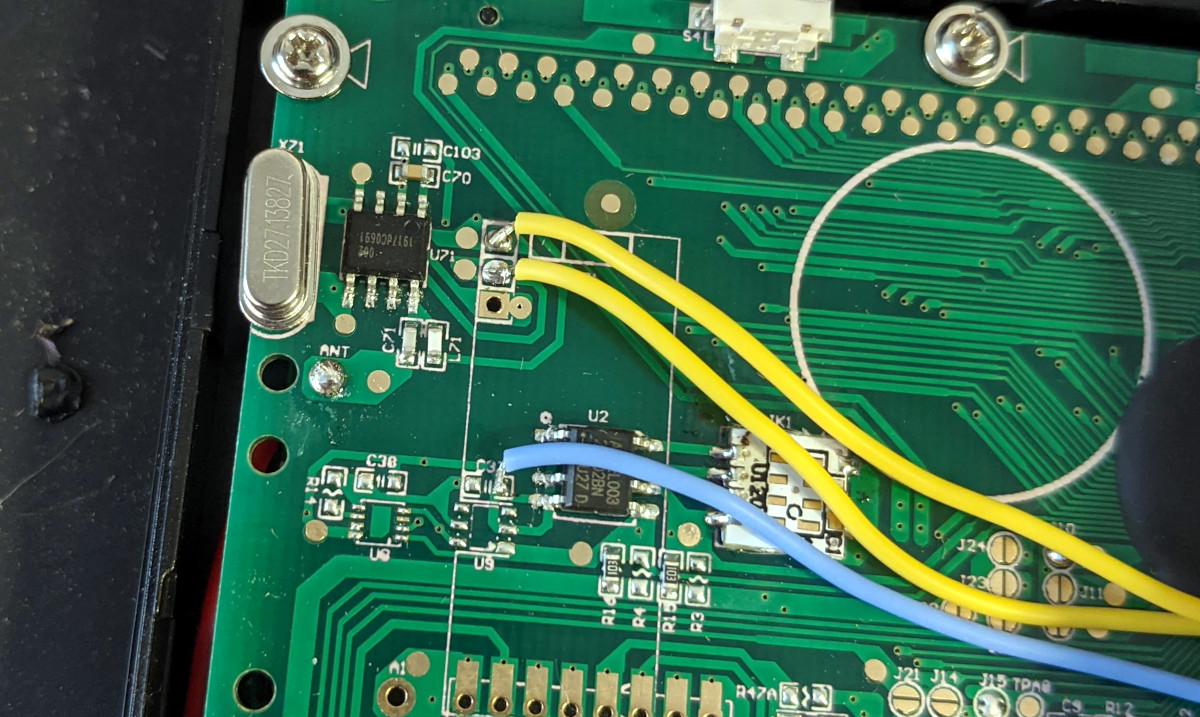
Tapping into the radio module.

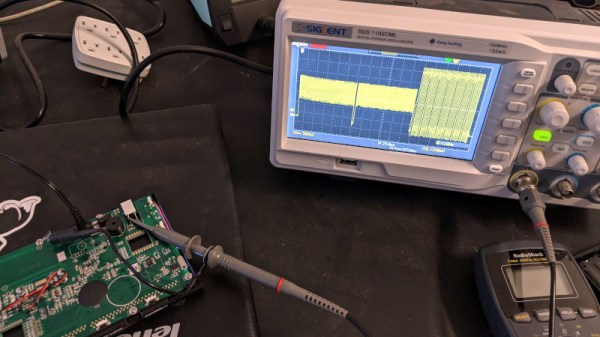
Now at this point, he could have pulled the data right out of the air with his RTL-SDR. But looking to push his skills to the next level, [Jonathan] decided to open up the base station and isolate its receiver. Since he already decoded the packets on the RF side, he knew exactly what he was looking for with his oscilloscope and logic analyzer. Once he was tapped into the feed coming from the radio, the final step was writing some code for the ESP8266 that could listen on the line, interpret the data packets, and push the resulting variables out over the network.

In this case, [Jonathan] decided to funnel all the data into Weather Underground by way of the Personal Weather Station API. This not only let him view the data through their web interface and smartphone application, but brought their hyperlocal forecasting technology into the mix at no extra charge. If you’re not interested in sharing your info with the public, it would be a trivial matter to change the firmware so the data is published to a local MQTT broker, or whatever else floats your proverbial boat.

If you’re really lucky, your own weather station may already have an ESP8266 onboard and is dumping all its collected data to the serial port. But if not, projects like this one that break down how to reverse engineer a wireless signal can be a great source of inspiration and guidance should you decide to try and crack the code.

Teardown: RADICA I-Racer

Long before the Oculus Rift and HTC Vive came along, some of the biggest names in gaming tried to develop practical stereoscopic displays. These early attempts at virtual reality (VR) were hindered by the technical limitations of their time, and most never progressed beyond the prototype stage. Of the ones that did make it to retail shelves, none managed to stick around for very long. The best known example is Nintendo’s Virtual Boy, which ended up being a financial disaster upon its release in 1995 and some regard as the gaming giant’s greatest blunder.

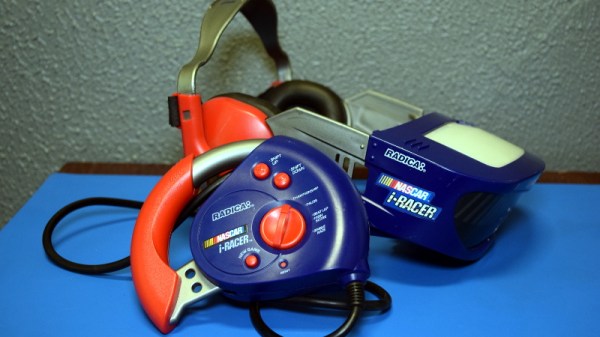
Despite these public failures, Radica still felt compelled to throw their hat into the ring. Best known for their line of relatively simplistic LCD handheld games, the company produced several rudimentary stereoscopic stand-alone titles in the late 1990s to try and cash in on the VR fad. Among the later entries in this series was 1999’s NASCAR i-Racer, which at least externally, looks quite a bit like modern VR headset.

Featuring a head-mounted stereoscopic display, a handheld controller, force feedback, and integrated headphones, you’d certainly be forgiven for thinking the i-Racer was ahead of its time. But its reliance on the primitive LCD technology that put Radica on the map, combined with the need to keep the game as cheap as possible, keeps the experience planted firmly in the 1990s. But perhaps there’s something we can do about that.

Continue reading “Teardown: RADICA I-Racer”

High Voltage Gives Metal Balls A Mind Of Their Own

Have you ever seen something that’s so fascinating you’re sure there has to be some kind of practical application for it, but you just can’t figure out what? That’s how we feel when watching tiny ball bearings assemble themselves into alien-like structures under the influence of high voltage in the latest Plasma Channel video from [Jay Bowles].

Now to be clear, [Jay] isn’t trying to take credit for the idea. He explains that researchers at Stanford University first documented the phenomenon back in 2015, and that his goal was to recreate their initial results as a baseline and go from there. The process is pretty simple: put small metal ball bearings into a tray of oil, apply high voltage, and watch them self-assemble into “wires” that branch out in search of the ground terminal like a plant’s roots looking for water. With the encouragement of his 500,000 volt Van de Graaff generator, the ball bearings leaped into action and created structures just like in the Stanford study.

With the basic pieces now in place, [Jay] starts to push the envelope. He experiments with various oils to see how their viscosity impacts the ball’s ability to assemble, finding that olive oil seems to be the ideal candidate (at least of those he’s tried so far). He also switches up the size and shape of the tray, to try and find how far the balls can realistically stretch out on their own.

In the end we’re no closer to finding a practical application for this wild effect than the good folks at Stanford were back in 2015, but at least we got to watch the little fellows do their thing in glorious 4K and with the exceptional production value we’ve come to expect from Plasma Channel. That said, [Jay] does hint at his ongoing efforts to turn the structures into works of art by “freezing” them with clear resin, so keep your eyes out for that.

Continue reading “High Voltage Gives Metal Balls A Mind Of Their Own”

RAM Fiddling Turns VGA Converter Into Video Synth

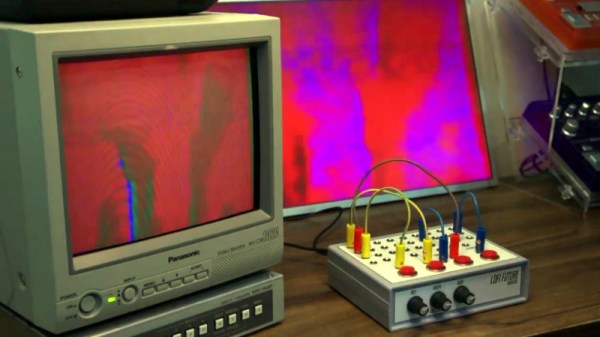
If you’re interested in circuit bent video but not sure where to start, the excellent guide [LoFi Future] has come up with for modifying the cheap and readily available GBS-8100 VGA to composite converter would be a great first step. While we wouldn’t call it an easy modification, the circuit documentation and demonstration video below go a long way to making it as accessible as possible to new players.

Some soldering will be required…

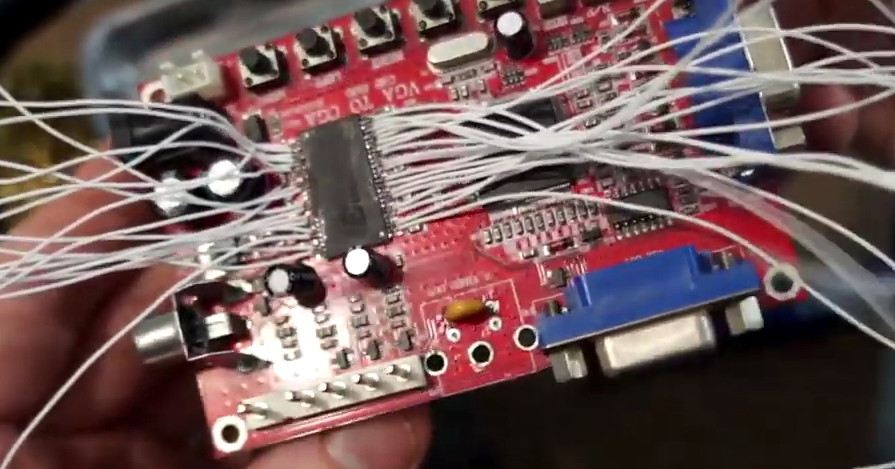
While other video converters have all-in-one chipsets that are much harder to work with, [LoFi Future] explains that the separate EM636165TS DRAM chip on the GBS-8100 provides an ideal spot to tap in and wreak some technicolor havoc. By mapping out the pins and studying how the video output is corrupted by grounding them out or connecting them to each other, he’s been able to come up with fairly repeatable “recipes” for different effects.

In the most basic form, once you’ve soldered the pins of the DRAM chip up to the plug board interface, you’d technically be done. But [LoFi Future] takes it a step further and pairs the GBS-8100 with a separate composite to VGA converter. This provides some additional effects in the form of feedback loops and hue adjustment, but more practically, allows the device to handle composite on both the input and output. It’s a lot of hardware to cram into the enclosure, but thanks to little touches like the printed panel graphics, the final product does looks very professional.

Aside from the occasional modified NES Zapper, most of the circuit bent hardware we see is of the audio variety. But with projects like this one and the MIDI controlled SNES we covered last year as inspiration, we might see a balancing of the scales. Continue reading “RAM Fiddling Turns VGA Converter Into Video Synth”