IBM has come up with an automatic debating system called Project Debater that researches a topic, presents an argument, listens to a human rebuttal and formulates its own rebuttal. But does it pass the Turing test? Or does the Turing test matter anymore?
The Turing test was first introduced in 1950, often cited as year-one for AI research. It asks, “Can machines think?”. Today we’re more interested in machines that can intelligently make restaurant recommendations, drive our car along the tedious highway to and from work, or identify the surprising looking flower we just stumbled upon. These all fit the definition of AI as a machine that can perform a task normally requiring the intelligence of a human. Though as you’ll see below, Turing’s test wasn’t even for intelligence or even for thinking, but rather to determine a test subject’s sex.
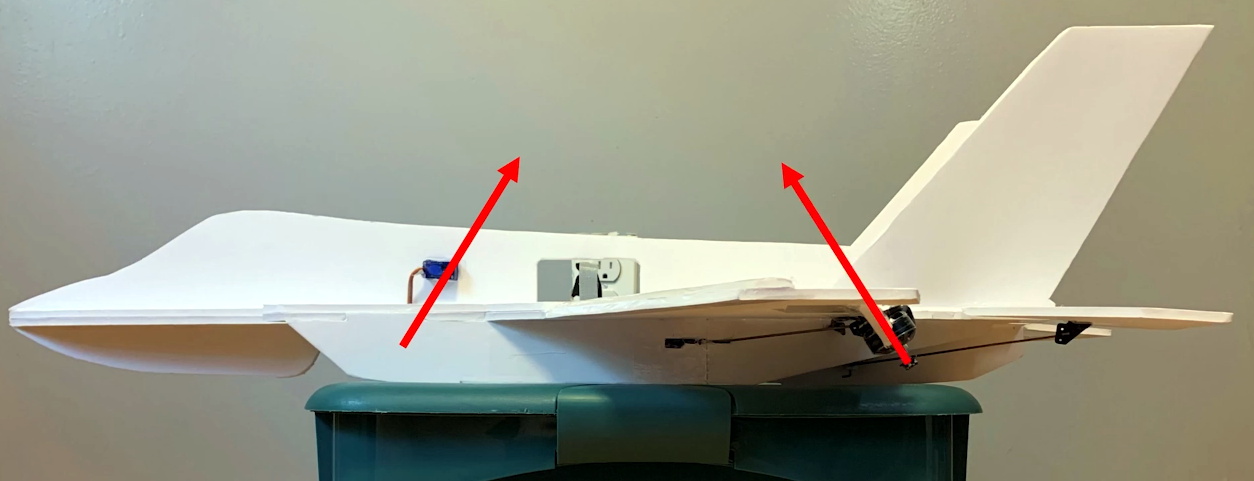
Ornithopters look silly. They look like something that shouldn’t work. An airplane with no propeller and wings that go flappy-flappy? No way that thing is going to fly. There are, however, a multitude of hobbyists, researchers, and birds who would heartily disagree with that sentiment, because ornithopters do fly. And they are almost mesmerizing to watch when they do it, which is just one reason we love [Hobi Cerdas]’s build of the Pterothopter, a rubber band-powered ornithopter modeled after a pterodactyl.
All joking aside, the science and research behind ornithopters and, relatedly, how living organisms fly is fascinating in itself — which is why [Lewin Day] wrote that article about how bees manage to become airborne. We can lose hours reading about this stuff and watching videos of prototypes. While most models we can currently build are not as efficient as their propeller-powered counterparts, the potential of evolutionarily-perfected flying mechanisms is endlessly intriguing. That alone is enough to fuel builds like this for years to come.
As you can see in the video below, [Hobi Cerdas] went through his own research and development process as he got his Pterothopter to soar. The model proved too nose-heavy in its maiden flight, but that’s nothing a little raising of the tail section and a quick field decapitation couldn’t resolve. After a more successful second flight, he swapped in a thinner rubber band and modified the wing’s leading edge for more thrust. This allowed the tiny balsa dinosaur to really take off, flying long enough to have some very close encounters with buildings and trees.
When Google halted production of the Chromecast Audio at the start of 2019, there was a (now silent) outcry. Fans of the device loved the single purpose audio streaming dongle that delivered wide compatibility and drop-dead simplicity at a rock bottom $35 price. For evidence of this, look no further than your favorite auction site where they now sell for significantly more than they did new, if you can even find an active listing. What’s a prolific hacker to do about this clear case of corporate malice? Why, reinvent it of course! And thus the Otter Cast Audio V2 was born, another high quality otter themed hack from one of our favorite teams of hardware magicians [Lucy Fauth, Jana Marie Hemsing, Toble Miner, and Manawyrm].
USB-C and Ethernet, oh my!
The Otter Cast Audio is a disc about the shape and size of standard Chromecast (about 50mm in diameter) and delivers a nearly complete superset of the original Chromecast Audio’s features plus the addition of a line in port to redirect audio from existing devices. Protocol support is more flexible than the original, with AirPlay, a web interface, Spotify Connect, Snapcast, and even a PulseAudio sink to get your Linux flavored audio bits flowing. Ironically the one thing the Otter Cast Audio doesn’t do is act as a target to Cast to. [Jan] notes that out of all the protocols supported here, actual Cast support was locked down enough that it was difficult to provide support for. We’re keeping our fingers crossed a solution can be found there to bring the Otter Cast Audio to complete feature parity with the original Chromecast Audio.
But this is Hackaday, so just as important as what the Otter Cast Audio does is how it does it. The OtterCast team have skipped right over shoehorning all this magic into a microcontroller and stepped right up to an Allwinner S3 SOC, a capable little Cortex A7 based machine with 128 MB of onboard DDR3 RAM. Pint sized by the bloated standards of a fully interactive desktop, but an absolutely perfect match to juggling WiFi, Bluetooth, Ethernet, and convenient support for all the protocols above. If you’re familiar with these hackers’ other work it won’t surprise you that what they produced here lives up to the typical extremely high quality bar set by such wonders as this USB-C adapter for JBC soldering iron handles and this TS-100 mainboard replacement.
Around these parts, we see plenty of plotter builds. They’re a great way to learn about CNC machines and you get to have fun making pictures along the way. [Ben Lucy] was undertaking just such a build of his own, but wanted to do something standalone that served a purpose. The result is the impressive Portable Portrait Painter.
What sets [Ben]’s project apart is how complete it is. Unlike other plotters that simply follow G-code instructions or process external images, the Portable Portrait Painter is a completely standalone machine. Fitted out with an OV7670 camera, hooked up to an Arduino, it’s capable of taking its own photos and then drawing them out as well.
Through some clever code from [Indrek Luuk], the Arduino Mega2560 is able to display a 20fps video preview on a color LCD screen. When the user presses a button, the current frame is captured and sent to the pen plotter. The plotting algorithm is particularly impressive, with images first processed with histogram compensation to maximise contrast. The pen is then drawn across the page line by line, and pressed into the page by varying amounts depending on the color value of each pixel. The darker the pixel, the thicker the stroke made by the pen. This more analog approach produces a much more detailed image than more basic plotters which either leave a mark or don’t.
The portraits produced by the plotter are impressive, and we like the edge-of-page artifacts, which add a little style to the final results. The Portrait Painter would make a great conversation piece at any Maker Faire or hackerspace night.
Since Galileo began observing celestial objects with a telescope, an almost uncountable number of improvements have been made to his designs and methods. Telescopes can now view anything from radio waves to gamma waves, come in a wide range of sizes and shapes, and some are also fairly accessible to hobbyists as well. In fact, several homemade telescopes are specifically designed for ease of use, portability, and minimum cost, like this portable ball telescope. (Google Translate from Italian)
The telescope was designed and built by [andrea console] and features a ball-shaped mount for the mirror which was built from a bowl. Ball designs like this are easier to orient than other telescopes since the ball allows for quick repositioning in any direction, but the main focus of this project was to investigate focal length with various accessories while also being as portable as possible. To that end, the mount for the eyepiece is on a lattice that assembles and disassembles quickly, and the ball and other equipment are easily packed. This makes transportation quick and easy and reduces weight compared to a more traditional, or even Dobsonian, telescope.
This build is impressive not just from having an extremely portable telescope, but also from [andrea console]’s documentation of the optics in his build. It includes some adjustable parts which can increase the magnification and has detailed notes on all of the finer points of its operation. The ball telescope is a popular build, and we’ve recently seen others made out of parts from IKEA as well.
With how expensive thermal cameras are, why not build your own? This is the goal with which [Dan Julio] set out a while ago, covering the project in great detail. While the ultimate goal is to create a stand-alone solution, with its own screen, storage and processing, the TCam-Mini is an interesting platform. Using the 160×120 pixel FLIR Lepton 3.5 thermal sensor, and combining it with a custom PCB and ESP32 module for wireless, he created a wireless thermal camera called the TCam-Mini along with accompanying software that can display the radiometric data.
The project is available on GitHub, as well as as a GroupGets crowd-funding campaign, where $50 gets one a TCam-Mini board, minus the $199 Lepton 3.5 sensor. Not cheap, but quite a steal relative to e.g. the FLIR One Pro camera add-on module. Compared to the aforementioned FLIR One Pro, there’s a definite benefit in having a more portable unit that is not reliant on a smartphone and accompanying FLIR app. Being able to load the radiometric data directly into a desktop application for processing makes it a closer match to the professional thermal cameras which [Dan] states that he’d like to get as close to in terms of features as possible.
Recently [Dan] has also begun to further characterize these Lepton sensors, in order to see whether their accuracy can be improved from the rated +/- 5-10 °C. For this he repurposed an old in-ear thermometer calibration device. Along with tweaking the ESP32 firmware, there is still a lot that can be done with the TCam-Mini, but it sure looks like a fun project to tinker with if one is into Leptons.
Good coffee is nice to have, sure, but frankly, caffeine is caffeine and we’ll take it any way we can get it. That includes freeze-dried, if that’s all you’ve got. We won’t judge anyone for their taste in caffeinated beverages, and to call this coffee dispenser ‘totally useless’ is just patently untrue. It clearly has a use, and even if you don’t like freeze-dried coffee, you could sacrifice one jar worth of Nescafe and fill it with Skittles or anything else that will fit in the little collector basket.
In this machine, the cup is the trigger — the 3D-printed plate underneath activates a micro switch embedded in the scrap wood base, and this triggers a micro:bit around back to actuate the stepper motor that twirls the collector basket around. Although [smogdog] has provided all the files, you’d have to come up with your own connector to suspend the thing over the cup and carve your own base.
We love it when we can see what a machine is doing, so not only is it useful, it’s beautiful. And it worked, at least for a little while. For some reason, it keeps burning out stepper motors. Check it out in proof-of-concept action after the break.