The Birds Outside, Drawn For You Automatically

With artificial intelligence being the bête noir of the moment, there are some projects using it which maybe don’t bring much to the table. So it’s nice to see one that uses it in a creative way, and delivers something new. [arnegiacomo]’s e-paper screen is a great example, as it draws a picture in real time of whatever birds are outside.

Behind the quite large screen sits a Raspberry Pi 5, and on that is BirdNet-Go, an AI-powered birdsong classifier. A USB microphone catches the birdsong, and Birdnet comes up with the species. The birds on the display are then those species as pictures from 19th century bird spotters guides, assembled into a collage. You can even see what the current set of birds it hears are, live, and they are a representative cross section of the European birds you’d find in Norway where it’s located.

We like this project, both for the bird book vibe it gives, and the creative use of machine classification. Surprisingly this isn’t the first project in this field we have seen over the years.

A small rocket is shown launching into the sky, with a trail of smoke leading into the mount of a black pipe. Four large plastic pieces are falling away from below the rocket.

Tube Launch Boosts Rocket’s Performance

If you want improve a model rocket’s performance, all the common options come with serious trade-offs: you could increase the motor’s size, which raises safety issues, or you could cut down on weight, which limits the possible payload. [Con Hathy] was therefore intrigued by the design of the Arcas sounding rockets, which with the aid of a gas-fed launch tube could reach an altitude of 100 km. Even in models without a gas generator, a launch tube apparently boosted performance, an effect which [Con] was able to replicate in a much smaller model rocket.

In theory, as the rocket engine fires, it should pressurize the tube behind the rocket, providing an extra boost out of the tube. To test this, [Con] 3D printed a test rocket, launched it both from a standard rail and from a tube, and compared the results. During tube launches, a printed sabot fit around the rocket and formed a seal with the launch tube. The results were surprising: the tube-launched rocket actually performed substantially worse than a rail launch. After building a simulation, [Con] found that, as the rocket moves down the tube, the volume of tube it needs to back-fill with gas increases faster than the engine puts out exhaust; it was pulling a slight vacuum behind it, slowing itself down.

To solve this, [Con] decreased the diameter of the launch tube. To let the rocket fit into the tube, he also modified it to use pop-out stabilizer fins which wrap around the rocket while in the tube. The sabot was also shrunk, and had foam added to improve the seal between it and the rocket. For this second test, [Con] also connected a pressure sensor to the base of the launch tube. The results on the second launch were much better: according to an altimeter, it managed to fly 72% higher. Based on the pressure sensor’s data, a longer tube could have squeezed out still more performance, but this still demonstrated the principle quite well.

We’ve seen a tube-launched rocket before, though not with such a performance focus.

Continue reading “Tube Launch Boosts Rocket’s Performance”

Corners Lifting On 3D Prints? Guide Gives Prevention Tips

Large prints have a risk of warping, by which we mean corners can lift off the print bed as the object sort of curls inward on itself. It’s not always due to poor filament quality or an unclean build plate. Sound like something you’ve dealt with? Check out this handy roundup to understand why it happens, and learn ways to prevent it.

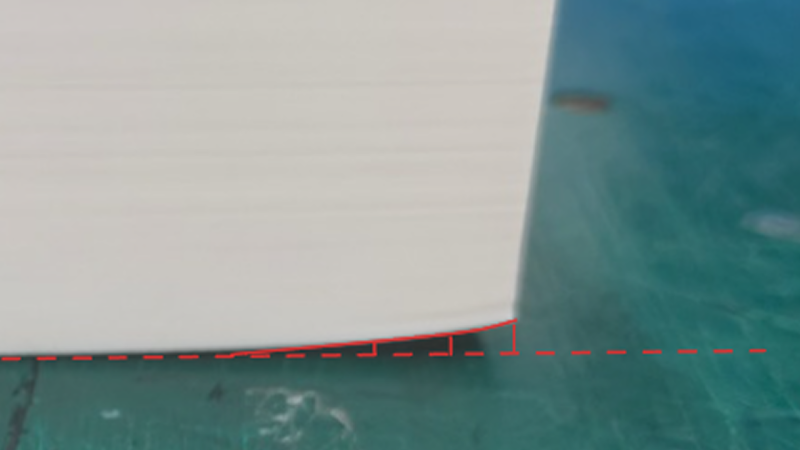
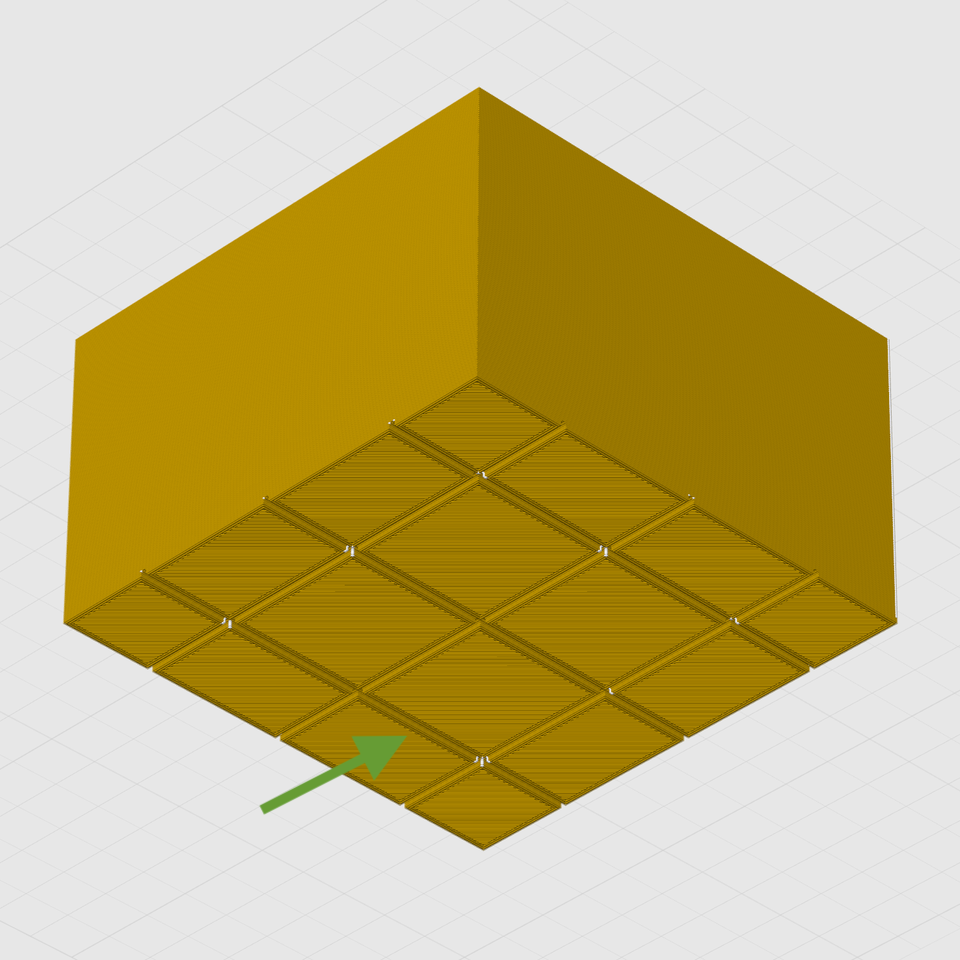
A big flat area with sharp corners is susceptible to warping. Breaking the footprint into a grid pattern helps distribute stresses instead of concentrating them at the corners.

The reason some objects have trouble while others don’t is physics. Deposited plastic shrinks ever so slightly as it cools, and some shapes — like wide, flat surfaces with sharp corners — are worse for this than others. This sort of problem is what the guide addresses with a number of techniques.

Some are simple, like turning on brims which increases an object’s footprint. This increased surface area offers more adhesion, but also increases heat transfer from the print bed into the model, slowing the cooling process. Thinner walls and an altered infill pattern is another option. Other techniques are more complex.

The most effective methods involve modifying the model itself to reduce or eliminate stress points. One such method is to break the model’s footprint into multiple zones with a shallow grid. Instead of one big flat bottom, the object has multiple smaller ones. Because big flat areas are more susceptible to warping than small ones, turning the bottom into a grid pattern helps spread those stresses out and prevent lifting.

If you design your own models, you’ll find several design tips worth keeping in mind. It’s always smart to practice good DFM (Design For Manufacturability) which means taking 3D printer strengths and weaknesses into account when designing an object. In this case, it can help prevent print failures. Good DFM can also make parts much, much stronger just by designing in the right features.

How To Avoid Getting Arc Flashed

After getting called out in the field to troubleshoot a large PV solar installation, [Derek] found himself suddenly in the midst of an arc flash, causing burns all over his face and arms. In a recent video he goes over the scenario that led up to this unfortunate event, as the holes in the Swiss cheese slowly lined themselves up, culminating in a high-current 480 VDC discharge nearly giving [Derek] a fatal embrace.

Despite being a professionally trained and certified professional, being called out to diagnose a weird issue on a slightly unusual solar farm’s electrical installation already worked against him. After having spent some time doing said troubleshooting, he finally tracked down the auxiliary transformer that normally powers the low-voltage gear, along with the spicy parts that should absolutely be unpowered after flipping the breaker into the ‘off’ position.

Testing for no power confirmed that the power had indeed been cut, which was when the wiring that normally connects the auxiliary transformer was spotted still lying just out of reach in the back of the cabinet. Clearly this was the cause behind one of the issues that the owner had been having.

This was when [Derek] decided to go to the light reach for this spool of wiring with a pair of pliers, into the – as it turned out – still live high-voltage side. One massive arc flash and hospital recovery later, [Derek] learned that the layout of the lines in the cabinet were different from usual, with the position of the roll of loose wiring being a potential hint that something was off.

The problem here was one of habituation, and the assumption that the system that he was working on was de-energized. The reason that he’s still with us being that the pliers acted as the current path instead of his body, and the arc flash cooked only the exposed parts of his skin, being mostly parts of his face and his hands.

Terrifyingly, [Derek] was working alone, and was forced to dial 911 somehow, with fingers that no longer registered on the iPhone’s touch screen on account of the skin having been turned into charcoal. While he doesn’t remember exactly how he managed to reach 911, it’s likely that the voice assistant finally connected him. The property owner also arrived and did what he could do to help before the ambulance arrived.

Overall, the lesson here is that complacency and assumptions are the killers here. Even if the layout of a high-voltage circuit is different in a way that makes no sense and there ought to be industry standards, when it’s you reaching into that cabinet such trivial details matter less than having ensured that there’s absolutely no power on anything, even if you know that there shouldn’t be. Reality only has to disagree with you once there.

[Derek] was lucky in the sense that the cabinet mostly shielded him from the arc flash’s intense heat, but over 19% of his skin was still burned, requiring skin grafts and an ongoing, very painful recovery. By sharing his story he hopes that he can prevent at least one other person reaching into that cabinet with some pliers for that ‘let me just quickly…’ moment.

Continue reading “How To Avoid Getting Arc Flashed”

A Split Keyboard Designed For Human Hands

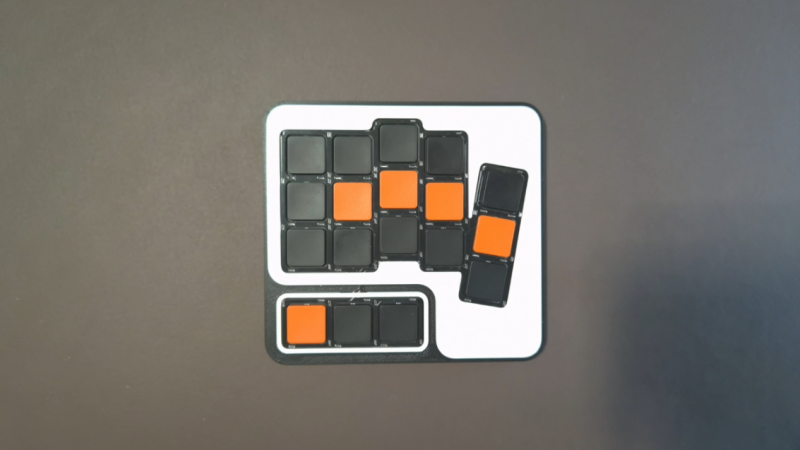
A surprising number of things we use in everyday life retain most of their design cues from their 19th century ancestors. The bicycle retains the same basic design as it had in 1890, as does the sewing machine, the toilet, the car, and of course, the keyboard and the QWERTY layout from old typewriters. But we aren’t doomed to have our technology perpetually living in the past. [Paul] wanted a keyboard designed around human hands, rather than being designed around a machine, so he built this unique split keyboard.

The design of this specific keyboard went through around 50 iterations before he was comfortable with it. Other design goals here were for it to be portable, and the split nature of this certainly makes it more compact as does the use of low-profile switches. Each finger’s column is angled and spaced based on the needs of that finger, with the ring finger keys sitting higher and the index finger columns angled inward. Each thumb has access to three keys, one of which is the spacebar and the other two layer keys, which is what enables this design to get down to only 36 total keys.

When thinking about it for any length of time, the modern keyboard’s design holdovers from the 1800s are fairly wasteful compared to this split, ergonomic version. Especially when looking at the spacebar, which ties up both thumbs and only performs a single task, there’s a lot of opportunity for modern designs to be more efficient, more portable, and easier on one’s body. Feel free to take this to the extreme and use all three dimensions, as long as you aren’t particularly concerned with portability.

Exploring The Downsides Of Cooling Roof Paint

The idea of painting a roof or wall white in order to reflect sunshine and keep the building’s insides cool is hardly a new one, and even in the loosest interpretation of the word ‘white’ it generally works pretty well. This is also what [NightHawkInLight] found after using an off-the-shelf silicone-based coating for his shed’s tin roof, though with a few caveats.

One might say that this is mostly a problem for people who live in non-desert climates — like Michigan in this case — yet it’s undeniable that having a cooler indoors in a high-humidity climate will inevitably lead to a higher indoor humidity level. This was the first issue that was encountered, though it mostly meant that instead of running an air conditioner eight hours a day, a weekly dehumidifier session was required, which was at least less expensive in terms of kWh.

While the current silicone-based paint on the roof stays above ambient, in a subsequent test both [NightHawkInLight]’s DIY sub-ambient cooling paint and a commercial option get a sample panel down to around ambient temperature, which could cool down the roof even more. Of course, in this case the humidity issues would get worse, with likely condensation forming that would have to be dealt with.

Overall, a cooling paint on the roof is a pretty thing even if you’re not living in the desert, but you have to be able to tame the resulting humidity and condensation issues.

Continue reading “Exploring The Downsides Of Cooling Roof Paint”

Hackaday Europe 2026: Fluid Kernels And Optimizing C++ For MCUs

Oftentimes, when we’re using a microcontroller, we’re whipping up some very specific code focused on executing a particular task. The device is set up to execute code that does exactly what we want with minimal overhead. However, sometimes, there are scenarios where it pays to go with a somewhat heavier setup, wherein the microcontroller runs an operating system for the benefits that offers.

Federico Terraneo came to Hackaday Europe to discuss this very topic. He talks about kernel architecture, real-time operating systems, and how to best use C++ in the world of microcontrollers.

Continue reading “Hackaday Europe 2026: Fluid Kernels And Optimizing C++ For MCUs”