Who Could Possibly Need An FPGA With 9M Logic Cells And 35B Transistors?

Xilinx recently announced the Virtex UltraScale+ VU19P FPGA. Of course, FPGA companies announce new chips every day. The reason this one caught our attention is the size of it: nearly 9 million logic cells and 35 billion transistors on a chip! If that’s not enough there is also over 2,000 user I/Os including transceivers that can move around 4.5 Tb/s back and forth.

To put things in perspective, the previous record holder — the Virtex Ultrascale 440 — has 5.5 million logic cells and an old-fashioned Spartan 3 topped out at about 50,000 cells — the new chip has about 180 times that capacity. For the record, I’ve built entire 32-bit CPUs on smaller Spartans.

That led us to wonder? Who’s buying these things? When I first heard about it I guessed that the price would be astronomical, partly due to expense but also partly because the market for these has to be pretty small. The previous biggest Xilinx part is listed on DigKey who pegs the Ultrascale 440 (an XCVU440-2FLGA2892E) at a cost of $55,000 as a non-stocked item. Remember, that chip has just over half the logic cells of the VU19P.

Continue reading “Who Could Possibly Need An FPGA With 9M Logic Cells And 35B Transistors?”

WiringPi Library To Be Deprecated

Since the release of the original Raspberry Pi single board computer, the WiringPi library by [Gordon] has been the easy way to interface with the GPIO and peripherals – such as I2C and SPI – on the Broadcom SoCs which power these platforms. Unfortunately, [Gordon] is now deprecating the library, choosing to move on rather than deal with a community which he no longer recognizes.

Among the points which he lists are the (commercial) abuse of his code, and the increasing amount of emails and messages on social media from folk who either failed to read the friendly manual, or are simply rude and inconsiderate. As [Gordon] puts it, WiringPi was never meant to be statically linked into code, nor to be used with anything other than C and RTB BASIC programmers. He never supported the use of the library with other languages, or having it statically integrated into some Java/JavaScript/NodeJS project.

As this secondary use is what’s draining the fun out of the project, he has decided to put out one final release, before making it a closed-source project, for use by himself and presumably paying clients. What the impact of this will be has to be seen. Perhaps a new fork will become the new ‘WiringPi’?

Suffice it to say, none of this is a good thing. The illegal use of open source code and the support nightmare that gets poured on the authors of said code by less than informed users is enough to drive anyone away from putting their projects out there. Fighting abuse and junking the ‘spam’ is one way to deal with it, but who has the time and energy (and money) for this?

What are your thoughts on this news, and this issue in general? How should an open source developer deal with it?

Thanks to [Dirk-Jan Faber] for sending this one in.

Goodyear Aero Thinks Flying Cars Are A Thing

The 2019 Geneva International Motor Show has a number of “concept” vehicles. These are vehicles that usually include some cool feature that isn’t really practical — at least today. For example, in the past, concept cars have had adjustable color interior lighting, plug-in hybrid engines, and power windows — all things that would eventually become commonly available. However, today’s advances in computer-generated graphics have meant you can show things you can’t begin to build. Case in point: Goodyear has a video touting the Aero — a solid car tire that doubles as a propeller for your garden variety flying car.

To us, the thing looks more like a science fiction movie trailer than anything remotely practical. Four relatively small wheels with no central hub can flip and provide enough lift to propel a sizeable vehicle skyward. Even more interesting, is to transition modes from ground to flight, the vehicle balances on two wheels while using only two as propellers to generate lift.

Continue reading “Goodyear Aero Thinks Flying Cars Are A Thing”

Expert Says Don’t Teach Kids To Code

I was a little surprised to see a news report about Andreas Schleicher, the director of education and skills at OECD — the Organization for Economic Cooperation and Development. Speaking at the World Innovation Summit for Education in Paris, Schleicher thinks that teaching kids to code is a waste of time. In particular, he seems to think that by the time a child today grows up, coding will be obsolete.

I can’t help but think that he might be a little confused. Coding isn’t going away anytime soon. It could, of course, become an even deeper specialty, and thus less generally applicable. But the comments he’s made seem to imply that soon we will just tell smart computers what we want and they will just do that. Somewhat like computers work on Star Trek.

What is more likely is that most people will be able to find specific applications that can do what they want without traditional coding. But someone still has to write something for the foreseeable future. What’s more, if you’ve ever tried to tease requirements out of an end user, you know that you can’t just blurt out anything you want to a computer and expect it to make sense. It isn’t the computer’s fault. People — especially untrained people — don’t always make sense or communicate unambiguously.

Continue reading “Expert Says Don’t Teach Kids To Code”

What Hardware Lies Beneath? Companies Swear They Never Meant To Violate Your Privacy

“Don’t Be Evil” was the mantra of Google from years before even Gmail was created. While certainly less vague than their replacement slogan “Do the Right Thing”, there has been a lot of criticism directed at Google over the past decade and a half for repeatedly being at odds with one of their key values. It seems as though they took this criticism to heart (or found it easier to make money without the slogan), and subsequently dropped it in 2018. Nothing at Google changed, though, as the company has continued with several practices which at best could be considered shady.

The latest was the inclusion of an undisclosed microphone in parts of their smart home system, the Nest Guard. This is a member of the Nest family of products — it is not the thermostat itself, but a base station for a set of home security hardware you can install yourself. The real issue is that this base station was never billed as being voice activated. If you’re someone who has actively avoided installing “always-listening” style devices in your home, it’s infuriating to learn there is hardware out that have microphones in them but no mention of that in the marketing of the product. Continue reading “What Hardware Lies Beneath? Companies Swear They Never Meant To Violate Your Privacy”

Bell Labs, Skunk Works, And The Crowd Sourcing Of Innovation

I’ve noticed that we hear a lot less from corporate research labs than we used to. They still exist, though. Sure, Bell Labs is owned by Nokia and there is still some hot research at IBM even though they quit publication of the fabled IBM Technical Disclosure Bulletin in 1998. But today innovation is more likely to come from a small company attracting venture capital than from an established company investing in research. Why is that? And should it be that way?

The Way We Were

There was a time when every big company had a significant research and development arm. Perhaps the most famous of these was Bell Labs. Although some inventions are inevitably disputed, Bell Labs can claim radio astronomy, the transistor, the laser, Unix, C, and C++ among other innovations. They also scored a total of nine Nobel prizes.

Bell Labs had one big advantage: for many years it was part of a highly profitable monopoly, so perhaps the drive to make money right away was less than at other labs. Also, I think, times were different and businesses often had the ability to look past the next quarter.

Continue reading “Bell Labs, Skunk Works, And The Crowd Sourcing Of Innovation”

Alexa, Remind Me Of The First Time Your Product Category Failed

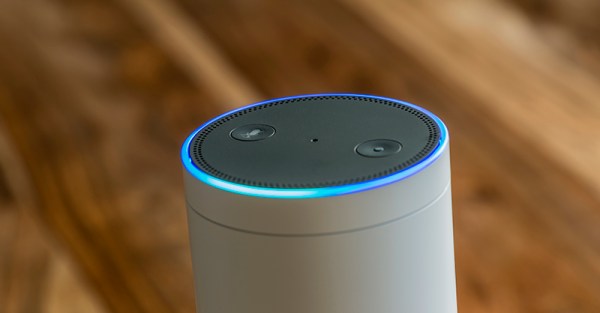
For the last few years, the Last Great Hope™ of the consumer electronics industry has been voice assistants. Alexas and Echos and Google Homes and Facebook Portals are all the rage. Over one hundred million Alexa devices have been sold, an impressive feat given that there are only about 120 Million households in the United States, and a similar number in Europe. Look to your left, look to your right, one of you lives in a house with an Internet connected voice assistant.

2018 saw a huge explosion of Internet connected voice assistants, in sometimes bizarre form factors. There’s a voice controlled microwave, which is great if you’ve ever wanted to defrost a chicken through the Internet. You can get hardware for developing your own voice assistant device. 2019 will be even bigger. Facebook is heavily advertising the Facebook Portal. If you haven’t yet deleted your Facebook account, you can put the Facebook Portal on your kitchen counter and make video calls with your family and friends through Facebook Messenger. With the Google Home Hub and a Nest doorbell camera, you too can be just like Stu Pickles from Rugrats.

This is not the first time the world has been enamored with Internet-connected assistants. This is not the first time the consumer electronics industry put all their hope into one product category. This has happened before, and all those devices failed spectacularly. These were the Internet appliances released between 1999 and 2001: the last great hurrah of the dot-com boom. They were dumb then, and they’re dumb now.

Continue reading “Alexa, Remind Me Of The First Time Your Product Category Failed”