Sticking Up For The Stick Shift

It seems that stick shift has become a sticking point, at least for American car buyers. Throughout 2019, less than 2% of all the cars sold in the US had a manual transmission. This sad picture includes everything from cute two-seater commuters to — surprisingly enough —  multi-million dollar super cars built for ultimate performance.

But aside from enthusiasts like myself, it seems no one cares too much about this shift away from manual transmissions. According to this video report by CNBC (embedded below), the fact that demand is in free-fall suggests that Americans on the whole just don’t enjoy driving stick anymore. And it stands to reason that as more and more people live their lives without learning to drive them, there would be a decline in the number of teachers and proponents. It’s a supply and demand problem starring the chicken and the egg.

But giving up the stick is one more example of giving up control over the vehicle. It’s not something everyone cares about, but those that do care a lot. Let’s grind through the ebb and flow of the manual transmission — more lovingly called the stick shift.

Continue reading “Sticking Up For The Stick Shift”

Stay Smarter Than Your Smart Speaker

Smart speakers have always posed a risk to privacy and security — that’s just the price we pay for getting instant answers to life’s urgent and not-so-urgent questions the moment they arise. But it seems that many owners of the 76 million or so smart speakers on the active install list have yet to wake up to the reality that this particular trick of technology requires a microphone that’s always listening. Always. Listening.

With so much of the world’s workforce now working from home due to the global SARS-CoV-2 pandemic, smart speakers have suddenly become a big risk for business, too — especially those where confidential conversations are as common and crucial as coffee.

Imagine the legions of lawyers out there, suddenly thrust from behind their solid-wood doors and forced to set up ramshackle sub rosa sanctuaries in their homes to discuss private matters with their equally out-of-sorts clients. How many of them don’t realize that their smart speaker bristles with invisible thorns, and is even vulnerable to threats outside the house? Given the recent study showing that smart speakers can and do activate accidentally up to 19 times per day, the prevalence of the consumer-constructed surveillance state looms like a huge crisis of confidentiality.

So what are the best practices of confidential work in earshot of these audio-triggered gadgets?

Continue reading “Stay Smarter Than Your Smart Speaker”

We Ruined Status LEDs; Here’s Why That Needs To Change

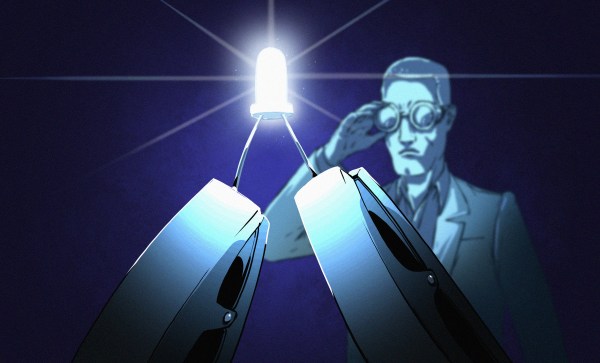
Ah, the humble status LED. Just about every piece of home electronics, every circuit module, and anything else that draws current seems to have one. In the days of yore, a humble indicator gave a subtle glow from behind a panel, and this was fine. Then the 1990s happened, and everything got much much worse.

It’s Not The Technology, It’s How You Use It

With great brightness, comes great responsibility.

The 1990s brought us much good: Nirvana, Linux, and of course the blue LED. Much like “Teen Spirit”, the latter quickly fell into overuse: the technology rapidly became the sigil of all that was new and great, much to the ocular pain of the buying public.

This decision ranks up there for stupidity with other such questionable choices as hiring a rental car at the airport, or invading Russia in the winter. A status LED, most would agree, is there to indicate status. It need only deliver enough light to be seen when observed by a querying eye. What it need not do is glow with the intensity of a dying star, or illuminate an entire room for that matter. But, in the desperate attempts of product designers to appear on the cutting edge, the new, brighter LED triumphed over all in these applications. Continue reading “We Ruined Status LEDs; Here’s Why That Needs To Change”

Another IoT Debacle: Charter Offers Home Insecurity

If you are a glass-half-empty person, you’ll view Charter’s announcement that they will shutter their home security and smart home service on February 5th as another reason not to buy into closed-source IoT devices. If you are a glass-half-full person though, you’ll see the cable company’s announcement as a sign that a lot of Zigbee hardware will soon flood the surplus market. Ars Technica reports that after investigation it appears that some of the devices may connect to a standard Zigbee hub after a factory reset, but many others will definitely not.

As you might expect, users were less than thrilled. Especially those that shelled out thousands of dollars on sensors and cameras. This sort of thing might be expected if a company goes out of business, but Charter just doesn’t want to be in the home security business anymore.

Continue reading “Another IoT Debacle: Charter Offers Home Insecurity”

Ask Hackaday: Drone Swarms Replace Fireworks; Where Are The Hackers?

Your mom always warned you that those fireworks could put an eye out. However, the hottest new thing in fireworks displays is not pyrotechnic at all. Instead, a swarm of coordinated drones take to the sky with different lighting effects. This makes some pretty amazing shows possible, granting full control of direction, color, and luminosity of each light source in a mid-air display. It also has the side benefit of being safer — could this be the beginning of the end for fireworks accident videos blazing their way across social media platforms?

For an idea of what’s possible with drone swarm displays, check out the amazing pictures found on this site (machine translation) that show off the 3D effects quite well. Note that although it appears the camera is moving during many of these, the swam itself could be rotated relative to a stationary viewer for a similar effect.

What I couldn’t find was much going on here in the hobby space. Granted, in the United States, restrictive drone laws might hamper your ability to do things like this. But it seems that in a purely technical terms this wouldn’t be super hard to do — at least for simple designs. Besides, there must be some way to do this in US airspace since drone performances have been at the Super Bowl, Los Angeles, New York, Miami, and Folsom, CA.

So if the regulations were sorted, what would it take to build a swarm of your own performing drones?

Continue reading “Ask Hackaday: Drone Swarms Replace Fireworks; Where Are The Hackers?”

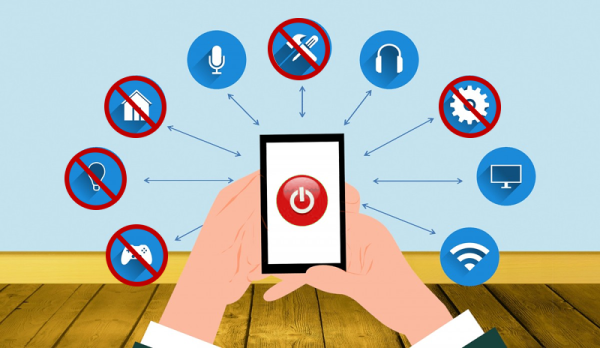
Best Buy’s IoT Goes Dark, Leaving Some “Smart” Products Dumbfounded

Bad news if you bought several Insignia-branded smart devices from Best Buy. The company has decided to shut down the back end systems that make them work — or at least work as a smart device. On the chopping block are smart outlets, switches, a security camera, and an upright freezer. If you bought, say, the freezer, it will still keep things cold. But the security camera will apparently be of no use at all now that the backend systems have gone dark. The company is offering an unspecified partial refund to users of the affected devices.

Best Buy announced this in September, and the shutdown date was last week on November 6th. Not all Insignia products are impacted, just the ones that rely on their app.

Anytime we talk about cloud-based technology, there are always a few people who say something like, “I’ll never rely on anything in the cloud!” Perhaps they have a point — certainly in this case they were right. There are really two things to consider: hardware devices that rely on the cloud, and data that resides in the cloud. In some cases, one product — like a camera — might have both.

Continue reading “Best Buy’s IoT Goes Dark, Leaving Some “Smart” Products Dumbfounded”

Arm Allows Custom Instructions

We’re surrounded by ARM processors, which enjoy a commanding foothold in the consumer market, especially with portable electronics. However, Arm Holdings has never focused its business model on manufacturing chips, instead licensing its CPUs to others who make the physical devices. There is a bit of a tightrope to walk, though, because vendors want to differentiate themselves while Arm wants to keep products as similar as possible to allow for portability and reuse of things like libraries and toolchains. So it was a little surprising when Arm announced recently that for the first time, they would allow vendors to develop custom instructions. At least on the Armv8-M architecture.

We imagine designs like RISC-V are encroaching on Arm’s market share and this is a response to that. Although it is big news, it isn’t necessarily as big as you might think since Arm has allowed other means to do similar things via special coprocessor instructions and memory-mapped accelerators. If you are willing to put in some contact information, they have a full white paper available with a pretty sparse example. The example shows a population count function hand-optimized into 12 Arm instructions. Then it shows a single custom instruction that would do the same job. However, they don’t show the implementation nor do they offer any timing data about speed increases.

Continue reading “Arm Allows Custom Instructions”