Incredible Atari 800XL Case Restoration

If you’ve been hanging around Hackaday for a while, you know that a large portion of the stuff we publish goes above and beyond what most people would consider a reasonable level of time and effort. One could argue that’s sort of the point: the easy way out is rarely the most exciting and interesting route you can take. We, and by extension our readers, are drawn to the projects that someone has really put their heart and soul into. If the person who created the thing wasn’t passionate about it, why should we be?
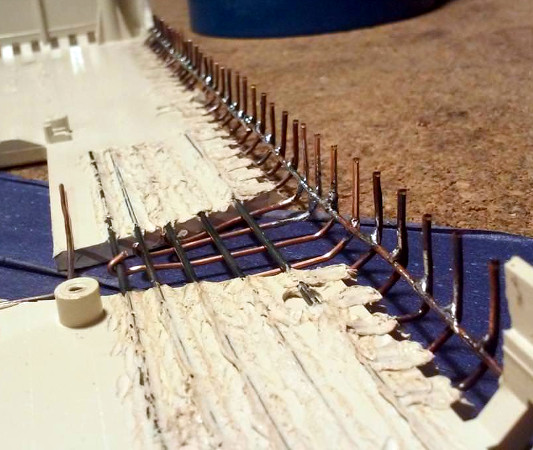
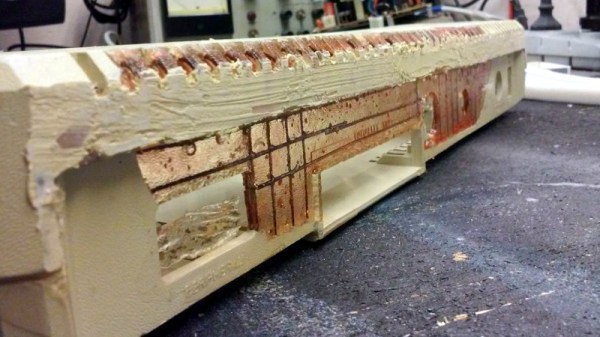
That being said, on occasion, even we are left in awe about the lengths some people will go to. A perfect example of this is the absolutely insane amount of time and effort [Drygol] has put into restoring an Atari 800XL that looked like it was run over by a truck. Through trial, error, and a bunch of polyester resin, he’s recreated whole sections of the Atari’s case that were missing.

To start the process, [Drygol] used metal rods to bridge the areas where the plastic was completely gone. By heating the rods with a torch and pushing them into the Atari’s case, he was able to create a firm base to work from. Additional rods were then soldered to these and bent, recreating the shape of the original case. With the “skeleton” of the repair in palce, the next step was filling it in.

[Drygol] borrowed an intact Atari 800XL case from a friend, and used that to create a mold of the missing sections from his own case. Most of his rear panel was missing, so it took some experimentation to create such a large mold. In the end he used silicone and a custom built tray that the case could sit in vertically, but he does mention that he never quite solved the problem of degassing the silicone. The mold still worked, but bubbles caused imperfections which needed to be filled in manually during the finishing process.
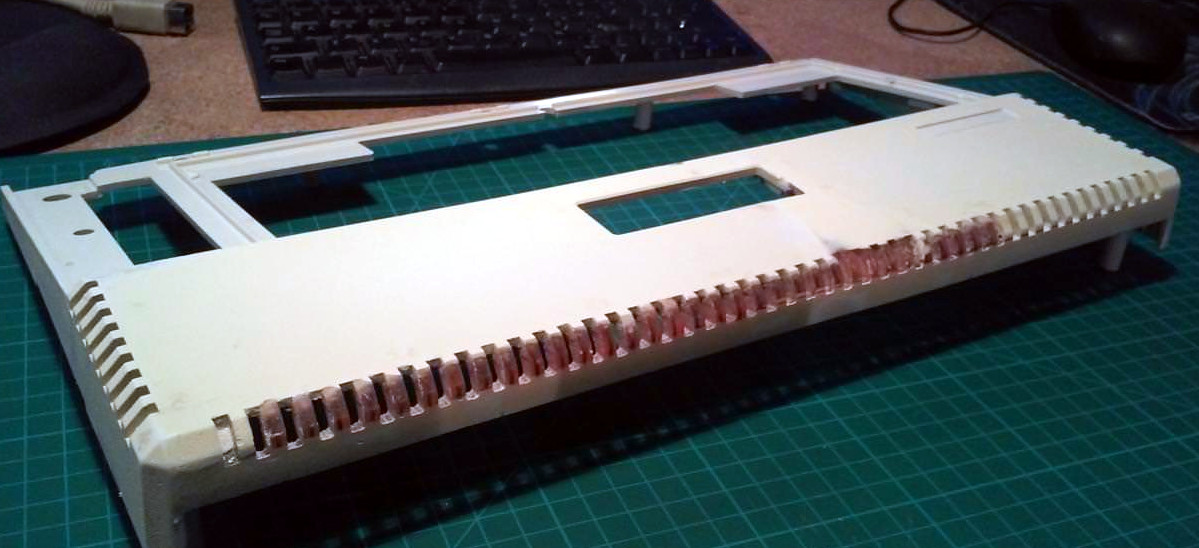
Using his silicone mold and the same tray, he was then able to pour polyester resin over the wire frame. This got him most of the way to rebuilding the case, but there was still plenty of filler and sanding required before the surface finish started to look half-way decent. When he got towards the very end of the finishing process, he used a mold he created of the case surface texture to roughen up the smooth areas left over from the filling process. Add a bit of custom spray paint, and the end result looks absolutely phenomenal considering the condition it was in originally.

We were already impressed by the work he put in during the first stages of the restoration, but this case repair is really on a whole new level. Between this and the incredible instructional videos [Eric Strebel] has been putting out, we’re really gaining a whole new respect for the power of polyester.
Continue reading “Incredible Atari 800XL Case Restoration”

A Tale Of More Than One Amiga 1500

If you were an Amiga enthusiast back in the day, the chances are you had an Amiga 500, and lusted after a 2000 or maybe later a 3000. Later still perhaps you had a 600 or a 1200, and your object of desire became the 4000. The amusingly inept Commodore marketing department repackaged what was essentially the same 68000-based Amiga at the bottom end of the range through the platform’s entire lifetime under their ownership, with a few minor hardware upgrades in the form of chipset revisions that added a relatively small number of features.

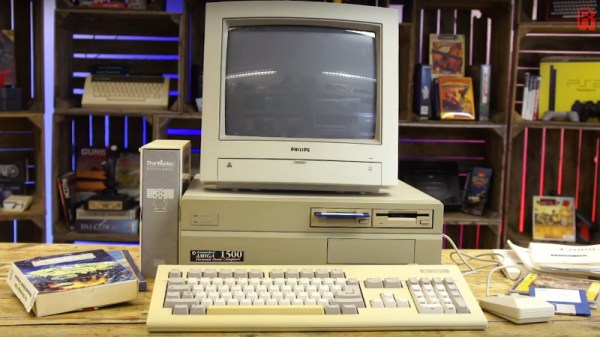
We’ve probably listed above all the various Amigas you’ll be familiar with, with a few exceptions you either didn’t have or only saw in magazines. The original A1000, the chipset-upgraded A500+, the CDTV multimedia  platform, or the CD32 games console as examples. But there’s one we haven’t listed which you may never have seen unless you hail from the United Kingdom, and it’s an Amiga behind which lies a fascinating tale that has been unearthed by [RetroManCave].

In the late 1980s, Commodore sold the A500 all-in-one cased Amiga to consumers with marketing based heavily upon gaming, and the A2000 desktop Amiga to businesses with the promise of productivity software. Both machines had a 16-bit Motorola 68000 running at the same speed, with the A2000 having a lot of extra memory and a hard drive lurking within that case. The price difference between the two was inordinately high, creating a niche for an enterprising British company called Checkmate Computers to fill with their provocatively named A1500, a clever case for an A500 mainboard that gave it an expansion slot and space for that hard drive and memory.

This machine’s existence angered Commodore, to the extent that they vowed to eradicate the upstart by releasing their own UK-only A1500. The result, a comically badly concealed rebadge of an A2000 with two floppies and no hard drive, is something we remember seeing at the time, and dare we admit it, even lusting after. But the full story in the video below is well worth a watch for an engrossing insight into a little-known saga in one corner of the computing world during the 16-bt era. Towards the end it becomes a plug for the Checkmate Computers co-founder’s current Kickstarter project, but if that holds no interest for you then you are at least forewarned.

Of course, if you have either A1500 today, you might want an up-to-date graphics card for it.

Continue reading “A Tale Of More Than One Amiga 1500”

Amiga 2000 Emergency Repair

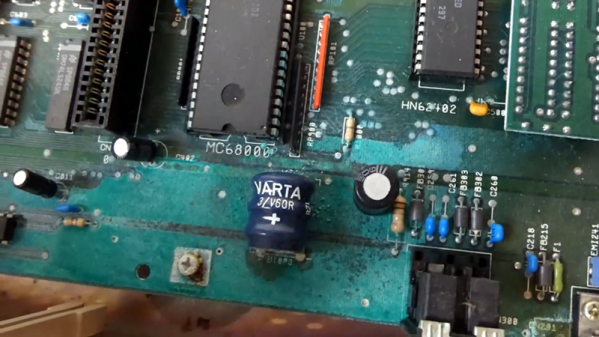
Big companies spend small fortunes on making sure their computers stay running and that they can be repaired quickly in an emergency. You wouldn’t expect an emergency repair on an Amiga 2000, though. [RETR-O-MAT] bought an Amiga 2000 that did boot, but was known to have a leaky battery on the motherboard. He wanted to rush to replace the battery before the leakage caused serious damage. You can see all this in the video below.

The computer looked lightly used over its 32-year lifespan, even when the case came off. The battery corrosion was evident, though. Even the bolt holding down the motherboard was clearly corroded from the leaking battery, causing it to be very difficult to remove.

The battery leakage also made unsoldering the battery a challenge. Several chips and sockets — including the CPU — were affected, so they had to come out. You can see a nice demonstration of the “old screwdriver trick” which might be eye-opening if you’ve only worked with SMD chips.

Even if you don’t care much about the Amiga 2000, it is interesting to see inside an old computer like this and note the differences — and similarities — to modern designs. The video is as much a tear down as it is a repair story. It also might be useful if you ever face having to tear out a leaky battery on any piece of gear. Continue reading “Amiga 2000 Emergency Repair”

There’s A Computer In This Hard Drive

Throughout the history of personal computers, there are some unique form factors. The 3com Audrey was sold as a computing appliance, meant to sit on a kitchen counter, to display recipes or something. For some reason, Macs were cubes once, and it actually wasn’t a bad machine. At one point, you were supposed to put a monitor on top of your computer.

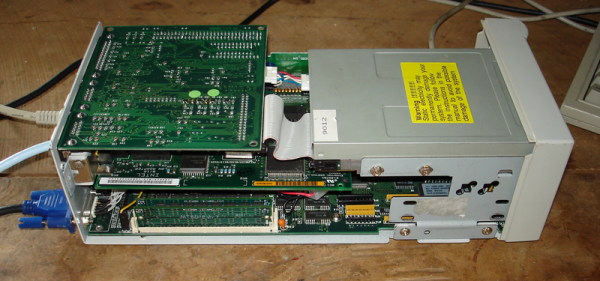
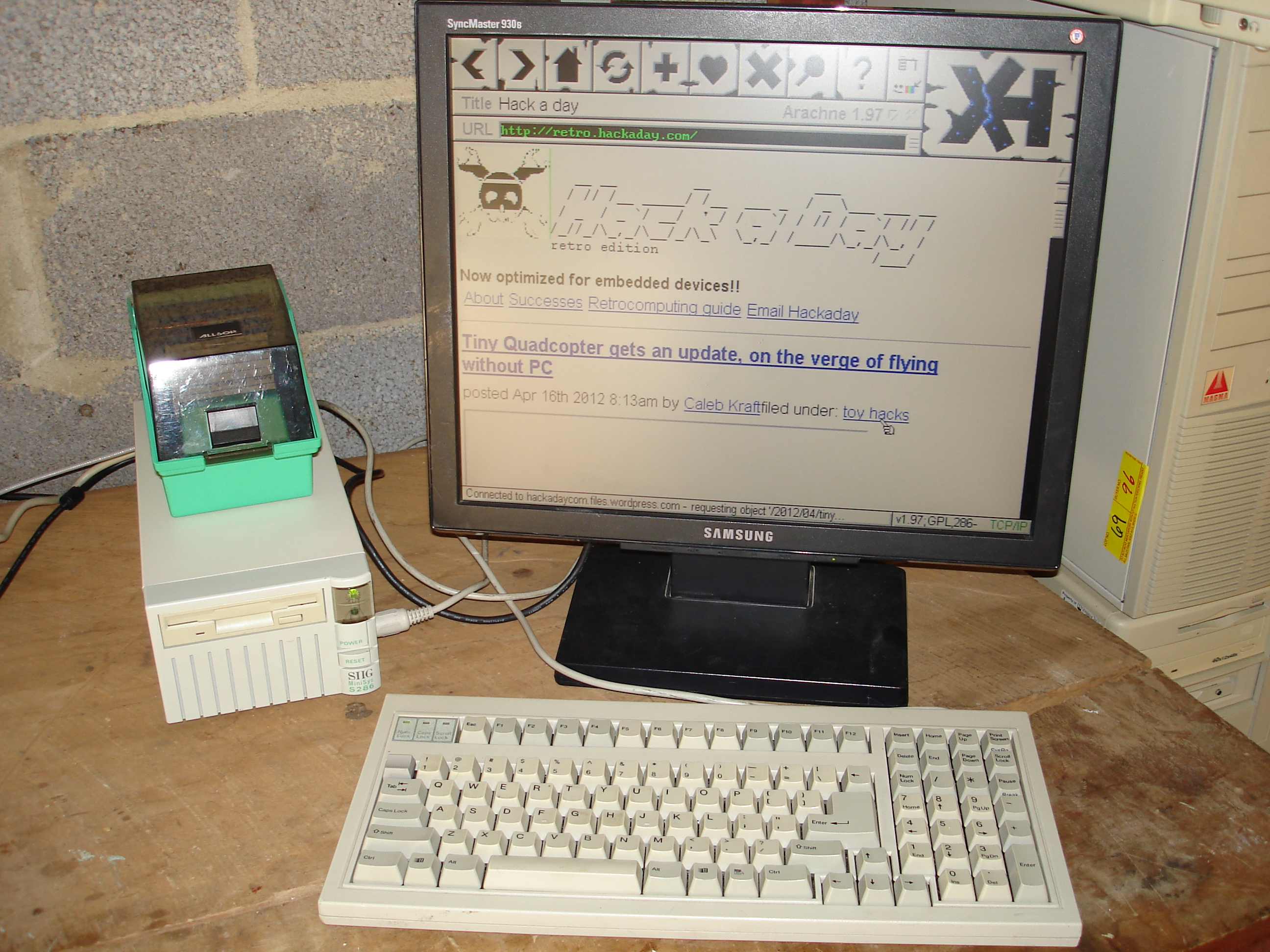
A few years ago, [glitch] read about an interesting system from the early 80s. The SIIG S286 was designed by the same people that made SCSI cards and external hard drives, and it shows: this is a complete 286-based system stuffed into what was probably an external enclosure for a 5 1/4 drive at some point. After finding one of these bad boys on an auction site a few months ago, he finally got it working. It’s weird, but it can get on a network, and you can read Hackaday with it.

The entire computer is stuffed into a case that’s about 5″ wide, 4″ tall, and 10″ long. There’s a motherboard with built-in VGA, ‘game port’, and a printer port. There’s a riser card for real 16-bit ISA cards, two serial ports, and a connector for a hard disk and floppy drive. Basically, it’s an entire 286 system wrapped up in a tiny box.

After acquiring this machine, [glitch] took it apart and found the usual damage. The CMOS battery leaked, but not too bad. This was replaced with a hermetically sealed lithium thionyl chloride battery. These are non-rechargable, but a quick swipe of the soldering iron disable the motherboard’s charging circuitry. The hard drive was replaced with a 128 MB Flash module, and an Ethernet card was installed.

With that, [glitch] has a complete system that can connect to the Internet. Of course, getting on the Internet with a 286 is a challenge, but we have a Hackaday Retro Edition for just the occasion. The browser is Arache, with the mTCP package. That’s about as low as you can go in Intel-land, and excellent proof that the computer will work for another 35 years or so.

How Etak Paved The Way To Personal Navigation

Our recent “Retrotechtacular” feature on an early 1970s dead-reckoning car navigation system stirred a memory of another pre-GPS solution for the question that had vexed the motoring public on road trips into unfamiliar areas for decades: “Where the heck are we?” In an age when the tattered remains of long-outdated paper roadmaps were often the best navigational aid a driver had, the dream of an in-dash scrolling map seemed like something Q would build for James Bond to destroy.

And yet, in the mid-1980s, just such a device was designed and made available to the public. Dubbed Etak, the system was simultaneously far ahead of its time and doomed to failure by the constellation of global positioning satellites being assembled overhead as it was being rolled out. Given the constraints it was operating under, Etak worked very well, and even managed to introduce some of the features of modern GPS that we take for granted, such as searching for services and businesses. Here’s a little bit about how the system came to be and how it worked.

Continue reading “How Etak Paved The Way To Personal Navigation”

ESP8266 Home Computer Hides Unexpected Gems

With a BASIC interpreter and free run throughout their hardware, home computers like the ZX Spectrum and Commodore 64 used to be a pervasive way to light that hacker fire. With the advent of cheap single board computers like the Raspberry Pi, devices purpose built to emulate these classic systems have become fairly commonplace. [uli] built a device in this vein called the BASIC Engine which is driven by a microcontroller and a handful of hardware peripherals. Like other examples it can be attached to a keyboard, programmed in a BASIC, play video and sound, etc. But digging into the BASIC Engine reveals that it’s similarity to other devices is only skin deep.

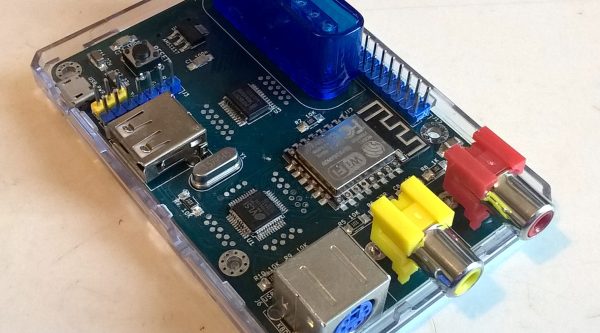
The current version of the BASIC Engine (“rev2”) lives in a Raspberry Pi 3 case for convenience. It has RCA connectors for NTSC or PAL video output and mono audio, plus a bank of headers to tap into GPIOs, connectors for a keyboard, and more. [uli] wanted to aim for extreme low cost so a relatively beefy board like a Raspberry Pi didn’t fit the bill, and we expect it was an enjoyable challenge. Instead its interpreter runs atop an ESP8266 but with the networking stack removed. [uli] was disheartened by how bloated even a “Hello world” program was and ripped it out, discovering that hidden beneath was a very powerful and disproportionately inexpensive general purpose microcontroller. The video is driven by a VS23S010, sold as a 1 Mbit parallel SRAM with a neat trick; it also includes a composite video controller!

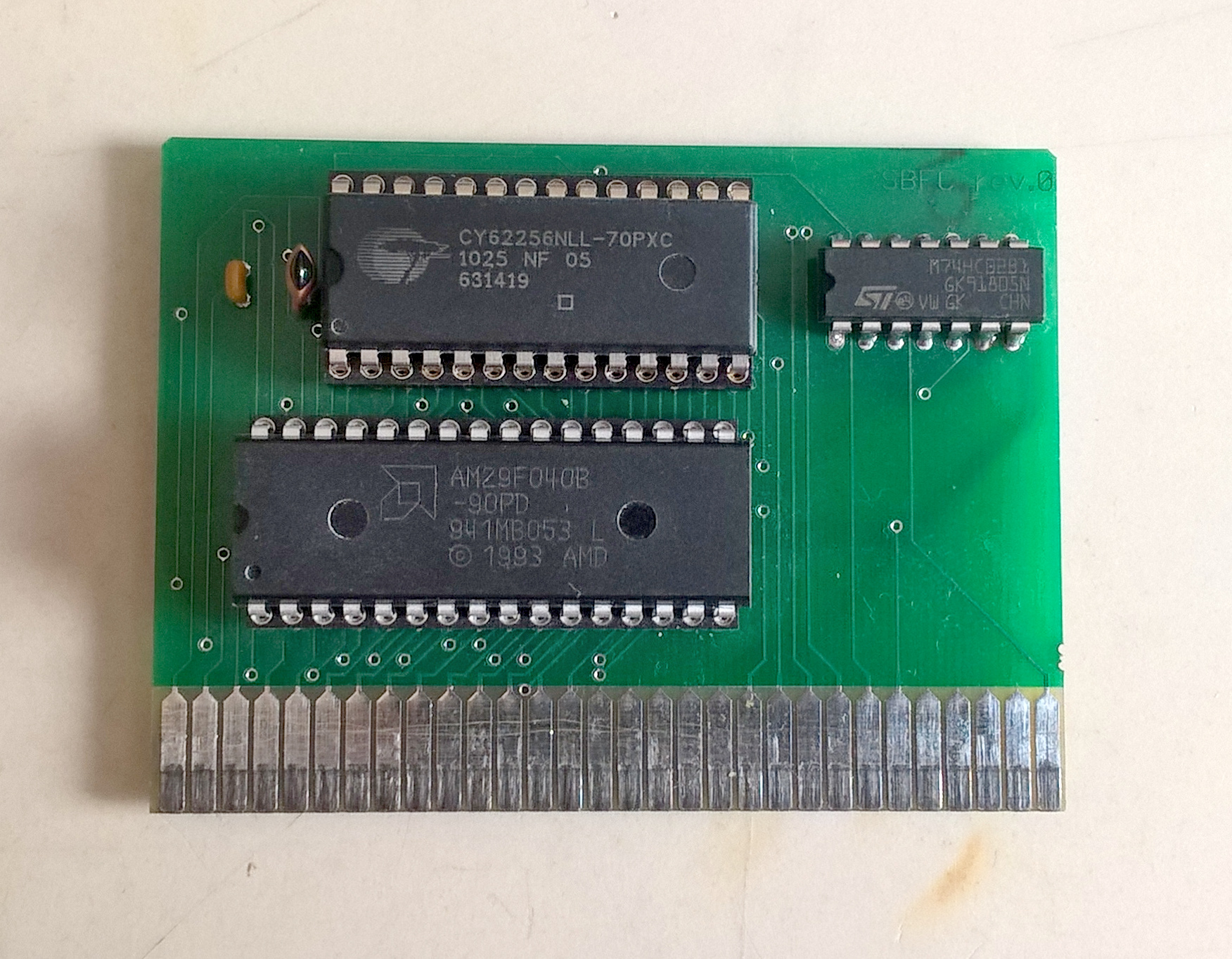
The real treat here is [uli]’s history writeup of how the BASIC Engine came to be. We’d recommend brewing a cup of coffee and sitting down for a full read-through. The first version was inspired by the PlayPower project, which was repurposing clones of Nintendo’s Famicom (NES to Americans) game console to make low cost home computers, complete with keyboard and gamepad input. [uli] started out by building a custom cartridge for a particular Famicom clone that ran a BASIC interpreter but after showing it to disinterested adults the project was left fallow. Years later, [uli] was encouraged to pick up the project again, leading down a twisted rabbit hole to where we are today.

If you want to build a BASIC Engine for yourself, Gerbers and build instructions are available on the pages linked above.

Thanks for the tip [antibyte]!

VCF East XIII: Another Day In Retro Paradise

While the weather alternated between mist and monsoon for most of it, the thirteenth annual Vintage Computer Festival East was still a huge success. People came from all over the country, and indeed the world, to show off computers and equipment that was easily older than many of those in attendance. From 1980’s robots to recreations of the very first machines to ever carry the name “computer” as we understand it today, there were a dizzying array of fascinating exhibits to see for those who made the pilgrimage to the InfoAge Science Center in Wall, New Jersey. The people who own and maintain these technological touchstones were in many cases were just as interesting as the hardware they brought to show off; walking encyclopedias of knowledge about the particular piece of vintage gear that they’ve so lovingly shepherded into the modern day.

Through it all, save for a brief intermission to get chili dogs from the nearest WindMill, Hackaday was there. We got up close and personal with [Brian Stuart]’s impressive ENIAC emulator, listened to some ethereal chiptunes courtesy of [Bill Degnan]’s MITS Altair 8800, saw relics from the days when the “app store” needed stamps from [Allan Bushman]’s impressive colleciton, and got inspired by the [Alexander Pierson]’s somewhat more modern take on the classic kit computers of the 1970’s.

But those were’t the only things on display at the Vintage Computer Festival, not by a long shot. There were over 100 individual exhibits this year at VCF, and that doesn’t even include the workshops, classes, tours, or the daily keynote presentations. To say you get your money’s worth on the ticket is something of an understatement.

It’s fair to say that there’s no real substitute for seeing a show like this in person. But in addition to the aforementioned articles, a rundown (in no particular order) of some of the interesting exhibits and attractions from this year’s VCF is a decent consolation prize. If this piques your interest, we’d invite you to keep an eye out for the next Vintage Computer Festival. We’ll be there.

Continue reading “VCF East XIII: Another Day In Retro Paradise”