Lead-Free Solder Alloys: Their Properties And Best Types For Daily Use

Lead-free solder alloys have been around for as long as people have done soldering, with sources dating back about 5,000 years. Most of these alloys were combinations like copper-silver or silver-gold and used with so-called hard soldering. That’s a technique still used today to join precious and semi-precious metals together. A much more recent development is that of soldering electronic components together, using ‘soft soldering’, which entails much lower temperatures.

Early soft soldering used pure tin (Sn), yet gradually alloys were sought that would fix issues like thermal cycling, shock resistance, electron migration, and the development of whiskers in tin-based alloys. While lead (Pb) managed to fill this role for most soldering applications, the phasing out of lead from products, as well as new requirements for increasingly more fine-pitched components have required the development of new solder alloys that can fill this role.

In this article we’ll be looking at the commonly used lead-free solder types for both hobby and industrial use, and the dopants that are used to improve their properties.

Continue reading “Lead-Free Solder Alloys: Their Properties And Best Types For Daily Use”

CRISPR Could Fry All Cancer Using Newly Found T-Cell

One of the human body’s greatest features is its natural antivirus protection. If your immune system is working normally, it produces legions of T-cells that go around looking for abnormalities like cancer cells just to gang up and destroy them. They do this by grabbing on to little protein fragments called antigens that live on the surface of the bad cells and tattle on their whereabouts to the immune system. Once the T-cells have a stranglehold on these antigens, they can release toxins that destroy the bad cell, while minimizing collateral damage to healthy cells.

CAR T-cell therapy process via National Cancer Institute

This rather neat human trick doesn’t always work, however. Cancer cells sometimes mask themselves as healthy cells, or they otherwise thwart T-cell attacks by growing so many antigens on their surface that the T-cells have no place to grab onto.

Medical science has come up with a fairly new method of outfoxing these crafty cancer cells called CAR T-cell therapy. Basically, they withdraw blood from the patient, extract the T-cells, and replace the blood. The T-cells are sent off to a CRISPR lab, where they get injected with a modified, inactive virus that introduces a new gene which causes the T-cells to sprout a little hook on their surface.

This hook, which they’ve dubbed the chimeric antigen receptor (CAR), allows the T-cell to chemically see through the cancer cells’ various disguises and attack them. The lab multiplies these super soldiers and sends them back to the treatment facility, where they are injected into the patient’s front lines.

Continue reading “CRISPR Could Fry All Cancer Using Newly Found T-Cell”

Advanced Timber Architecture Gives New Life To Wooden Structures

When it comes to building materials, wood doesn’t always draw the most attention as the strongest in the bunch. That honor usually goes to concrete and steel – steel embedded in concrete provides support and a foundation for tall buildings, while concrete increases tensile strength and can be formed into a variety of shapes with the help of rebar. Wood, on the other hand, decays and is vulnerable to moisture damage and fire.

That’s not necessarily the case anymore, thanks to the development of advanced timber. New materials like glulam, or sheets of timber bonded with moisture-resistant structural adhesives, can be produced using two to three times less energy than steel, making them environmentally-friendly alternatives to other building materials. Granted, this requires the beams to be burned at the end of their lifespan, but glulam still has an equivalent or better environmental profile compared to steel, not to mention a lower cost.

Among engineered wood, there are some varieties more commonly used among hobbyists – MDF, plywood, or particle board for instance. Others, like Cross-Laminated Timber (CLT) are more common among building materials. While CLT buildings have existed for decades, recently major cities like Stockholm and Vancouver have seen a resurgence of timber construction. Since wood can theoretically store carbon for the entire length of its lifespan, up to 0.8 tons in a cubic meter of spruce, some architecture firms like Oslotre are building houses with a negative carbon footprint.

Projects like Sidewalk Labs and Masthamnen are proposing entire neighborhoods and skyscrapers built from advanced timber. Compared to International Style architecture, characterized by gray concrete, shiny metal, and glass, this movement could be a step towards returning to natural architectural forms. Given the stress reducing effects of green spaces in cities, engineered wood buildings could bridge the gap between modern architectural styles and natural woodlands.


The Truth Is In There: The Art Of Electronics, The X-Chapters

If you’ve been into electronics for any length of time, you’ve almost certainly run across the practical bible in the field, The Art of Electronics, commonly abbreviated AoE. Any fan of the book will certainly want to consider obtaining the latest release, The Art of Electronics: The x-Chapters, which follows the previous third edition of AoE from 2015. This new book features expanded coverage of topics from the previous editions, plus discussions of some interesting but rarely traveled areas of electrical engineering.

For those unfamiliar with it, AoE, first published in 1980, is an unusually useful hybrid of textbook and engineer’s reference, blending just enough theory with liberal doses of practical experience. With its lively tone and informal style, the book has enabled people from many backgrounds to design and implement electronic circuits.

After the initial book, the second edition (AoE2) was published in 1989, and the third (AoE3) in 2015, each one renewing and expanding coverage to keep up with the rapid pace of the field. I started with the second edition and it was very well worn when I purchased a copy of the third, an upgrade I would recommend to anyone still on the fence. While the second and third books looked a lot like the first, this new one is a bit different. It’s at the same time an expanded discussion of many of the topics covered in AoE3 and a self-contained reference manual on a variety of topics in electrical engineering.

I pre-ordered this book the same day I learned it was to be published, and it finally arrived this week. So, having had the book in hand — almost continuously — for a few days, I think I’ve got a decent idea of what it’s all about. Stick around for my take on the latest in this very interesting series of books.

Continue reading “The Truth Is In There: The Art Of Electronics, The X-Chapters”

Nuclear Fusion At 100: The Hidden Race For Energy Supremacy

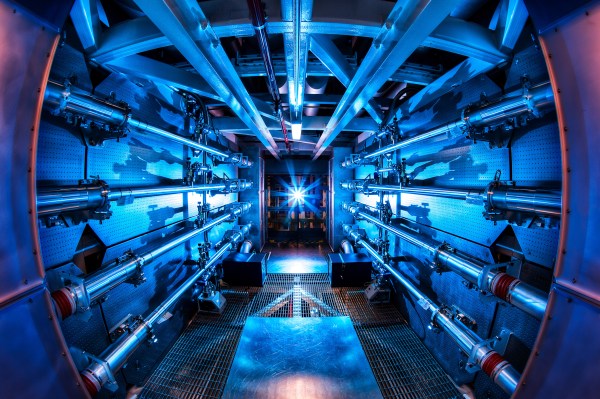
It’s hardly a secret that nuclear fusion has had a rough time when it comes to its image in the media: the miracle power source that is always ‘just ten years away’.  Even if no self-respecting physicist would ever make such a statement, the arrival of commercial nuclear fusion power cannot come quickly enough for many. With the promise of virtually endless, clean energy with no waste, it does truly sound like something from a science-fiction story.

Meanwhile, in the world of non-fiction, generations of scientists have dedicated their careers to understanding better how plasma in a reactor behaves, how to contain it and what types of fuels would work best for a fusion reactor, especially one that has to run continuously, with a net positive energy output. In this regard, 2020 is an exciting year, with the German Wendelstein 7-X stellarator reaching its final configuration, and the Chinese HL-2M tokamak about to fire up.

Join me after the break as I look into what a century of progress in fusion research has brought us and where it will take us next.

Continue reading “Nuclear Fusion At 100: The Hidden Race For Energy Supremacy”

New Year Habits – What Do You Do For Data Storage?

2020 is a year of reflection and avoiding regret, and one of the biggest practices we all know we should do better is back up our data. Inevitably there will be a corruption or accident, and we mourn the loss of some valuable data and vow to never let it happen again, and then promptly forget about good data retention practices.

I believe life is about acquiring memories, so it makes sense to me to try to archive and store those memories so that I can reflect on them later, but data storage and management is a huge pain. There’s got to be a better way (cue black and white video of clumsy person throwing up arms in disgust).

Nice Cloud You Have There; Shame if Something Happened to It

The teens of the century saw a huge shift towards cloud storage. The advantages of instantly backing up files and using the cloud as the primary storage for all your devices is appealing. It’s now easier to transfer files via the cloud than with a cable. With Google Docs and WordPress we have our most important documents and writing stored as database blobs on someone else’s servers. Facebook and Google and Flickr record all of our memories as photo albums. Unlimited storage is common, and indexing is so good that we can find photos with a vague description of their contents.

These things are instantly accessible, but lack permanence. Gone are newspaper clippings and printed photos discovered in a shoebox. When we aren’t in control of those services, they can disappear without any warning. Even some big offerings have packed up shop, leaving people scrambling to back up data before the servers were shut down. Google Plus is closed, Yahoo  Groups is closed, MySpace lost all content created prior to 2016, GeoCities closed in 2009, and Ubuntu One closed in 2014. It’s safe to say that no online content is safe from deletion. It’s also safe to say that cloud storage is a difficult location from which to extract your data.

With the risk of data leaks and privacy violations occurring daily, it’s also safe to say that some of your files should probably not be stored in the cloud in the first place. So, how do we do it well, and how do we get in the habit of doing it regularly?

Continue reading “New Year Habits – What Do You Do For Data Storage?”

Who Invented The Mouse? Are You Sure?

If you ask most people who invented the mouse, they won’t know. Those that do know, will say that Doug Englebart did. In 1964 he had a box with two wheels that worked like a modern mouse as part of his work at Stanford Research Institute. There is a famous demo video from 1968 of him showing off what looks a lot like an old Mcintosh computer. Turns out, two other people may have an earlier claim to a mouse — or, at least, a trackball. So why did you never hear about those?

The UK Mouse

Ralph Benjamin worked for Britain’s Royal Navy, developing radar tracking systems for warships. Right after World War II, Ralph was working on the Comprehensive Display System — a way for ships to monitor attacking aircraft on a grid. They used a “ball tracker.” Unlike Engelbart’s mouse, it used a metallic ball riding on rubber-coated wheels. This is more like a modern non-optical mouse, although the ball tracker had you slide your hand across the ball instead of the other way around. Sort of a trackball arrangement.

Continue reading “Who Invented The Mouse? Are You Sure?”