The Oldest Nuclear Reactor? Nature’s 2 Billion Year Old Experiment

When was the first nuclear reactor created? You probably think it was Enrico Fermi’s CP-1 pile built under the bleachers at the University of Chicago in 1942. However, you’d be off by — oh — about 2 billion years.

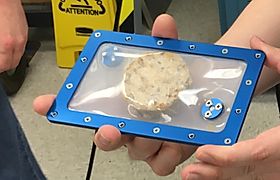
The first reactors formed naturally about 2 billion years ago in what is now Gabon in West Africa. This required several things coming together: natural uranium deposits, just the right geology in the area, and a certain time in the life of the uranium. This happened 17 different times, and the average output of these natural reactors is estimated at about 100 kilowatts — a far cry from a modern human-created reactor that can reach hundreds or thousands of megawatts.

The reactors operated for about a million years before they spent their fuel. Nuclear waste? Yep, but it is safely contained underground and has been for 2 billion years.

Continue reading “The Oldest Nuclear Reactor? Nature’s 2 Billion Year Old Experiment”

Continuous Integration: What It Is And Why You Need It

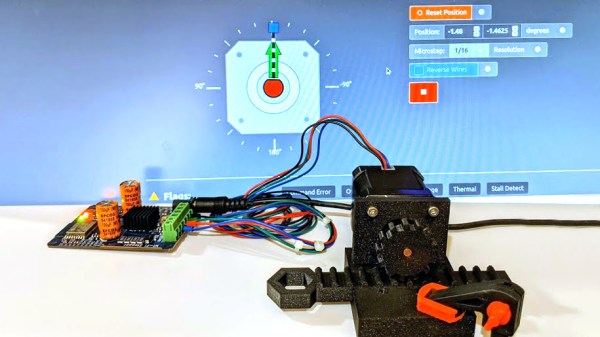
If you write software, chances are you’ve come across Continuous Integration, or CI. You might never have heard of it – but you wonder what all the ticks, badges and mysterious status icons are on open-source repositories you find online. You might hear friends waxing lyrical about the merits of CI, or grumbling about how their pipeline has broken again.

Want to know what all the fuss is about? This article will explain the basic concepts of CI, but will focus on an example, since that’s the best way to understand it. Let’s dive in. Continue reading “Continuous Integration: What It Is And Why You Need It”

Hackaday Belgrade: Call For Proposals

Join Hackaday in Belgrade, Serbia on May 9th, 2020 for the Hackaday Belgrade conference! The biennial hardware conference is just seventeen weeks from now. Early Bird tickets will go on sale shortly, but beginning right now you can hack your way into the conference by submitting a talk proposal. Accepted speakers receive free admission, plus everyone who submits a quality talk proposal will be given priority when tickets go on sale.

Yes, I’m talking to you. Hackaday strives to include first-time speakers in the slate of presenters at our conferences. We’re looking for unique, cutting-edge, whimsical, crazy, formidable, or world-changing topics revolving around hardware creation. From learning new tools or techniques to fabrication adventures, from code-wrangling that firmware project to pulling off an art installation, and from forgotten hardware history to the impossible made possible on your own workbench, we need to hear your stories!

That project for which you went into the deep weeds and worked your way back out again? Everyone at a Hackaday conference wants to hear about it and in the greatest detail possible. After all, we’re your fellow hackers. In fact, you should probably bring the hardware along for the ride.

We Need You

None of this happens in a vacuum. This is the third Hackaday Belgrade conference, which have now settled into a tick-tock cadence of even-numbered years. The first two both sold out, this one will as well, and the result is always an action-packed, nearly 24-hour marathon sprint of talks, workshops, and hardware hacking. But the only reason this works is because amazing people just like you make it a priority in their life to be there.

Badge hacking at 2018 Hackaday Belgrade

So take the plunge, put together your talk proposal and submit it before March 2nd. But don’t stop there, pester your friends and your heros to do the same. Block out May 9th on your schedule (roughly 9 am-2 am) and take the day before off of work. While you’re at it, convince your boss and coworkers to come along with you. See you in Belgrade!

The Quadratic Equation Solution A Few Thousand Years In The Making

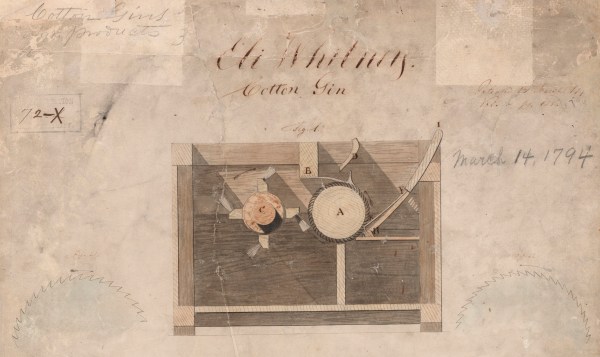
Everyone learns (and some readers maybe still remember) the quadratic formula. It’s a pillar of algebra and allows you to solve equations like Ax2+Bx+C=0. But just because you’ve used it doesn’t mean you know how to come up with the formula itself. It’s a bear to derive so the vast majority of us simply memorize the formula. A Carnegie Mellon mathematician named Po-Shen Loh didn’t expect to find a new way to derive the solution when he was reviewing math materials for middle school use to make them easier to understand. After all, people have been solving that equation for about 4,000 years. But that’s exactly what he did.

Before we look at the new solution, let’s talk about why you want to solve quadratic equations. They are used in many contexts. In ancient times you might use them to determine how much more crop to grow to cover pay tax payments without eating in to the crop you needed to subsist. In physics, it can describe motion. There’s seemingly no end to how many things you can describe with a quadratic equation.

Babylonians, in particular, would solve simultaneous equations to find the roots of a quadratic. Egyptians, Grecians, Indians, and Chinese peoples used graphical methods to solve the equations. The entire history is a bit much to get into, but still a great read. For this article, let’s dig into how the new derivation was discovered.

Continue reading “The Quadratic Equation Solution A Few Thousand Years In The Making”

Tony Brooker And Autocode – The First High-level Language

The field of computer science has undeniably changed the world for virtually every single person by now. Certainly for you as Hackaday reader, but also for everyone around you, whether they’re working in the field themselves, or are simply enjoying the fruits of convenience it bears. What was once a highly specialized niche field for a few chosen people has since grown into a discipline that not only created one of the biggest industry in modern times, but also revolutionized every other industry, some a few times over.

The fascinating part about all this is the relatively short time span it took to get here, and with that the privilege to live in an era where some of the pioneers and innovators, the proverbial giants whose shoulders every one of us is standing on, are still among us. Sadly, one of them, [Tony Brooker], a pioneer of the early programming language concept known as Autocode, passed away in November. Reaching the remarkable age of 94, the truly sad part however is that this might be the first time you hear his name, and there’s a fair chance you never heard of Autocode either.

But Autocode was probably the first high-level computer language, and as such played a fundamental role in the development of whatever you’re coding in today. So to honor the memory of [Tony Brooker], let’s remember the work he did with Autocode, and the leap in computer science history that it represented.

Continue reading “Tony Brooker And Autocode – The First High-level Language”

Happy 50th Birthday To All You Epoch Birthers

Good morning everyone, and what a lovely start to the new year it is, because it’s your birthday! Happy birthday, it’s your 50th! What’s that you say, you aren’t 50 today? (Looks…) That’s what all these internet databases say, because you’ve spent the last decade or so putting 1970-01-01 as your birth date into every online form that doesn’t really need to know it!

It’s been a staple for a subset of our community for years, to put the UNIX epoch, January 1st 1970, into web forms as a birth date. There are even rumours that some sites now won’t accept that date as a birthday, such is the volume of false entries they have with that date. It’s worth taking a minute though to consider UNIX time, some of its history and how its storage has changed over the years.

Continue reading “Happy 50th Birthday To All You Epoch Birthers”

Parallel Pis For Production Programming; Cutting Minutes And Dollars Off Of Assembly

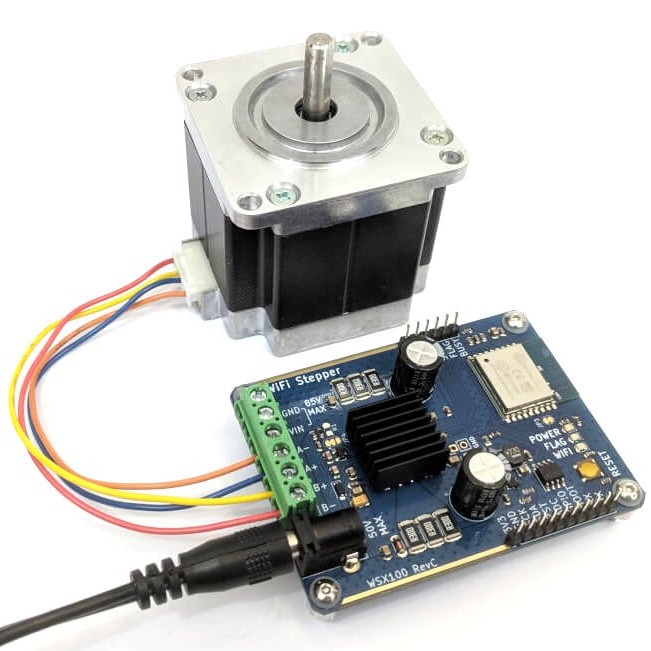
Assembly lines for electronics products are complicated beasts, often composed of many custom tools and fixtures. Typically a microcontroller must be programmed with firmware, and the circuit board tested before assembly into the enclosure, followed by functional testing afterwards before putting it in a box. These test platforms can be very expensive, easily into the tens of thousands of dollars. Instead, this project uses a set of 12 Raspberry Pi Zero Ws in parallel to program, test, and configure up to 12 units at once before moving on to the next stage in assembly.

Continue reading “Parallel Pis For Production Programming; Cutting Minutes And Dollars Off Of Assembly”