Space Garbage Truck Passes Its First Test

Back in April we reported on the successful launch of the SpaceX Falcon 9 rocket to the International Space Station which carried, along with supplies and experiments for the orbiting outpost, the RemoveDEBRIS spacecraft. Developed by the University of Surrey, RemoveDEBRIS was designed as the world’s first practical demonstration of what’s known as Active Debris Removal (ADR) technology. It included not only a number of different technologies for ensnaring nearby objects, it even brought along deployable targets to use them on.

Orbital debris (often referred to simply as “space junk”) is a serious threat to all space-faring nations, and has become even more pressing of a concern as the cost of orbital launches have dropped precipitously over the last few years, accelerating number and frequency of new objects entering orbit. The results of these first of their kind tests have therefore been hotly anticipated, as the technology to actively remove debris from Low Earth orbit (LEO) is seen by many in the industry to be a key element of expanding access to space for commercial purposes.

Six months after its arrival in space we’ve now starting to see the first results of the groundbreaking tests performed by the RemoveDEBRIS spacecraft, and so far it’s very promising.

Continue reading “Space Garbage Truck Passes Its First Test”
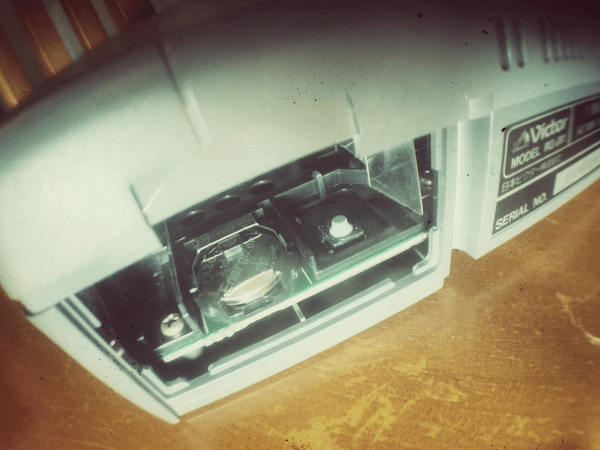
Show That Sega Saturn Save Battery Who’s Boss

Breaking out the Sega Saturn out of the closet for a hit of 90’s nostalgia comes with its own set of compromises: the wired controllers, the composite video, and worst of all that dead CR2032 battery behind the backdoor. Along with the death of that battery went your clock and all those precious hours put into your game save files. While the bulk of us kept feeding the insatiable SRAM, a friendly Canadian engineer named [René] decided to fix the problem for good with FRAM.

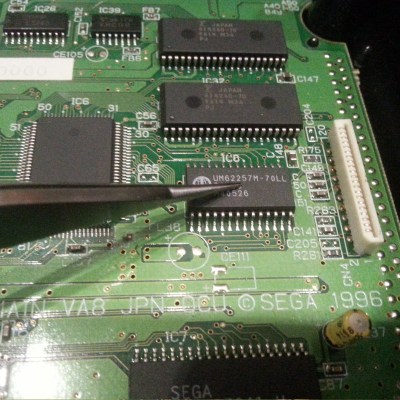
The issue with the battery-backed memory in the Saturn stems from the particularly power-hungry factory installed SRAM chip. Normally when the console is plugged-in to a main power source the CR2032 battery is not in use, though after several weeks in storage the battery slowly discharges. [René’s] proposed solution was to use a non-volatile form of RAM chip that would match the pinout of the factory SRAM as close as possible. This would allow for easier install with the minimum number of jumper wires.

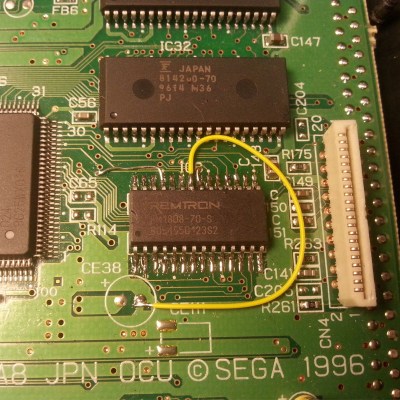
Enter the FM1808 FRAM chip complete with a whopping 256 kb of addressable memory. The ferroelectric chip operates at the same voltage as the Saturn’s factory SRAM, and has the added benefit of being able to use a read/write mode similar to that of the Saturn’s original memory chip. Both chips conform to a DIP-28 footprint, and only a single jumper wire on pin 22 was required to hold the FM1808 chip’s output-enable signal active-low as opposed to the active-high enable signal on the Saturn’s factory memory chip. The before and after motherboard photos are below:

After a quick test run of multiple successful read and writes to memory, [René] unplugged his Saturn for a couple days and found that his save files had been maintained. According to the FM1808 datasheet, they should be there for the next 45 years or so. The only downside to the upgrade is that the clock & calendar settings were not maintained upon boot-up and reset to the year 1996. But that’s nothing a bit of button-mashing through couldn’t solve, because after all wasn’t the point of all this to relive a piece of the 90s?

For more Sega Saturn goodness, check out how the Sega Saturn was finally cracked after 20 years.

Learn ARM Assembly With The Raspberry Pi

We live in a time when you don’t have to know assembly language to successfully work with embedded computers. The typical processor these days has resources that would shame early PCs and some of the larger ones are getting close to what was a powerful desktop machine only a few years ago. Even so, there are some cases where you really want to use assembly language. Maybe you need more speed. Or maybe you need very precise control over timing. Maybe you just like the challenge. [Robert G. Plantz] from Sonoma State University has an excellent book online titled “Introduction to Computer Organization: ARM Assembly Langauge Using the Raspberry Pi.” If you are interested in serious ARM assembly language, you really need to check out this book.

If you are more interested in x86-64 assembly and Linux [Plantz] has you covered there, too. Both books are free to read on the Internet, and you can pick up a printed version of the Linux book for a small payment if you want.

Continue reading “Learn ARM Assembly With The Raspberry Pi”

Industrial 3D Printing Uses Layers Like We’ve Never Seen Before

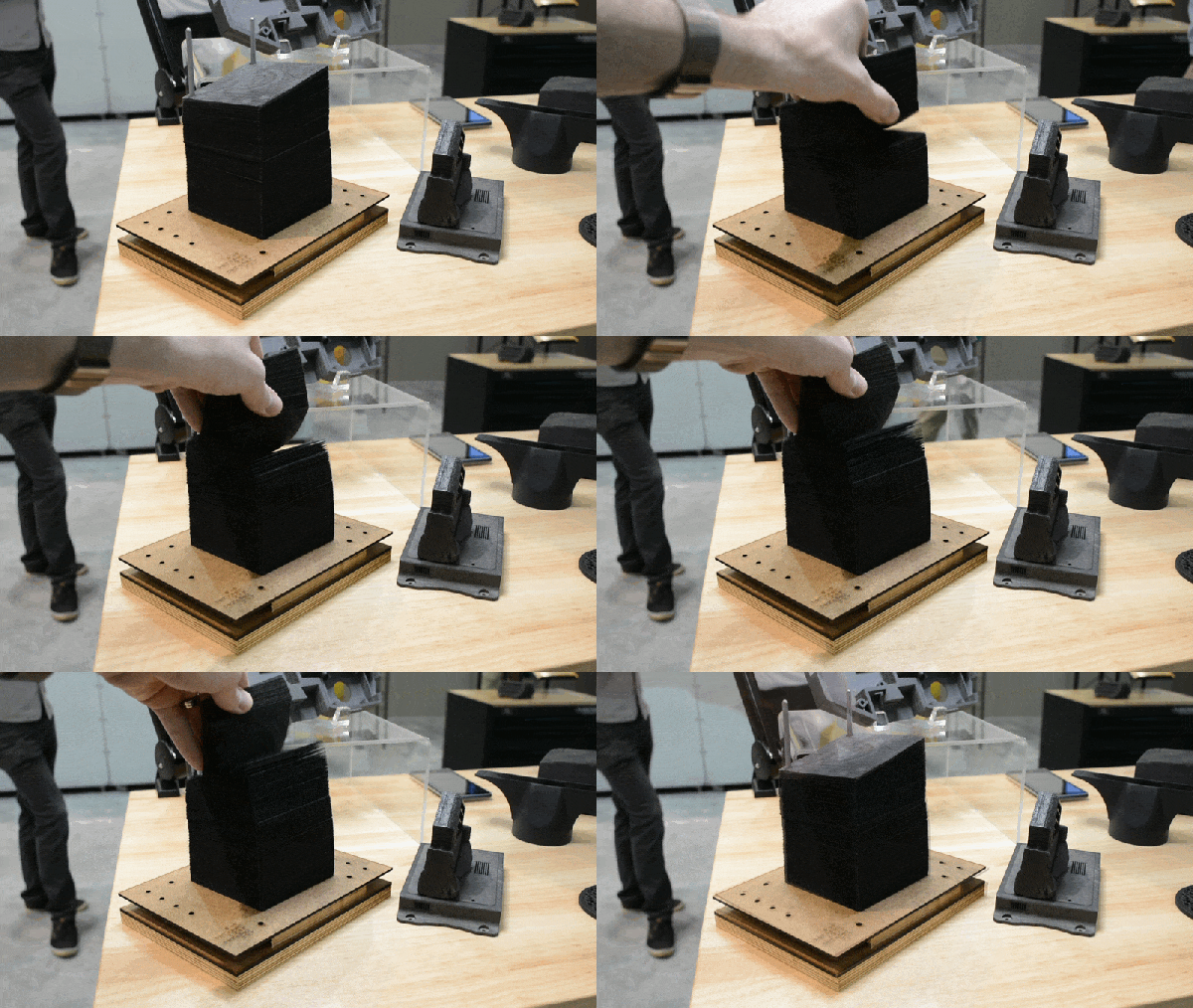
We’ve seen FDM printers lay down layers by extruding plastic in a line. We’ve seen printers use sintering and lithography to melt or cure one layer at a time before more print medium moves into place for the next layer. What we’ve never seen before is a printer like this that builds parts from distinct layers of substrate.

At the International Manufacturing Technology Show last week I spoke with Eric of Impossible Objects. The company is using a “sheet lamination process” that first prints each layer on carbon fiber or fiberglass, then uses a hydraulic press and an oven to bake the part into existence before bead-blasting the excess substrate away. Check out my interview with Eric and join me below for more pictures and details.

Continue reading “Industrial 3D Printing Uses Layers Like We’ve Never Seen Before”

Learn To Loop The Python Way: Iterators And Generators Explained

If you’ve ever written any Python at all, the chances are you’ve used iterators without even realising it. Writing your own and using them in your programs can provide significant performance improvements, particularly when handling large datasets or running in an environment with limited resources. They can also make your code more elegant and give you “Pythonic” bragging rights.

Here we’ll walk through the details and show you how to roll your own, illustrating along the way just why they’re useful.

Continue reading “Learn To Loop The Python Way: Iterators And Generators Explained”

A $1, Linux-Capable, Hand-Solderable Processor

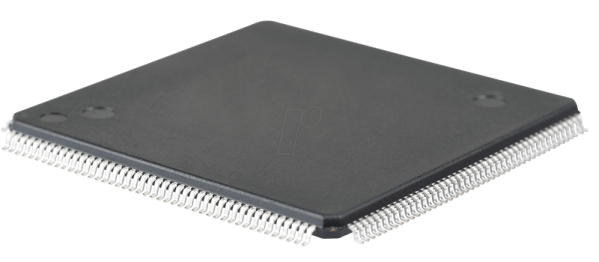
Over on the EEVblog, someone noticed an interesting chip that’s been apparently flying under our radar for a while. This is an ARM processor capable of running Linux. It’s hand-solderable in a TQFP package, has a built-in Mali GPU, support for a touch panel, and has support for 512MB of DDR3. If you do it right, this will get you into the territory of a BeagleBone or a Raspberry Pi Zero, on a board that’s whatever form factor you can imagine. Here’s the best part: you can get this part for $1 USD in large-ish quantities. A cursory glance at the usual online retailers tells me you can get this part in quantity one for under $3. This is interesting, to say the least.

The chip in question, the Allwinner A13, is a 1GHz ARM Cortex-A8 processor. While it’s not much, it is a chip that can run Linux in a hand-solderable package. There is no HDMI support, you’ll need to add some more chips (that are probably in a BGA package), but, hey, it’s only a dollar.

If you’d like to prototype with this chip, the best options right now are a few boards from Olimex, and a System on Module from the same company. That SoM is an interesting bit of kit, allowing anyone to connect a power supply, load an SD card, and get this chip doing something.

Currently, there aren’t really any good solutions for a cheap Linux system you can build at home, with hand-solderable chips. Yes, you could put Linux on an ATMega, but that’s the worst PC ever. A better option is the Octavo OSD335x SoC, better known as ‘the BeagleBone on a Chip’. This is a BGA chip, but the layout isn’t too bad, and it can be assembled using a $12 toaster oven. The problem with this chip is the price; at quantity 1000, it’s a $25 chip. At quantity one, it’s a $40 chip. NXP’s i.MX6 chips have great software support, but they’re $30 chips, and you’ll need some DDR to make it do something useful, and that doesn’t even touch the fiddlyness of a 600-ball package

While the Allwinner A13 beats all the other options on price and solderability, it should be noted that like all of these random Linux-capable SoCs, the software is a mess. There is a reason those ‘Raspberry Pi killers’ haven’t yet killed the Raspberry Pi, and it’s because the Allwinner chips don’t have documentation and let’s repeat that for emphasis: the software is a mess.

Still, if you’re looking for a cheap chip you can solder at home, this one seems to be the only game in town. We’re really looking forward to seeing what you make with it!

3D Printing In Metal: The Laser And Metal Powder Printers We Saw At IMTS

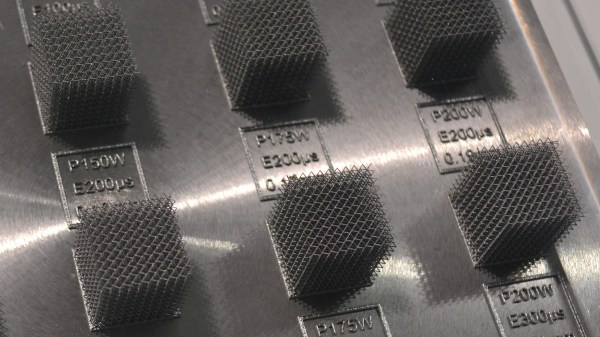
Last week I went to the International Manufacturing Technology Show (IMTS) and it was incredible. This is a toy store for machinists and showcases the best of industrial automation. But one of the coolest trends I found at the show are all the techniques used to 3D print in metal. The best part is that many of the huge machines on display are actually running!

It’s probably better to refer to this as additive manufacturing, because the actual methods can be significantly different from your 3D printer. Below you’ll find examples of three different approaches to this process. I had a great interview with a company doing actual 3D printing in metal using a nozzle-based delivery often called cladding. There’s a demo video of powder layer printing using lasers. And a technique that uses binders as an intermediary step toward the final metal part. Let’s take a look!

Continue reading “3D Printing In Metal: The Laser And Metal Powder Printers We Saw At IMTS”