Tend Your Garden… Again

In the early 1940s, several countries saw an incredible shift in agriculture. What were called “victory gardens” were being planted en masse by people from all walks of life, encouraged by various national governments around the world. Millions of these small home gardens sprang up to help reduce the price of produce during World War 2, allowing anyone with even the tiniest pot of soil to contribute to the war effort.

It’s estimated that in 1943 alone, victory gardens accounted for around one third of all vegetables produced in the United States. Since then, however, the vast majority of these productive gardens have been abandoned in favor of highly manicured, fertilized, irrigated turfgrass (which produces no food yet costs more to maintain), but thanks to the recent global pandemic there has been a resurgence of people who at least are curious about growing their own food again, if not already actively planting gardens. In the modern age, even though a lot of the folk knowledge has been lost since the ’40s, planting a garden of any size is easier than ever especially with the amount of technology available to help.

As someone who not only puts food on the table as a writer for a world-renowned tech website but also literally and figuratively puts food on the table as a small-scale market farmer, there are a few things that I’ve learned that I hope will help if you’re starting your first garden.
Continue reading “Tend Your Garden… Again”

Open-Source Grinder Makes Compression Screws For Plastic Extruders Easy

In a world that’s literally awash in plastic waste, it seems a pity to have to buy fresh rolls of plastic filament to feed our 3D-printers, only to have them generate yet more plastic waste. Breaking that vicious cycle requires melding plastic recycling with additive manufacturing, and that takes some clever tooling with parts that aren’t easy to come by, like the compression screws that power plastics extruders.

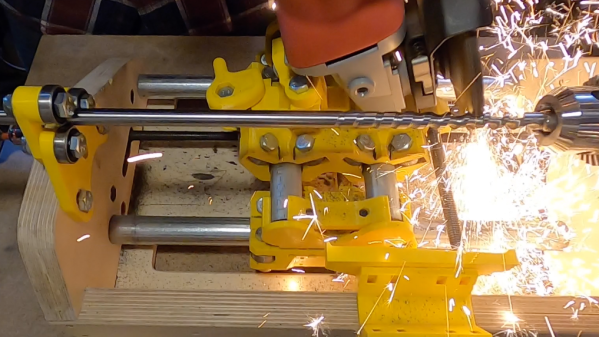
This open-source compression screw grinder aims to make small-scale plastic recyclers easier to build. Coming from the lab of [Joshua Pearce] at the Michigan Technological University in collaboration with [Jacob Franz], the device is sort of a combination of a small lathe and a grinder. A piece of round steel stock is held by a chuck with the free end supported by bearings in a tailstock. On the bed of the machine is an X-Y carriage made of 3D-printed parts and pieces of electrical conduit. The carriage moves down the length of the bed as the stock rotates thanks to a pulley and a threaded rod, carrying a cordless angle grinder with a thick grinding wheel. A template attached to the front apron controls how deep the grinder cuts as it tracks along the rod; different templates allow the screw profile to be easily customized. The video below shows the machine in action and the complicated screw profiles it’s capable of producing.

We’ve seen lots of homebrew plastic extruders before, most of which use repurposed auger-type drill bits as compression screws. Those lack the variable geometry of a proper compression screw, so [Joshua] and [Jacob] making all the design documents for this machine available should be a boon to recycling experimenters.

Continue reading “Open-Source Grinder Makes Compression Screws For Plastic Extruders Easy”

RC Car Becomes Useful Little Mower

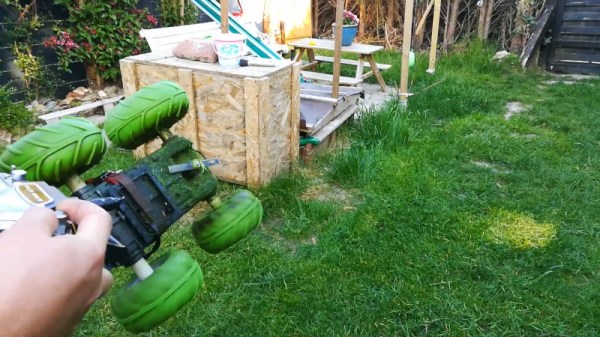
When we think of lawn mowers, our first thought is of heavy, rusty old machines that take the best part of an afternoon to get started. Of course, there’s always another way, as [Mark] ably demonstrates with his own build. 

Beginning from an unconventional starting point, [Mark] chose a remote control car, of the type that can flip and drive in both orientations. Having lost the controller, he started by ripping out the original electronics. In its place, an ESP32 receives signals from a FlySky RC receiver, and runs the drive motors with a Sparkfun Monster Motor Shield. Another channel on the receiver is hooked up directly to a drone speed controller driving a brushless motor, outfitted with a sawblade to cut the grass.

It’s a small platform, and one that ordinarily you might doubt could do the job. However, for [Mark]’s purposes, the rig works just fine, and has been doing good work for the last two years! We’ve seen mowers hacked before too, like this autonomous rig out in the wild. Video after break.

Continue reading “RC Car Becomes Useful Little Mower”

3D-Printing Bigger Wind Turbines

Many decades ago, a much younger version of me was in the car with my dad and my brother, cruising down the highway on some errand or another. We were probably all in the front seat, and none of us were wearing seatbelts; those were simpler times. As we passed under an overpass, my dad said, “Do you know why the overpasses on these roads are so high?” Six-year-old me certainly didn’t, but it was clear dad did and had something to say about it, so we just shook our heads and waited for the lesson. “Because that’s how big nuclear missiles are.” He then went into an explanation of how the Interstate Highway System in the USA, then still in its infancy, was designed to make sure the armed forces could move around the country, so overpasses needed to allow trucks with big loads to pass.

It was an interesting lesson at the time, and over the years I’ve continued to be impressed with the foresight and engineering that went into the Interstate system here in the US. It’s far from perfect, of course, and it’s only recently that the specifications for the system have started to put a pinch on things that seem totally unrelated to overpass dimensions — namely, the size and efficiency of wind turbines.

Continue reading “3D-Printing Bigger Wind Turbines”

Experimenting With Vibratory Wind Generators

We’ve all got a pretty good mental image of the traditional wind-powered generator: essentially a big propeller on a stick. Some might also be familiar with vertical wind turbines, which can operate no matter which way the wind is blowing. In either case, they use some form of rotating structure to harness the wind’s energy.

But as demonstrated by [Robert Murray-Smith], it’s possible to generate electrical power from wind without any moving parts. With simple components, he shows how you can build a device capable of harnessing the wind with nothing more than vibrations. Alright, so we suppose that means the parts are technically moving, but you get the idea.

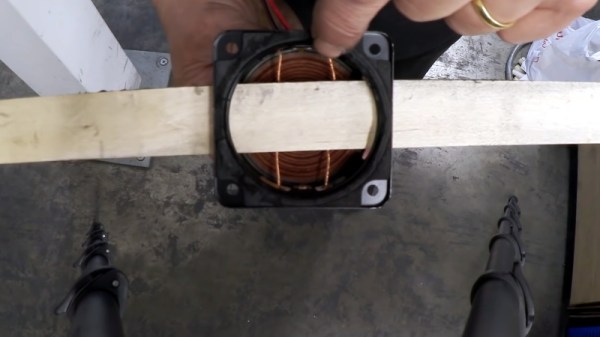
In the video after the break, [Robert] shows two different devices that operate under the same basic principle. For the first, he cuts the cone out of a standard speaker and glues a flat stick to the voice coil. As the stick moves back and forth in the wind, the coil inside of the magnet’s field and produces a measurable voltage. This proves the idea has merit and can be thrown together easily, but isn’t terribly elegant.

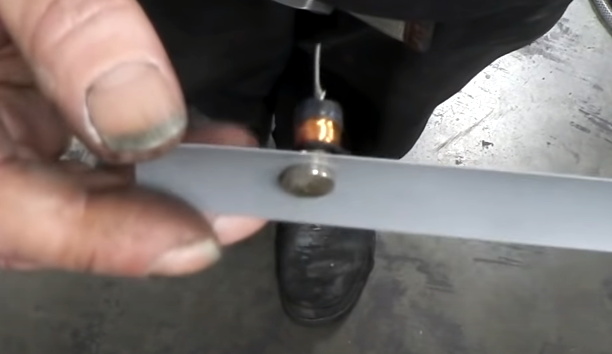
For the revised version, he glues a coil to a small piece of neoprene rubber, which in turn is glued to a slat taken from a Venetian blind. On the opposite side of the coil, he glues a magnet. When the blind slat starts vibrating in the wind, the oscillation of the magnet relative to the coil is enough to produce a current. It’s tiny, of course. But if you had hundreds or even thousands of these electric “blades of grass”, you could potentially build up quite a bit of energy.

If this all sounds a bit too theoretical for your tastes, you can always 3D print yourself a more traditional wind turbine. We’ve even seen them in vertical form, if you want to get fancy.

Continue reading “Experimenting With Vibratory Wind Generators”

AudioMoth: The Proverbial Moth On The Wall

Monitoring environmental sounds is perhaps not a common task, but much like with wildlife cameras, we could learn a lot from an always-on device listening in on Mother Nature. The AudioMoth is one of such devices. Although it has been around for a few years, it is notable for being an open platform, with the full Eagle-based hardware design files, BOM and firmware available, as well as NodeJS- and Electron-based utility software.

The AudioMoth is powered by a Silicon Labs EFM32-based MCU (EFM32WG980F256) with a Cortex-M4 core, 256 kB of Flash and 32 kB of SRAM. Using the onboard MEMS microphone it records both audible and ultrasonic frequencies that are written in uncompressed WAV format to the SD card. This makes it capable of capturing the sounds from bats in an area in addition to the calls of birds and other wildlife.

The AudioMoth has also a micro-sized, low-cost version called the μMoth, which shares the same features as the AudioMoth. This project is still in progress, with updates expected later this year.

Although the AudioMoth device can apparently be bought from sites like LabMaker for $74 at this point, it should be noted that the MCU used on the device is listed as ‘NRND’ (not recommended for new designs) by SiLabs, which may complicate building one in a number of years from now. Or at least you’ll have to substitute in a different microcontroller.

Regardless, it does seem like an interesting starting point for wildlife monitoring, whether one simply wants to build a device like this, or to use it as inspiration for one’s own design.

Compile A Hydroponics System From Source

Tending to a garden is usually a rewarding endeavor, as long as there is good soil to work with. If there isn’t, it can either get frustrating quickly having to deal with soils like sand or hard clay, or it can get expensive by having to truck in compost each year. Alternatively, it’s possible to set up systems of growing plants that don’t need any soil at all, although this requires an automated system otherwise known as hydroponics to manage water and nutrients sent to the plants.

This setup by [Kyle] is unique in that it uses his own open-source software which he calls Mycodo to control the hydroponic system. It is loaded onto a Raspberry Pi 4 (which he notes can now be booted from a USB drive instead of an SD card) which controls all of the peripherals needed for making sure that the water has the correct amount of nutrients and chemical composition.

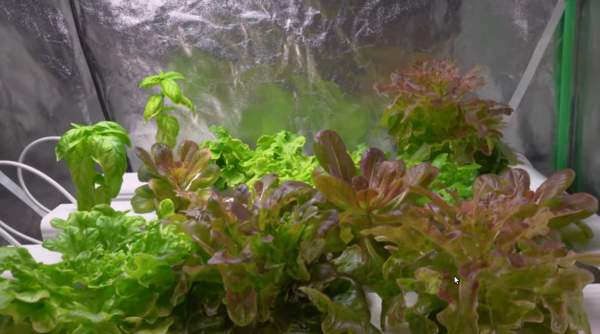
The build is much more than just a software control panel, though. [Kyle] walks through every part of setting up a small hydroponic system capable of effectively growing 15-20 plants indoors. He grows varieties of lettuce and basil, but this system can work for many more types of plants as well. With just slight variations, a similar system can not only grow plants like these, but fish as well.

Continue reading “Compile A Hydroponics System From Source”