Last summer in the first swings of the global pandemic, sitting at home finally able to tackle some of my electronics projects now that I wasn’t wasting three hours a day commuting to a cubicle farm, I found myself ordering a new smartphone. Not the latest Samsung or Apple offering with their boring, predictable UIs, though. This was the Linux-only PinePhone, which lacks the standard Android interface plastered over an otherwise deeply hidden Linux kernel.
As a bit of a digital privacy nut, the lack of Google software on this phone seemed intriguing as well, and although there were plenty of warnings that this was a phone still in its development stages it seemed like I might be able to overcome any obstacles and actually use the device for daily use. What followed, though, was a challenging year of poking, prodding, and tinkering before it got to the point where it can finally replace an average Android smartphone and its Google-based spyware with something that suits my privacy-centered requirements, even if I do admittedly have to sacrifice some functionality.
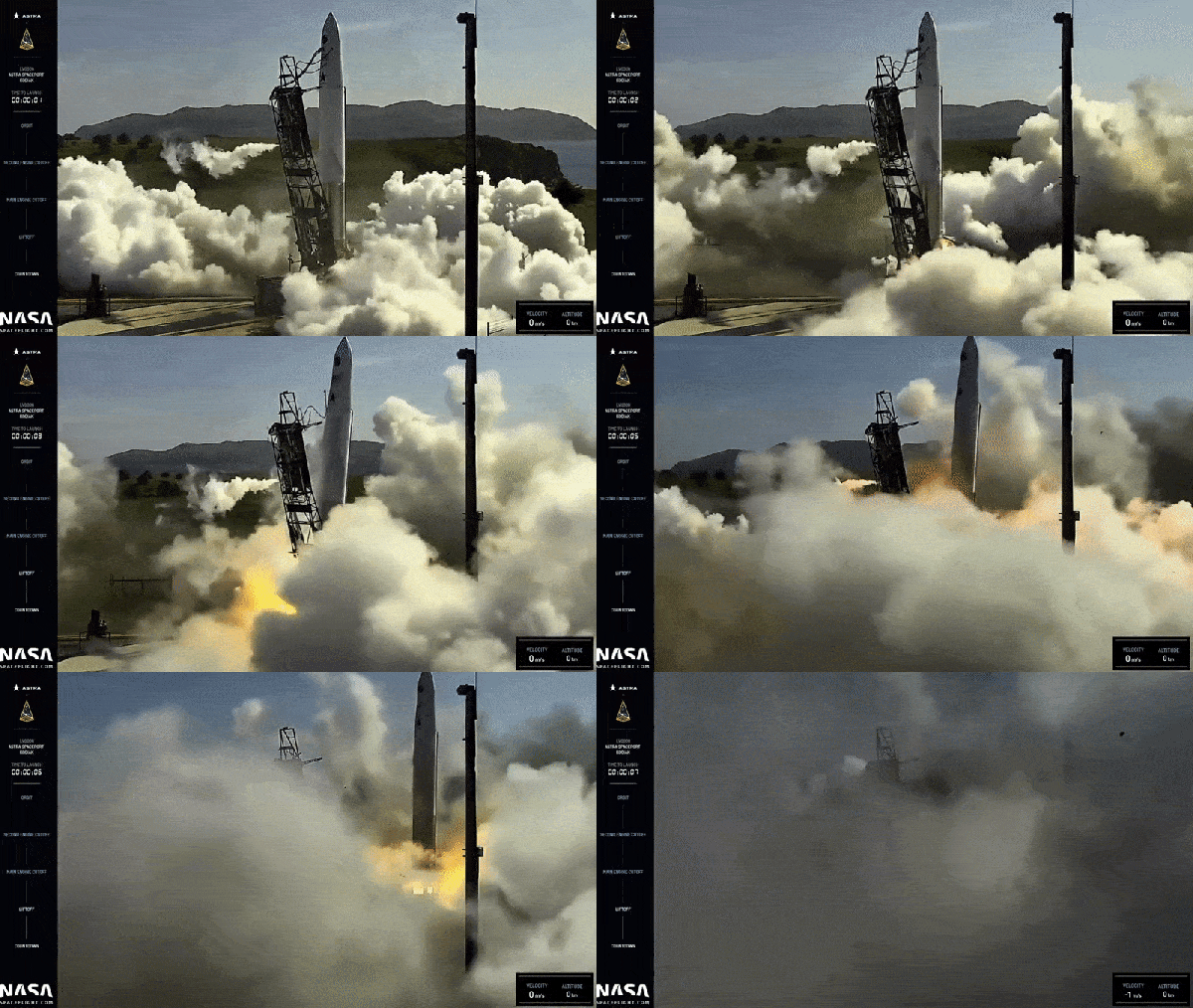
It’s often said that getting into orbit is less about going up, and more about going sideways very fast. So in that sense, the recent launch conducted by aerospace startup Astra could be seen as the vehicle simply getting the order of operations wrong. Instead of going up and then burning towards the horizon, it made an exceptionally unusual sideways flight before finally moving skyward.
As you might expect, the booster didn’t make it to orbit. But not for lack of trying. In fact, that the 11.6 meter (38 feet) vehicle was able to navigate through its unprecedented lateral maneuver and largely correct its flight-path is a testament to the engineering prowess of the team at the Alameda, California based company. It’s worth noting that it was the ground controller’s decision to cut the rocket’s engines once it had flown high and far enough away to not endanger anyone on the ground that ultimately ended the flight; the booster itself was still fighting to reach space until the very last moment.
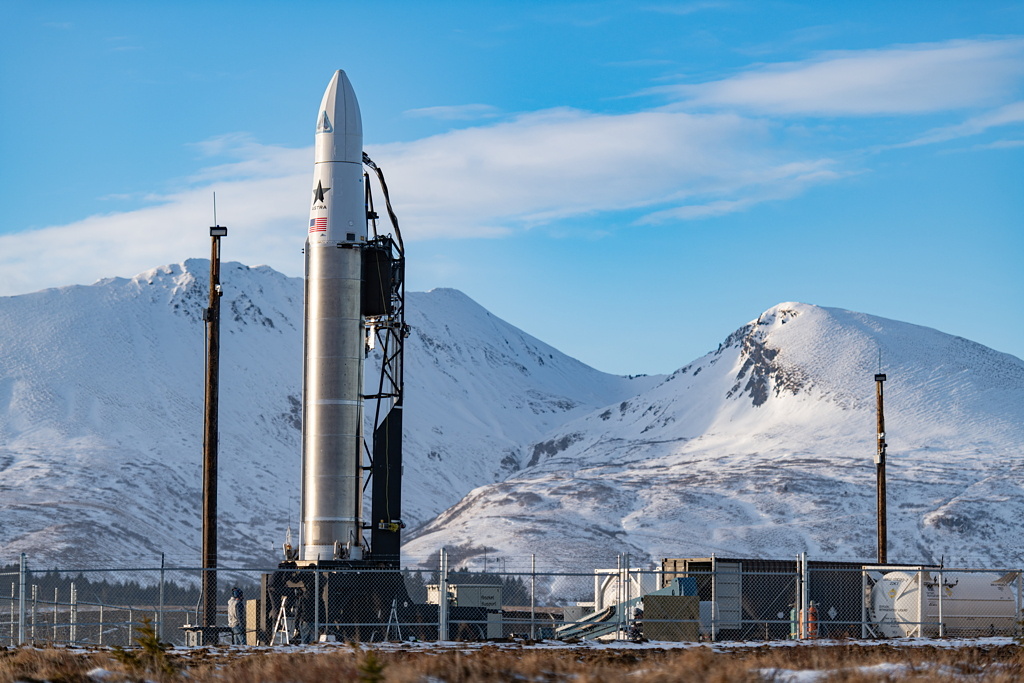
Astra’s rocket on the launch pad.
There’s a certain irony to the fact that this flight, the third Astra has attempted since their founding in 2016, was the first to be live streamed to YouTube. Had the company not pulled back their usual veil of secrecy, we likely wouldn’t have such glorious high-resolution footage of what will forever be remembered as one of the most bizarre rocket mishaps in history. The surreal image of the rocket smoothly sliding out of frame as if it was trying to avoid the camera’s gaze has already become a meme online, arguably reaching a larger and more diverse audience than would have resulted from a successful launch. As they say, there’s no such thing as bad press.
Naturally, the viral clip has spurred some questions. You don’t have to be a space expert to know that the pointy end of the rocket is usually supposed to go up, but considering how smooth the maneuver looks, some have even wondered if it wasn’t somehow intentional. With so much attention on this unusual event, it seems like the perfect time to take a close look at how Astra’s latest rocket launch went, quite literally, sideways.
In a normal summer we would be spoiled for choice here in Europe when it came to our community’s events, with one big camp and a host of smaller ones near and far. Only the most hardcore of travelers manage to make it to all of them, but it’s usually possible to take in at least one or two over the season. But of course, this isn’t a normal summer. Many of us may now be vaccinated against COVID-19, but we remain in the grip of a global pandemic. The massive Dutch MCH camp was postponed until 2022, and most of the smaller camps have fallen by the wayside due to uncertainty. But one hacker camp carried on.
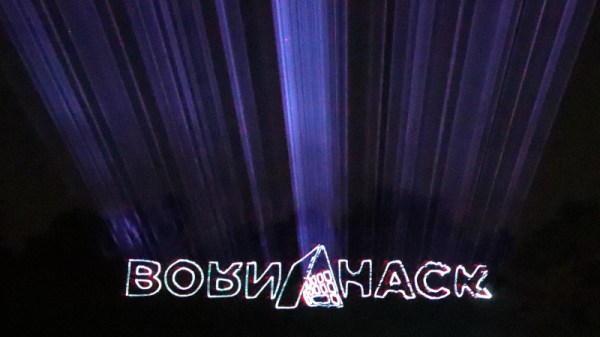
BornHack in Denmark was the world’s only in-person summer hacker event of 2020, and on its return last week made it the only such event in Europe for 2021. Having secured a ticket earlier in the year when they went on sale, I navigated the tricky world of cross-border European travel in a pandemic to make my way to the Hylkedam scout camp on the Danish isle of Fyn for a week in the company of hackers from all over Northern Europe. BornHack had achieved the impossible again, and it was time to enjoy a much-needed week at a hacker camp.
Congratulations to the ten projects that have been selected to receive $500, and continue to the finals of the 2021 Hackaday Prize! Each of these are a different take on the Reimagine Supportive Tech Challenge that sought ways to make great hardware ideas work for more people.
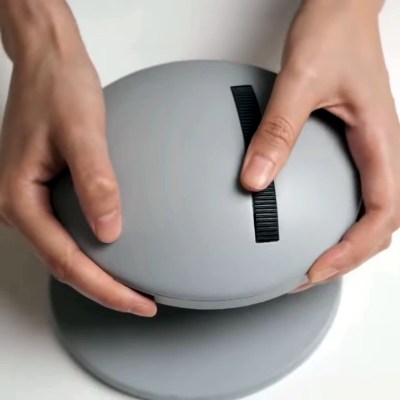
Ebooks have made it possible for everyone to have a library in their pocket, and that has included the visually impaired as text-to-speech can read the printed word. But that’s not a complete replacement for reading for yourself and so the Thenar steps in as an affordable, portable braille ebook reader. It leverages a single braille cell on the edge of the device, and a tank-track-style scroll wheel for user input. Complete with a docking station to inductively charge the battery, it’s a high-end reader for those who need an alternative to epaper.
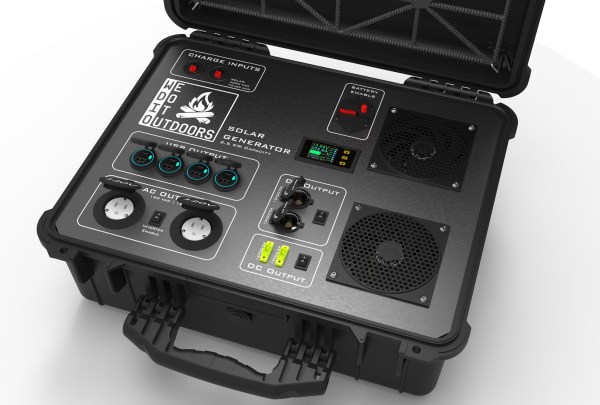
Okay, pop-quiz; how many of us want to have a future involving solar-powered everything? Most of us now have our hands up, but how many of us can set up a high-efficiency solar charge controller ourselves? If this next finalist (pictured at the top) has its way the answer will be just about everyone. The 2.5 kilowatt solar generator in a rugged brief case is packing a whopping 160 (!) 18650 lithium cells. The charging side of the design handles the maximum power-point tracking (MPPT) while the discharging side protects the user with a circuit breaker and all kinds of regulated outputs like 120 V, 24 V, 12 V, and of course all of the USB-C functionality you’d expect from a system like this.
Ten Finalists, Eight Dozen Entries
We cherry-picked two excellent finalists above, but all ten of these are easily worth their own mention (and many have already been individually featured on these pages). Congrats to the folks who will be headed to the finals in October!
One of the nice things about the Unix philosophy that Linux inherited is that the filesystem is very modular. That’s good, too, because a typical system might want a choice of filesystems like ext4, reiserfs, btrfs, and even network systems like nfs. Besides that, there are fake file systems like /sys and /dev that help Linux make everything look like a file. The downside is that building a filesystem required changing the kernel or, at least, writing a loadable module. That’s not as hard as it sounds, but it is a little more difficult than writing a normal program. Then came FUSE — file system in user space. This is a single file system module that allows you to create new file systems by writing ordinary code.
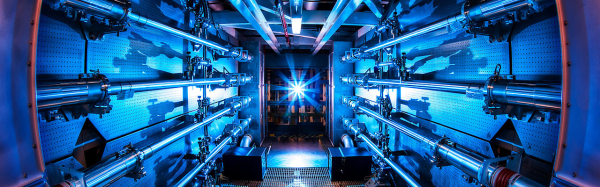
Earlier this month, Lawrence Livermore National Laboratory (LLNL) announced to the world that they had achieved a record 1.3 MJ yield from a fusion experiment at their National Ignition Facility (NIF). Yet what does this mean, exactly? As their press release notes, the main advancement of these results will go towards the US’s nuclear weapons arsenal.
This pertains specifically to the US’s nuclear fusion weapons, which LLNL along with Los Alamos National Laboratory (LANL) and other facilities are involved in the research and maintenance of. This traces back to the NIF’s roots in the 1990s, when the stockpile stewardship program was set up as an alternative to nuclear weapons testing. Much of this research involves examining how today’s nuclear weapons degrade over time, and ways to modernize the existing arsenal.
In light of this, one may wonder what the impact of these experimental findings from the NIF are beyond merely ensuring that the principle of MAD remains intact. To answer that question, we have to take a look at inertial confinement fusion (ICF), which is the technology at the core of the NIF’s experiments.
3D printers have come a long way over the past several years, but the process of bed leveling remains a pain point. Let’s take a look at the different ways the problem has been tackled, and whether recent developments have succeeded in automating away the hassle.
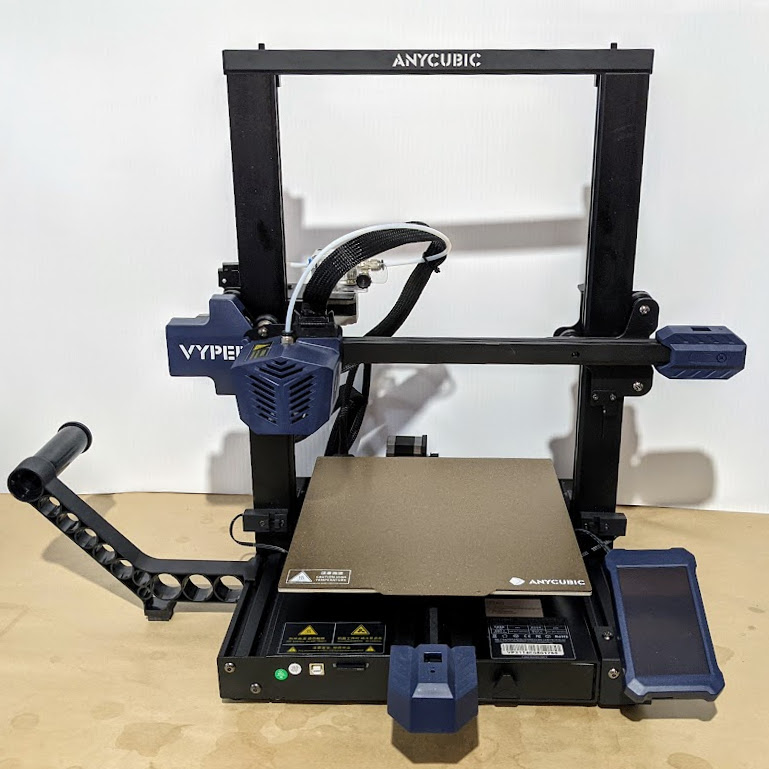
Anycubic Vyper, with an auto-leveling feature we decided to take a closer look at.
Bed leveling and first layer calibration tends to trip up novices because getting it right requires experience and judgment calls, and getting it wrong means failed prints. These are things 3D printer operators learn to handle with time and experience, but they are still largely manual processes that are often discussed in ways that sound more like an art than anything else. Little wonder that there have been plenty of attempts to simplify the whole process.
Some consumer 3D printers are taking a new approach to bed leveling and first layer calibration, and one of those printers is the Anycubic Vyper, which offers a one-touch solution for novices and experienced users alike. We accepted Anycubic’s offer of a sample printer specifically to examine this new leveling approach, so let’s take a look at the latest in trying to automate away the sometimes stubborn task of 3D printer bed leveling.