The Electronics Markets Of Ho Chi Minh City, Vietnam

When we think about world-famous electronics markets in Asia, usually Shenzhen, Tokyo’s Akihabara, or Shanghai’s Beijing Road come to mind.

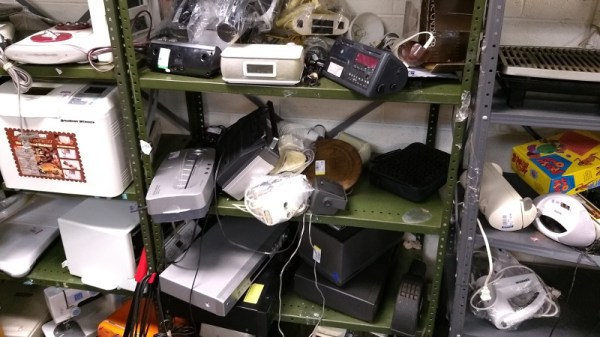
There’s another market that I’ve had my eye on for a few years: Nhật Tảo market in Ho Chi Minh City, Vietnam. It might not be as large or accessible as the more well-known markets, but it’s very much worth a visit if you’re in the area. I decided it was time to hop on my red motorbike (red things go faster) and give you a short tour of the central market, as well as some more hobbyist-friendly options.

Continue reading “The Electronics Markets Of Ho Chi Minh City, Vietnam”

Game Boy Advance SP in ECG device

Game Boy Advance Hiding In A Medical Device

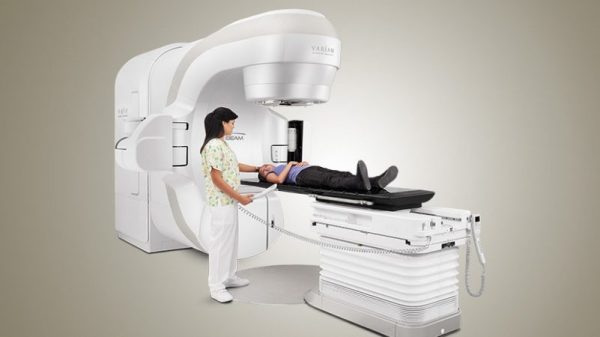
It turns out that medical manufacturers also do hacking once in a while. [Jana Marie Hemsing] recently tweeted a photo of an ECG-Trigger-Unit that she’d opened up. Inside she found that the LCD screen was that of a Game Boy Advance (GBA) and the reason she could tell was that the screen’s original case was still there, complete with GAME BOY ADVANCE SP written on it.

In the manufacturer’s defense, this device was likely made around the year 2000 when gaming products were some of the best sources for high speed, high quality, small LCDs displays.  This design document for a portable ECG measurement instrument from as recently as 2013 cites reasons for using a GBA as:

  • impressive plotting results,
  • no serious transmission delays, and
  • fine graphics processing capability.

The Verge had even turned up this US patent from 1997 that has the diagnostic medical device be a cartridge for plugging into a Game Boy. At the time, PCs were frequently used for medical displays but this patent cites issues such as the higher cost of PCs, software installation issues, and crashing. However, they talk about the crashing being due to running word processing and spreadsheet software on the same PC, something not likely to happen if the PC is dedicated to bedside monitoring.

But despite all those pros, wouldn’t you feel surprise and alarm when you first glimpse the Game Boy inside the device that’s monitoring your heart? We also have to wonder what licensing these products went through in the countries in which they were used. This particular device was made by German company Medical Imaging Electronics.

Game Boy hacks aren’t limited to the medical industry though. Here on Hackaday, we’ve seen them turned into remote controls for flying drones and we’ve seen Game Boy cartridge emulators that use STM32. Finally, if you’re wondering where you saw [Jana Marie]’s name before, she was one of the two hackers driving the motorized armchair in a photo in our [Jenny List]’s SHACamp 2017 write-up.

Our thanks to [geonomad] for the tip!

Cheap, Full-Duplex Software Defined Radio With The LimeSDR

A few years ago, we saw the rise of software-defined radios with the HackRF One and the extraordinarily popular RTL-SDR USB TV tuner dongle. It’s been a few years, and technology is on a never-ending upwards crawl to smaller, cheaper, and more powerful widgets. Now, some of that innovation is making it to the world of software-defined radio. The LimeSDR Mini is out, and it’s the cheapest and most capable software defined radio yet. It’s available through a Crowd Supply campaign, with units shipping around the beginning of next year.

The specs for the LimeSDR mini are quite good, even when compared to kilobuck units from Ettus Research. The frequency range for the LimeSDR Mini is 10 MHz – 3.5 GHz, bandwidth is 30.72 MHz, with a 12-bit sample depth and 30.72 MSPS sample rate. The interface is USB 3.0 (the connector is male, and soldered to the board, but USB extension cables exist), and the LimeSDR is full duplex. That last bit is huge — the RTL-SDR can’t transmit at all, and even the HackRF is only half duplex. This enormous capability is thanks to the field programmable RF transceiver found in all of the LimeSDR boards. We first saw these a year or so ago, and now these boards are heading into the hands of hackers. Someone’s even building a femtocell out of a Lime board.

The major selling point for the LimeSDR is, of course, the price. The ‘early bird’ rewards for the Crowd Supply campaign disappeared quickly at $99, but there are still plenty available at $139. This is very inexpensive and very fun — on the Crowd Supply page, you can see a demo of a LimeSDR mini set up as an LTE base station, streaming video between two mobile phones. These are the golden days of hobbyist SDR.

Inventing The Induction Motor

When you think of who invented the induction motor, Nikola Tesla and Galileo Ferraris should come to mind. Though that could be a case of the squeaky wheel being the one that gets the grease. Those two were the ones who fought it out just when the infrastructure for these motors was being developed. Then again, Tesla played a huge part in inventing much of the technology behind that infrastructure.

Although they claimed to have invented it independently, nothing’s ever invented in a vacuum, and there was an interesting progression of both little guys and giants that came before them; Charles Babbage was surprisingly one of those giants. So let’s start at the beginning, and work our way to Tesla and Ferraris.

Continue reading “Inventing The Induction Motor”

Spy Tech: Nonlinear Junction Detectors

If you ever watch a spy movie, you’ve doubtlessly seen some nameless tech character sweep a room for bugs using some kind of detector and either declare it clean or find the hidden microphone in the lamp. Of course, as a hacker, you have to start thinking about how that would work. If you had a bug that transmits all the time, that’s easy. The lamp probably shouldn’t be emitting RF energy all the time, so that’s easy to detect and a dead give away. But what if the bug were more sophisticated? Maybe it wakes up every hour and beams its data home. Or perhaps it records to memory and doesn’t transmit anything. What then?

High-end bug detectors have another technique they use that claims to be able to find active device junctions. These are called Nonlinear Junction Detectors (NLJD). Spy agencies in the United States, Russian and China have been known to use them and prisons employ them to find cell phones. Their claim to fame is the device doesn’t have to be turned on for detection to occur. You can see a video of a commercial NLJD, below

Continue reading “Spy Tech: Nonlinear Junction Detectors”

Huge Names Confirm Their Supercon Appearances

We’re excited to announce the next batch of speakers for the 2017 Hackaday Superconference.

We are especially pleased to welcome Michael Ossmann as a speaker. He presented an RF design workshop at the 2014 Superconference which was sold out, standing room only, and still turned away dozens of people before becoming a hit on the Internet. This year he takes the stage with colleague Dominic Spill as they focus on infrared communications and the uses and abuses of such.

Dr. Christal Gordon threw down an incredible talk on biologically inspired sensors last year and we suspect she will outdo herself this year. Her talk will cover the fanciest of cutting-edge sensors and the trade-offs of selecting the new hotness for your designs. Coming out of this you will know when to go with a suite of tried and true components and when to make the leap to new tech.

Several of this year’s Hackaday Prize Judges will be on hand and presenting talks. In addition to Christal Gordon and Danielle Applestone (announced as a speaker last week), we’re thrilled to have Anouk Wipprecht — internationally known for her work in fashion and engineering, pushing the boundaries of how technology can interface with humans — as a speaker. Nadya Peek from the Center for Bits and Atoms who spoke at Supercon in 2016 with a harrowing tale of an impromptu engineering challenge in Shenzhen has confirmed that she will speak this year.

The ever-popular Sprite_TM will be at Supercon. He has a reputation for bringing the house down with fantastic presentations, be it the Tamagochi Matrix or the Tiniest Game Boy. And we are proud to present the Art Director for Hackaday — Joe Kim will be speaking about the curious connection between art and technology and how developments in one push the other forward.

Ever wonder about the air you’re breathing in the house or at work. So does Natalia Mykhaylova whose work begins to monitor and catalog that information. She will discuss the state of our HVAC systems and what it looks like to bring them into the information age.

Below you’ll find the confirmed speakers we’re announcing today. We’ll have more, as well as a list of confirmed talks next week. Get your ticket now, they will sell out.

Continue reading “Huge Names Confirm Their Supercon Appearances”

The Narrowing Gap Between Amateur And Professional Fabrication

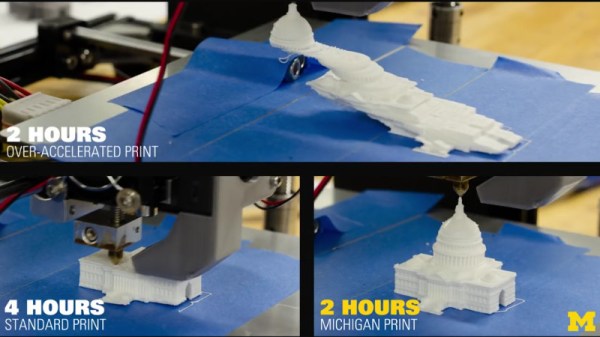
The other day I saw a plastic part that was so beautiful that I had to look twice to realize it hadn’t been cast — and no, it didn’t come out of a Stratysys or anything, just a 3D printer that probably cost $1,500. It struck me that someone who had paid an artisan to make a mold and cast that part might end up spending the same amount as that 3D printer. It also struck me that the little guys are starting to catch up with the big guys.

Haz Bridgeport, Will Mill

Sometimes it’s just a matter of getting a hold of the equipment. If you need a Bridgeport mill for your project, and you don’t have one, you have to pay for someone else to make the thing — no matter how simple. You’re paying for the operator’s education and expertise, as well as helping pay for the maintenance and support of the hardware and the shop it’s housed in.

I once worked in a packaging shop, and around 2004 we got in a prototype to use in developing the product box. This prototype was 3D printed and I was told it cost $12,000 to make. For the era it was mind blowing. The part itself was simplistic and few folks on Thingiverse circa 2017 would be impressed; the print quality was roughly on par with a Makerbot Cupcake. But because the company didn’t have a 3D printer, they had to pay someone who owned one a ton of cash to make the thing they wanted.

Unparalleled Access to Formerly Professional-Only Tools

But access to high end tools has never been easier. Hackerspaces and tool libraries alone have revolutionized what it means to have access to those machines. There are four or five Bridgeports (or similar vertical mills) at my hackerspace and I believe they were all donated. For the cost of membership, plus the time to get trained in and checked out, you can mill that part for cheap. Repeat with above-average 3D printers, CNC mills, vinyl cutters, lasers. The space’s South Bend lathe (pictured) is another example of the stuff most people don’t have in their basement shops. This group ownership model may not necessarily grant you the same gear as the pros, but sometimes it’s pretty close.
Continue reading “The Narrowing Gap Between Amateur And Professional Fabrication”