Take Your PCBs From Good To Great: Toner Transfer

dscf8697
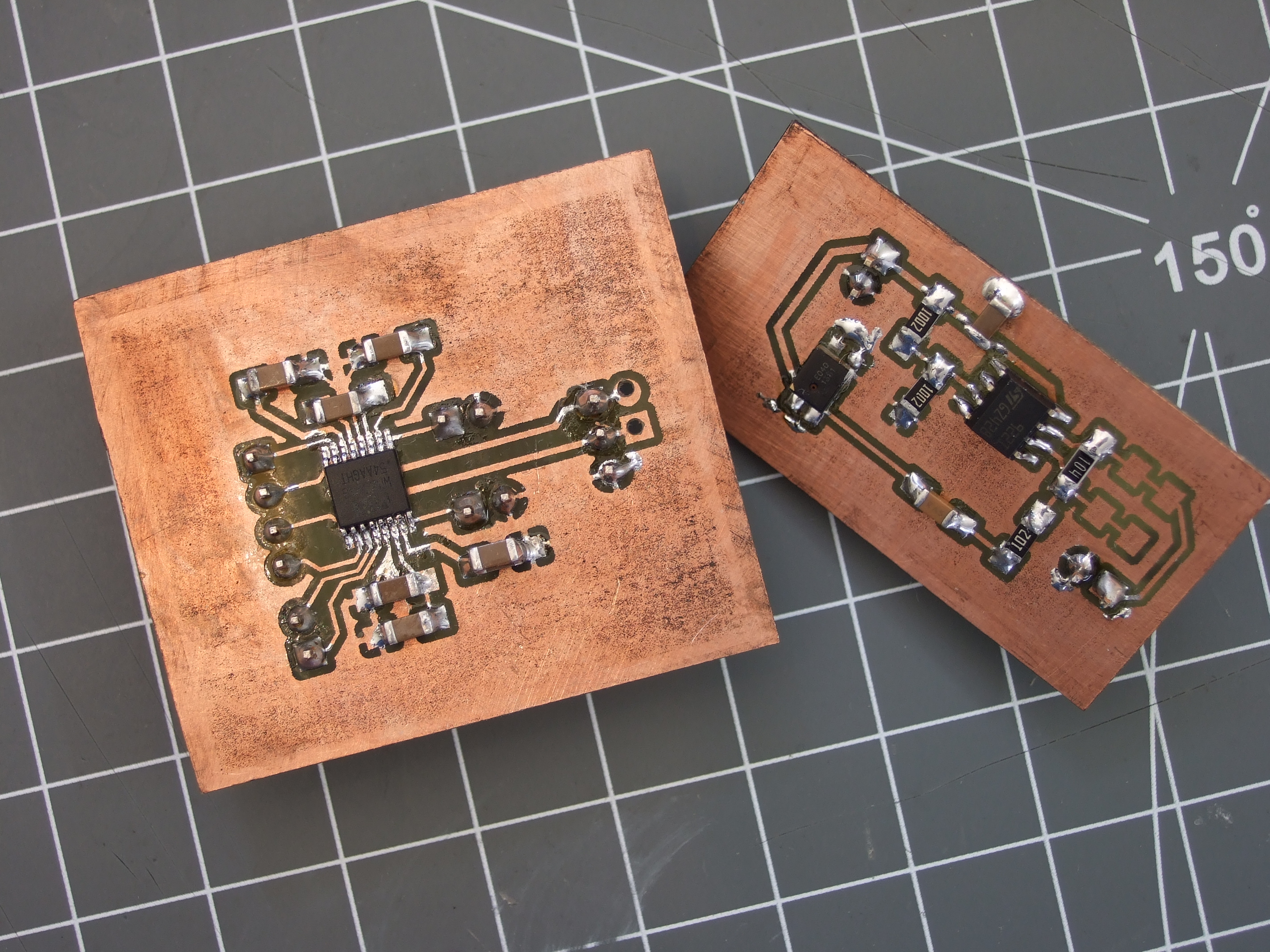
One-offs that I never would have gotten professionally made, but that were infinitely handy during development

A lot of us make circuit boards at home. I find it a useful skill to have in my bag of tricks for intermediate steps along the way to a finished project, even if the finished version is going to be sent out to a PCB fab. When I need a breakout board that meshes with other development tools, for instance, there’s nothing like being able to whip something up that plugs right in. Doing it quickly, and getting on with the rest of the project instead of placing an order and waiting for delivery, helps keep me in the flow.

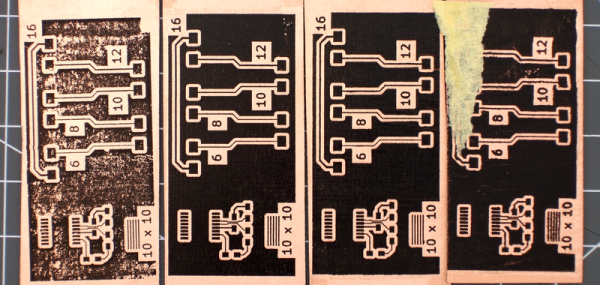
Toner transfer is by far the fastest way to make a circuit board at home — simply print the circuit out on a laser printer, iron it onto the copper, and etch. When it works, it’s awesome. When it doesn’t, it can be a hair-pulling exercise in figuring out which of myriad factors are misaligned.

For a long time now, I’ve been using a method that’s very reliable and repeatable. Recently, I’ve been tweaking a bit on the performance of the system, and I thought I’d share what I’ve got. At the moment, I’m able to very reliably produce boards with 6 mil (0.15 mm) traces and 8 mil (0.20 mm) spacing. With a little care in post-production, 4 mil / 6 mil is entirely plausible.

Continue reading “Take Your PCBs From Good To Great: Toner Transfer”

Path To Craftsmanship: The Art Of Being Wrong

Every technical person knows, unlike artists and politicians, that they can be provably wrong; at least to a degree. Math tells the truth. Coupled with this knowledge is an ego which is often entirely based on our output. If our mechanism works, we feel good because we are provably good.

A disclaimer.
It didn’t stop Scott Adams from writing four books full of it and it won’t stop me.
from Dilbert: Advice

Unfortunately, unlike the robots we build or the simple minds we spin out of code, we are still human at the end of the day. When we feel the sting of being wrong we often respond poorly. Some of us slip into depression, claiming it all and dredging up a few other mistakes from our past along for the ride. Some of us explode into prideful rages, dropping our metaphorical shorts to show that this one fault is no fault at all compared to a history of personal majesty. Others become sullen and inward. Others ignore it all together. Others yet strike out at those around them leaving unpleasant barbs. The variations are endless, but I do think there is an ideal to be reached.

Despite the risk that the nature of the things I’ve learned will reveal exactly what kind of arrogant sod I am, I’ll give it a go anyway. I’ve made many mistakes, and I have many more to make, but these are some of the things I’ve learned. I’ve learned them all in technical fields, so I’m not sure how broadly the advice applies, but luckily this is Hackaday.

Continue reading “Path To Craftsmanship: The Art Of Being Wrong”

SNES Micro Is A Pi Z Of Art

Clay is a shapeless raw material that’s waiting to be turned into awesomeness by your creativity. So is the Raspberry Pi. [Dorison Hugo] brought the two together in his artfully crafted SNES micro – a tiny retro gaming console sculpted from clay.

Continue reading “SNES Micro Is A Pi Z Of Art”

A 3D Printed Camera (Including The Lens)

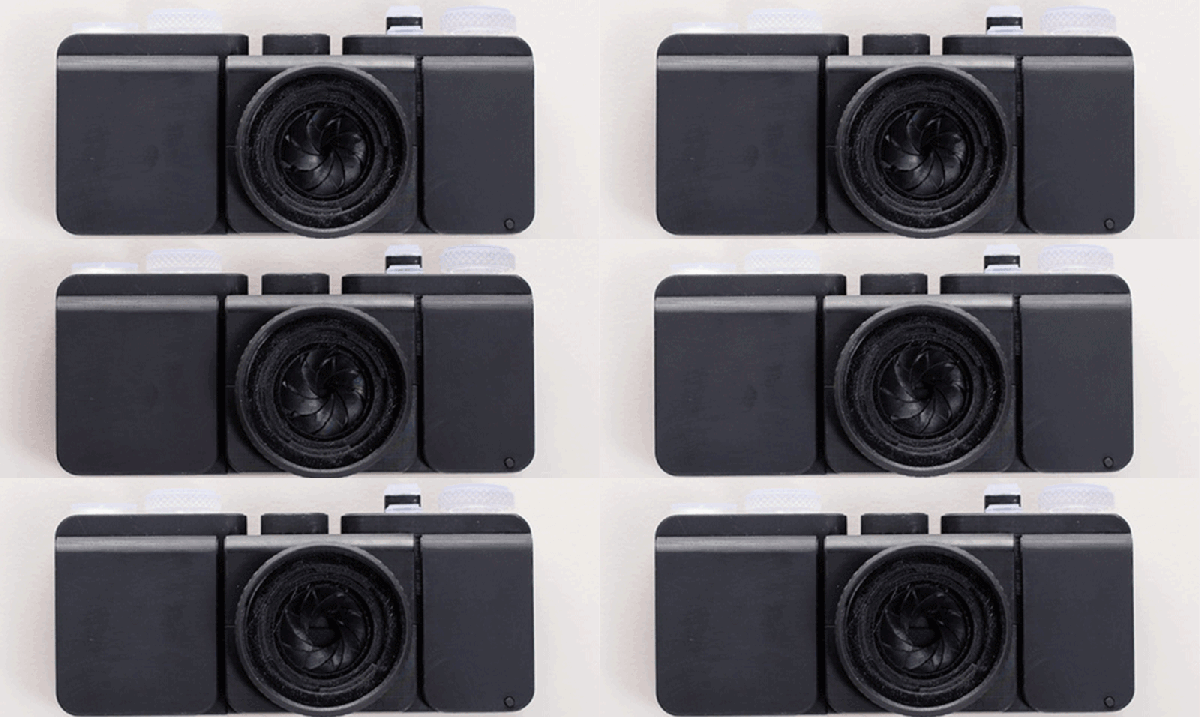
Barring the RepRap project, we usually see 3D printers make either replacement parts or small assemblies, not an entire finished product. [Amos] is the exception to this rule with his entirely 3D-printed camera. Everything in this camera is 3D printed, from the shutter to the lightproof box to the lens itself. It’s an amazing piece of engineering, and a testament to how far 3D printing has come in just a few short years.

35mm film is the most common film by far, and the only one that’s still easy to get and have developed at a reasonable price. This 3D-printed camera is based on that standard, making most of the guts extremely similar to the millions of film cameras that have been produced over the years. There’s a film cartridge, a few gears, a film takeup spool, and a lightproof box. So far, this really isn’t a challenge for any 3D printer.

The fun starts with the lens. We’ve seen 3D printers used for lens making before, starting with a 3D print used to create a silicone mold where a lens is cast in clear acrylic, 3D printed tools used to grind glass, and an experiment from FormLabs to 3D print a lens. All of these techniques require some surface finishing, and [Amos]’ lens is no different. He printed a lens on his Form 2 printer, and started polishing with 400 grit sandpaper. After working up to 12000 grit, the image was still a bit blurry, revealing microscopic grooves that wouldn’t polish out. This led him to build a tool to mechanically polish the lens. This tool was, of course, 3D printed. After polishing, the lens was ‘dip polished’ in a vat of uncured resin.

The shutter was the next challenge, and for this [Amos] couldn’t rely on the usual mechanisms found in film cameras. he did find a shutter mechanism from 1885 that didn’t take up a lot of depth, and after modeling the movement in Blender, designed a reasonable shutter system.

Building an entire camera in a 3D printer is a challenge, but how are the pictures? Not bad, actually. There’s a weird vignetting, and everything’s a little bit blurry. It’s hip, trendy, and lomo, and basically amazing that it works at all.

Giant-Scale Physical Pong

At first, we thought we were having deja vu, but then we saw this video embedded below. [Thijs Eerens] is a creative technologist (dare we say, a “hacker”?) who builds giant-scale games for a living. For the Lowlands festival in the Netherlands, he contributed to the build of a huge Pong game that looks as big as a cinema screen.

The paddles appear to be controlled by pulling ropes, and the “ball” is driven around on a system of wires and stepper motors. Code running in the background tracks the player paddles, drives the ball, and keeps score. From the video, there seem to be sound effects involved. It looks like a lot of fun.

Continue reading “Giant-Scale Physical Pong”

VW Engineer Pleads Guilty To Conspiracy

[James Liang], an engineer at Volkswagen for 33 years, plead guilty today to conspiracy. He was an engineer involved in delivering Diesel vehicles to market which could detect an emissions test scenario and perform differently from normal operation in order to pass US emission standards.

A year ago we talked about the Ethics in Engineering surrounding this issue. At the time we wondered why any engineer would go along with a plan to defraud customers. We may get an answer to this after all. [Mr. Liang] will cooperate with authorities as the VW probe continues.

According to information in the indictment, none of this happened by mistake (as we suspected). There was a team responsible for developing a mode that would detect a test and pass inspection after the company discovered the engine could not otherwise pass. It’s not hard to see the motivation behind this — think of the sunk cost in developing an engine design. The team responsible for cheating the tests went so far as to push software updates in 2014 which made the cheat better, and lying about the existence of these software “features” when questioned by authorities (again, according to the indictment).

Books You Should Read: Poorly Made In China

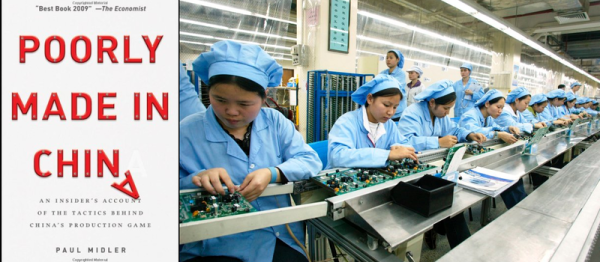
This book is scary, and honestly I can’t decide if I should recommend it or not. It’s not a guide, it doesn’t offer solutions, and it’s full of so many cautionary tales and descriptions of tricks and scams that you will wonder how any business gets done in China at all. If you are looking for a reason not to manufacture in China, then this is the book for you.

The author is not involved in the electronics industry. Most of the book describes a single customer in the personal products field (soap, shampoo, lotions, creams, etc.). He does describe other industries, and says that in general most factories in any industry will try the same tricks, and confirms this with experiences from other similar people in his position as local intermediary for foreign importers.

Continue reading “Books You Should Read: Poorly Made In China”