Tips For Buying Your First Milling Machine

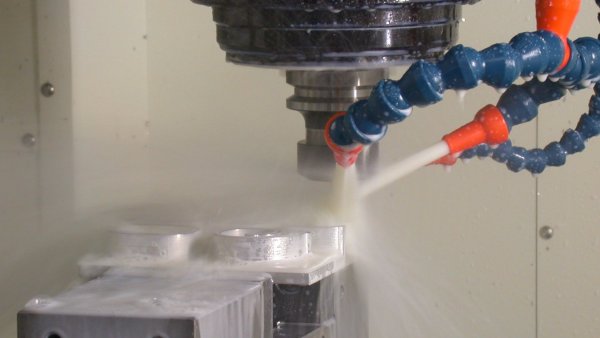
If you’re interested in making things (and since you’re reading this, we’re going to assume you are), you’ve almost certainly felt a desire to make metal parts. 3D printers are great, but have a lot of drawbacks: limited material options, lack of precision, and long printing times. If you want metal parts that adhere to even moderately tight tolerances, a milling machine is your only practical option. There is, after all, a very good reason that they’re essential to manufacturing.

However, it can be difficult to know where to start for the hobbyist who doesn’t have machining experience. What kind of milling machine should you get? Should you buy new or used? What the heck is 3-phase power, and can you get it? These questions, among many others, can be positively overwhelming to the uninitiated. Luckily, we — your friends at Hackaday — are here to help give you some direction. So, if you’re ready to learn, then read on! Already an expert? Leave some tips of your own in the comments!

Continue reading “Tips For Buying Your First Milling Machine”
Nerd-Bait: ESP8266 + ILI9341 Screen

In honor of my-own-damn-self, we’re going to call it Elliot’s Law: “When any two interesting parts get cheap enough on eBay, someone will make an interface PCB for them.”

IMG_3830

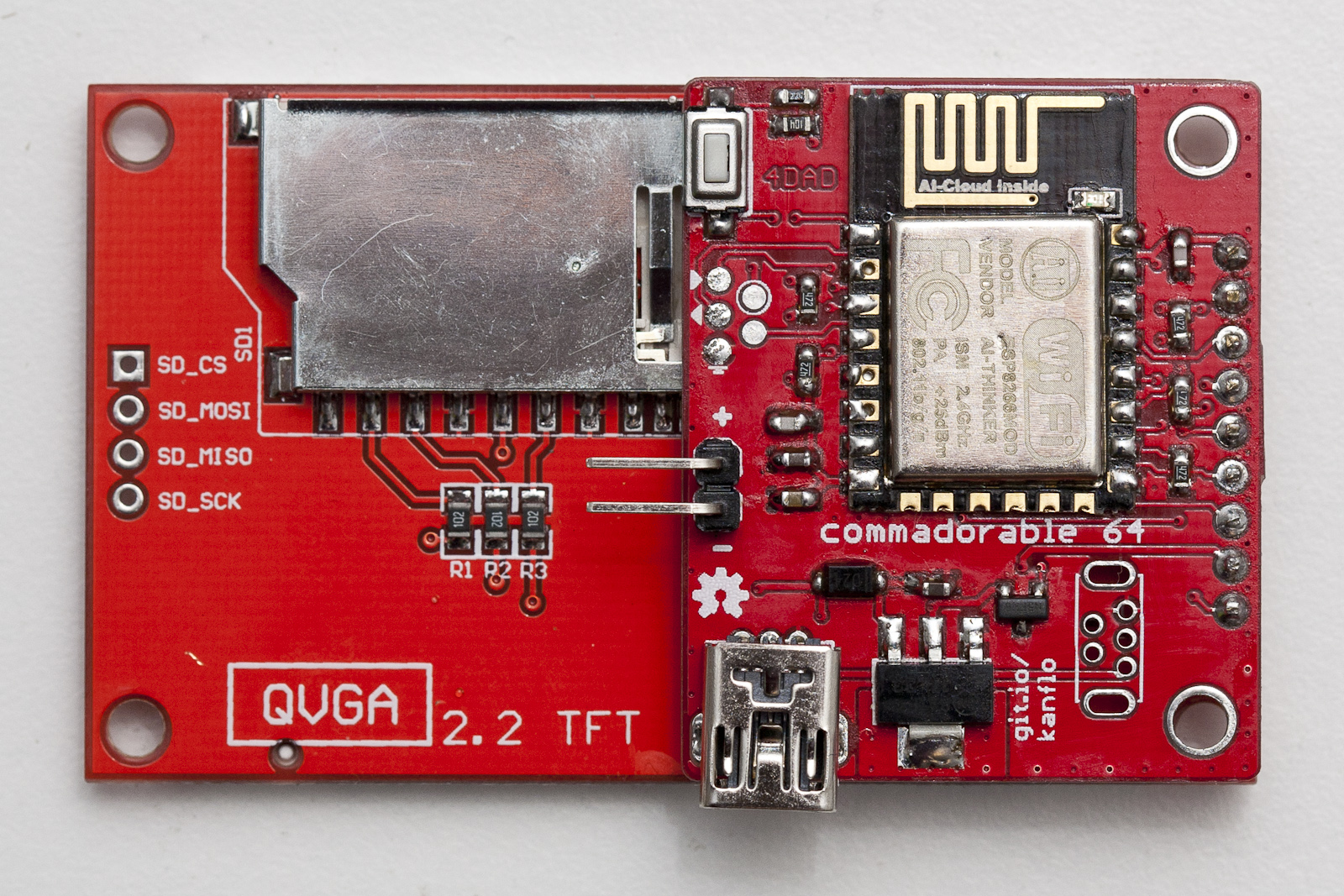
And so it is with [Johan Kanflo]’s latest bit of work: a PCB that mounts an ESP8266 module onto the back of an ILI9341 color display, with user button, power supply, and an auxiliary MOSFET. Four bucks for the screen, four bucks for the ESP8266 module, and a few bucks here and there on parts and PCB, and you’ve got an Internet-enabled, full-color, 320×240 graphical display. That’s pretty awesome, and it’s entirely consistent with Elliot’s Law.

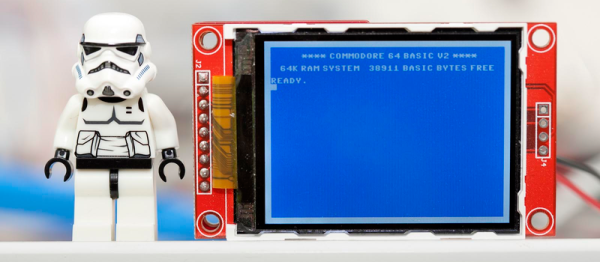
However, we almost can’t forgive [Johan] for the extreme geek-baiting. Posting the cuuuute little screen next to a Stormtrooper Lego figure is already hitting below the belt, but displaying a Commodore-64 startup screen, in what’s got to be exactly the right font and color combo, borders on being pathologically emotionally manipulative. You’re playing with our hearts, [Kanflo]!

We love projects like his ESP8266-and-RFM69 mashup and his gutted-Macintosh-planespotter-gizmo, so we’re inclined to forgive. And besides, we’re still on a high from naming our first law and we’re wondering which two eBay parts are up next.

Google’s New OS Will Run On Your Raspberry Pi

According to reports from Android Police and ZDNet, you may soon have a new operating system from Google to run on your Raspberry Pi. Details are still extremely sparse, the only description on the GitHub page is “Pink + Purple == Fuchsia (a new Operating System)”. But, here’s what we do know:

The new OS, called Fuchsia, will be based on Magenta, which is in turn built on LittleKernel. That means that, surprisingly, Google will not be using a Linux kernel for the new OS but something more like an embedded RTOS. Although Google is targeting embedded systems, the possibility of being able to run it on a desktop has been mentioned, so it may not be too minimalistic.

Google’s Travis Geiselbrecht has named the Raspberry Pi 3 specifically as one system it will run on, and said that it’ll be available soon. But, it seems Google is aiming to make it run on a variety of ARM devices (both 32 bit and 64 bit), as well as 64 bit PCs. This is a direct effort to compete against other commercial embedded operating systems that are currently available, and especially on IoT devices.

If you’re eager to see what this is all about, you can follow Google’s quick start recipes and see what you can come up with, although details are still sketchy enough that we’re just going to wait a bit.

Fail Of The Week: How NOT To Smooth A 3D Print

Many of the Fail Of The Week stories we feature here are pretty minor in the grand scheme of things. At worse, gears are ground, bits are broken, or the Magic Blue Smoke is released. This attempt to smooth a 3D print released far more than a puff of blue smoke, and was nearly a disaster of insurance adjuster or medical examiner proportions.

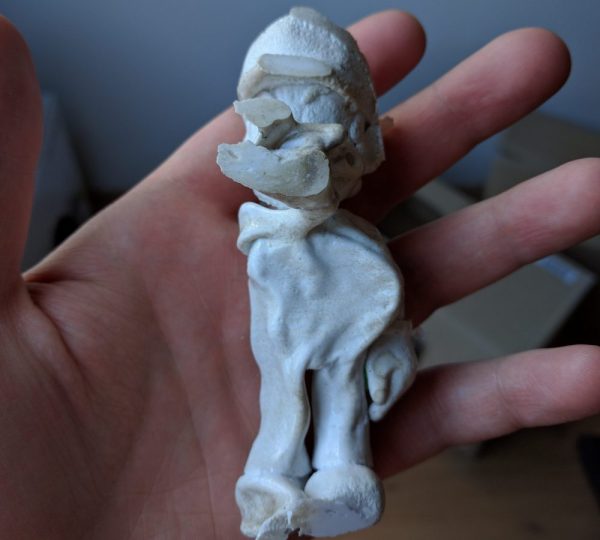
Luckily, [Maxloader] and his wife escaped serious injury, and their house came out mostly unscathed. The misadventure started with a 3D printed Mario statue. [Maxloader] had read acetone vapor can smooth a 3D print, and that warming the acetone speeds the process. Fortunately, his wife saw the looming danger and wisely suggested keeping a fire blanket handy, because [Max] decided to speed the process even more by putting a lid on the pot. It’s not clear exactly what happened in the pot – did the trapped acetone vapors burp the lid off and find a path to the cooktop burner? Whatever it was, the results were pretty spectacular and were captured on a security camera. The action starts at 1:13 in the video below. The fire blanket came in handy, buying [Max] a few seconds to open the window and send the whole flaming mess outside. Crisis averted, except for nearly setting the yard on fire.

What are we to learn from [Maxloader]’s nearly epic fail? First, acetone and open flame do not mix. If you want to heat acetone, do it outside and use an electric heat source. Second, a fire extinguisher is standard household equipment. Every house needs at least one, and doubly so when there’s a 3D printer present. And third, it’s best to know your filaments – the dearly departed Mario print was in PLA, which is best smoothed with tetrahydrofuran, not acetone.

Anything else? Feel free to flame away in the comments.

Continue reading “Fail Of The Week: How NOT To Smooth A 3D Print”

Turn Your Motorola Android Phone Into A Raspberry Pi

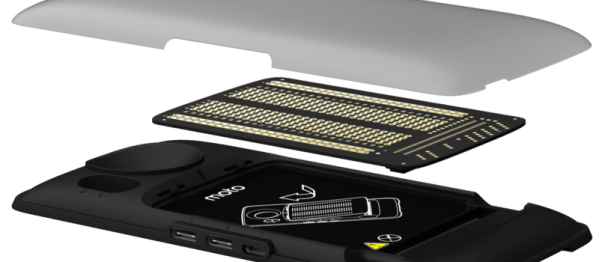
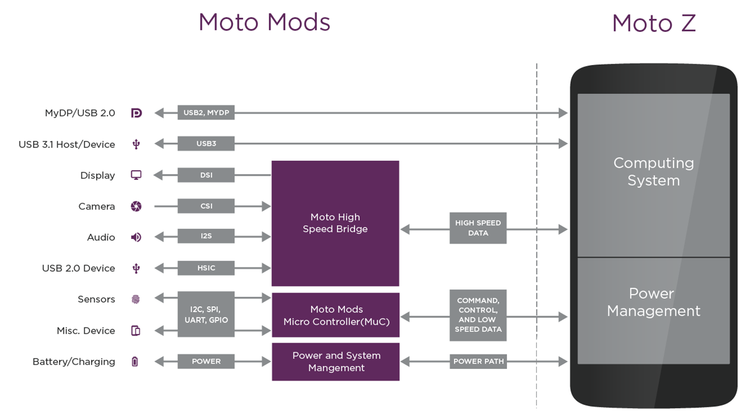
In the surest sign that hardware hacking is the new hotness, Motorola and Farnell/Element 14 have developed an add-on board and SDK that will let you connect virtually anything to your mobile phone. Motorola is calling it the “Moto Mods” system, and it looks like its going to be a dedicated microcontroller that interfaces with the computer inside the phone and provides everything from GPIOs to DSI (video). Naturally, I2C, I2S, SPI, UART, even two flavors of USB are in the mix.

dev-config-diagram-5

The official SDK, ahem Mods Development Kit (MDK), is based on the open Greybus protocol stack (part of Google’s Project Ara open phone project) and it’s running on an ARM Cortex-M4F chip. It’s likely to be itself fairly hackable, and even if the suggested US $125 price is probably worth it for the convenience, we suspect that it’ll be replicable with just a few dollars in parts and the right firmware. (Yes, that’s a challenge.)

The initial four adapter boards range from a simple breadboard to a Raspberry-Pi-hat adapter (hence the title). It’s no secret that cell phones now rival the supercomputers of a bygone era, but they’ve always lacked peripheral interfaces. We wish that all of the old smartphones in our junk box had similar capabilities. What do you say? What would you build with a cellphone if you could break out all sorts of useful comms?

Via HackerBoards, and thanks to [Tom] for the tip!

Ask Hackaday: What Are Magnetic Gears (Good For)?

Magnetic gears are surprisingly unknown and used only in a few niche applications. Yet, their popularity is on the rise, and they are one of the slickest solutions for transmitting mechanical energy, converting rotational torque and RPM. Sooner or later, you’re bound to stumble upon them somewhere, so let’s check them out to see what they are and what they are good for.

Continue reading “Ask Hackaday: What Are Magnetic Gears (Good For)?”

Google Unveils Their Experimental Plan For Wireless Broadband Service

Two years ago, the FCC, with interested parties in Microsoft, Google, and many startups, created the Citizens Band Radio Service (CBRS), a rule that would open up the 3550-3650 MHz band  to anyone, or any company, to create their own wireless backbone between WiFi access points. It is the wireless solution to the last-mile problem, and last year the FCC enthusiastically endorsed the creation of the CBRS.

In a recently released FCC filing, Google has announced their experimental protocol for testing the new CBRS. This isn’t fast Internet to a lamp pole on the corner of the street yet, but it lays the groundwork for how the CBRS will function, and how well it will perform.

Google will be testing the propagation and interference of transmissions in the 3.5 GHz band in places around the US. Most of the Bay Area will be covered in the tests, as well as Boulder, CO, Kansas City, Omaha, Raleigh, NC, Provo, UT, and Reston, VA. Tests will consist of a simple CW tone broadcast in the 3.5 GHz band.

The 3.5 GHz band is already allocated to shipborne navigation and military radar systems, posing an obvious problem to any wireless broadband system using this spectrum. To this end, the FCC is proposing a novel solution to the problem of coexistence between the CBRS and the military. Instead of simply banning transmissions in the spectrum, FCC Chairman Wheeler proposes, “computer systems can act like spectrum traffic cops.” A computer is able to direct the wireless traffic much more effectively than a blanket ban, and will allow better utilization of limited spectrum.

Google’s FCC filing is just for testing propagation and interference, and we have yet to hear anything about how a network built on 3.5 GHz spectrum will be laid out. One thing is for certain, though: you will not have a 3.5 GHz USB networking dongle for the same reason you don’t have a Google Fiber input on your desktop.