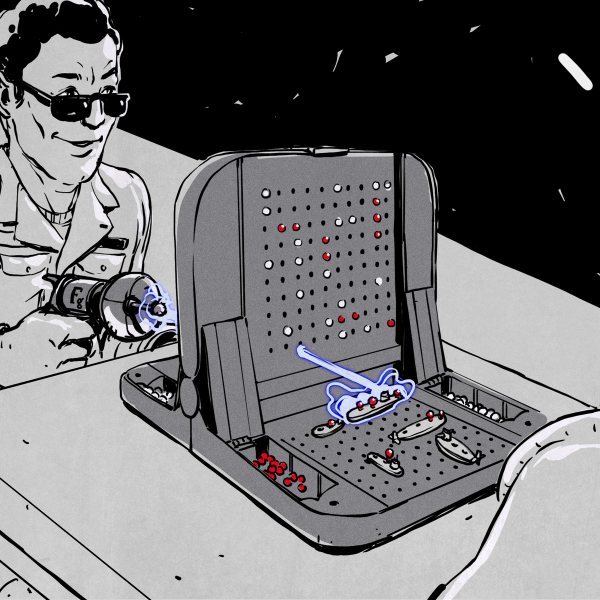
Orbital Tracking On The NES

It’s easy to dismiss the original Nintendo Entertainment System as just, well, an entertainment system. But in reality the 6502 based console wasn’t so far removed from early home computers like the Apple II and Commodore 64, and Nintendo even briefly flirted with creating software and accessories geared towards general purpose computing. Though in the end, Mario and friends obviously won out.

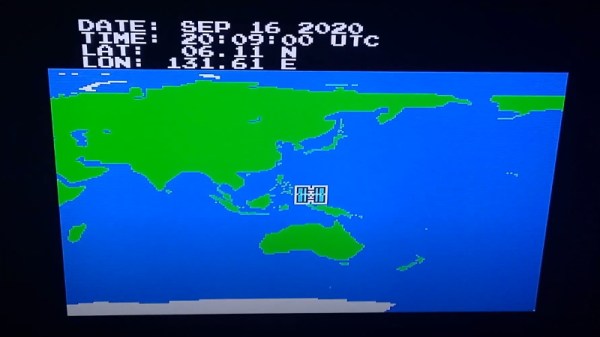
Still, we’re willing to bet that nobody at Nintendo ever imagined their plucky little game system would one day be used to track the course of a space station in low Earth orbit. But that’s precisely what [Vi Grey] has done with his latest project, which is part of his overall effort to demonstrate the unexpected capabilities of the iconic NES. While you’ll need a bit of extra hardware to run the program on a real console, there’s no fundamental trickery that would have kept some developer from doing this in 1985 if they’d wanted to.
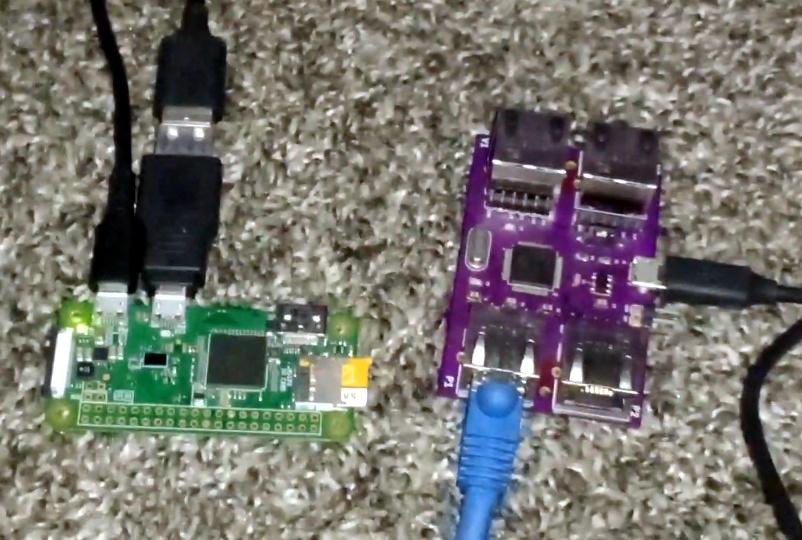
Raspberry Pi Zero and TAStm32

If you want to see your own 8-bit view of the International Space Station, the easiest way is with an emulator. In that case, [Vi] explains how you can load up his Lua script in Mesen or FCEUX to provide the ROM with the necessary tracking data from the Internet.

To run it on a real NES you’ll not only need some type of flash cart to get the ROM loaded, but also a TAStm32 board that’s used for tool-assisted speedruns. This allows the computer to essentially “type” the orbital data into the NES by emulating rapid controller button presses. That might seem like a tall order, but it’s important to note that neither device requires you to modify the original console; the code itself runs on a 100% stock NES.

If tracking spacecraft isn’t your thing, perhaps you’d be more interested in the some of the work [Vi] has previously done on the NES. We’re particularly fond of his polyglot ROM that is a ZIP file of its own source code.
Continue reading “Orbital Tracking On The NES”

Nintendo Headquarters Plaques

3D Print A Piece Of Nintendo History Before The Real One Is Gone

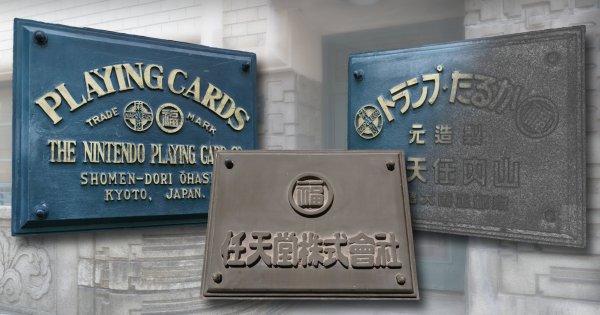
Nintendo wasn’t always in the videogames business. Long before Mario, the company was one of the foremost producers of Hanafuda playing cards in Japan. From 1930 until 1959, Nintendo ran its printing business from a four-story art deco style building that featured distinctive plaques at the front entrance. We now have a chance to print those former Nintendo HQ plaques at home thanks to [Mr. Talida] who shared some 3D models on Twitter. Talida, a self-described “retro video game archivist”, recreated the plaques via photogrammetry from a number of reference photos he took from a visit to the Kyoto site late last year.

These 3D models come at a crucial time as the old Nintendo HQ building, which sat dormant for years, is set to be turned into a boutique hotel next year. According to JPC, the hotel will feature twenty rooms, a restaurant, and a gym and is expected to be completed by summer 2021 (although that estimate was from the “before” times). The renovation is expected to retain as much of the original exterior’s appearance as possible, but the Nintendo plaques almost assuredly will not be included. For a first-person tour of the former Nintendo headquarters building, there is a video from the world2529 YouTube channel provided below.

It is encouraging to see examples of this DIY-style of historical preservation. Many companies have proven themselves to be less-than-stellar stewards of their own history. Though if his Twitter timeline is any indication, [Mr. Talida] is up to something further with this photogrammetry project. A video export exhibiting a fully textured 3D model of the old Nintendo headquarters’ entrance was published recently along with the words, “What have I done.”

Continue reading “3D Print A Piece Of Nintendo History Before The Real One Is Gone”

Game Boy Plays Forever

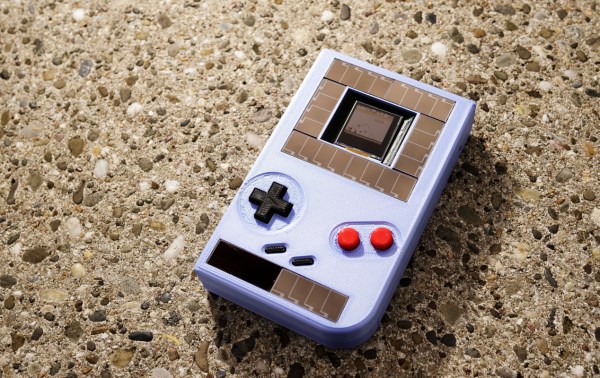
For those of us old enough to experience it first hand, the original Game Boy was pretty incredible, but did have one major downside: battery consumption. In the 90s rechargeable batteries weren’t common, which led to most of us playing our handhelds beside power outlets. Some modern takes on the classic Game Boy address these concerns with modern hardware, but this group from the Delft University of Technology and Northwestern has created a Game Boy clone that doesn’t need any batteries at all, even though it can play games indefinitely.

This build was a proof-of-concept for something called “intermittent computing” which allows a computer to remain in a state of processing limbo until it gets enough energy to perform the next computation. The Game Boy clone, fully compatible with the original Game Boy hardware, is equipped with many tiny solar panels which can harvest energy and is able to halt itself and store its state in nonvolatile memory if it detects that there isn’t enough energy available to continue. This means that Super Mario Land isn’t exactly playable, but other games that aren’t as action-packed can be enjoyed with very little impact in gameplay.

The researchers note that it’ll be a long time before their energy-aware platform becomes commonplace in devices and replaces batteries, but they do think that internet-connected devices that don’t need to be constantly running or powered up would be a good start. There are already some low-powered options available that can keep their displays active when everything else is off, so hopefully we will see even more energy-efficient options in the near future.

Thanks to [Sascho] for the tip!

Continue reading “Game Boy Plays Forever”

A Real Working Lego NES

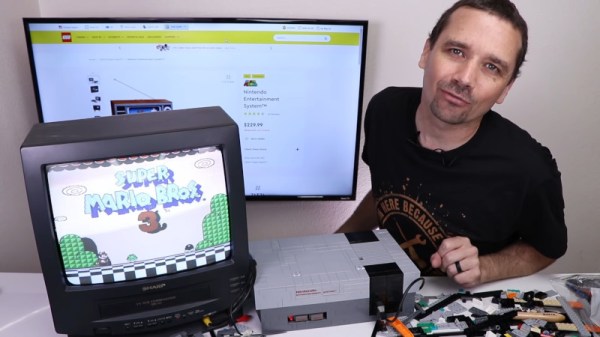
Lego is an entry into the world of engineering for many a youngster, and an enjoyable pursuit for many more. These days, high quality kits are available to make everything from the Tower of Pisa to Nintendo’s venerated NES console. [TronicsFix] picked up the latter set, and decided it needed to be fully functional.

Consisting of 2646 pieces, the official Lego NES is a faithful recreation of the original, albeit at approximately 80% of the size. After building the kit to spec, [TronicsFix] noted that there was no way a cartridge would fit in the slot.

Given this failing, a ground-up rebuild was in order. Starting with the internals from an original NES, [TronicsFix] set about building an appropriately sized base and working from there. Supports were built to mount the various components, with the controller ports being particularly well done, and the video output and power switches being a little more tricky. The many cosmetic pieces from the official kit came in handy here, giving the final product the aesthetic touches it needed to fit the bill.

The final result is an authentic, functional NES in a LEGO case. [TronicsFix] demonstrates as such, showing the console playing Super Mario 3. Nintendo consoles remain a favorite amongst modders; some going so far as to build fire-breathing creations. Video after the break.

Continue reading “A Real Working Lego NES”

WiiBoy Color Is Exactly What It Sounds Like

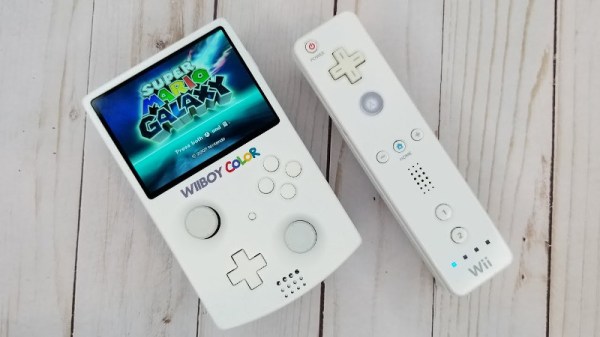
Anyone can go out and buy a handheld console, and if you want to be the cool kid on the school bus, you can always ask your parents to take you out to get one. But if you want real street cred that lasts through your adult years, you’ve gotta put something together yourself. [GingerOfMods] has done just that with the Wiiboy Color. 

Yes, it’s another home-console-turned-portable, and it’s perfomed with exquisite execution. The Wii motherboard is cut and sliced to the absolute bare minimum, as the aim was to build the entire system to the rough form factor of the original Game Boy Color. Custom PCBs were then used to link the chopped ‘board to peripherals, such as the USB drive used to load games and the circuitry from a Gamecube controller. The screen is a beautiful looking 3.5″ IPS LCD, running at 480p and originally intended for use as an automotive backup camera. Battery life is around 2-3 hours, with a USB-C port included for easy charging. More details are included on the forum build log.

It’s a tidy build, and the 3D printed case, Switch joysticks and DS Lite buttons give it a near-production quality finish. [GingerOfMods] intends to build more for commissions, though expect a hefty price tag given the labor and custom work involved. We’ve seen other portable Wiis before too, like this tightly-packed Kapton-heavy build. Video after the break.

Continue reading “WiiBoy Color Is Exactly What It Sounds Like”

Retro Game Bow Tie

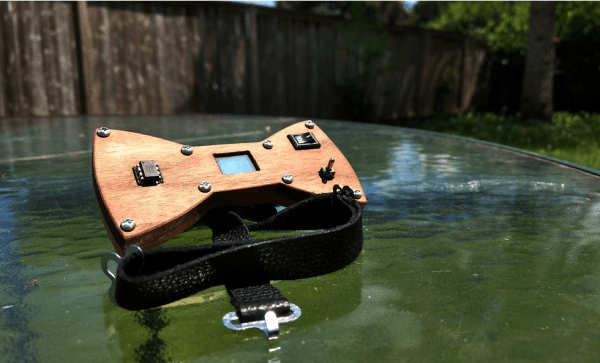
[Greg] loves hacking his bow ties. Back in high school, he added some bright RGB LEDs to the bow tie he wore to prom and even won the male best-dressed award. Recently he decided to try another bow tie hack, this time giving his tie some retro arcade game feels.

He decided to use an ATtiny85 and to experiment doing some more lower-level programming to refresh his skills. He wrote all his libraries from scratch which really helped him learn a lot about the ATtiny in the process. This also helped him make sure his code was as efficient as possible since he had quite a bit of memory constraints using the ATtiny85 (only 512 bytes of RAM).

He designed the body of the bow tie with wood. He fit all the electronics inside the body while allowing the ATtiny to protrude out of the body giving his bow tie some wanted hacker aesthetic. Of course, he needed to access the toggle switch to play the game, so he made a slot for that as well.

Nice addition to the electronics bow tie collection on Hackaday. Really aesthetic design if you ask us. And you know how much we love retro games.

Continue reading “Retro Game Bow Tie”

Remote Code Execution On The N64

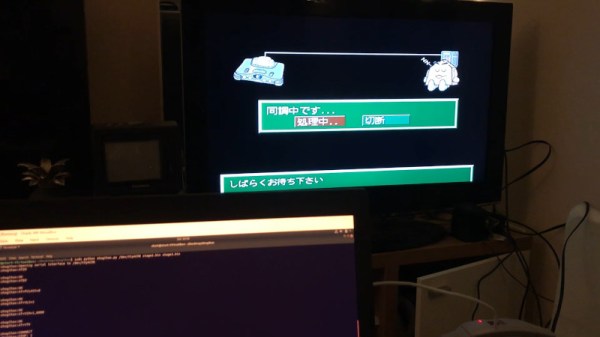
Some like to garden in their spare time, while others prefer to smoke cigars or fold complicated origami figurines. Security researcher [grifter] [CTurt] seems to enjoy cracking consoles instead, and had a go at exploiting the Nintendo 64 over an obscure modem interface.

The 1990s were a wild time, where games shipped in cartridges. This format opened up crazy possibilities to add additional hardware to the cartridge itself. Perhaps most famously, Nintendo packed in the SuperFX chip to enable 3D graphics on the Super Nintendo. Later on, the N64 game Morita Shogi 64 shipped with an entire telephone modem in the cartridge itself.  The resulting exploit is therefore dubbed “shogihax”.

Armed with a dodgy GameShark and a decompiler, [CTurt] set to work. Through careful parsing of the code, they were able to find a suitable overflow bug in the game when using the modem. Unlike more pedestrian savegame hacks, this not only allowed for the execution of arbitrary code but also the modem interface means that it’s possible to continually stream more data to the console on an ad-hoc basis.

It’s a great hack that takes advantage of a relatively accessible cartridge, rather than relying on more obscure hardware such as the N64DD modem or other rarities. We’ve seen other N64 homebrew hacks before, too. Video after the break.

Thanks to [grifter] for the tip!

Continue reading “Remote Code Execution On The N64”