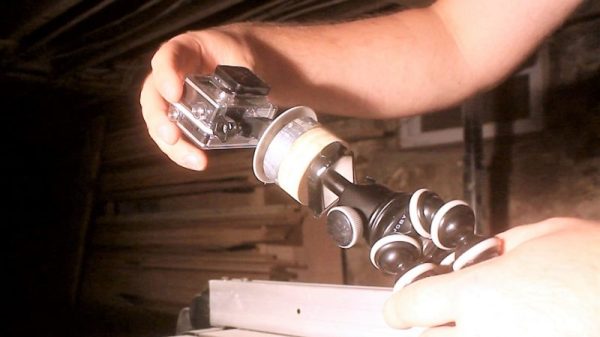
Everyone has a box or two at home somewhere full of family photographs and slides from decades past. That holiday with Uncle Joe in Florida perhaps, or an unwelcome reminder of 1987’s Christmas jumper. It’s fair to say that some memories deserve to be left to gather dust, but what about the others in a world of digital images?
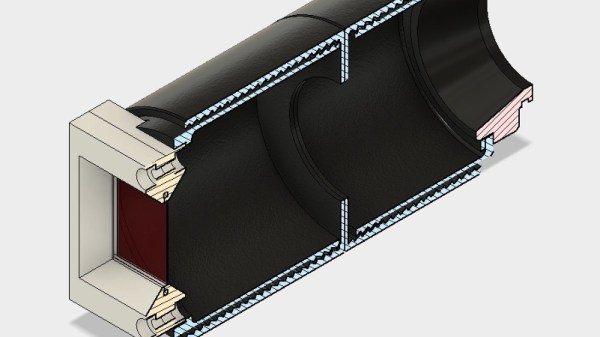
You could of course buy a film scanner to digitize Uncle Joe on the beach, but aside from the dubious quality of so many of them where’s the fun in that? Instead, how about 3D printing one? That’s what [Alexander Gee] did, in the form of an adapter to fit the lens mount of his Sony camera that contains both a 50mm enlarger lens and a mount for the slide. It’s a simple enough print, but he’s made enough parts parametric for users to be able to adjust it to their own camera’s mount.
Sometimes builds do not have to be complex, push boundaries, or contain more computing power than took us to the Moon. This one is simple and well-executed, and for anyone prepared to experiment could deliver results with a variety of cameras and lenses. Of course, you have to have some film to scan before you can use it, so perhaps you’d like to try a bit of home developing.
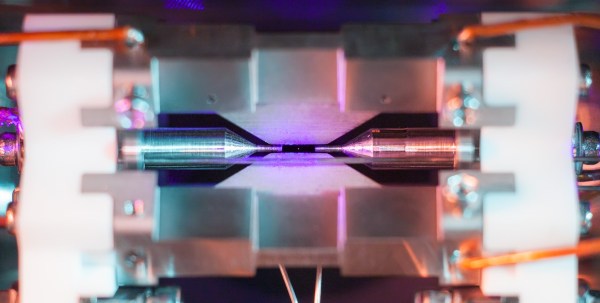
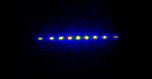
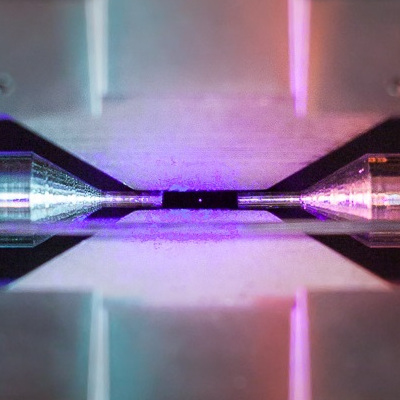 You probably learned in school that you couldn’t see a single atom, and that’s usually true. But [David Nadlinger] from the University of Oxford, trapped a positively charged strontium atom in an ion trap and then irradiated it with a blue-violet laser. The atom absorbs and reemits the light, and a camera can pick up the light, creating a one-of-a-kind photograph. The camera was a Canon 5D Mk II with a 50mm f/1.8 lens — a nice camera, but nothing too exotic.