Software Defined Radio Gets Physical Control

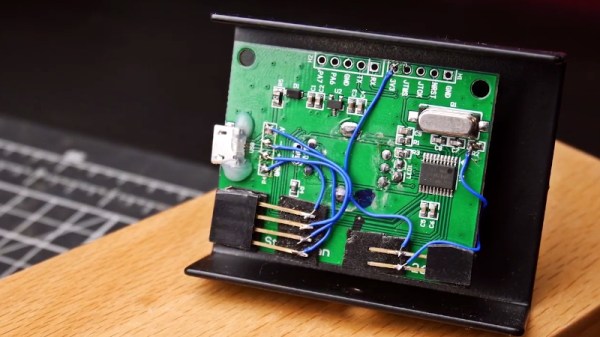
Software Defined Radio (SDR) is a great technology, but there’s something so satisfying about spinning a physical knob to cruise the airwaves. Wanting to restore that tactile experience, [Tysonpower] purchased a cheap USB volume knob and set out to get it working with his software. Unfortunately, getting it up and running took a lot more work than you’re probably expecting.
Programming the knob’s STM32

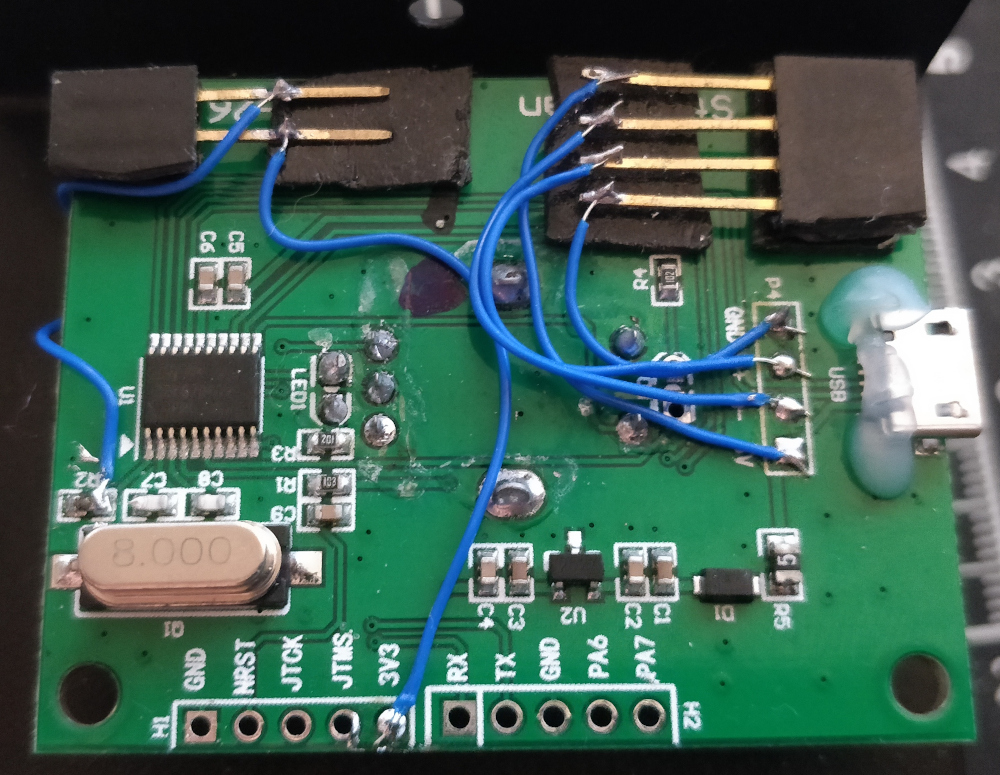
After verifying that the knob worked for volume control on his computer, [Tysonpower] decided to try and pull the firmware from the device’s STM32 microcontroller. Unfortunately, this is where things got tricky. It turned out the chip had Code Protection enabled, so when it was wired up to a programmer and put into DFU mode, the firmware got wiped. Oops.

That left [Tysonpower] with no choice but to write a new firmware from scratch, which naturally required reverse engineering the device’s hardware. Step one was reading up on STM32 development and getting the toolchain working, which paved the way to getting the knob’s LED to blink. A couple more hours worth of work and some multimeter poking later, and he was able to read the knob’s movement. He describes getting USB HID working as a nightmare due to lack of documentation, but eventually he got that sorted out as well.

The end result is a firmware allows the volume knob to mimic a mouse scroll wheel, which can be used for tuning in many SDR packages. But we think the real success story is the experience [Tysonpower] gained with reverse engineering and working with the STM32 platform. After all, sometimes the journey is just as important as the end result. Continue reading “Software Defined Radio Gets Physical Control”

A STM32 Tonewheel Organ Without A Single Tonewheel

The one thing you might be surprised not to find in [Laurent]’s beautiful tonewheel organ build is any tonewheels at all.

Tonewheels were an early way to produce electronic organ sounds: by spinning a toothed wheel at different frequencies and transcending the signal one way or another it was possible to synthesize quite an array of sounds. We like to imagine that they’re all still there in [Laruent]’s organ, albeit very tiny, but the truth is that they’re being synthesized entirely on an STM32 micro controller.

The build itself is beautiful and extremely professional looking. We were unaware that it was possible to buy keybeds for a custom synthesizer, but a model from FATAR sits at the center of the show. There’s a MIDI encoder board and a Nucleo development board inside, tied together with a custom PCB. The UI is an momentary encoder wheel and a display from Mikroelektronika.

You can see and hear this beautiful instrument in the video after the break.

Continue reading “A STM32 Tonewheel Organ Without A Single Tonewheel”

A Mini Vending Machine To Ramp Up Your Sales

A common sight in the world of hackerspaces is an old vending machine repurposed from hawking soda cans into a one-stop shop for Arduinos or other useful components. [Gabriel D’Espindula]’s mini vending machine may have been originally designed as an exercise for his students and may not be full sized, but we can see it or machines like it taking away some of the demand for those surplus models.

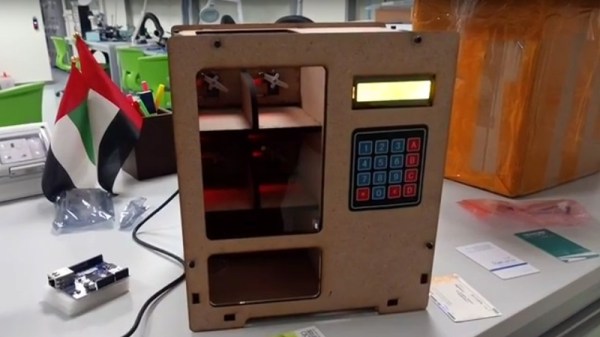
Its construction mimics that of some older 3D printers in using laser-cut ply to form the components of a box. Behind a clear lockable door are the shelves containing the products, at the back of which are continuous rotation servos that will drive the spiral Archimedes screws that eject the products. To the side is a membrane keypad and display, and the whole is drawn together with an STM32 board and an Arduino. It supports both RFID card login and keyboard login, and though it’s not finished we can see it forming the basis of a very useful system.

He’s posted the most recent progress in the form of a video that we’ve placed below the break. All the various files are available for download, so should you fancy one yourself then you have a good chance of success.

Continue reading “A Mini Vending Machine To Ramp Up Your Sales”

This RGB Tree Has Its Roots In A PCB

[Paczkaexpress]’s RGB tree is a mix of clever building techniques and artistic form that come together into quite a beautiful sculpture.

The branches of his tree are made from strands of enameled copper wire capped with an RGB LED and terminated in a female header. The separate wires are all wound and sculpted into the form of a tree. The wire is covered in a very thin layer of plastic, which we highly recommend observing under a microscope, that allow it to maintain a uniform and reflective copper color without shorting, adding to the effect.

The part we found an especially pleasing mix of form and function was how the “roots” of the tree clicked home in the PCB base. The PCB holds the STM32, power components, and an LED Driver. It doesn’t hide how the magic works, and the tree really does get its nutrients from the soil it’s planted in. This would be a fun kit to build. Very clever and you can see the final effect after the break.

Continue reading “This RGB Tree Has Its Roots In A PCB”

World’s Smallest MIDI Synth, Now Even Better

We’re pretty sure there’s no internationally recognized arbiter of records like “World’s smallest full-featured polyphonic stereo MIDI synthesizer that fits in a DIN shell”. If there isn’t, there sure should be, and we’re pretty sure [mitxela]’s Flash-Synth would hold that particular record.

This is one of those lessons that some people just can’t leave a challenge alone. First [mitxela] built a MIDI synthesizer into a DIN connector, then a couple of months later he made a somewhat more streamlined version. While both were feats of engineering derring-do, neither was entirely satisfactory. With only square wave synthesis and a limit of eight voices, plus some unpleasant audio issues and a total lack of manufacturability, the next challenge was clear.

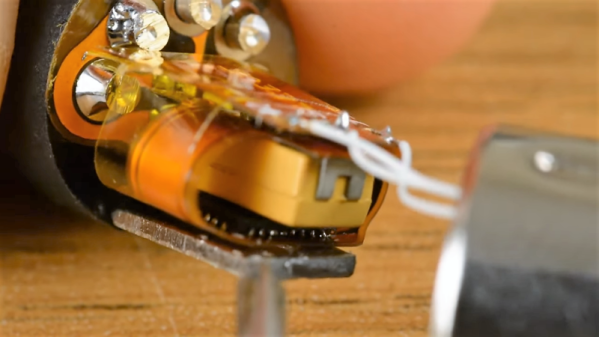
We won’t pretend to follow all the audio arcana, of which the video below and the build log have plenty, but the technical achievement is obvious enough. The Flash-Synth has an STM32, a tantalum SMD filter capacitor that dwarfs it, and a few support components on a flexible PCB that folds back on itself twice. This bit of circuit origami is connected to a 5-pin DIN plug and stuffed into the connector’s shell, which in turn mates to a custom-machined metal housing. A stereo audio jack lives at the other end of the assembly, and the whole synth is powered parasitically off the MIDI port.

The first half of the video below is mostly a demo that proves the synth sounds great and can do just about anything; skip to the 22-minute mark for the gory build details. Suffice it to say that [mitxela]’s past experience with ludicrous scale soldering served him well here.

Continue reading “World’s Smallest MIDI Synth, Now Even Better”

This Home-Etched ARM Dev Board Is A Work Of Art

One of the step changes in electronic construction at our level over the last ten or fifteen years has been the availability of cheap high-quality printed circuit boards. What used to cost hundreds of dollars is now essentially an impulse buy, allowing the most intricate of devices to be easily worked with. Many of us have put away our etching baths for good, often with a sigh of relief.

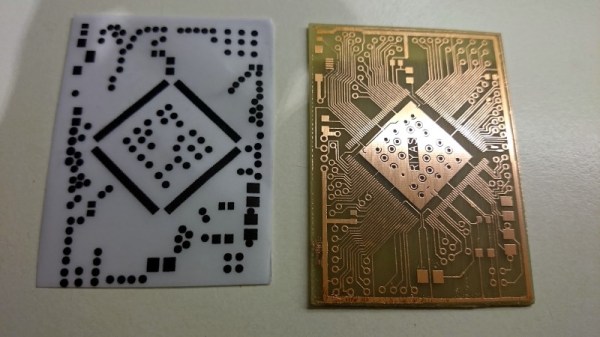
We’re pleased that [Riyas] hasn’t though, because they’ve etched an STM32 dev board that if we didn’t know otherwise we’d swear had been produced professionally. It sports a 176-pin variant of an STM32F4 on a single-sided board, seemingly without the annoying extra copper or lack-of-copper that we remember from home etching. We applaud the etching skill that went into it, and we’ll ignore the one or two boards that didn’t go entirely to plan. A coat of green solder mask and some tinning, and it looks for all the world as though it might have emerged from a commercial plant. All the board files are available to download along with firmware samples should you wish to try making one yourself, though we won’t blame you for ordering it from a board house instead.

It’s always nice to see that single board computers are not the sole preserve of manufacturers. If the RC2014 Micro doesn’t isn’t quite your style, there’s always the Blueberry Pi which features a considerably higher penguin quotient.

Tiny LED Cube Packs Six Meters Of Madness

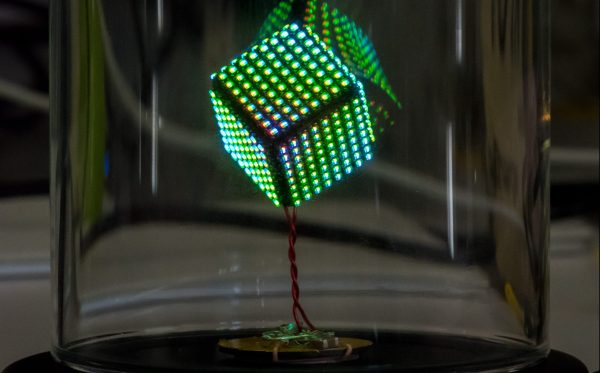
When [Freddie] was faced with the challenge of building a sendoff gift for an an LED-loving coworker he hatched a plan. Instead of making a display from existing video wall LED panels he would make a cube. But not just any cube, a miniature desk sized one that wasn’t short of features or performance. We’d be over the moon if someone gifted us with this itty-bitty Qi coil-powered masterpiece of an RGB cube.

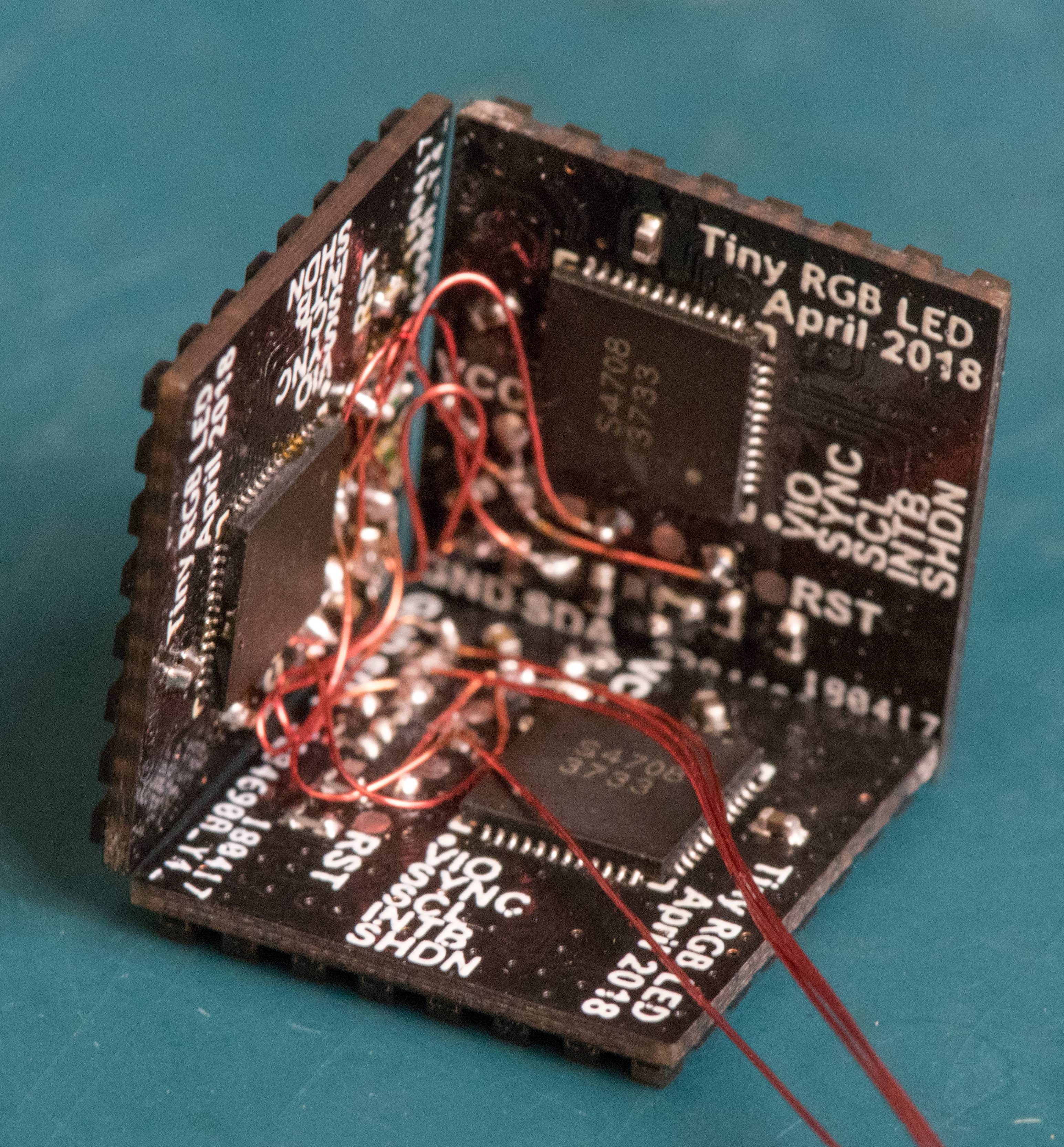
Recently we’ve been blessed with a bevy of beautiful, animated RGB cubes but none hit quite this intersection of size and function. The key ingredient here is tiny but affordable RGB LEDs which measure 1 mm on a side. But LEDs this small are dwarfed by the otherwise minuscule “2020” package WS2812’s and APA102s of the world. Pushing his layout capabilities to the max [Freddie] squeezed each package together into a grid with elements separated by less than 1 mm, resulting in a 64 LED panel that is only 16 mm x 16 mm panel (with test points and controller mounted to the back). Each of these four-layer PCBs that makes up the completed cube contains an astonishing 950 mm of tracking, meaning the entire cube has nearly six meters of traces!

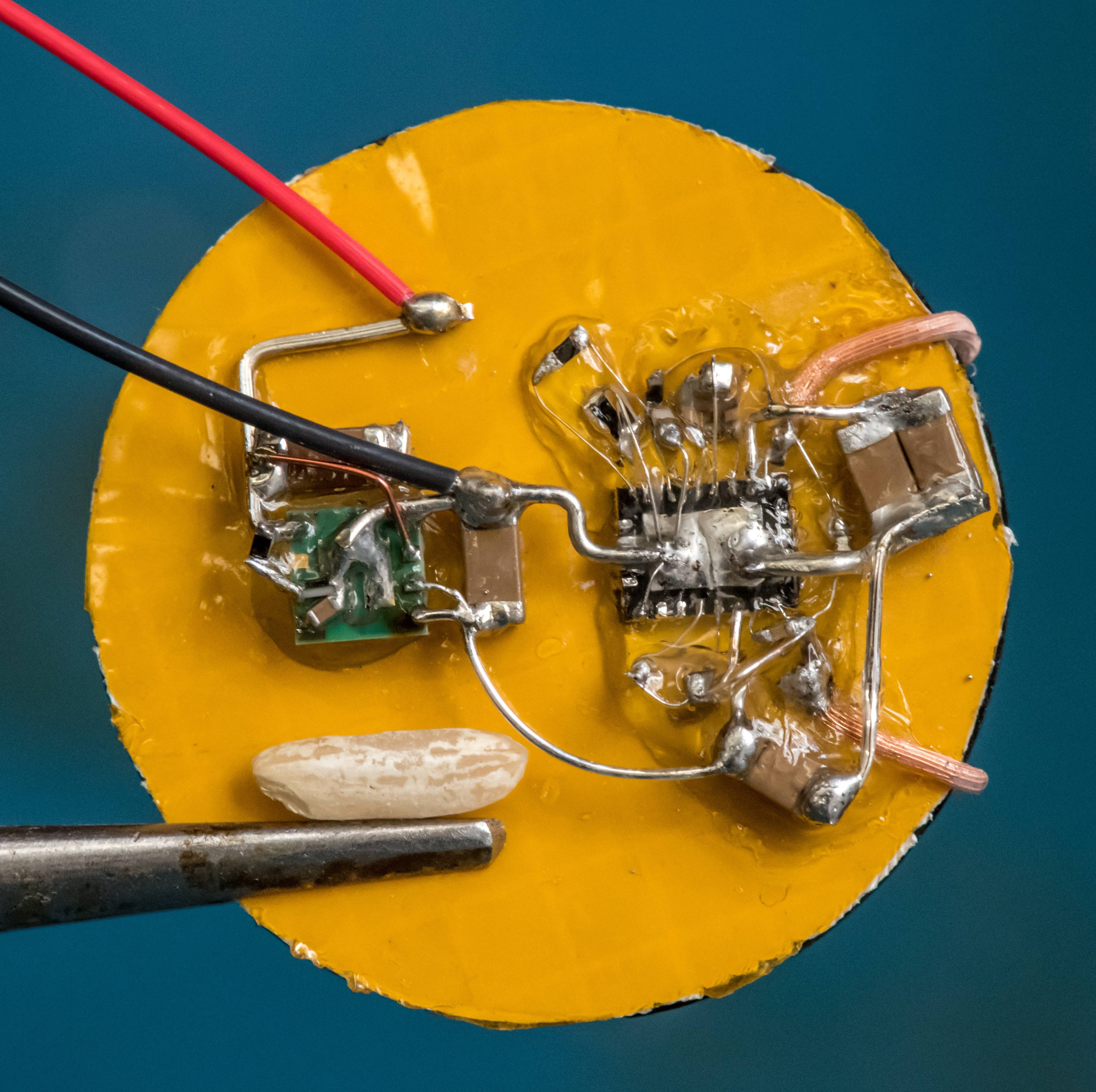
How do you power such a small device with no obvious places to locate a connector? By running magnet wire through a corner and down to a Qi coil of course. Not to let the cube itself outshine the power supply [Freddie] managed to deadbug a suitably impressive supply on the back of the coil itself. Notice the grain of rice in the photo to the left! The only downside here is that the processor – which hangs diagonally in the cube on a tiny motherboard – cannot be reprogrammed. Hopefully future versions will run programming lines out as well.

Check out the video of the cube in action after the break, and the linked photo album for much higher resolution macro photos of the build. While you’re there take a moment to admire the layout sample from one of the panels! If this sets the tone, we’re hoping to see more of [Freddie]’s going-away hacks in the future!

Continue reading “Tiny LED Cube Packs Six Meters Of Madness”