Linux Fu: Simple SSH File Sharing

If you have more than one Linux computer, you probably use ssh all the time. It is a great tool, but I’ve always found one thing about it strange. Despite having file transfer capabilities in the form of scp and sftp, there is no way to move a file back or forth between the local and remote hosts without starting a new program on the local machine or logging in from the remote machine back to the local machine.

That last bit is a real problem since you often access a server from behind a firewall or a NAT router with an ephemeral IP address, so it can’t reconnect to you anyway. It would be nice to hit the escape character, select a local or remote file, and teleport it across the  interface, all from inside a single ssh session.

I didn’t quite get to that goal, but I did get pretty close. I’ll show you a script that can automatically mount a remote directory on the local machine. You’ll need sshfs on the local machine, but no changes on the remote machine where you may not be able to install software. With a little more work, and if your client has an ssh server running, you can mount a local directory on the remote machine, too. You won’t need to worry about your IP address or port blocking. If you can log into the remote machine, you are good.

Combined, this got me me very close to my goal. I can be working in a shell on either side and have access to read or write files on the other side. I just have to set it up carefully. Continue reading “Linux Fu: Simple SSH File Sharing”


Into The Plasmaverse Hack Chat

Join us on Wednesday, September 23 at noon Pacific for the Into the Plasmaverse Hack Chat with Jay Bowles!

Most kids catch on to the fact that matter can exist in three states — solid, liquid, and gas — pretty early in life, usually after playing in the snow a few times. The ice and snowflakes, the wet socks, and the fog of water vapor in breath condensing back into water droplets all provide a quick and lasting lesson in not only the states of matter but the transitions between them. So it usually comes as some surprise later when they learn of another and perhaps more interesting state: plasma.

For the young scientist, plasma is not quite so easy to come by as the other phases of matter, coming about as it does from things they’re usually not allowed to muck with. High voltage discharges, strong electromagnetic fields, or simply a lot of heat can strip away electrons from a gas and make the ionized soup that we call plasma. But once they catch the bug, few things can compare to the dancing, frenetic energy of a good plasma discharge.

Jay Bowles picked up the plasma habit quite a while back and built his YouTube channel around it. Tesla coils, Van de Graaff generators, coils and capacitors of all types — whatever it takes to make a spark, Jay has probably made and used it to make the fourth state of matter. He’ll join us on the Hack Chat to talk about all the fun things to do with plasma, high-voltage discharge, and whatever else sparks his interest.

join-hack-chatOur Hack Chats are live community events in the Hackaday.io Hack Chat group messaging. This week we’ll be sitting down on Wednesday, September 23 at 12:00 PM Pacific time. If time zones baffle you as much as us, we have a handy time zone converter.

Click that speech bubble to the right, and you’ll be taken directly to the Hack Chat group on Hackaday.io. You don’t have to wait until Wednesday; join whenever you want and you can see what the community is talking about.

Continue reading “Into The Plasmaverse Hack Chat”

Custom Keyboard Goes Split, Gets Thin, Acquires Stained Wood

The hardware and software required to make DIY keyboards happen has gotten more and more accessible, and that means it’s easier than ever to make one’s ideal input device a reality from the ground up. For [Cameron Sun], his Ellipsis Split mechanical keyboard buildlog details his second effort, refining his original design from lessons learned the first time around. The new keyboard is slim, split into two, and has integrated wrist supports made from stained wood. The painting and wood treatment took a lot of work and patience, but it certainly paid off because the result looks amazing!

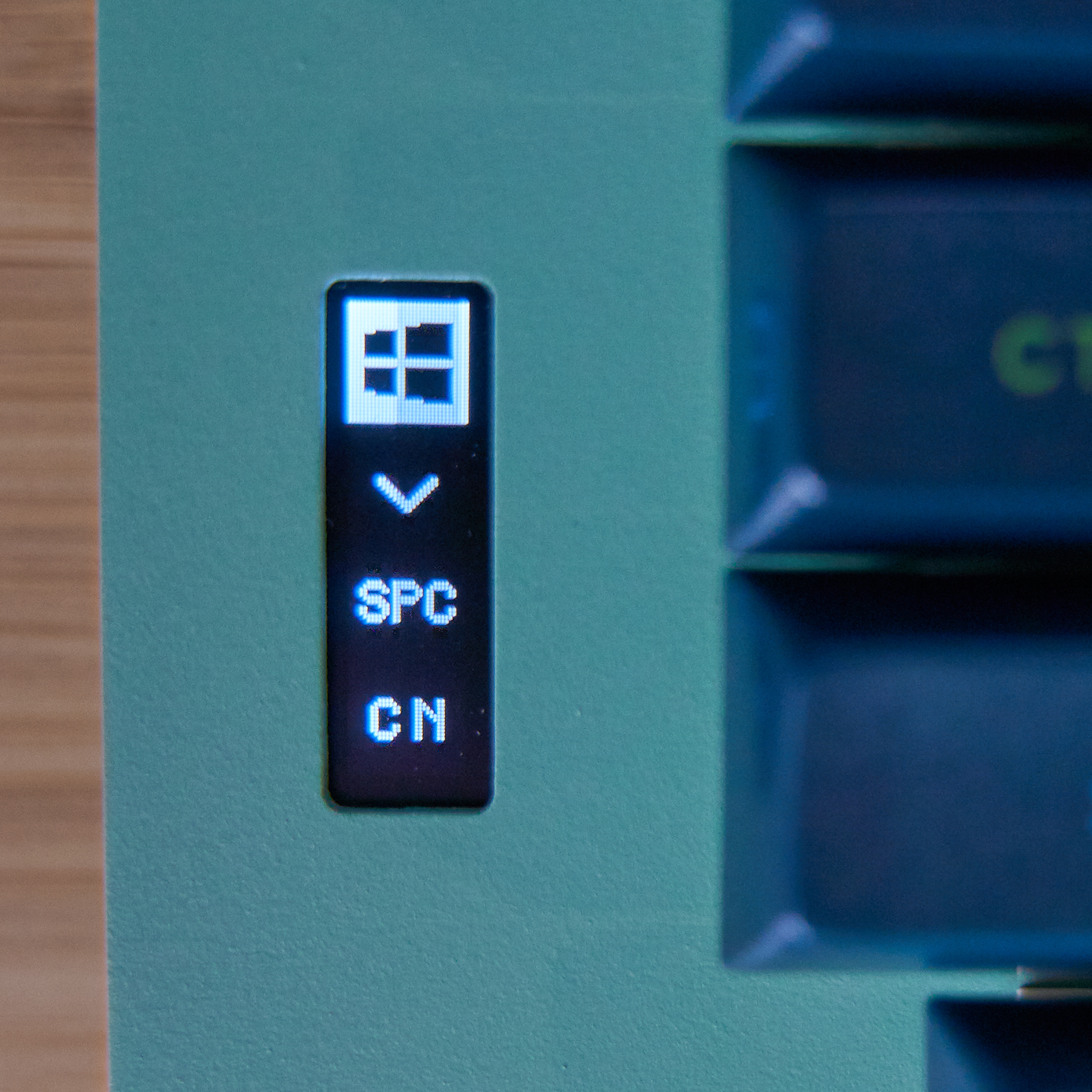
Small integrated OLED screen shows the current mode.

When we saw [Cameron]’s first custom keyboard, we admired the unique aluminum case and some nice touches like the physical toggle switches. Those tactile switches allow changing the keyboard to different modes, while also serving as a visual indicator. [Cameron] liked those switches too, but alas they just didn’t fit into the slim new design. However, he’s very happy with swapping modes in software and using a small OLED display as an indicator. What kind of different modes does his keyboard have? There’s Windows mode and Mac mode (which changes some hotkeys) as well as modes that change which keys in the thumb clusters do what (moving the space key to the left for easier gaming, for example.) After all, it’s not just the physical layout that can be customized with a DIY keyboard.

Interested in making your own custom keyboard? Be sure to look into this breakaway keyboard PCB concept before you start, because it just might make your custom build a lot easier.

Exploring The Clouds Of Venus; It’s Not Fantasy, But It Will Take Specialized Spacecraft

By now, you’ve likely heard that scientists have found a potential sign of biological life on Venus. Through a series of radio telescope observations in 2017 and 2019, they were able to confirm the presence of phosphine gas high in the planet’s thick atmosphere. Here on Earth, the only way this gas is produced outside of the laboratory is through microbial processes. The fact that it’s detectable at such high concentrations in the Venusian atmosphere means we either don’t know as much as we thought we did about phosphine, or more tantalizingly, that the spark of life has been found on our nearest planetary neighbor.

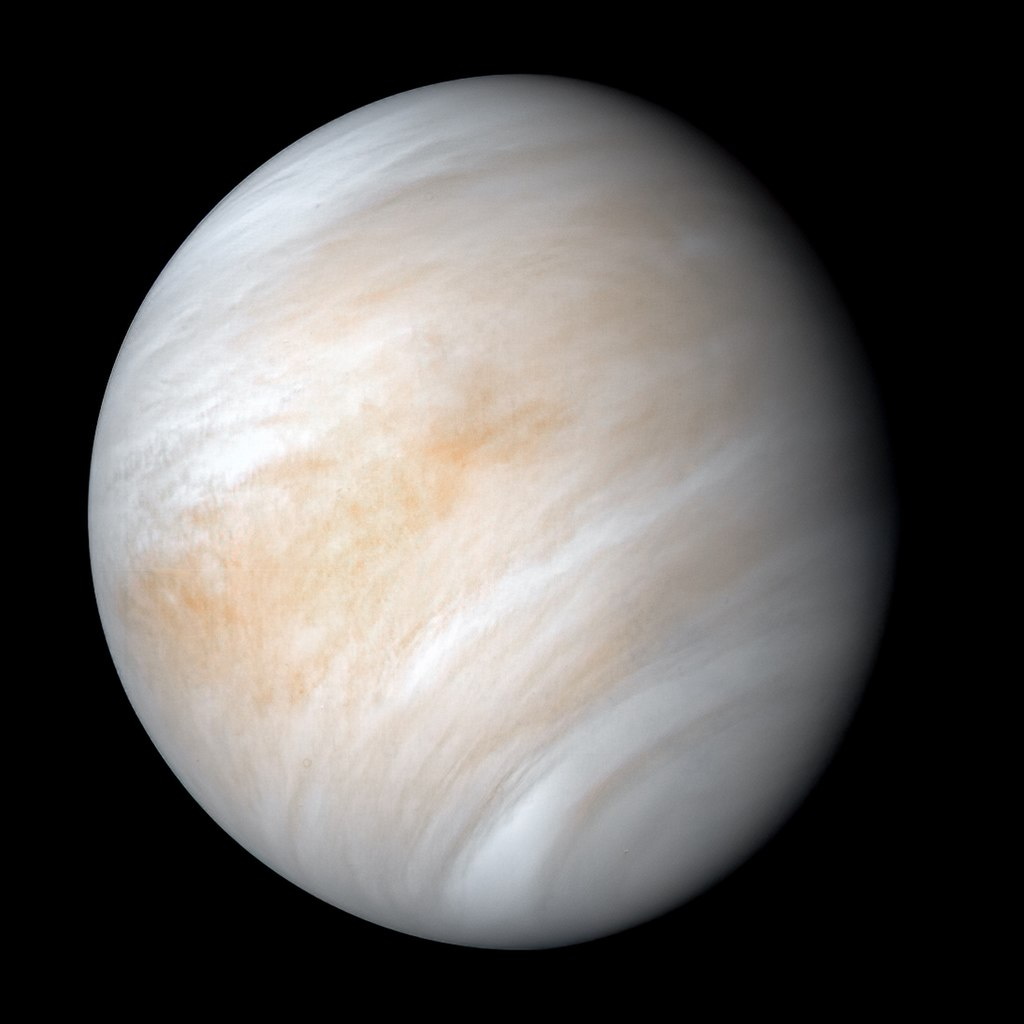
Venus, as seen by Mariner 10 in 1974

To many, the idea that life could survive on Venus is difficult to imagine. While it’s technically the planet most like Earth in terms of size, mass, composition, and proximity to the Sun, the surface of this rocky world is absolutely hellish; with a runaway greenhouse effect producing temperatures in excess of 460 C (840 F). Life, at least as we currently know it, would find no safe haven on the surface of Venus. Even the Soviet Venera landers, sent to the planet in the 1980s, were unable to survive the intense heat and pressure for more than a few hours.

While the surface may largely be outside of our reach, the planet’s exceptionally dense atmosphere is another story entirely. At an altitude of approximately 50 kilometers, conditions inside the Venusian atmosphere are far more forgiving. The atmospheric pressure at this altitude is almost identical to surface-level pressures on Earth, and the average temperature is cool enough that liquid water can form. While the chemical composition of the atmosphere is not breathable by Earthly standards, and the clouds of sulfuric acid aren’t particularly welcoming, it’s certainly not out of the realm of possibility that simple organisms could thrive in this CO2-rich environment. If there really is life on Venus, many speculate it will be found hiding in this relatively benign microcosm high in the clouds.

In short, all the pieces seem to be falling into place. Observations confirm a telltale marker of biological life is in the upper levels of the Venusian atmosphere, and we know from previous studies that this region is arguably one of the most Earth-like environments in the solar system. It’s still far too early to claim we’ve discovered extraterrestrial life, but it’s not hard to see why people are getting so excited.

But this isn’t the first time scientists have turned their gaze towards Earth’s twin. In fact, had things gone differently, NASA might have sent a crew out to Venus after the Apollo program had completed its survey of the Moon. If that mission had launched back in the 1970s, it could have fundamentally reshaped our understanding of the planet; and perhaps even our understanding of humanity’s place in the cosmos.

Continue reading “Exploring The Clouds Of Venus; It’s Not Fantasy, But It Will Take Specialized Spacecraft”

Historical Satellite Tracker Saved From Scrap Heap

In a bit of rare Australian space news, the  Arnhemland Historical Society has managed to save one of the satellite trackers used during the 1960s and 1970s from the scrap heap. As the Space Race intensified during the 1950s and 1960s, every nation wanted a piece of this new technology. A number of European nations banded together in the form of ELDO, the European Launcher Development Organisation.

Australia was a partner in this program, with launches of the Europa-1 and Europa-2 rockets taking place from Woomera, South Australia. Initially the UK’s cancelled Blue Streak IRBM program provided the first stage for Europa-1, but this was later replaced with the French Diamant. France also provided the Coralie second stage in addition to the German-developed Astris third stage.

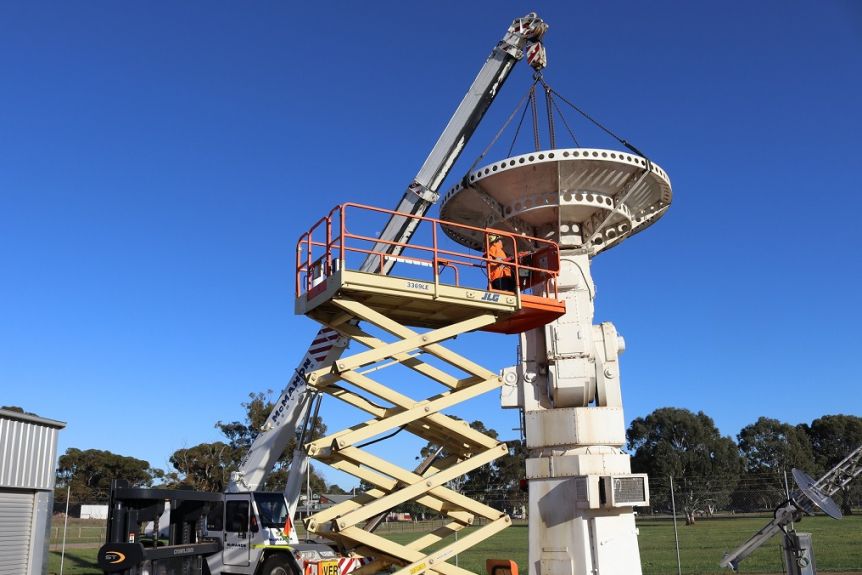
The satellite tracker being dismantled at the South Australian defence base before it was trucked north. (Photo: Arnhemland Historical Society)

The first launch of the Europa-1 took place in 1966, with the rocket performing well, but inaccurate readings from a radar station leading to the rocket to be wrongly instructed to self-destruct. Of nine launches, four were successful, with the satellite trackers at Arnhemland providing tracking support. Ultimately, the many technical setbacks led to the demise of ELDO, and it was merged by the 1970s into what is now the European Space Agency, with its main launch site in Kourou, French Guiana.

Despite the lack of success, these early days at Woomera were instrumental in getting Europe’s feet wet in the development of the Ariane rockets. Woomera’s rocketing days may also not be over yet, with NASA having announced  in 2019 plans to use Woomera for launches.

Maybe one day Arnhemland will have its own space port, with the old satellite track on display to remind of those early days.

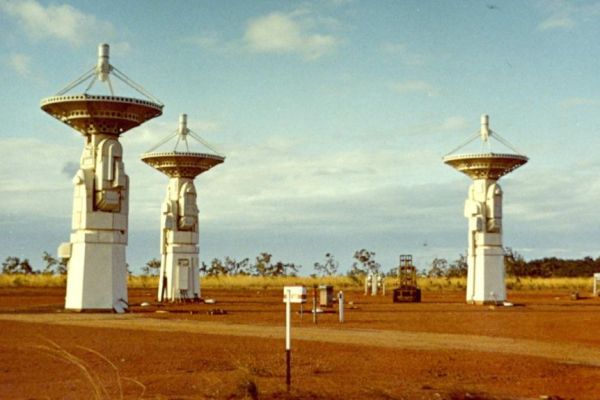
[Top photo: The ELDO satellite trackers were state-of-the-art when they stood in Gove in the 1960s. (Supplied: Arnhemland Historical Society)]

(Thanks, David)

What’s Inside An FPGA? Ken Shirriff Has (Again) The Answer

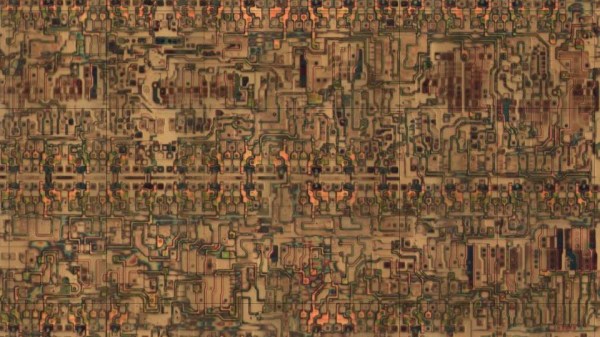
FPGAs are somewhat the IPv6 of integrated circuits — they’ve been around longer than you might think, they let you do awesome things that people are intrigued by initially, but they’ve never really broke out of their niches until rather recently. There’s still a bit of a myth and mystery surrounding them, and as with any technology that has grown vastly in complexity over the years, it’s sometimes best to go back to its very beginning in order to understand it. Well, who’d be better at taking an extra close look at a chip than [Ken Shirriff], so in his latest endeavor, he reverse engineered the very first FPGA known to the world: the Xilinx XC2064.

If you ever wished for a breadboard-friendly FPGA, the XC2064 can scratch that itch, although with its modest 64 configurable logic blocks, there isn’t all that much else it can do — certainly not compared to even the smallest and cheapest of its modern successors. And that’s the beauty of this chip as a reverse engineering target, there’s nothing else than the core essence of an FPGA. After introducing the general concepts of FPGAs, [Ken] (who isn’t known to be too shy to decap a chip in order to look inside) continued in known manner with die pictures in order to map the internal components’ schematics to the actual silicon and to make sense of it all. His ultimate goal: to fully understand and dissect the XC2064’s bitstream.

Of course, reverse engineering FPGA bitstreams isn’t new, and with little doubt, building a toolchain based on its results helped to put Lattice on the map in the maker community (which they didn’t seem to value at first, but still soon enough). We probably won’t see the same happening for Xilinx, but who knows what [Ken]’s up to next, and what others will make of this.

Custom Strain Gauges Help Keep Paraglider Aloft

No matter what they’re flying, good pilots have a “feel” for their aircraft. They know instantly when something is wrong, whether by hearing a strange sound or a feeling a telltale vibration. Developing this sixth sense is sometimes critical to the goal of keeping the number of takeoff equal to the number of landings.

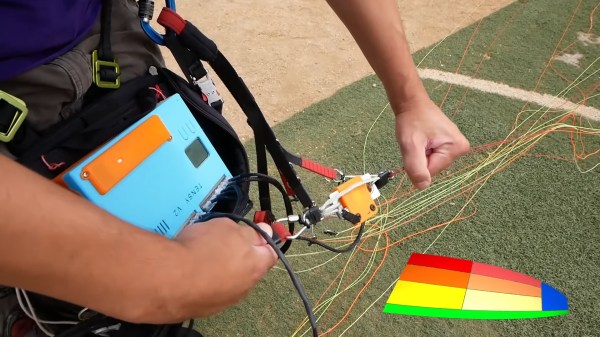
The same thing goes for non-traditional aircraft, like paragliders, where the penalty for failure is just as high. Staying out of trouble aloft is the idea behind this paraglider line tension monitor designed by pilot [Andre Bandarra]. Paragliders, along with their powered cousins paramotors, look somewhat like parachutes but are actually best described as an inflatable wing. The wing maintains its shape by being pressurized by air coming through openings in the leading edge. If the pilot doesn’t maintain the correct angle of attack, the wing can depressurize and collapse, with sometimes dire results.

Luckily, most pilots eventually develop a feel for collapse, sensed through changes in the tension of the lines connecting the wing to his or her harness. [Andre]’s “Tensy” — with the obligatory “McTenseface” surname — that’s featured in the video below uses an array of strain gauges to watch to the telltale release of tension in the lines for the leading edge of the wing, sounding an audible alarm. As a bonus, Tensy captures line tension data from across the wing, which can be used to monitor the performance of both the aircraft and the pilot.

There are a lot of great design elements here, but for our money, we found the lightweight homebrew strain gauges to be the real gem of this design. This isn’t the first time [Andre] has flown onto these pages, either — his giant RC paraglider was a big hit back in January.

Continue reading “Custom Strain Gauges Help Keep Paraglider Aloft”