Arduino Compatible IR Blaster Keeps TVs At Bay

The TV-B-Gone is a well known piece of kit in hacker circles: just point it at a noisy TV in a public space, hit the button, and one of the hundreds of IR remote codes for “Power Off” that it blinks out in rapid succession is more than likely to get the intended response. Unfortunately, while a neat conversation starter, its practical use is limited to a single function. But not so with this programmable IR development board that creator [Djordje Mandic] describes as a “TV-B-Gone on steroids”.

Sure you can point it at a random TV and turn it off with a single button press, but you can also plug the board into your computer and control it directly through the serial connection provided by its CP2104 chip. Using a simple plain-text control protocol, the user can modify the behavior of the device and monitor its status. [Djordje] imagines this feature being used in conjunction with a smartphone application for covert applications. To that end, the device’s support for an onboard battery should keep it from draining the phone during extended operations.

Of course you could do something else entirely with it simply by firing up the Arduino IDE and writing some new code for the device’s ATmega328P microcontroller. As with the IR-enabled ESP8266 development board we looked at a few months ago, there are plenty of applications for an all-in-one board that allows you to communicate with the wide world of IR devices.

Continue reading “Arduino Compatible IR Blaster Keeps TVs At Bay”

ISS Artificial Gravity Study Shows Promise For Long Duration Spaceflight

The International Space Station is humanity’s most expensive gym membership.

Since the earliest days of human spaceflight, it’s been understood that longer trips away from Earth’s gravity can have a detrimental effect on an astronaut’s body. Floating weightless invariably leads to significantly reduced muscle mass in the same way that a patient’s muscles can atrophy if they spend too much time laying in bed. With no gravity to constantly fight against, an astronauts legs, back, and neck muscles will weaken from disuse in as little as a week. While this may not pose an immediate problem during spaceflight, astronauts landing back on Earth in this physically diminished state are at a higher risk of injury.

Luckily this problem can be largely mitigated with rigorous exercise, and any orbiting vessel spacious enough to hold human occupants for weeks or months will by necessity have enough internal volume to outfit it with basic exercise equipment such as a treadmill or a resistance machine. In practice, every space station since the Soviet Union’s Salyut 1 in 1971 has featured some way for its occupants to workout while in orbit. It’s no replacement for being on Earth, as astronauts still return home weaker than when they left, but it’s proven to be the most practical approach to combating the debilitating aspects of long duration spaceflight.

Early NASA concept for creating artificial gravity.

Of course, there’s an obvious problem with this: every hour spent exercising in space is an hour that could be better spent doing research or performing maintenance on the spacecraft. Given the incredible cost of not just putting a human into orbit, but keeping them there long-term, time is very literally money. Which brings us back to my original point: astronauts spending two or more hours each day on the International Space Station’s various pieces of exercise equipment just to stave off muscle loss make it the world’s most expensive gym membership.

The ideal solution, it’s been argued, is to design future spacecraft with the ability to impart some degree of artificial gravity on its passengers through centripetal force. The technique is simple enough: just rotate the craft along its axis and the crew will “stick” to the inside of the hull. Unfortunately, simulating Earth-like gravity in this way would require the vessel to either be far larger than anything humanity has ever launched into space, or rotate at a dangerously high speed. That’s a lot of risk to take on for what’s ultimately just a theory.

But a recent paper from the University of Tsukuba in Japan may represent the first real steps towards the development of practical artificial gravity systems aboard crewed spacecraft. While their study focused on mice rather than humans, the results should go a long way to codifying what until now was largely the stuff of science fiction.

Continue reading “ISS Artificial Gravity Study Shows Promise For Long Duration Spaceflight”

The Epic Saga Of Hacking Knights Of The Round

For the uninitiated, Knights of the Round was a hack-and-slash arcade game released by Capcom in 1991 that rather loosely followed the legend of King Arthur and the eponymous Knights of the Round Table. In it, up to three players make their way from stage to stage, vanquishing foes and leveling up their specific character’s weapons and abilities. But [Sebastian Mihai] was looking for a new way to experience this classic title, so he decided to reverse engineer the game and create his own version called Warlock’s Tower.

Those familiar with the original game will no doubt notice some of the differences right away while watching the video below, but for those who don’t have an intimate knowledge of Arthur’s digital adventures, the major changes are listed on the project’s web page. Among the most notable are the removal of cooperative multiplayer and stage time limits. This turns the game from a frantic beat ’em up to a more methodical adventure. Especially since you now have to compete the game in a single life. If we had to guess, we’d say [Sebastian] prefers his games to have a bit of a challenge to them.

Even if you aren’t interested in playing Warlock’s Tower yourself, the story of how [Sebastian] created it is absolutely fascinating. He started with zero knowledge of Motorola 68000 assembly, but by the end of the project, was wrangling multiple debuggers and writing custom tools to help implement the approximately 70 patches that make up the custom build.

The hundreds of hours of work that went into creating these patches is documented as a sort of stream of consciousness on the project page, allowing you to follow along in chronological order. Whether it inspires you to tackle your own reverse engineering project or makes you doubt whether or not you’ve got the patience to see it through, it’s definitely worth a read. If you’re a Knights of the Round fan, you should also take a look at the incredible wealth of information he’s amassed about the original game itself, which honestly serves as an equally impressive project in its own right.

Modified versions of classic games, known colloquially as “ROM hacks” are fairly common among serious fans who want to see their favorite games improved over time. While they aren’t always as ambitious as Warlock’s Tower, they all serve as examples of how a dedicated community can push a product well beyond the scope envisioned by its original creators.

Continue reading “The Epic Saga Of Hacking Knights Of The Round

Enterprise Helm Commands The Entertainment Center

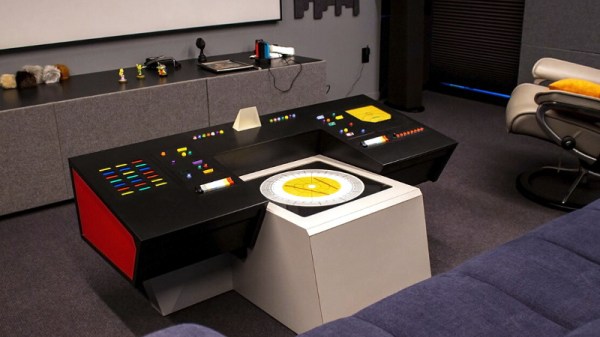
Many a young geek wished they could get a chance to sit at the helm of the USS Enterprise, wildly tapping on unlabeled technicolor buttons with the self-assured confidence of a proper Starfleet officer. For most of us it was a dream unrealized, but right now somebody in the Seattle, Washington area is getting to do exactly that in their media room. We won’t deny being jealous, but at least our collective egos can take some comfort in the knowledge that they had to outsource the construction of their replica helm to the fine folks at [Blackmouth Design].

There’s not a lot of technical details to be had, but considering the page for this project is only meant to show off the company’s design and fabrication skills, we can’t blame them too much. If we were in the business of selling these things, we’d probably keep some of the juicer details under wraps too.

But we do know there’s “Arduino technology” under the hood that fires up different light and sound effects depending on which of the vintage rocker switches has been flipped. The red momentary buttons lined up on the right side of the coffee table sized panel are tied into the home media center to do things like turn off the lights and lower the projector screen. Check out the video below for a brief demo.

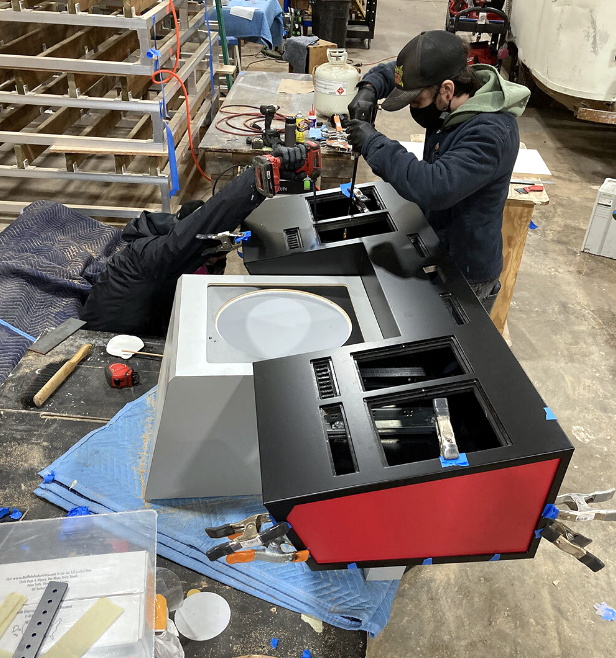
In a post on Reddit, one of the engineers behind the project explains that the top surface of the helm is 3/16″ powder coated aluminum, with the plywood that makes up the base laminated in the classic Original Series color scheme of red, grey, and black. The artwork for the astrogator was created from scratch, backlit with LEDs, and placed behind a 1/4″ acrylic panel for protection. We imagine the fact that it’s parallel to the ground means it’s supposed to be a space to place your drinks or popcorn, though if it was in our house, nobody would be bringing food or drink anywhere near it.

In all honesty, while Hackaday is decidedly more about building than buying, we can’t fault anyone for forking over their hard earned cash for craftsmanship of this caliber. After all, we’ve had our eyes on that officially licensed tricorder replica for quite some time now.

Continue reading Enterprise Helm Commands The Entertainment Center”

Dreamcast Homebrew Gets Boost From SD Card Cache

While it might have been a commercial failure compared to contemporary consoles, the Sega Dreamcast still enjoys an active homebrew scene more than twenty years after its release. Partly it’s due to the fact that you can burn playable Dreamcast discs on standard CD-Rs, but fans of the system will also point out that the machine was clearly ahead of its time in many respects, affording it a bit of extra goodwill in the community.

That same community happens to be buzzing right now with news that well-known Dreamcast hacker [Ian Micheal] has figured out how to cache data to an SD card via the console’s serial port. At roughly 600 KB/s the interface is too slow to use it as swap space for expanding the system’s paltry 16 MB of memory, but it’s more than fast enough to load game assets which otherwise would have had to be loaded into RAM.

A third-party Dreamcast SD adapter.

In the video below, [Ian] shows off his new technique with a port of DOOM running at 640×480. He’s already seeing an improvement to framerates, and thinks further optimizations should allow for a solid 30 FPS, but that’s not really the most exciting part. With the ability to load an essentially unlimited amount of data from the SD card while the game is running, this opens the possibility of running mods which wouldn’t have been possible otherwise. It should also allow for niceties like saving screenshots or game progress to the SD card for easy retrieval.

[Ian] says he’ll be bringing the same technique to his Dreamcast ports of Quake and Hexen in the near future, and plans on posting some code to GitHub that demonstrates reading and writing to FAT32 cards so other developers can get in on the fun. The downside is that you obviously need to have an SD card adapter plugged into your console to make use of this technique, which not everyone will have. Luckily they’re fairly cheap right now, but we wouldn’t be surprised if the prices start climbing. If you don’t have one already, now’s probably the time to get one.

To be clear, this technique is completely separate from replacing the Dreamcast’s optical drive with an SD card, which itself is a very popular modification that’s helped keep Sega’s last home console kicking far longer than anyone could have imagined.

Continue reading “Dreamcast Homebrew Gets Boost From SD Card Cache”

Riding Mower Repair Uncovers Miniature Culprit

Most people would be pretty upset it the lawn mower they spent $4,000 USD on had a major failure within the first year of owning it. But for [xxbiohazrdxx], it was an excuse to take a peek under the hood and figure out what brought down this state-of-the-art piece of landscaping gear.

It should be said that, at least technically, the Husqvarna TS 348XD in question was still working. It’s just that [xxbiohazrdxx] noticed the locking differential, which is key to maintaining traction on hilly terrain, didn’t seem to be doing anything when the switch was pressed. Since manually moving the engagement lever on the transmission locked up the differential as expected, the culprit was likely in the electronics.

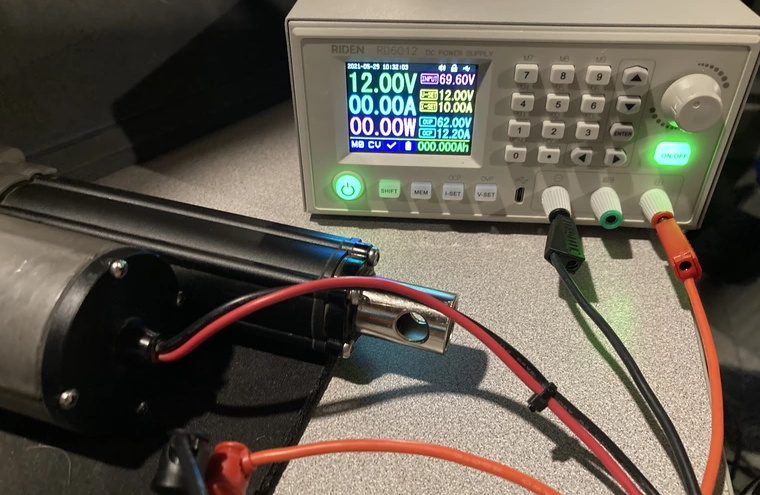
Testing the dead actuator.

As [xxbiohazrdxx] explains, the switch on the dash is connected to a linear actuator that moves the lever on the transmission. The wiring and switch tested fine with a multimeter, but when the actuator was hooked up to a bench power supply, it didn’t move. Even more telling, it wasn’t drawing any power. Definitely not a good sign. Installing a new actuator would have solved the problem, but it was an expensive part that would take time to arrive.

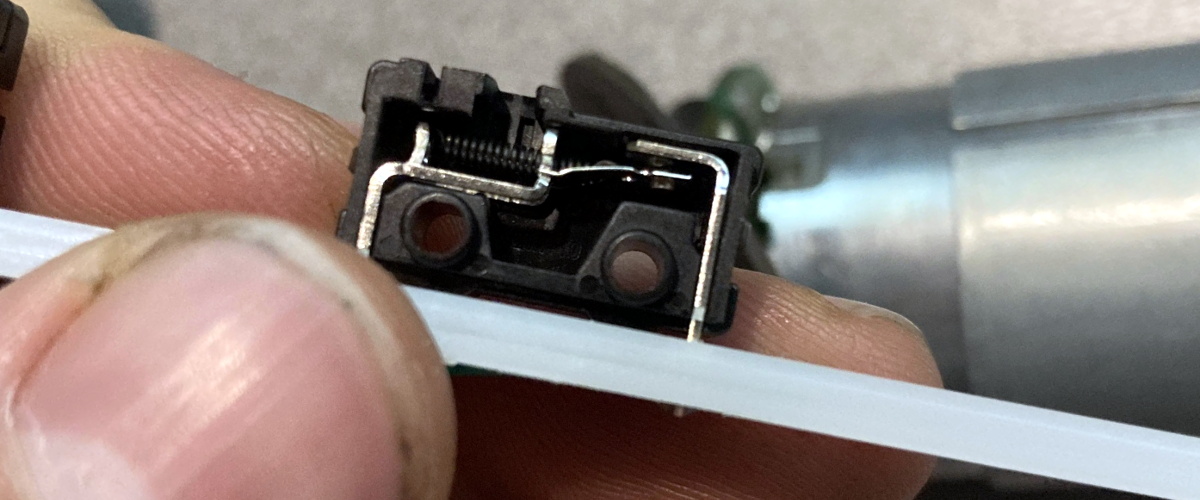
Repairing the dead actuator seemed worth a shot at least, so [xxbiohazrdxx] cracked it open. The PCB looked good, and there were no obviously toasted components. But when one of the internal microswitches used to limit the travel of the actuator was found to be jammed in, everything started to make sense. With the switch locked in the closed position, the actuator believed it was already fully extended and wouldn’t move. After opening the switch itself and bending the contacts back into their appropriate position, everything worked as expected.

A tiny piece of bent metal kept this $4,000 machine from operating correctly.

As interesting as this step-by-step repair process was, what struck us the most is [xxbiohazrdxx]’s determination to fix rather than replace. At several points it would have been much easier to just swap out a broken part for a new one, but instead, the suspect part was carefully examined and coaxed back to life with the tools and materials on-hand.

While there’s plenty of folks who wouldn’t mind taking a few days off from lawn work while they wait for their replacement parts to arrive, not everyone can afford the luxury. Expedient repairs are critical when your livelihood depends on your equipment, which is why manufacturers making it harder and more expensive for farmers to fix their tractors has become such a major issue in right to repair battles all over the globe.

An Exercise In Firmware Dumping With The GreatFET

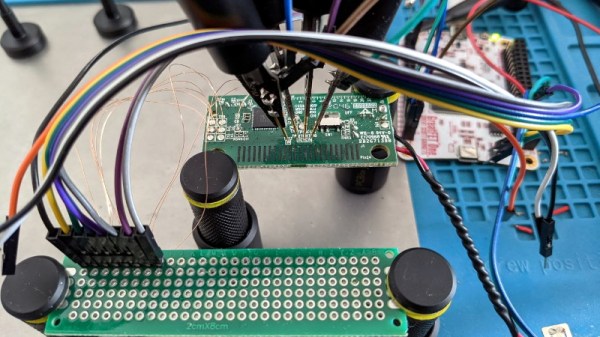
Looking to hone his hardware hacking skills, [James Chambers] recently set out to reverse engineer a common cheap wireless keyboard: the Logitech K360. The chipset it uses has already been fairly well explored (and exploited) by security researchers, but the goal here was more about gaining some practical hands-on experience than it was breaking any new ground.

The first post in what we’re sure will be a fascinating series deals with dumping the board’s firmware using the GreatFET. We actually haven’t seen too many projects that showcase the capabilities of this highly capable open hardware multi-tool, so the post serves as a nice demonstration of how one goes about writing the necessary Python scripts to put it to work in a practical scenario.

Some promising bytes.

Of course, even with the best of tools, there’s always a few stumbling blocks. After identifying what was clearly some kind of programming header on the K360’s diminutive PCB, it took a few failed attempts at reading the firmware before [James] realized he needed to tap into more pins on the keyboard’s nRF24LE1 microcontroller. Once everything was physically wired up, he wrote some code for the GreatFET that would perform the proper incantations on the chip’s PROG and RESET pins to enable its programming interface.

[James] goes on to explain how you can pull some extended chip information out of the hardware and verify the contents of the firmware dump with Gihdra, but any more advanced analysis will have to wait until the next post in the series. In the meantime, if you like reading about hardware hacking from this “over the shoulder” viewpoint, you should check out some of the fantastic work that [wrongbaud] has sent in over the last year or so.