3D Printed VirtuScope Is A Raspberry Pi 4 Cyberdeck With A Purpose

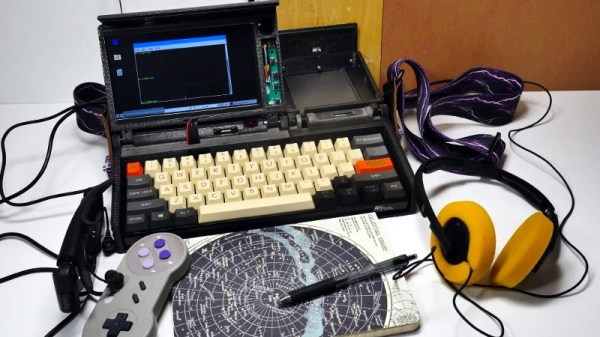
William Gibson might have come up with the idea for the cyberdeck in 1984, but it’s only recently that technology like desktop 3D printing and powerful single board computers have enabled hackers and makers to assemble their own functional versions of these classic cyberpunk devices. Often the final product is little more than a cosplay prop, but when [Joe D] (better known on the tubes as [bootdsc]) started designing his VirtuScope, he wanted to create something that was actually practical enough to use. So far, it looks like he’s managed to pull it off.

Many of the cyberdeck builds we see are based around the carcass of a era-appropriate vintage computer, which looks great and really helps sell the whole retro-future vibe. Unfortunately, this can make the projects difficult and expensive to replicate. Plus there’s plenty of people who take offense to gutting a 30+ year old piece of hardware just so you can wear it around your neck at DEF CON.

[bootdsc] deftly avoided this common pitfall by 3D printing the entire enclosure for the VirtuScope, and since he’s shared all of the STLs, he’s even made it so anyone can run off their own copy. The majority of the parts can be done on any FDM printer with a 20 x 20 x 10cm build area, though there are a few detail pieces that need the resolution of an SLA machine.

Under the hood the VirtuScope is using the Raspberry Pi 4, which [bootdsc] says is key to the build’s usability as the latest version of the diminutive Linux SBC finally has enough computational muscle to make it a viable for daily computing. Granted the seven inch LCD might be a tad small for marathon hacking sessions, but you could always plug in an external display when you don’t need to be mobile. For your wireless hacking needs, the VirtuScope features an internal NooElec SDR (with HF upconverter) and a AWUS036AC long-range WiFi adapter; though there’s plenty of room to outfit it with whatever kind of payload you’d find useful while on the go.

Documentation for this project is still in the early stages, but [bootdsc] has already provided more than enough to get you started. He tells us that there are at least two more posts coming that will not only flesh out how he built the VirtuScope, but explain why it’s now become his portable SDR rig of choice. We’re excited to see more details about this build, and hope somebody out there is willing to take on the challenge of building their own variant.

In the past we’ve seen partially 3D printed cyberdecks, and at least one that also went the fully-printed route, but none of them have been quite as accessible as the VirtuScope. By keeping the geometry of the printed parts simple and utilizing commonly available components, [bootdsc] may well have laid the groundwork for hackerdom’s first “mass produced” cyberdeck.

Continue reading “3D Printed VirtuScope Is A Raspberry Pi 4 Cyberdeck With A Purpose”
Pew Pew In The Palm Of Your Hand

It’s often said that “getting there is half the fun”, and we think that can be just as true when building hardware as it is during the roadtrip to your favorite hacker con. Many of us enjoy the process of planning, designing, and building a new gadget as much as playing with it when it’s done. We get the impression [Radomir Dopieralski] feels the same way, as he’s currently working on yet another iteration of his PewPew project.

For the uninitiated, [Radomir] has already created a number of devices in the PewPew line, which are designed to make programming games on “bare metal” easier and more approachable for newcomers by using CircuitPython.

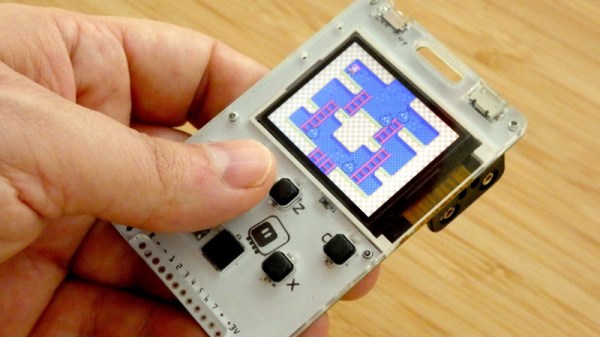
The original version was a shield for the Adafruit Feather, which eventually evolved into a standalone device. The latest version, called the M4, includes many niceties such as a large TFT screen and an acrylic enclosure. It’s also switched over to the iconic Game Boy layout, to really drive home that classic gaming feel.

As [Radomir] explains, previous versions of the PewPew were designed to be as cheap and easy to manufacture as possible, since they were to be used in game programming workshops. But outside of that environment, they left a little something to be desired. With the M4, he’s created something that’s much closer to a traditional game system. In that respect it’s a bit like the Arduboy: you can still use it to learn game development, but it’s also appealing enough that you might just play other people’s games on it instead.

A Curiously Strong Z80 In Your Pocket

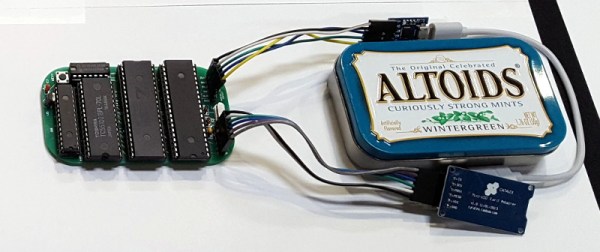
Like many hackers, [Tom Szolyga] has soft spot for the venerable Z80. The number of instructions and registers made it relatively easy to program in ASM, and he still has fond memories of the refreshingly straightforward CP/M operating system he used to run on them back in the day. In fact, he loves Z80 computers so much he decided to build one that he could carry around in his pocket.

The result is the Minty Z80, so-called because it lives inside a tin formerly inhabited by every hacker’s favorite curiously strong mint. But the goal of this build wasn’t just to make it small, but also make it convenient to work with. [Tom] is using a ATmega32A to help interface the Z84C0008 microprocessor with the modern world, which allows for niceties such as support for a micro SD card. There’s no onboard USB-to-serial capability, but with an external adapter connected to the Minty’s header, it’s easy to use log into this microcosm of classic computing with a terminal emulator running on a computer or mobile device.

[Tom] has provided the schematics and Bill of Materials for the Minty Z80 on the project’s Hackaday.io page, but as of the latest update, he’s holding off on releasing the board files until he’s sure that all the bugs have been worked out. There’s no word yet if he found any show stoppers in the first iteration of the board design, but he’s posted a picture of the fully assembled miniature retrocomputer in all its glory which seems like a good sign.

The design of the Minty Z80 is similar to that of the Z80-MBC2 by [Just4Fun], but on an even smaller scale. It’s encouraging to see several projects leveraging modern design and components to prevent classic computing from becoming little more than a distant memory.

India’s Moon Mission Is Far From Over

India’s Chandrayaan-2 mission to the Moon was, in a word, ambitious. Lifting off from the Satish Dhawan Space Centre on July 22nd, the mission hoped to simultaneously deliver an orbiter, lander, and rover to our nearest celestial neighbor. The launch and flight to the Moon went off without a hitch, and while there were certainly some tense moments, the spacecraft ultimately put itself into a stable lunar orbit and released the free-flying lander so it could set off on its independent mission.

Unfortunately, just seconds before the Vikram lander touched down, an anomaly occurred. At this point the Indian Space Research Organisation (ISRO) still doesn’t know exactly what happened, but based on the live telemetry stream from the lander, some have theorized the craft started tumbling or otherwise became unstable between three and four kilometers above the surface.

Telemetry indicates a suboptimal landing orientation

In fact, for a brief moment the telemetry display actually showed the Vikram lander completely inverted, with engines seemingly accelerating the spacecraft towards the surface of the Moon. It’s unclear whether this was an accurate depiction of the lander’s orientation in the final moments before impact or a glitch in the real-time display, but it’s certainly not what you want to see when your craft is just seconds away from touchdown.

But for Chandrayaan-2, the story doesn’t end here. The bulk of the mission’s scientific goals were always to be accomplished by the orbiter itself. There were of course a number of scientific payloads aboard the Vikram lander, and even the Pragyan rover that it was carrying down to the surface, but they were always secondary objectives at best. The ISRO was well aware of the difficulties involved in making a soft landing on the Moon, and planned their mission objectives accordingly.

Rather than feel sorrow over the presumed destruction of Vikram and Pragyan, let’s take a look at the scientific hardware aboard the Chandrayaan-2 orbiter, and the long mission that still lies ahead of it.

Continue reading “India’s Moon Mission Is Far From Over”

Scratch Built Media Player Channels 1980s Design

No, you aren’t looking at a 30 year old Teac graphic equalizer that somebody modified. The MWA-002 Network Music Player created by [GuzziGuy] is built entirely from new components, and easily ranks up there with some of the most gorgeous pieces of homebrew audio gear we’ve ever seen. Combining modular hardware with modern manufacturing techniques, this 1980s inspired build is a testament to how far we’ve come in terms of what’s possible for the dedicated hacker and maker.

The enclosure, though it looks all the world like a repurposed piece of vintage hardware, was built with the help of a CNC router. It’s constructed from pieces of solid oak, plywood, and veneered MDF that have all been meticulously routed out and cut. Even the front panel text was engraved with the CNC and then filled in with black paint to make the letters pop.

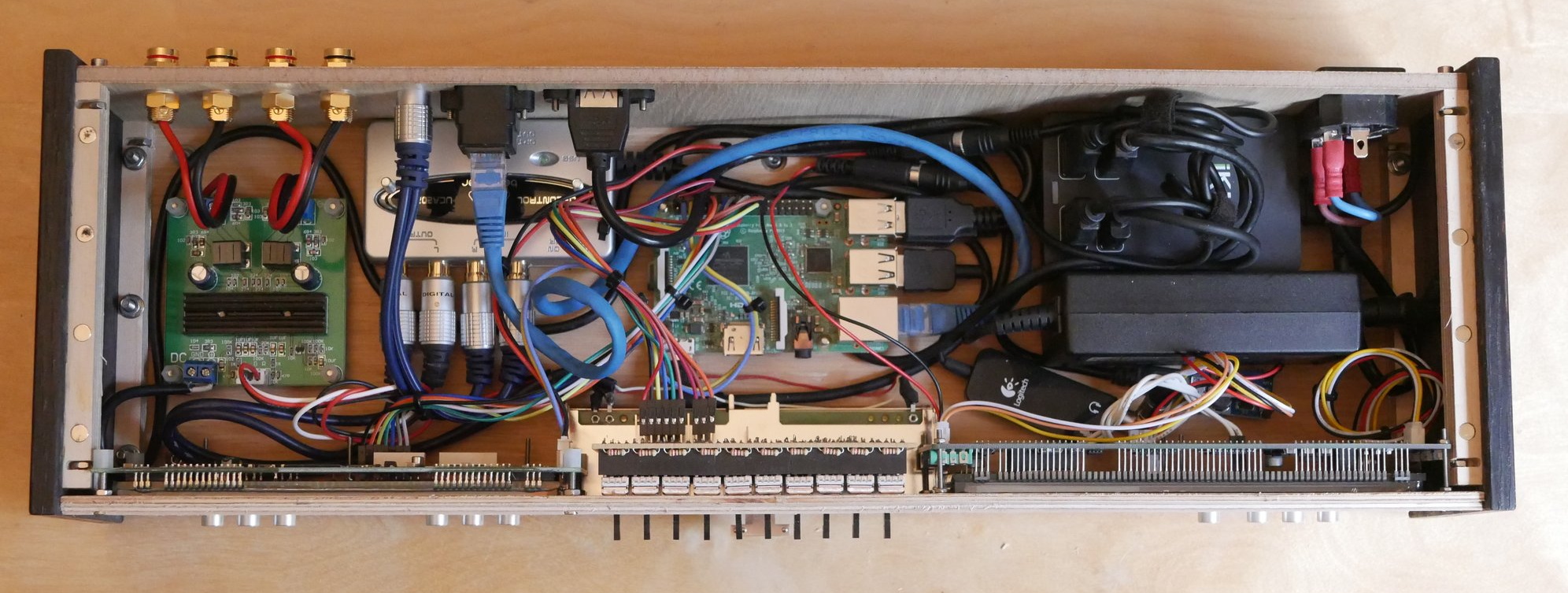
Internally, the MWA-002 is powered by a Raspberry Pi 3 running Mopidy to play both local tracks and streaming audio. Not satisfied with the Pi’s built-in capabilities, [GuzziGuy] is using a Behringer UCA202 to produce CD-quality audio, which is then fed into a TPA3116 amplifier. In turn, the output from the amplifier is terminated in a set of female jacks on the player. Just like the stereo equipment of yore, this player is designed to be connected to a larger audio system and doesn’t have any internal speakers.

The primary display is a 256×64 Futaba GP1212A02A FVD which has that era-appropriate glow while still delivering modern features. [GuzziGuy] says it was more difficult to interface with this I2C display than the LCDs he used in the past due to the lack of available libraries, but we think the final product is proof it was worth the effort. He bought both the VFD spectrum analyzer and LED VU meter as turn-key modules, but the center equalizer controls are completely custom; with dual MCP3008 ADCs to read the state of the sliders and the Linux Audio Developer’s Simple Plugin API (LADSPA) to tweak the Pi’s audio output accordingly.

We’re no strangers to beautiful pieces of audio gear here at Hackaday, but generally speaking, most projects involve modernizing or augmenting an existing device. While those projects are to be admired, the engineering that goes into creating something of this caliber from modular components and raw building materials is really an accomplishment on a whole different level.

Atomic Pi Gets A 3D-Printed Mac Makeover

The Atomic Pi is a pretty impressive piece of kit for the price, but it’s not exactly a turn-key kind of product. Even to a greater extent than what you might normally expect with a “dev” board like this, the user is responsible for putting together the rest of the pieces required to actually utilize it. But with this design by [Renri Nakano], you can turn the Atomic Pi into something that’s dangerously close to being a practical computer, and a trendy one at that.

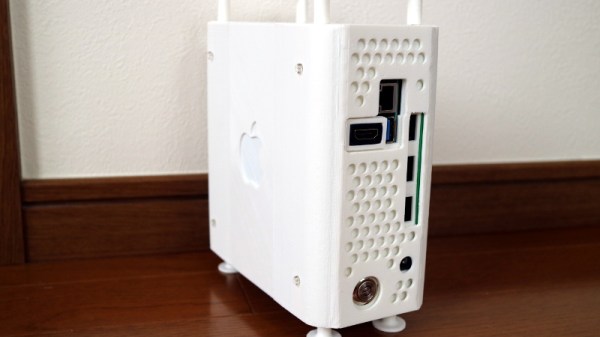
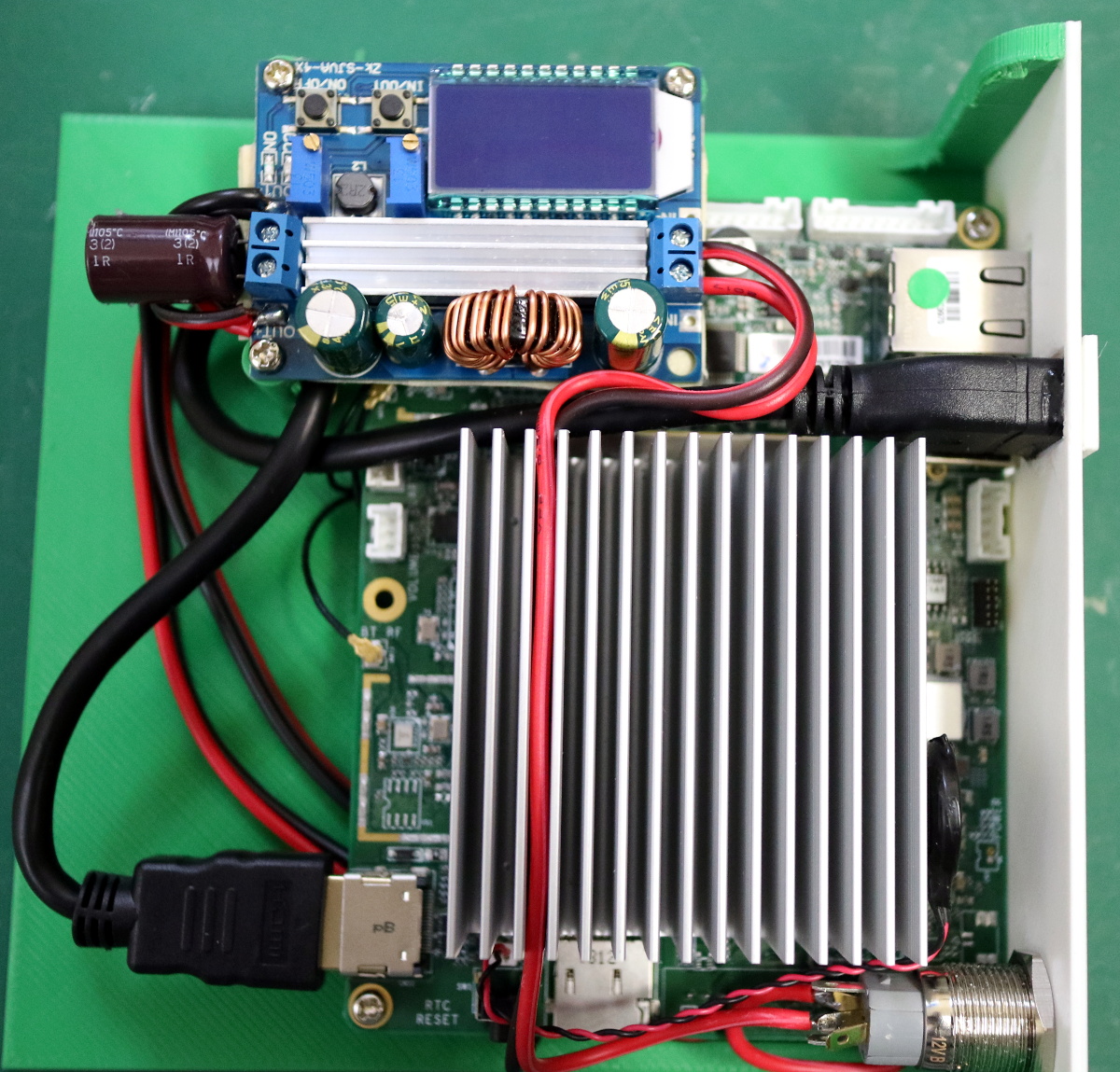
Inspired by the 2019 Apple Mac Pro “Cheese Grater”, this 3D printable enclosure for the Atomic Pi is equal parts form and function. It integrates the necessary power supply to get things up and running without the need for the official breakout board or power module, which is good, since at the time of this writing they don’t seem to be available anyway. Plus it has a cool looking power button, so that’s got to count for something.

There’s also an integrated USB hub to give the Atomic Pi a bit more expandability, and a short HDMI extension cable that puts a video port on the back of the case. [Renri] even thought to leave an opening so you could run the wires for your wireless antennas.

At this point, we’ve seen several projects that mimic the unique case design of the 2019 Mac Pro. The level commitment ranges from recreating the design in CAD and milling it out of aluminum to just sticking a Raspberry Pi inside of a literal cheese grater from the kitchen. Naturally we enjoy a well executed Internet meme as much as the next hacker, but all the same, we were glad to see [Renri] put in the effort to make sure this case was more than just a pretty face.

[Thanks to baldpower for the tip.]

DJ Xiaomi Spins Beats And Brushes At The Same Time

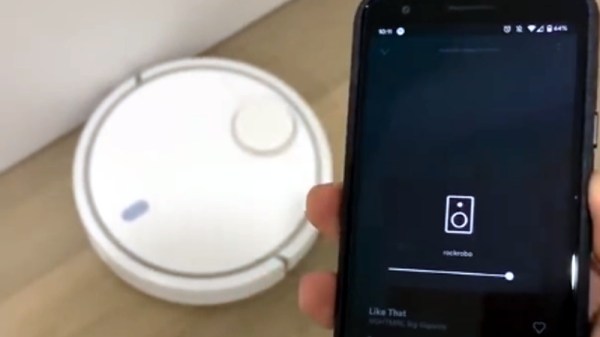
Direct from the “Just Because I Can” department, this blog post by [Eddie Zhang] shows us how easy it is to get the Xiaomi robotic vacuum cleaner working as what might be the world’s most unnecessary Spotify Connect speaker. Will your home be the next to play host to an impromptu performance by DJ Xiaomi? Judging by the audio quality demonstrated in the video after the break, we doubt it. But this trick does give us a fascinating look at the current state of vacuum hacking.

For the first phase of this hack, [Eddie] makes use of Dustcloud, an ongoing project to document and reverse engineer various Xiaomi smart home gadgets. Using the information provided there you can get root-level SSH access to your vacuum cleaner and install your own software. There’s a sentence you never thought you’d read, right?

With the vacuum rooted, [Eddie] then installs a Spotify Connect client intended for the Raspberry Pi. As they’re both ARM devices, the software will run on the Xiaomi bot well enough, but the Linux environment needs a little tweaking. Namely, you need to manually create an Upstart .conf file for the service, as the vacuum doesn’t have systemd installed. There goes another one of those unexpected sentences.

We’re certainly no stranger to robotic vacuum hacking, though historically the iRobot Roomba has been the target platform for such mischief. Other players entering the field can only mean good things for those of us who get a kick out of seeing home appliances pushed outside of their comfort zones.

Continue reading “DJ Xiaomi Spins Beats And Brushes At The Same Time”