NTP Morse Code Clock Powered By ESP8266

We’ve featured a great many unique clocks here on Hackaday, which have utilized nearly every imaginable way of conveying the current time. But of all these marvelous timepieces, the Morse code clock has the distinct honor of simultaneously being the easiest to construct and (arguably) the most difficult to read. As such, it’s little surprise we don’t see them very often. Which makes this latest entry into the field all the more interesting.
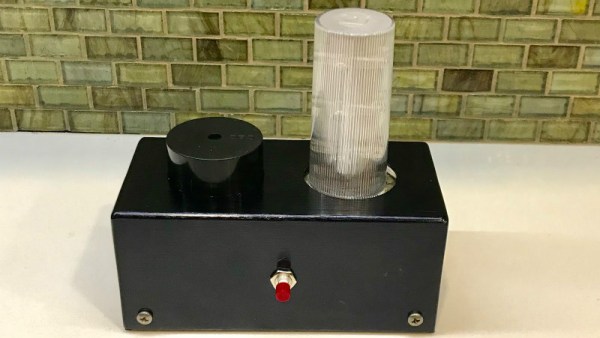
[WhisleyTangoHotel] has taken the basic concept of the Morse clock, which at its most simplistic could be done with a microcontroller and single LED, and expanded it into a (relatively) practical device. With both audio and visual signaling, and support for pulling the time from NTP, this is easily the most polished Morse code clock we’ve ever seen. Using it still requires you to have a decent grasp on Samuel Morse’s now nearly 200 year old encoding scheme of course, but on the bright side, this clock is sure to help keep your CW skills sharp.

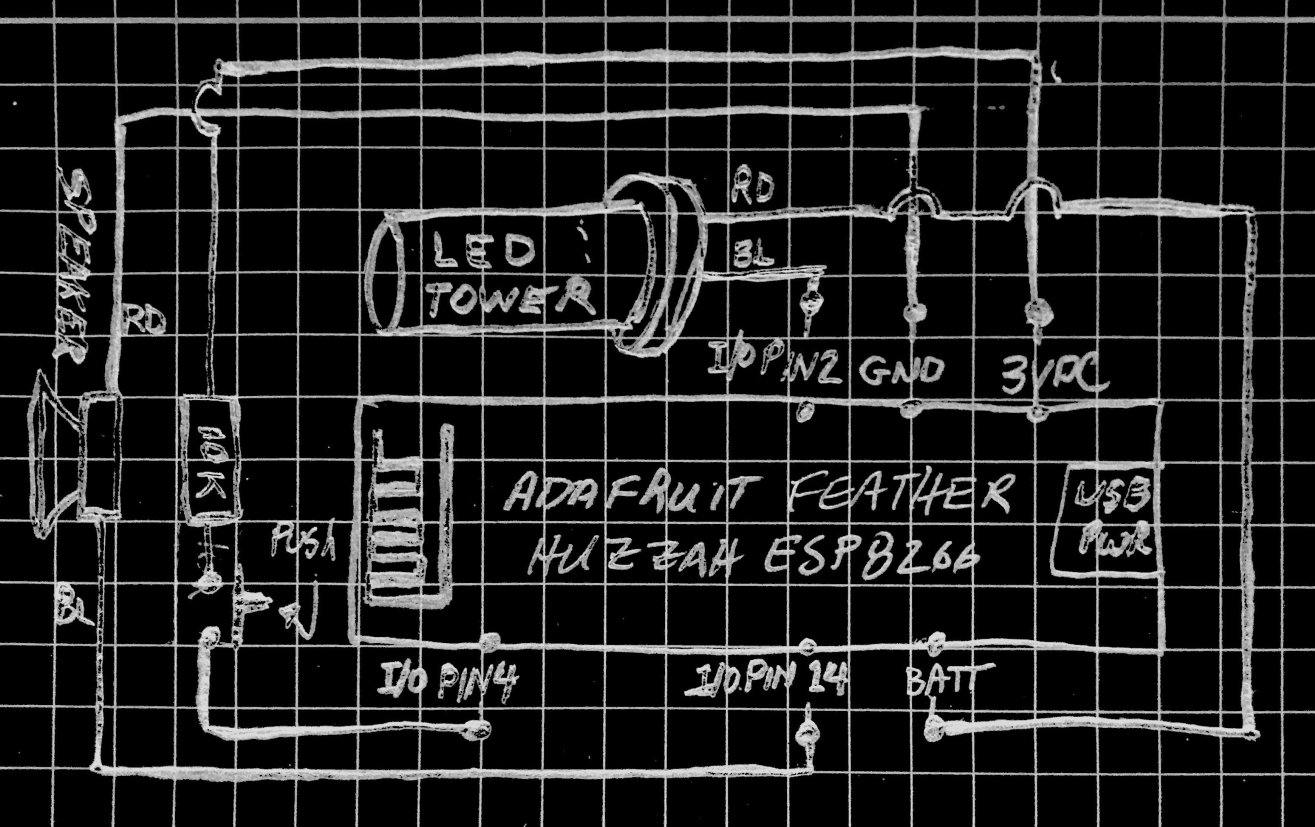
For those following along at home, [WhisleyTangoHotel] provides a hand-drawn diagram to show how everything connects together in his Morse timepiece, but there’s nothing on the hardware side that’s likely to surprise the Hackaday reader. A single momentary push button represents the device’s sole user input, with the output being handled by a LED “tower” and speaker on their own respective pins on the microcontroller. Here a Adafruit Feather HUZZAH is used, but any ESP8266 would work in its place.

Of course, the advantage of using an ESP8266 board over your garden variety MCU is the Wi-Fi connectivity. This allows the clock to connect to an NTP server and get the current time before relaying it to the user. Some might think this overkill, but it’s really a critical feature; the lack of a proper RTC on the ESP means the clock would drift badly if not regularly synchronized. Assuming you’ve got a reliable Internet connection, this saves you the added cost and complexity of adding an external RTC.

[WhisleyTangoHotel] wraps up his blog post by providing his ESP8266 Arduino source code, which offers an interesting example in working not only with NTP and time zones on the ESP, but how to handle parsing strings and representing their principle characters in Morse code.

Interestingly enough, in the past we’ve seen a single LED clock that didn’t use Morse code to blink out the time, which might be a viable option as an alternate firmware for this device if you’re not in the Samuel Morse fan club.

Continue reading “NTP Morse Code Clock Powered By ESP8266”

Wearable Speeder Bikes Are Ready For A Night Out

While Hackaday is about as far from a fashion blog as you can possibly get, we have to admit we’re absolutely loving the [bithead942] Winter 2018 Collection. His wife and daughter recently got to model his latest must have design: wearable Star Wars speeder bikes; and judging by the video after the break they were certainly some of the best dressed at the Thanksgiving parade.

[bithead942] started the build by taking careful measurements of a vintage speeder bike model kit his wife had, which allowed to accurately recreate the iconic look of the vehicles as they were seen in Return of the Jedi . But to do them justice, the final “bikes” would need to be around three meters (ten feet) long, which immediately posed a problem. What kind of material could support itself over that length while still being light enough to wear for extended periods of time?

The answer came, as it often does, from the local hardware store. He found that a combination of Schedule 80 and 40 PVC pipe was a perfect material: strong enough to support the desired dimensions without bending, light enough that the final bike wouldn’t be uncomfortable to wear, easy to bend with heat, and perhaps best of all, cheap and readily available. The PVC frame was then covered with chicken wire and thin flexible foam to give it a filled out look without weighing them down.

Even though he had a strict weight limit on the build, [bithead942] couldn’t help but add in some electronics to complete the effect. The LED festooned control panel allows the ladies to trigger different sound effects from the movie stored on a Adafruit Mini FX Sound Board, which is connected to a 20W Class D amplifier and a pair of 400 watt car stereo speakers. He says the resulting playback was loud enough to hear outside during the parade, and only added a few pounds to the overall build.

These may be the bikes you’re looking for, but they’re definitely not the first we’ve featured on Hackakday. Meanwhile you’d be wise not to underestimate the lowly PVC pipe when designing your next project. From a hacked together drill press for your Dremel to a planetarium for you and your closest dozen or so friends, there’s little you can’t build with this plentiful material.

Continue reading “Wearable Speeder Bikes Are Ready For A Night Out”

Weaponized Networked Printing Is Now A Thing

It’s a fairly safe bet that a Venn diagram of Hackaday readers and those who closely follow the careers of YouTube megastars doesn’t have a whole lot of overlap, so you’re perhaps blissfully unaware of the man who calls himself [PewDiePie]. As such, you might not know that a battle between himself and another YouTube channel which uploads Bollywood music videos has reached such a fever pitch that his fans have resorted to guerrilla hacking to try to sway public opinion towards their side. It’s perhaps not the dystopian future we imagined, but it just might be the one we deserve.

To briefly summarize the situation, a hacker known only by the handle [TheHackerGiraffe] decided to help out Dear Leader by launching an automated attack against 50,000 Internet connected printers. When the hack was successful, the printer would spit out a page of digital propaganda, complete with fist ASCII art, that urged the recipient to go on YouTube and pledge their support for [PewDiePie]. There’s some debate about how many of the printers [TheHackerGiraffe] targeted actually delivered their payload, but judging by reactions throughout social media, it was enough to get the message out.

While the stunt itself may have come as a surprise, the methodology wasn’t. In fact, the only surprising element to the security researchers who’ve weighed in on the situation is that this hasn’t happened more often. It certainly isn’t the first time somebody’s done it, but the fact that this time its been connected to such a high profile Internet celebrity is putting more eyes on the problem then there have been in the past. Now that the proverbial cat is out of the bag, there are even websites springing up which claim to be purveyors of “Printer Advertising”. Odds are good this won’t be the last time somebody’s printer starts running off more than TPS reports.

We here at Hackaday don’t have much interest in the battle for YouTube supremacy. We’re just pulling for Dave Jones’s EEVBlog channel to join [AvE] in breaking a million subscribers. But we’re very interested in the technology which made this attack possible, how likely it is we’re going to see more people exploit it, and what are we supposed to do now that even our own printers can be turned against us?

Continue reading “Weaponized Networked Printing Is Now A Thing”

Hacking Your Way To A Custom TV Boot Screen

More and more companies are offering ways for customers to personalize their products, realizing that the increase in production cost will be more than made up for by the additional sales you’ll net by offering a bespoke product. It’s great for us as consumers, but unfortunately we’ve still got a ways to go before this attitude permeates all corners of the industry.

[Keegan Ryan] recently purchased a TV and wanted to replace its stock boot screen logo with something of his own concoction, but sadly the set offered no official way to make this happen. So naturally he decided to crack the thing open and do it the hard way The resulting write-up is a fascinating step by step account of the trials and tribulations that ultimately got him his coveted custom boot screen, and just might be enough to get you to take a screw driver to your own flat panel at home.

The TV [Keegan] brought was from a brand called SCEPTRE, but as a security researcher for NCC Group he thought it would be a fun spin to change the boot splash to say SPECTRE in honor of the infamous x86 microarchitecture attack. Practically speaking it meant just changing around two letters, but [Keegan] would still need to figure out where the image is stored, how it’s stored, and write a modified version to the TV without letting the magic smoke escape. Luckily the TV wasn’t a “smart” model, so he figured there wouldn’t be much in the way of security to keep him from poking around.

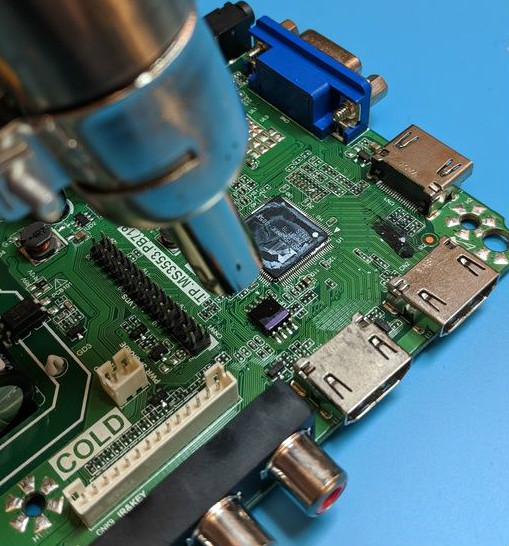
He starts by taking the TV apart and studying the main PCB. After identifying the principle components, he deduces where the device’s firmware must be stored: an 8 MB SPI flash chip from Macronix. He connects a logic analyzer up to the chip, and sure enough sees that the first few kilobytes are being read on startup. Confident in his assessment, he uses his hot air rework station to lift the chip off the board so that he can dive into its contents.

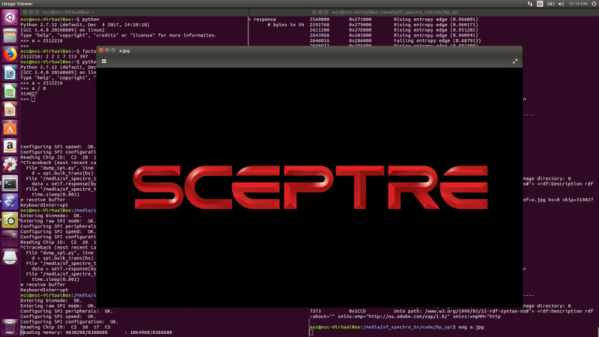
With the help of the trusty Bus Pirate, [Keegan] is able to pull the chip’s contents and verify its integrity by reading a few human-readable strings from it. Using the binwalk tool he’s able to identify a JPEG image within the firmware file, and by feeding its offset to dd, pull it out so he can view it. As hoped, it’s the full screen SCEPTRE logo. A few minutes in GIMP, and he’s ready to merge the modified image with the firmware and write it back to the chip.

He boots the TV back up and finds…nothing changed. A check of the datasheet for the SPI flash chip shows there are some protection bits used to prevent modifying particular regions of the chip. So after some modifications to the Bus Pirate script and another write, he boots the TV and hopes for the best. Finally he sees the object of his affection pop up on the big screen, a subtle change that reminds him every time the TV starts about the power of reverse engineering.

Solar Heart Engineered To Beat For Decades

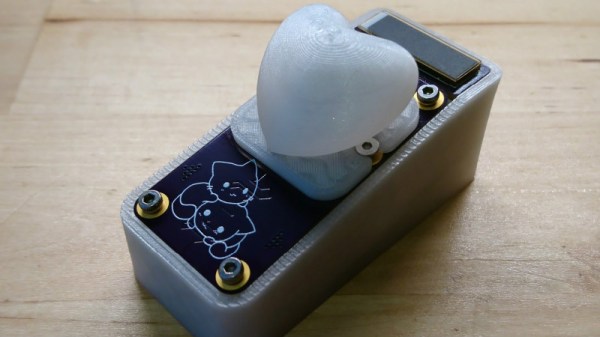
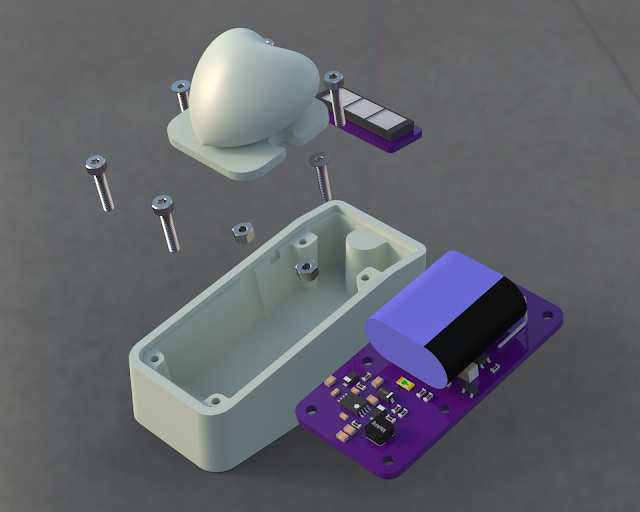
It’s often said that if something is worth doing it’s worth doing right, or maybe even worth overdoing. This is clearly a concept that [ANTALIFE] takes very seriously, as made abundantly clear by projects like the solar powered “beating” heart he made as a gift for his wife. What for most of us would have ended up being a junk bin build becomes a considerable engineering project in his hands, with a level of research and fine tuning that’s frankly staggering.

But [ANTALIFE] didn’t put this much thought into the device just for fun. He wants it to remain functional for as long as 30 years, and hopes he and the missus can still look on it fondly in their retirement years. Keeping an electronic device up and running for decades straight means you need to look carefully at each component and try to steer clear of any potential pitfalls.

The biggest one was the battery. More specifically, the fact he couldn’t use one. The lifetime of most rechargeable batteries is measured in hundreds of cycles, which for a device which will be charged by solar every day, means the battery is going to start showing its age in only 4 to 5 years. That simply wasn’t going to cut it.

[ANTALIFE] did some digging and realized that the solution was to use a supercapacitor, specifically the AVX SCMS22C255PRBA0. This is little wonder is rated for a staggering half million cycles, which in theory means that even with daily use it should still take a charge in the year 3300. In practice of course there are a lot of variables which will reduce that lifetime such as temperature fluctuations and the Earth being conquered by apes; but no matter what caveats you put on the figure it should still make 30 years without breaking a sweat.

Similar thought was given to choosing a solar cell with a suitably long lifetime, and he did plenty of testing and experimentation with his charging circuit, including some very nice graphs showing efficiency over time, to make sure it was up to snuff. Finally he walks the reader though his light-sensitive ring oscillator circuit which gives the device its pleasing “breathing” effect once the lights go down.

We’d love to bring you an update on this device in 30 years to see how close [ANTALIFE] got, but as we’re still trying to work the kinks out of the mobile version of the site we can’t make any guarantees about what the direct-brain interface version of HaD might look like. In the meantime though, you can read up on the long term battle between supercapacitors and traditional batteries.

Continue reading “Solar Heart Engineered To Beat For Decades”

Your USB Serial Adapter Just Became A SDR

To say that the RTL-SDR project was revolutionary might be something of an understatement. Taking a cheap little USB gadget and using it as a Software Defined Radio (SDR) to explore the radio spectrum from the tens of megahertz all the way into gigahertz frequencies with the addition of nothing more than some open source tools may go down as one of the greatest hacks of the decade. But even in the era of RTL-SDR, what [Ted Yapo] has manged to pull off is still pretty incredible.

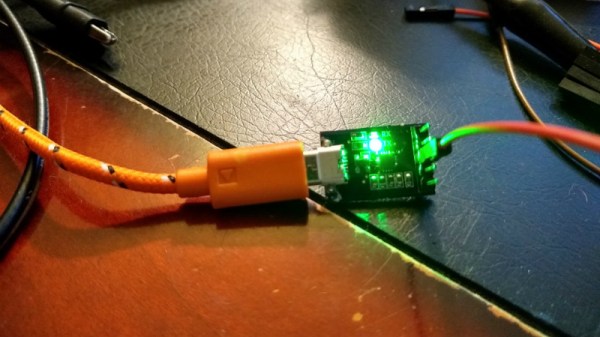
With a Python script, a length of wire attached to the TX pin, and a mastery of the electron that we mere mortals can only hope to achieve, [Ted] has demonstrated using a common USB to serial adapter as an SDR transmitter. That’s right, using the cheap little UART adapter you’ve almost certainly got sitting in your parts bin right now and his software, you can transmit in the low megahertz frequencies and even up into VHF with some trickery. The project is still very much experimental, and though this may be the first time, we’re willing to bet this isn’t the last time you’ll be hearing about it.

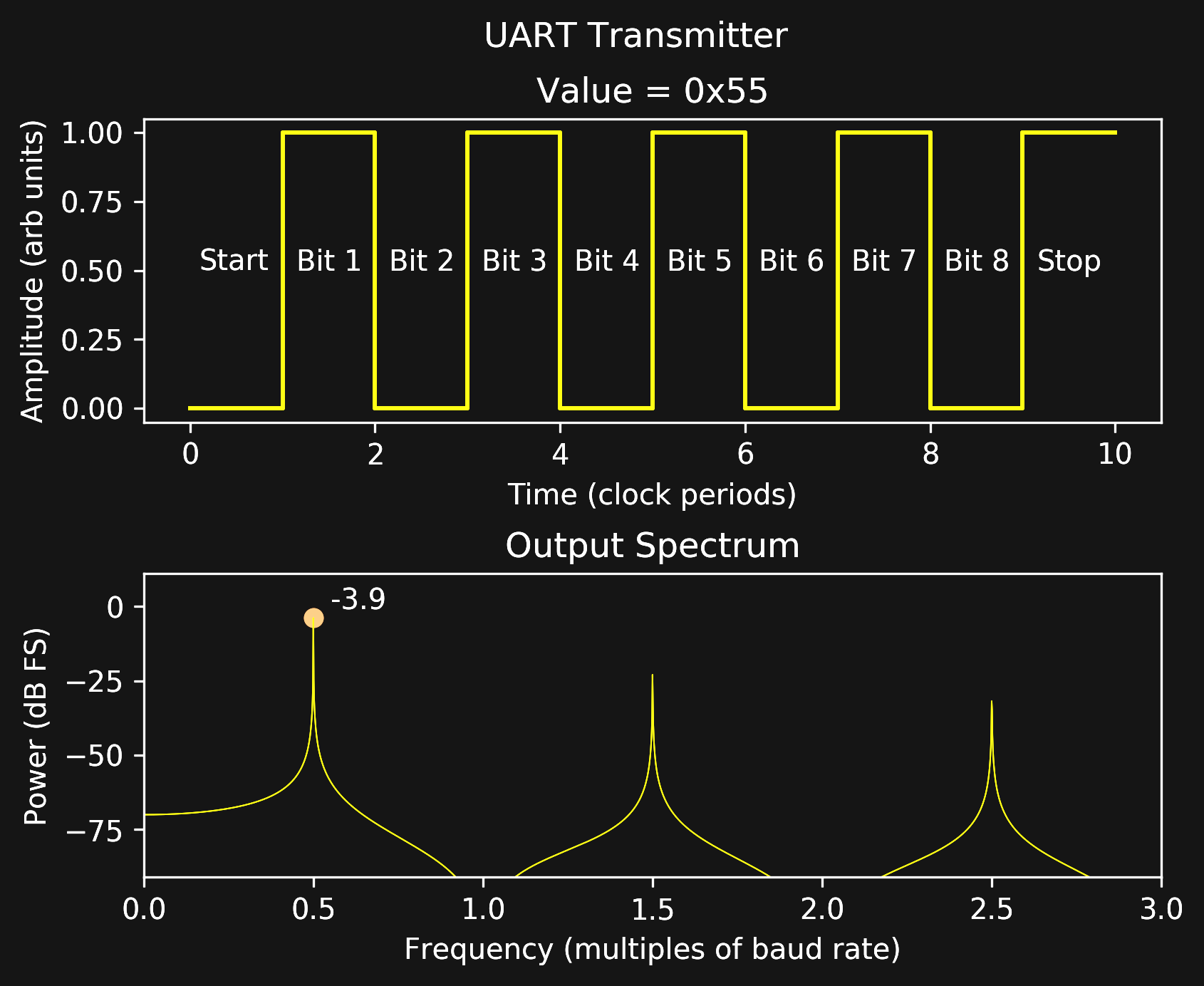
The basic idea is that when sending certain characters over the UART serial line, they can combine with the start and stop bits to produce a square wave burst at half the baud rate. [Ted] found that sending a string of 0x55 at 19200 baud would generate a continuous square wave at 9600 Hz, and if he turned the baud rate all the way up to 2,000,000 where these USB adapters top out, that signal was transmitted at 1 MHz, right in the middle of the AM dial.

A neat trick to be sure, but alone not terribly useful. The next step was to modulate that signal by sending different characters over UART. [Ted] explains at great length his experiments with multi-level quantization and delta-sigma schemes, and each step of the way shows the improvement of the transmitted audio signal. Ultimately he comes up with a modulation scheme that produces a impressively clean signal, all things considered.

This alone is impressive, but [Ted] isn’t done yet. He realized that this method of transmission was generating some strong frequency harmonics which extended far beyond the theoretical maximum 1 MHz frequency of his UART SDR. In his experimentation he found he was able to pick up a signal from all the way out to 151 MHz, though it was too poor to be of any practical use. Dialing back the expectations a bit, he was able to successfully control a cheap 27 MHz RC toy using the 43rd harmonic of a 631 kHz signal at a range of about 10 feet with a FT232RL adapter, which he notes produces the cleanest signals in his testing.

[Ted] is still working on making transmissions cleaner and stronger by adding filters and amplifiers, but these early accomplishments are already very promising. His work reminds us of a low frequency version of the USB to VGA adapter turned GHz SDR transmitter, and we’re very eager to see where it goes from here.

Continue reading “Your USB Serial Adapter Just Became A SDR”

1970s Lab Equipment Turned Retro Pi Terminal

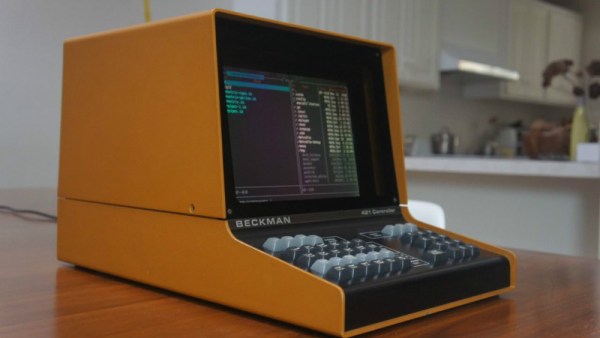
When it was released, the Beckman Model 421 CRT controller represented the latest and greatest in liquid chromatography technology. Its 12 inch screen would allow the operator to view critical information such as flow rate and concentration, and its integrated keyboard simplified system control. It made liquid chromatography faster and easier, allowing lab technicians to focus on analysis rather than the complexities of operating the equipment.

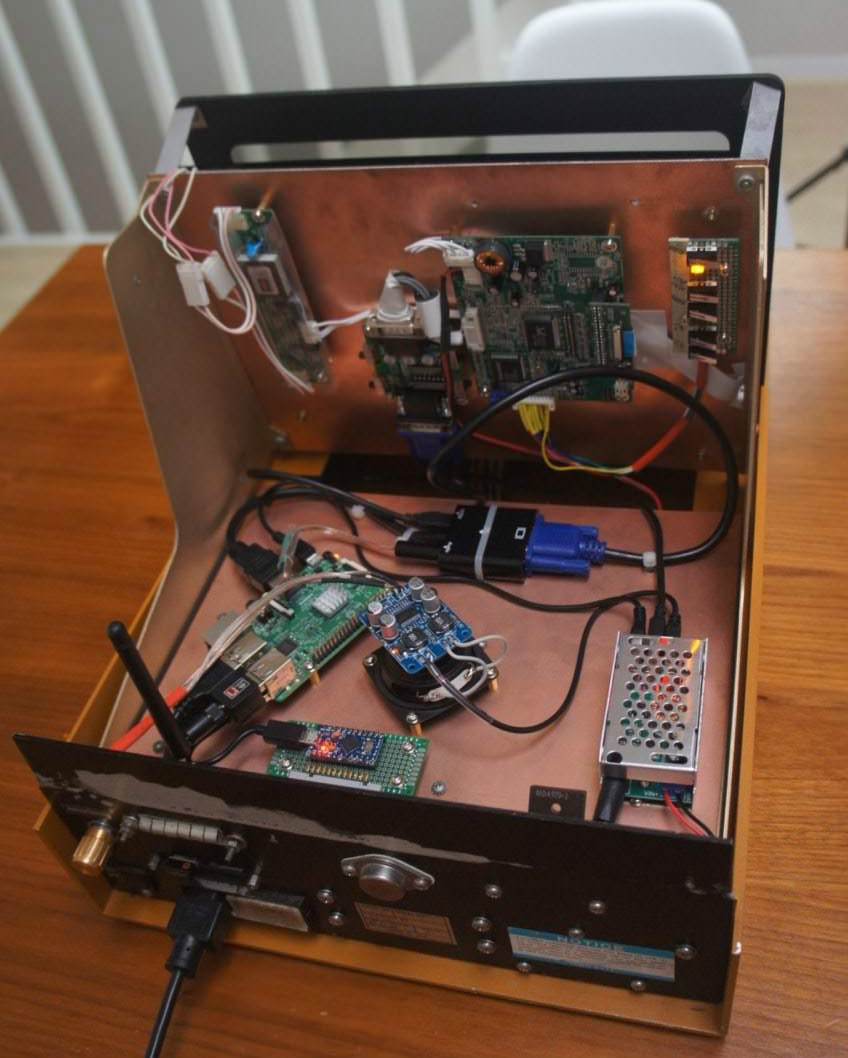
But none of that matters right now. What matters is that [Igor Afanasyev] found one of these gloriously vintage devices at a local swap meet and decided it deserved a second chance at life. With a Raspberry Pi and a surprising amount of support hardware, he was able to turn this roughly 40 year old piece of scientific equipment into a multipurpose device that does everything from classic gaming to multimedia playback. It’s got a few quirks, but overall this is a gadget that any hacker would love to have kicking around their modern-day lab.

[Igor] explains that the Model 412 is essentially just a dumb terminal with no internal logic, so in theory it should have been possible to just hang the thing on a serial port and be done with it. But unfortunately the display drive board was dead, so a full rebuild was in order. This meant that there’s little left of the original device other than the keyboard and the case itself, but since it isn’t exactly a “vintage computer” in the traditional sense, we think the purists will allow it.

For the display, [Igor] used an LCD he salvaged from an old digital picture frame. It was the right size to fit the opening, and thanks to an unpopulated VGA header on the board, wasn’t too difficult to get connected to the Pi with an HDMI adapter. He also added a hardware VGA scanline generator board so that no matter what the Pi shows it will have that classic old-school look; a fantastic detail we don’t usually see on builds like this.

The keyboard on the Model 412 was more of a control panel than a traditional input device, so not only does it have keycaps which say things like “FLOW RATE” and “WRITE TAPE”, but it has a fairly weird layout. After reverse engineering the somewhat unusual key matrix, he spun up a custom firmware for the Arduino Pro Micro using QMK which would let him use the board on the Pi as a standard USB input device. But rather than replace the keys, [Igor] created a little cheat-sheet overlay that he could put over the board to see what keys translate to which letters. It’s awkward for sure, but we really appreciate that he preserved the unique nature and look of the Model 412.

Like the Heathkit H19 that was brought back to life with an internal Raspberry Pi or the DEC VT100 with a BealeBone inside there’s something about the visual aesthetic and no-nonsense approach of these vintage terminals which continue to make them compelling into the 21st century.