SV Seeker Is Recycling Batteries

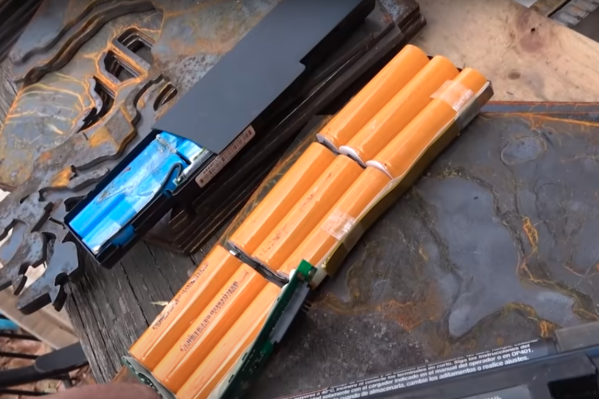
SV Seeker is a home-made boat currently being built by [Doug Jackson] just north of Tulsa, Oklahoma. It’s a bit different than what you might imagine as a typical DIY boat, though. You see, Seeker is a 75 ft steel boat, intended to work as a research vessel. Doug and his crew proudly refer to Seeker as “The boat the internet built”, and he’s our kind of people. We’ve covered them before, the first time way back in 2013. Doug’s Youtube channel does double duty, both teaching the rest of us all the skills he’s learned while building, and also serving as the eventual user and repair manual for the boat.
Continue reading “SV Seeker Is Recycling Batteries”

History Of Closed Captions: The Analog Era

Closed captioning on television and subtitles on DVD, Blu-ray, and streaming media are taken for granted today. But it wasn’t always so. In fact, it was quite a struggle for captioning to become commonplace. Back in the early 2000s, I unexpectedly found myself involved in a variety of closed captioning projects, both designing hardware and consulting with engineering teams at various consumer electronics manufacturers. I may have been the last engineer working with analog captioning as everyone else moved on to digital.

But before digging in, there is a lot of confusing and imprecise language floating around on this topic. Let’s establish some definitions. I often use the word captioning which encompasses both closed captions and subtitles:

Closed Captions: Transmitted in a non-visible manner as textual data. Usually they can be enabled or disabled by the user. In the NTSC system, it’s often referred to as Line 21, since it was transmitted on video line number 21 in the Vertical Blanking Interval (VBI).
Subtitles: Rendered in a graphical format and overlaid onto the video / film. Usually they cannot be turned off. Also called open or hard captions.

The text contained in captions generally falls into one of three categories. Pure dialogue (nothing more) is often the style of captioning you see in subtitles on a DVD or Blu-ray. Ordinary captioning includes the dialogue, but with the addition of occasional cues for music or a non-visible event (a doorbell ringing, for example). Finally, “Subtitles for the Deaf or Hard-of-hearing” (SDH) is a more verbose style that adds even more descriptive information about the program, including the speaker’s name, off-camera events, etc.

Roughly speaking, closed captions are targeting the deaf and hard of hearing audience. Subtitles are targeting an audience who can hear the program but want to view the dialogue for some reason, like understanding a foreign movie or learning a new language.

Continue reading “History Of Closed Captions: The Analog Era”

You Need An Automated Overhead Camera Assistant

It’s 2021. Everyone and their mother is filming themselves doing stuff, and a lot of it is super cool content. But since most of us have to also work the video capture devices ourselves, it can be difficult to make compelling footage with a single, stationary overhead view, especially when there are a lot of steps involved. A slider rig is a good start, but the ability to move the camera in three dimensions programmatically is really where it’s at.

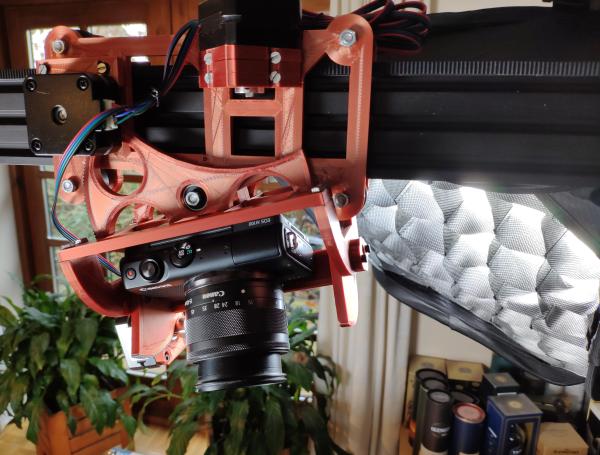
[KronBjorn]’s excellent automated overhead camera assistant runs on an Arduino Mega and is operated by typing commands in the serial monitor. It can pan ±20° from straight down and moves in three axes on NEMA-17 stepper motors. It moves really smoothly, which you can see in the videos after the break. The plastic-minimal design is interesting and reminds us a bit of an ophthalmoscope phoropter — that’s that main rig at the eye doctor. There’s only one thing that would make this better, and that’s a dedicated macro pad.

If you want to build your own, you’re in luck — there’s quite a lot of detail to this project, including a complete BOM, all the STLs, code, and even assembly videos of the 3D-printed parts and the electronics. Slide past the break to check out a couple of brief demo videos.

Not enough room for a setup like this one? Try the pantograph version.

Continue reading “You Need An Automated Overhead Camera Assistant”

Magna Announces Simple Drive Solution For Electric Pickup Trucks

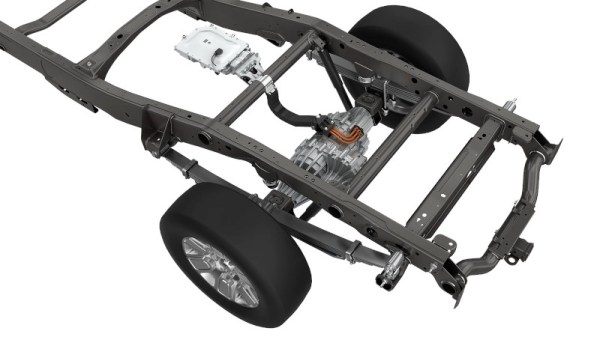
Thus far, the majority of electric cars on sale have been aimed at commuters, fitting into the sedan and SUV segments of the marketplace. Going forward, there’s a very real need for electrification to touch the whole spectrum of automobiles, and that includes work vehicles like pickup trucks. A company called Magna have recently thrown their hat into the ring in just this space, developing a simple drivetrain that can be readily installed in pickup trucks without major modifications.  Continue reading “Magna Announces Simple Drive Solution For Electric Pickup Trucks”

Sanity Check Your Engines With This Dynamometer

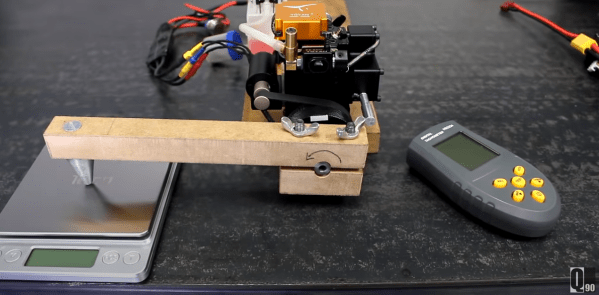
As you get ready to pop the hood of your RC car to drop in a motor upgrade, have you ever wondered how much torque you’re getting from these small devices? Sure, we might just look up the motor specs, but why trust the manufacturer with such matters that you could otherwise measure yourself? [JohnnyQ90] did just that, putting together an at home-rig built almost from a stockpile of off-the-shelf parts.

To dig into the details, [JohnnyQ90] has built himself a Prony Brake Dynamometer. These devices are setup with the motor shaft loosely attached to a lever arm that can push down on a force-measuring device like a scale. With our lever attached, we then power up our motor. By gradually increasing the “snugness” of the motor shaft, we introduce sliding friction that “fights” the motor, and the result is that, at equilibrium, the measured torque is the maximum amount possible for the given speed. Keep turning up that friction and we can stall the motor completely, giving us a measurement of our motor’s stall torque.

Arming yourself with a build like this one can give us a way to check the manufacturer’s ratings against our own, or even get ratings for those “mystery motors” that we pulled out the dumpster. And [JohnnyQ90’s] build is a great reminder on how we can leverage a bit of physics and and a handful of home goods to get some meaningful data.

But it turns out that Prony Brake Dynamometers aren’t the only way of measuring motor torque. For a disc-brake inspired, have a look at this final project. And if you’re looking to go bigger, put two motors head-to-head to with [Jeremy Felding’s] larger scale build.


Continue reading “Sanity Check Your Engines With This Dynamometer”

A Lot Of Effort For A Pi Laptop

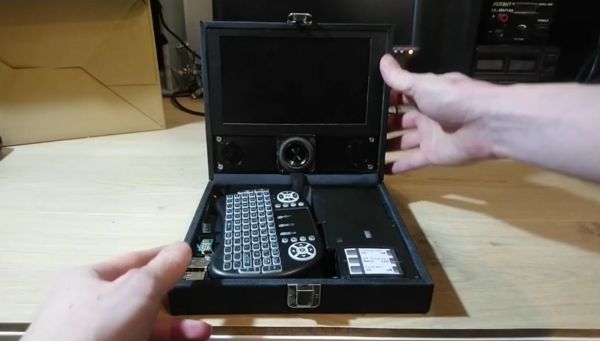
Building a Raspberry Pi laptop is not that uncommon. In fact, just a few clicks from any of the major electronics suppliers will have the parts needed for such a project speeding on their way to your house in no time at all. But [joekutz] holds the uncontroversial belief that the value in these parts has somewhat diminishing returns, so he struck out to build his own Pi laptop with a €4 DVD player screen and a whole lot of circuit wizardry to make his parts bin laptop work.

The major hurdle that he needed to overcome was how to power both the display and the Pi with the two small battery banks he had on hand. Getting 5V for the Pi was easy enough, but the display requires 8V so he added one lithium ion battery in series (with its own fuse) in order to reach the required voltage. This does make charging slightly difficult but he also has a unique four-pole break-before-make switch on hand which doesn’t exactly simplify things, but it does make the project function without the risk of short-circuiting any of the batteries he used.

The project also makes use of an interesting custom circuit which provides low voltage protection for that one lonely lithium battery as well. All in all it’s a master course in using some quality circuit-building skills and electrical theory to make do with on-hand parts (and some 3D printing) rather than simply buying one’s way out of a problem. And the end result is something that’s great for anything from watching movies to playing some retro games.

Continue reading “A Lot Of Effort For A Pi Laptop”