AI: This Decade’s Worst Buzz Word

In hacker circles, the “Internet of Things” is often the object of derision. Do we really need the IoT toaster? But there’s one phrase that — while not new — is really starting to annoy me in its current incarnation: AI or Artificial Intelligence.

The problem isn’t the phrase itself. It used to mean a collection of techniques used to make a computer look like it was smart enough to, say, play a game or hold a simulated conversation. Of course, in the movies it means HAL9000. Lately, though, companies have been overselling the concept and otherwise normal people are taking the bait.

The Alexa Effect

Not to pick on Amazon, but all of the home assistants like Alexa and Google Now tout themselves as AI. By the most classic definition, that’s true. AI techniques include matching natural language to predefined templates. That’s really all these devices are doing today. Granted the neural nets that allow for great speech recognition and reproduction are impressive. But they aren’t true intelligence nor are they even necessarily direct analogs of a human brain.

Continue reading “AI: This Decade’s Worst Buzz Word”

The Science Behind Lithium Cell Characteristics And Safety

To describe the constraints on developing consumer battery technology as ‘challenging’ is an enormous understatement. The ideal rechargeable battery has conflicting properties – it has to store large amounts of energy, safely release or absorb large amounts of it on demand, and must be unable to release that energy upon failure. It also has to be cheap, nontoxic, lightweight, and scalable.

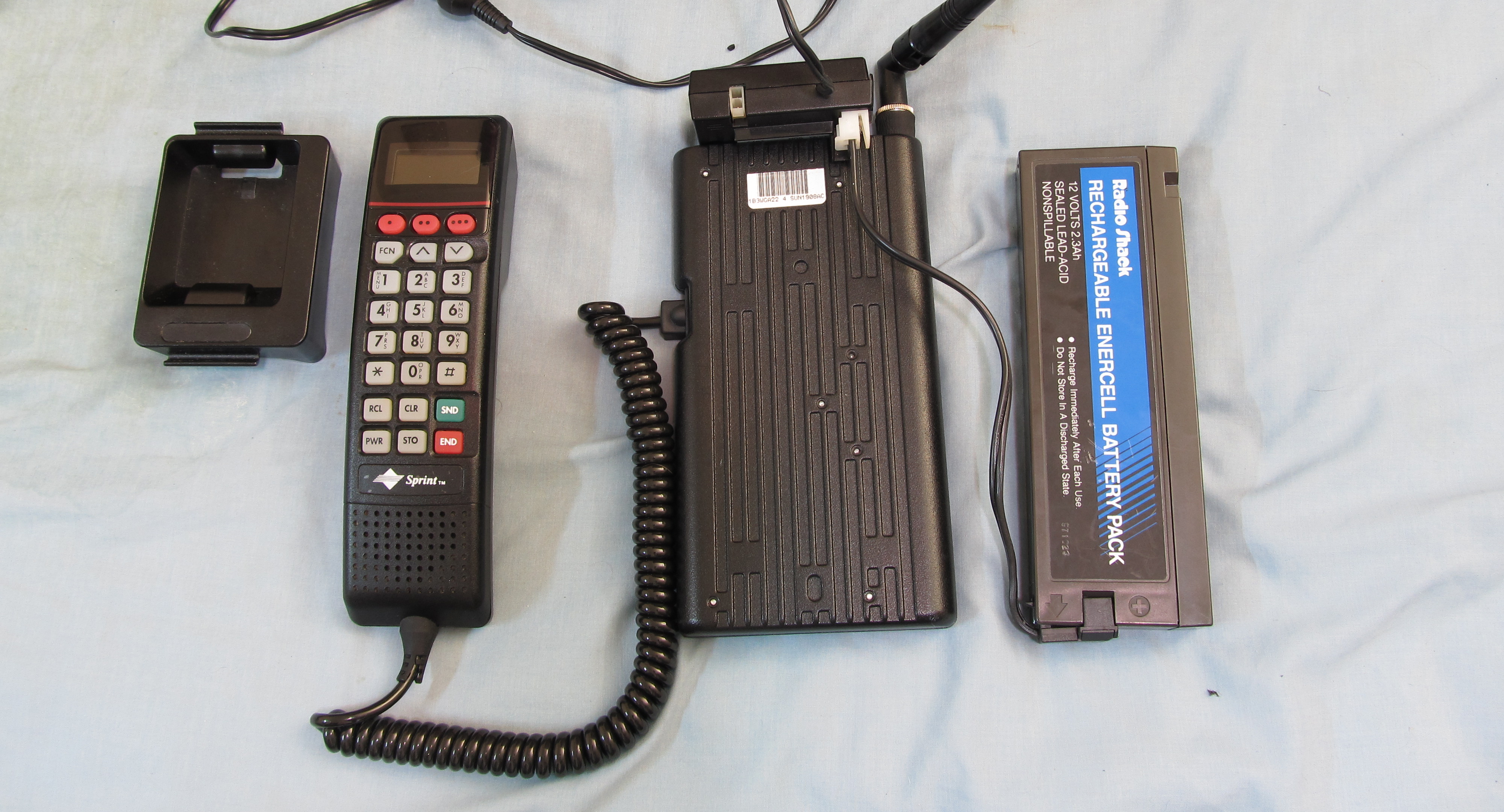
As a result, consumer battery technologies represent a compromise between competing goals. Modern rechargeable lithium batteries are no exception, although overall they are a marvel of engineering. Mobile technology would not be anywhere near as good as it is today without them. We’re not saying you cannot have cellphones based on lead-acid batteries (in fact the Motorola 2600 ‘Bag Phone’ was one), but you had better have large pockets. Also a stout belt or… some type of harness? It turns out lead is heavy.

The Motorola 2600 ‘bag phone’, with a lead-acid battery. Image CC-BY-SA 3.0 source: Trent021

Rechargeable lithium cells have evolved tremendously over the years since their commercial release in 1991. Early on in their development, small grains plated with lithium metal were used, which had several disadvantages including loss of cell capacity over time, internal short circuits, and fairly high levels of heat generation. To solve these problems, there were two main approaches: the use of polymer electrolytes, and the use of graphite electrodes to contain the lithium ions rather than use lithium metal. From these two approaches, lithium-ion (Li-ion) and lithium-polymer (Li-Po) cells were developed (Vincent, 2009, p. 163). Since then, many different chemistries have been developed.

Continue reading “The Science Behind Lithium Cell Characteristics And Safety”

Sneakers: A Love-Fest

“A TURNIP CURES ELVIS” begins the opening credits, an intriguing beginning to a smart and still timely film that was released around 25 years ago. If you’ve never seen the movie, I’m about to spoil the hell out of it.

Sneakers features the title characters, hackers who work the 1992 gig economy as freelance penetration testers. They work for Martin Bishop, a hippie hacker Obi Wan who works San Francisco’s gray market, doing good deeds and helping banks improve their security.

While there is a fair amount of cheese in Sneakers, a lot of the problems the characters face — physical security and cryptography come to mind — remain the problems of today. Securing our digital business? Check. Surveillance? Check? Gray operators? Absolutely. At the same time, the movie does a good job of exploring different categories of hacker. The various characters seem to offer glimpses of people I see all the time at the hackerspace. Bigger than life, certainly, but they are in a Hollywood movie, after all.


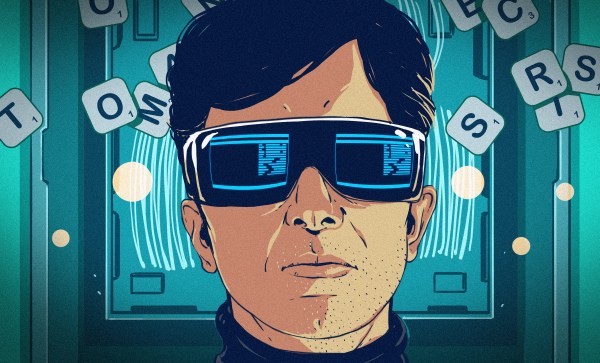
Finally, the movie is just smart. Those opening credits offer a preview: the anagrams that begin the movie (“A TURNIP KILLS ELVIS” translates to Universal Pictures) are not just some art director’s conceit for the opening credits. The anagrams end up being important later on in the film, where there is a key clue hidden but if you think about it, shuffling letters on your Scrabble tray could be taken as a metaphor for hacker thinking — taking the same information as everyone else but looking at it in a different way.

Continue reading “Sneakers: A Love-Fest”

A Video Game Odyssey: How Magnavox Launched The Console Industry

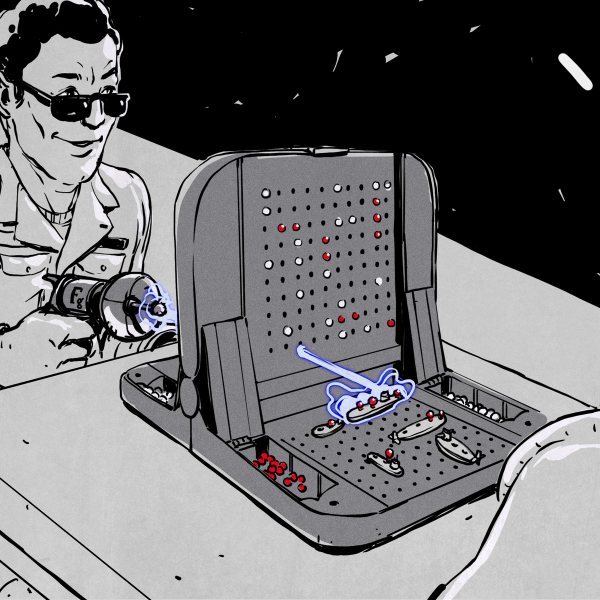
What was the first video game console? If you said the Atari 2600, you would be wrong, but we’d forgive you. After all, the Atari was early and widely sold. It also had the major features you expect from a video game. However, there was an earlier console available. the Magnavox Odyssey.

This system was black and white, had two wired controllers, and while it didn’t quite have cartridges, you could select from one of several games. The system seems inexpensive today at $100 (not including the optional light gun). However, adjusting for 1972 currency value, that’s equivalent to about $600 today.

It was not an impulse buy, and the differentiation between games was mostly an exercise in imagination. But the the Magnavox Odyssey nevertheless brought computer technology into the home and that was exciting. It proved a market existed for home video gaming, and served no small part in the success of Atari.

Continue reading “A Video Game Odyssey: How Magnavox Launched The Console Industry”

In-Band Signaling: Coded Squelch Systems

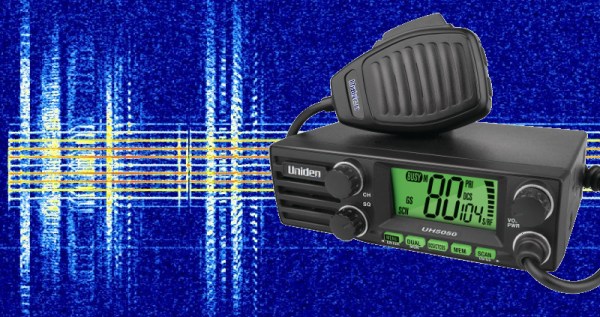
In the first part of our series on in-band signaling, we discussed one of the most common and easily recognizable forms of audio control, familiar to anyone who has dialed a phone in the last fifty years – dual-tone multifrequency (DTMF) dialing. Our second installment will look at an in-band signaling method that far fewer people have heard, precisely because it was designed to be sub-audible — coded squelch systems for public service and other radio services. Continue reading “In-Band Signaling: Coded Squelch Systems”

A Noob’s Guide To McMaster-Carr

For the penny-pinching basement hacker, McMaster-Carr seems like a weird go-to resource for hardware. For one, they’re primarily a B2B company; and, for two, their prices aren’t cheap. Yet their name is ubiquitous among the hacker community. Why? Despite the price, something makes them too useful to ignore by everyday DIY enthusiasts. Those of us who’ve already been enlightened by the McMaster-Carr can design wonders with a vocabulary of parts just one day away at the click of a button.

Today, this article is for those of us who have yet to receive that enlightenment. When used wisely, this source of mechanical everything brings us a world of fast parts at our fingertips. When used poorly, we find nothing but overpriced stock components in oversized shipping boxes.

Since we, the McMaster-Carr sages, are forever doomed to stuff our desk drawers with those characteristic yellow baggies till the end of time, we thought we’d give an intro to the noobs that are just beginning to flex their muscles with this almighty resource. Grab another cup of coffee as we take you on a tour of the good and good-grievances of McMaster-Carr.

Continue reading “A Noob’s Guide To McMaster-Carr”

Video Streaming Like Your Raspberry Pi Depended On It

The Raspberry Pi is an incredibly versatile computing platform, particularly when it comes to embedded applications. They’re used in all kinds of security and monitoring projects to take still shots over time, or record video footage for later review. It’s remarkably easy to do, and there’s a wide variety of tools available to get the job done.

However, if you need live video with as little latency as possible, things get more difficult. I was building a remotely controlled vehicle that uses the cellular data network for communication. Minimizing latency was key to making the vehicle easy to drive. Thus I set sail for the nearest search engine and begun researching my problem.

My first approach to the challenge was the venerable VLC Media Player. Initial experiments were sadly fraught with issues. Getting the software to recognize the webcam plugged into my Pi Zero took forever, and when I did get eventually get the stream up and running, it was far too laggy to be useful. Streaming over WiFi and waving my hands in front of the camera showed I had a delay of at least two or three seconds. While I could have possibly optimized it further, I decided to move on and try to find something a little more lightweight.

Continue reading “Video Streaming Like Your Raspberry Pi Depended On It”