An Introduction To Solid State Relays

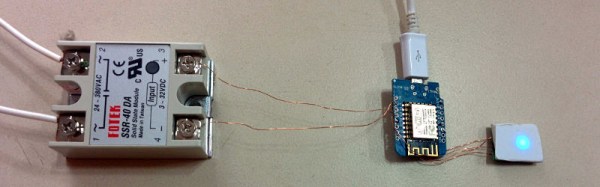
When we think of relays, we tend to think of those big mechanical things that make a satisfying ‘click’ when activated. As nice as they are for relay-based computers, there are times when you don’t want to deal with noise or the unreliability of moving parts. This is where solid-state relays (SSRs) are worth considering. They switch faster, silently, without bouncing or arcing, last longer, and don’t contain a big inductor.
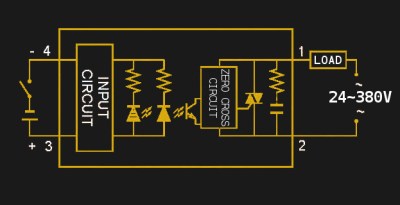
Source Fotek SSR Specifications Sheet

An SSR consists of two or three standard components packed into a module (you can even build one yourself). The first component is an optocoupler which isolates your control circuit from the mains power that you are controlling. Second, a triac, silicon controlled rectifier, or MOSFET that switches the mains power using the output from the optocoupler. Finally, there is usually (but not always) a ‘zero-crossing detection circuit’. This causes the relay to wait until the current it is controlling reaches zero before shutting off. Most SSRs will similarly wait until the mains voltage crosses zero volts before switching on.

If a mechanical relay turns on or off near the peak voltage when supplying AC, there is a sudden drop or rise in current. If you have an inductive load such as an electric motor, this can cause a large transient voltage spike when you turn off the relay, as the magnetic field surrounding the inductive load collapses. Switching a relay during a peak in the mains voltage also causes an electric arc between the relay terminals, wearing them down and contributing to the mechanical failure of the relay.

Continue reading “An Introduction To Solid State Relays” →

Cuban Embassy Attacks And The Microwave Auditory Effect

If you’ve been paying attention to the news, you may have seen a series of articles coming out about US staffers in Cuba. It seems that 21 staffers have suffered a bizarre array of injuries ranging from hearing loss to dizziness to concussion-like traumatic brain injuries. Some staffers have reported hearing incapacitating sounds in the embassy and in their hotel rooms. The reports range from clicking to grinding, humming, or even blaring sounds. One staffer described being awoken to a horrifically loud sound, only to have it disappear as soon as he moved away from his bed. When he got back into bed, the mysterious sound came back.

Cuba has denied any wrongdoing. However, the US has already started to take action – expelling two Cuban diplomats from the US in May. The question though is what exactly could have caused these injuries. The press has gone wild with theories of sonic weaponry, hidden bugs, and electronic devices, poisons, you name it. Even Julian Assange has weighed in, stating “The diversity of symptoms suggests that this is a pathogen combined with paranoia in an isolated diplomatic corps.”

So what’s going on? Bizarre accidents? Cloak and dagger gone awry? Mass hysteria among the US state department, or something else entirely? Continue reading “Cuban Embassy Attacks And The Microwave Auditory Effect” →

The Electronics Markets Of Ho Chi Minh City, Vietnam

When we think about world-famous electronics markets in Asia, usually Shenzhen, Tokyo’s Akihabara, or Shanghai’s Beijing Road come to mind.

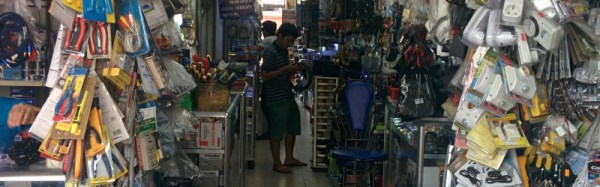
There’s another market that I’ve had my eye on for a few years: Nhật Tảo market in Ho Chi Minh City, Vietnam. It might not be as large or accessible as the more well-known markets, but it’s very much worth a visit if you’re in the area. I decided it was time to hop on my red motorbike (red things go faster) and give you a short tour of the central market, as well as some more hobbyist-friendly options.

Continue reading “The Electronics Markets Of Ho Chi Minh City, Vietnam” →

Network Analysers: The Electrical Kind

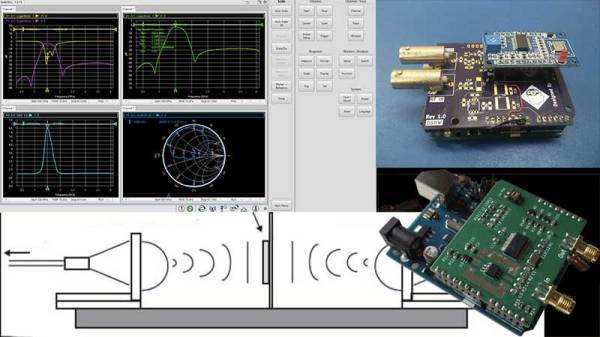
Instrumentation has progressed by leaps and bounds in the last few years, however, the fundamental analysis techniques that are the foundation of modern-day equipment remain the same. A network analyzer is an instrument that allows us to characterize RF networks such as filters, mixers, antennas and even new materials for microwave electronics such as ceramic capacitors and resonators in the gigahertz range. In this write-up, I discuss network analyzers in brief and how the DIY movement has helped bring down the cost of such devices. I will also share some existing projects that may help you build your own along with some use cases where a network analyzer may be employed. Let’s dive right in.

Network Analysis Fundamentals

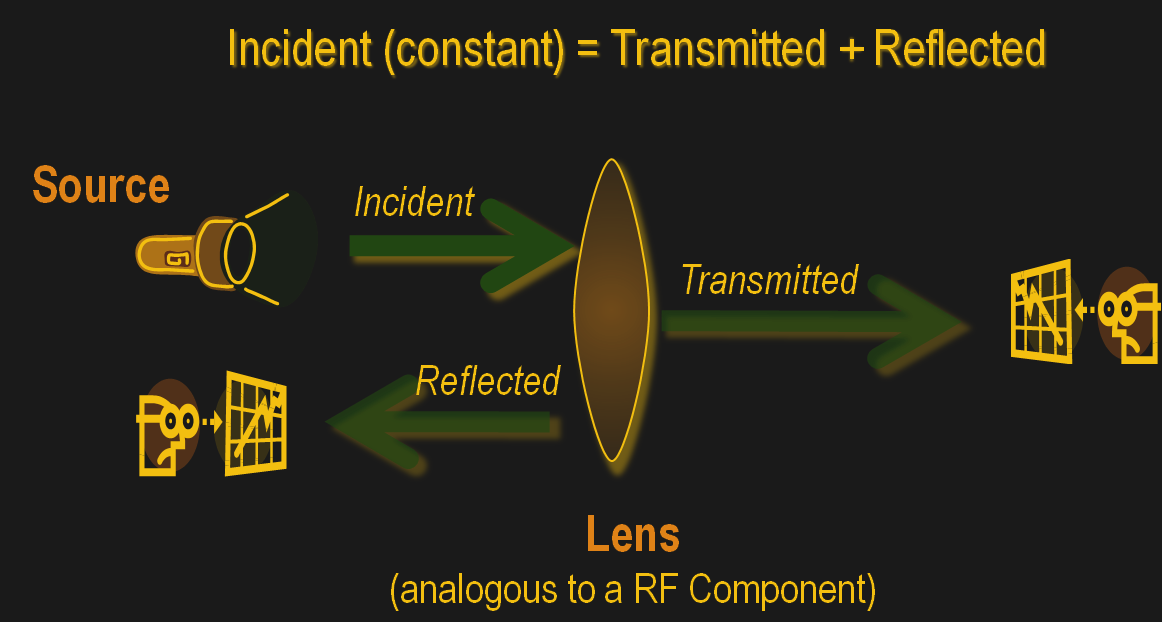
As a conceptual model, think of light hitting a lens and most of it going through but part of it getting reflected back.

The same applies to an electrical/RF network where the RF energy that is launched into the device may be attenuated a bit, transmitted to an extent and some of it reflected back. This analysis gives us an attenuation coefficient and a reflection coefficient which explains the behavior of the device under test (DUT).

Of course, this may not be enough and we may also require information about the phase relationship between the signals. Such instruments are termed Vector Network Analysers and are helpful in measuring the scattering parameters or S-Parameters of a DUT.

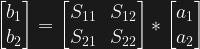
The scattering matrix links the incident waves a1, a2 to the outgoing waves b1, b2 according to the following linear equation: \begin{bmatrix} b_1 \\ b_2 \end{bmatrix} = \begin{bmatrix} S_{11} & S_{12} \\ S_{21} & S_{22} \end{bmatrix} * \begin{bmatrix} a_1 \\ a_2 \end{bmatrix} .

The equation shows that the S-parameters are expressed as the matrix S, where and denote the output and input port numbers of the DUT.

This completely characterizes a network for attenuation, reflection as well as insertion loss. S-Parameters are explained more in details in Electromagnetic Field Theory and Transmission Line Theory but suffice to say that these measurements will be used to deduce the properties of the DUT and generate a mathematical model for the same.

General Architecture

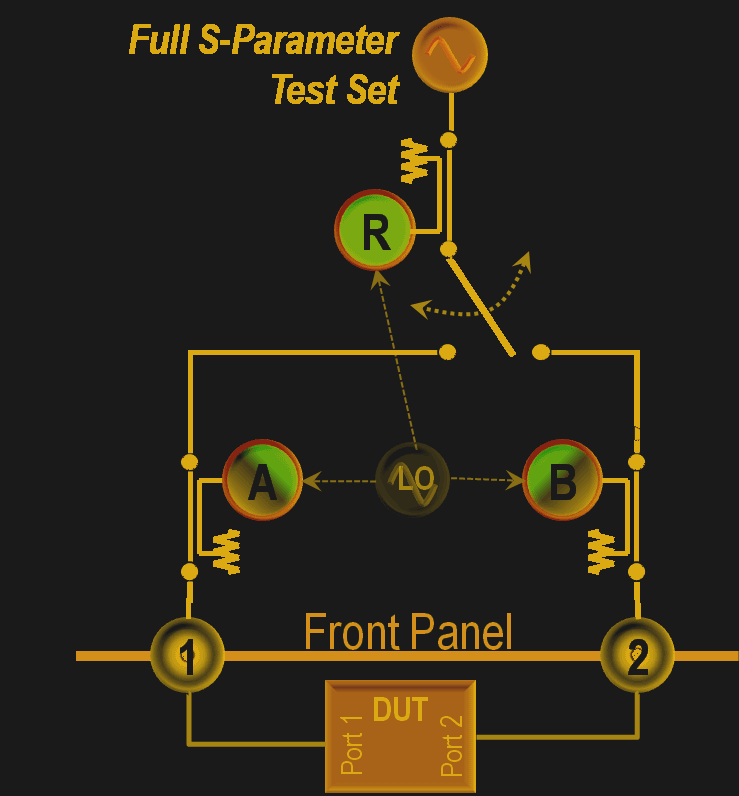
As mentioned previously, a simple network analyzer would be a signal generator connected and a spectrum analyzer combined to work together. The signal generator would be configured to output a signal of a known frequency and the spectrum analyzer would be used to detect the signal at the other end. Then the frequency would be changed to another and the process repeats such that the system sweeps a range of frequencies and the output can be tabulated or plotted on a graph. In order to get reflected power, a microwave component such as a magic-T or directional couplers, however, all of this is usually inbuilt into modern-day VNAs.
Continue reading “Network Analysers: The Electrical Kind” →

Inventing The Induction Motor

When you think of who invented the induction motor, Nikola Tesla and Galileo Ferraris should come to mind. Though that could be a case of the squeaky wheel being the one that gets the grease. Those two were the ones who fought it out just when the infrastructure for these motors was being developed. Then again, Tesla played a huge part in inventing much of the technology behind that infrastructure.

Although they claimed to have invented it independently, nothing’s ever invented in a vacuum, and there was an interesting progression of both little guys and giants that came before them; Charles Babbage was surprisingly one of those giants. So let’s start at the beginning, and work our way to Tesla and Ferraris.

Continue reading “Inventing The Induction Motor” →

Spy Tech: Nonlinear Junction Detectors

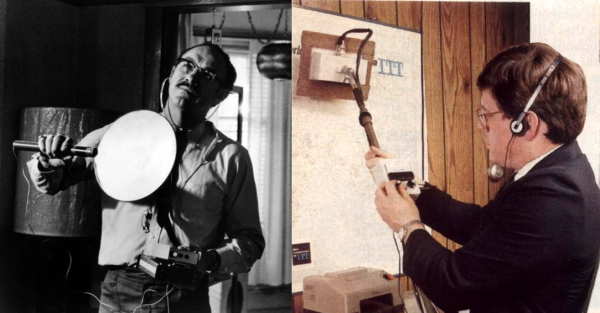
If you ever watch a spy movie, you’ve doubtlessly seen some nameless tech character sweep a room for bugs using some kind of detector and either declare it clean or find the hidden microphone in the lamp. Of course, as a hacker, you have to start thinking about how that would work. If you had a bug that transmits all the time, that’s easy. The lamp probably shouldn’t be emitting RF energy all the time, so that’s easy to detect and a dead give away. But what if the bug were more sophisticated? Maybe it wakes up every hour and beams its data home. Or perhaps it records to memory and doesn’t transmit anything. What then?

High-end bug detectors have another technique they use that claims to be able to find active device junctions. These are called Nonlinear Junction Detectors (NLJD). Spy agencies in the United States, Russian and China have been known to use them and prisons employ them to find cell phones. Their claim to fame is the device doesn’t have to be turned on for detection to occur. You can see a video of a commercial NLJD, below

Continue reading “Spy Tech: Nonlinear Junction Detectors” →

Huge Names Confirm Their Supercon Appearances

We’re excited to announce the next batch of speakers for the 2017 Hackaday Superconference.

We are especially pleased to welcome Michael Ossmann as a speaker. He presented an RF design workshop at the 2014 Superconference which was sold out, standing room only, and still turned away dozens of people before becoming a hit on the Internet. This year he takes the stage with colleague Dominic Spill as they focus on infrared communications and the uses and abuses of such.

Dr. Christal Gordon threw down an incredible talk on biologically inspired sensors last year and we suspect she will outdo herself this year. Her talk will cover the fanciest of cutting-edge sensors and the trade-offs of selecting the new hotness for your designs. Coming out of this you will know when to go with a suite of tried and true components and when to make the leap to new tech.

Several of this year’s Hackaday Prize Judges will be on hand and presenting talks. In addition to Christal Gordon and Danielle Applestone (announced as a speaker last week), we’re thrilled to have Anouk Wipprecht — internationally known for her work in fashion and engineering, pushing the boundaries of how technology can interface with humans — as a speaker. Nadya Peek from the Center for Bits and Atoms who spoke at Supercon in 2016 with a harrowing tale of an impromptu engineering challenge in Shenzhen has confirmed that she will speak this year.

The ever-popular Sprite_TM will be at Supercon. He has a reputation for bringing the house down with fantastic presentations, be it the Tamagochi Matrix or the Tiniest Game Boy. And we are proud to present the Art Director for Hackaday — Joe Kim will be speaking about the curious connection between art and technology and how developments in one push the other forward.

Ever wonder about the air you’re breathing in the house or at work. So does Natalia Mykhaylova whose work begins to monitor and catalog that information. She will discuss the state of our HVAC systems and what it looks like to bring them into the information age.

Below you’ll find the confirmed speakers we’re announcing today. We’ll have more, as well as a list of confirmed talks next week. Get your ticket now, they will sell out.

Continue reading “Huge Names Confirm Their Supercon Appearances” →