The Trouble With Cordless Power Tools

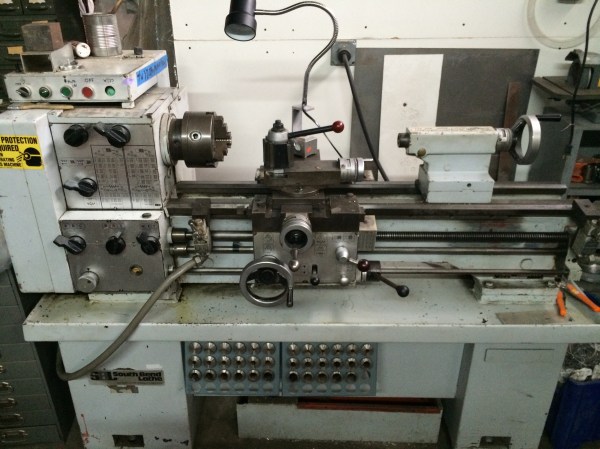
If you grow up around a small engineering business you are likely to gain something of an appreciation for power tools. You’ll see them of all ages, sizes, manufacturers, and technologies. When thinking of the power tools constantly on hand in the workshop of a blacksmith like my dad for instance, I’m instantly seeing a drill and an angle grinder. The drill that most comes to mind is a Makita mains powered hand drill, and given that I remember the day he bought it to replace his clapped-out Wolf in 1976, it has given phenomenal service over four decades and continues to do so.

41 years of hard use, and still going strong.
41 years of hard use, and still going strong…

Of course, the Makita isn’t the only drill in his possession. A variety of others of different sizes and speeds have come and gone over the years, and there is always one at hand for any given task. The other one I’d like to single out is I think the most recent acquisition, a Bosch cordless model he bought several years ago. It’s similar in size and capabilities to the Makita save for its bulky battery pack, and it is a comparably decent quality tool.

So, we have two drills, both of similar size, and both of decent quality. One is from the mid 1970s, the other from the end of the last decade. One is a very useful tool able to drill holes all day, the other is little more than a paperweight. The vintage model from the days of flared trousers is a paperweight, you ask? No, the not-very-old Bosch, because its battery pack has lost its capacity. The inevitable degradation due to aged cell chemistry has left it unable to hold enough charge for more than maybe a minute’s use, and what was once a tool you’d be glad to own is now an ornament.

Continue reading “The Trouble With Cordless Power Tools”

Intro To The North American Traffic Signal

Traffic lights are so ubiquitous that we hardly give them a second thought, except to curse their existence when they impede us on our daily drive. But no matter how much it seems like traffic lights have the ability to read our minds and tell when we’re running late, they’re really not much more than a set of lights and a programmable controller. Simple in practice, but as usual, the devil is in the details, and for a system that needs to work as close to 100% of the time as possible, the details are important. Let’s explore the inner workings of traffic signals.

Electromechanical Timing

The traffic lights and crosswalk signals at an intersection are only the public user interface, of course. The interesting stuff is going on in the control box. There’s at least one at every intersection, usually a plain metal cabinet set back from the road, sometimes camouflaged with public bills or graffiti. But inside are the guts of what makes an intersection work and keeps vehicle and foot traffic moving smoothly and safely.

Unsurprisingly, most traffic signal controls started out as purely electromechanical devices. Cabinets were chock full of synchronous motors turning timing wheels with cams to cycle the intersection’s lights through the proper sequence. One old time controller that was common up until recently was made by Econolite, and the insides are a paragon of sturdy design.

Continue reading “Intro To The North American Traffic Signal”

Hackaday UK Unconference Art

Hackaday UK Unconference Needs You

Hackaday’s first ever conference in the United Kingdom will take place on September 16th. Get your free ticket right now for the Hackaday UK Unconference!

An Unconference is the best way to put your finger on the pulse of what is happening in the hardware world right now. Everyone who attends should be ready to stand and deliver a seven-minute talk on something that excites them right now — this mean you. The easiest thing to do is grab your latest hack off the shelf and talk about that.

Talks may be about a prototype, project, or product currently in progress at your home, work, or university. It could also be an idea, concept, or skill that you’re now exploring. The point is to channel your excitement and pass it on to others in a friendly presentation environment where everyone will cheer as your story unfolds.

Hackaday doesn’t often have the opportunity to organize live events in Europe which is why we’re so happy to partner with DesignSpark, the exclusive sponsor of the Hackaday UK Unconference. DesignSpark is the innovation arm of RS Components and will have some staff on hand at the Unconference. They share our excitement in bringing together the Hackaday community throughout the UK. It is with their support that we are able to book an incredible venue and offer admission at no cost to all attendees. Hackaday events fill to capacity quickly, so get your ticket now before they are gone.

We have already asked a few of our friends in the area if they will be there. Seb Lee-Delisle who wowed us in Belgrade with his laser projection wizardry plans to be there. James Larsson is part of the crew that started the Flashing Light Prize and will be on hand. Phoenix Perry is always on the cutting edge of where people and technology meet and we can’t wait to hear her talk. Mike Harrison of Mike’s Electric Stuff will be around and likely teasing some secret Hackaday hardware he’s spearheading. James Bruton of XRobots (and a Hackaday Prize Judge) is coming, as is Saar Drimer who you may know as the person behind the beautiful hardware art of Boldport. Several Hackaday editors will be there; Elliot Williams, Jenny List, and I will all be on hand. All that’s missing is you.

We’ll flood into the Culture Space at Canada Water on the east side of London starting at 13:00. Tea, coffee, and snacks will be served throughout the afternoon and we’ll provide dinner as well. Anyone who is still standing when we close the doors at 21:00 is invited to join us at the pub afterward (we’ll get the first round).

As always, Hackaday’s success is based on the community of hackers, designers, and engineers that make it up. Please share the link to tickets on your social media and pester your friends to attend. Most importantly, don’t shy away from this speaking opportunity. We want to hear your story and this is the place to tell it. See you in London in just a few short weeks!

UPDATE: Wow, that didn’t take long. The tickets are claimed, but make sure you get on the waitlist. A lot can change in the next five week’s and we’ll be pestering all ticket holders to be there or give their seat up for someone on the waitlist.

Pogo Pin Serial Adapter Thing

A few weeks ago, I was working on a small project of mine, and I faced a rather large problem. I had to program nearly five hundred badges in a week. I needed a small programming adapter that would allow me to stab a few pads on a badge with six pogo pins, press a button, and move onto the next badge.

While not true for all things in life, sometimes you need to trade quality for expediency. This is how I built a terrible but completely functional USB to serial adapter to program hundreds of badges in just a few hours.

Continue reading “Pogo Pin Serial Adapter Thing”

Mini Hacker Breaks Down How To Build It

I read the other day that the hot career choice for kids these days is: YouTuber. That means every kid — yes, including mine — has two or three attempts at a YouTube show on their account and then they get into the next big thing and forget about it. On the other hand, sometimes you find someone who has a lot of ideas to share, and the dedication to keep sharing them.

[Kevin Zhou], an 11-year-old from Indonesia, has filmed around  70 videos in the past couple of years, with a fantastic variety of nerdy projects ranging from Mindstorms to Arduino to wood shop projects, and even a Blender tutorial. His projects show a lot of complexity, with serious, real-world concepts, and he shares the technical details about the various components in the project, and he walks you through the code as well.

He made a Mindstorms carving machine, pictured above, with a gantry system holding a motor steady while the user carves into a block of floral foam with LEGO bits. He does a lot of home automation projects using an Arduino and relay board, as well as a number of water-pumping robots. He doesn’t stick to one medium or technology. He has a jigsaw and in one video he shows how to build a Thor’s hammer out of wood. He prints out each layer’s design on office paper and glues the paper to a piece of wood, cutting out the cross-sections on his jigsaw. The whole stack is glued together and clamped. [Kevin]’s design featured a hollow space inside to save weight, which he cut by drilling a 1-inch hole in the center with his drill press, then threading the jigsaw blade through the hole to cut out the inside. As an amateur woodcrafter myself, I like seeing him branching out working on small wood projects.

Continue reading “Mini Hacker Breaks Down How To Build It”

Avoiding The Engineer-Saviour Trap

The random seaside holidays of Hackaday staffers rarely sow the seeds of our articles, but my most recent trip had something slightly unusual about it. I was spending a couple of days in a resort town on the Isle of Wight, just off the coast of Southern England, and my hotel was the local outpost of a huge chain that provides anonymous rooms for travelling salesmen and the like. I could probably find an identical place to lay my head anywhere in the world from Anchorage to Hobart and everywhere in between.

My room though was slightly different to the norm. By chance rather than necessity I’d been assigned one of the hotel’s accessible rooms, designed with people with disabilities in mind. And once I’d reached the limit of the free amusement that the digital TV channels of Southern England could provide, my attention turned to the room itself, eyeing up its slightly unfamiliar design features as an engineer.

Continue reading “Avoiding The Engineer-Saviour Trap”

Why I Got The Job

Hackaday readers are a vast and varied bunch. Some of us would call ourselves engineers or are otherwise employed in some kind of technical role. Others may still be studying to gain the requisite qualifications and are perhaps wondering just how to complete that final leap into the realm of gainful employment. Well, this one’s for you.

What sort of job are you looking for?

You might be a straight, down the lines, petroleum engineering graduate who’s looking to land a job in the oil and gas industry. Conversely, you might be an arts student who’s picked up a few skills with electronics over the years and are keen to gain a position doing grand installation pieces for musuems or corporate clients.

There’s a broad spectrum of jobs out there that require high-level technical skills, and my first piece of advice is that you shouldn’t limit yourself. There are things you can do to keep your options open, even over a long career – these could pay dividends when you’re looking for a seachange.

Continue reading “Why I Got The Job”