A Lockdown Brightened By A Library Of Vintage Usborne Books

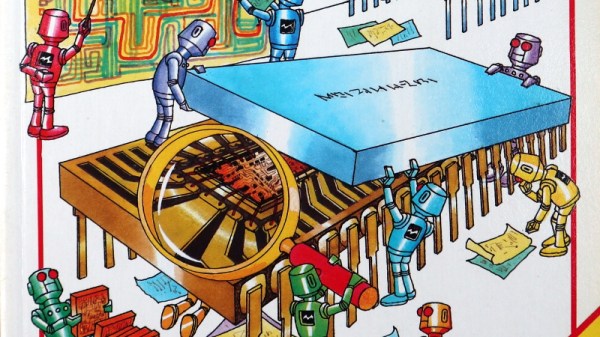
Lockdown is boring. No, let’s emphasize that, lockdown is really boring. Walking for exercise is much less fun than it was last year because it’s a wet and muddy February, and with nowhere open, a rare trip out to a McDonalds drive-through becomes a major outing. Stuck inside for the duration we turn our eyes to some of the older ways to wile away the time. Books. Remember them? In doing that I found that the friend whose house I’m living in has the whole library of Usborne children’s computer and technology books from the 1980s. Suddenly a rainy day doesn’t matter, because we’re in a cheerful world of cartoon robots and computer parts!

When Kids Learned Machine Code
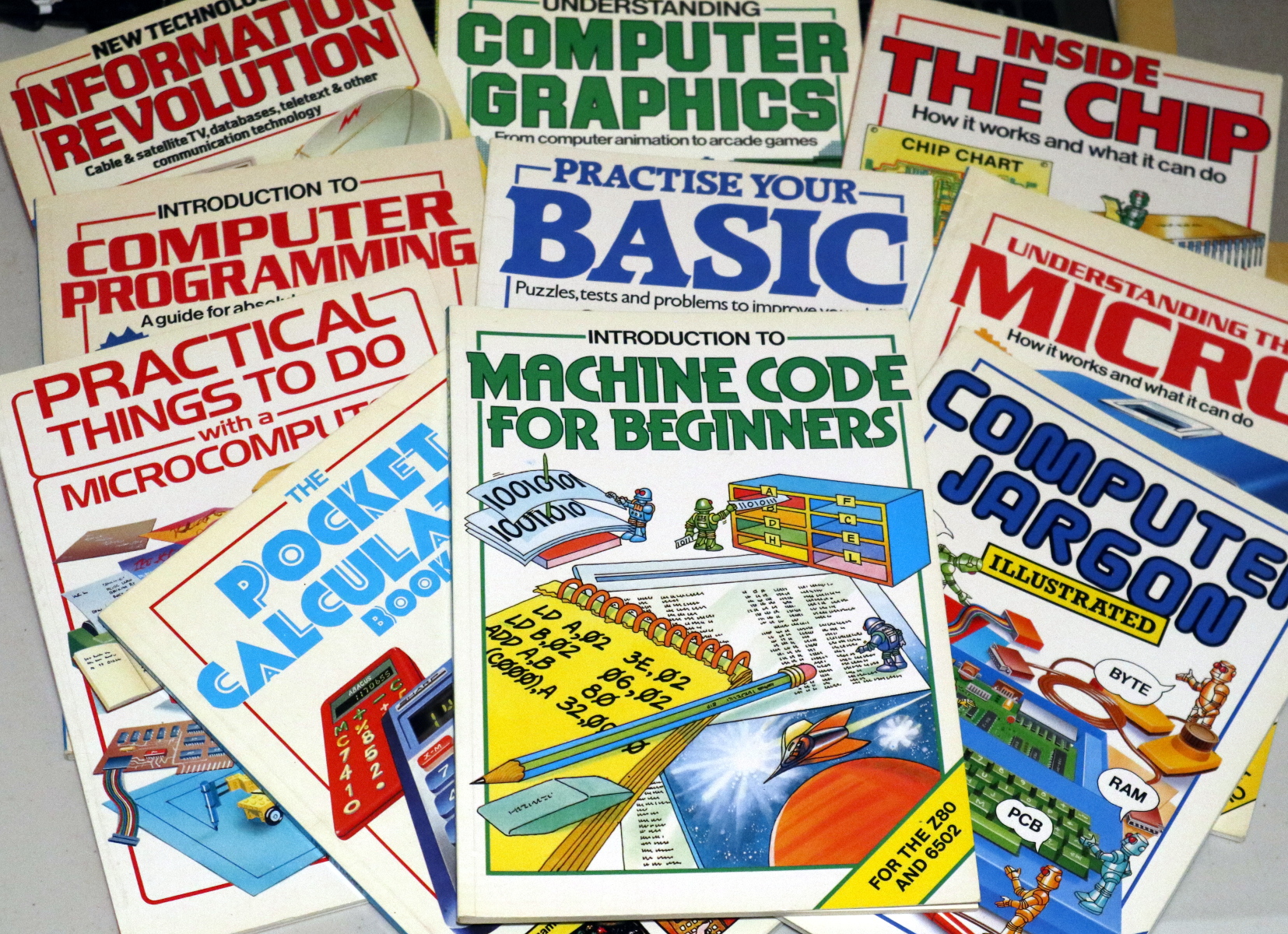
A comprehensive selection to get one's teeth into.
A comprehensive selection to get one’s teeth into.

If this leaves you none the wiser, it’s worth explaining that during the 1980s home computer boom there was no Internet handily placed for finding out how your new toy worked. Instead you had to read books and hoard the scraps of information they contained. Publishers responded to this new world of technology with enthusiasm, and the British children’s publisher Usborne did so in their characteristic entertaining and informative style. For probably the only time in history, children were presented with mainstream books telling them how to write machine code and interface directly to microprocessors, and those among them who probably now read Hackaday took to them with glee. They remain something of a cult object among retrocomputing enthusiasts, and fortunately a selection of them are available for download. Usborne are still very much in business producing up-to-date books educating today’s children, and to promote some of their more recent titles for the Raspberry Pi they’ve released them in electronic form. Continue reading “A Lockdown Brightened By A Library Of Vintage Usborne Books”

How Laser Headlights Work

When we think about the onward march of automotive technology, headlights aren’t usually the first thing that come to mind. Engines, fuel efficiency, and the switch to electric power are all more front of mind. However, that doesn’t mean there aren’t thousands of engineers around the world working to improve the state of the art in automotive lighting day in, day out.

Sealed beam headlights gave way to more modern designs once regulations loosened up, while bulbs moved from simple halogens to xenon HIDs and, more recently, LEDs. Now, a new technology is on the scene, with lasers!

Continue reading “How Laser Headlights Work”

New Part Day: Onion Tau LiDAR Camera

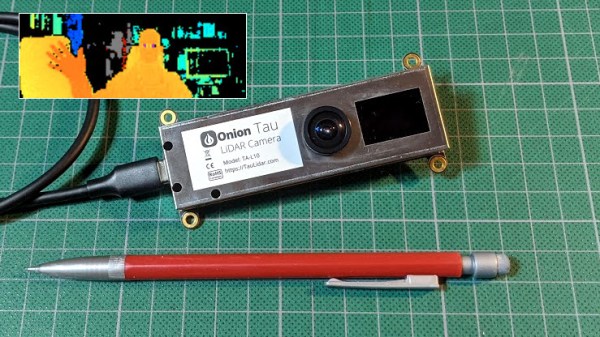
The Onion Tau LiDAR Camera is a small, time-of-flight (ToF) based depth-sensing camera that looks and works a little like a USB webcam, but with  a really big difference: frames from the Tau include 160 x 60 “pixels” of depth information as well as greyscale. This data is easily accessed via a Python API, and example scripts make it easy to get up and running quickly. The goal is to be an affordable and easy to use option for projects that could benefit from depth sensing.

When the Tau was announced on Crowd Supply, I immediately placed a pre-order for about $180. Since then, the folks at Onion were kind enough to send me a pre-production unit, and I’ve been playing around with the device to get an idea of how it acts, and to build an idea of what kind of projects it would be a good fit for. Here is what I’ve learned so far.

Continue reading “New Part Day: Onion Tau LiDAR Camera”

Science Officer…Scan For Elephants!

If you watch many espionage or terrorism movies set in the present day, there’s usually a scene where some government employee enhances a satellite image to show a clear picture of the main villain’s face. Do modern spy satellites have that kind of resolution? We don’t know, and if we did we couldn’t tell you anyway. But we do know that even with unclassified resolution, scientists are using satellite imagery and machine learning to count things like elephant populations.

When you think about it, it is a hard problem to count wildlife populations in their habitat. First, if you go in person you disturb the target animals. Even a drone is probably going to upset timid wildlife. Then there is the problem with trying to cover a large area and figuring out if the elephant you see today is the same one as one you saw yesterday. If you guess wrong you will either undercount or overcount.

The Oxford scientists counting elephants used the Worldview-3 satellite. It collects up to 680,000 square kilometers every day. You aren’t disturbing any of the observed creatures, and since each shot covers a huge swath of territory, your problem of double counting all but vanishes.

Continue reading “Science Officer…Scan For Elephants!”

Unicode: On Building The One Character Set To Rule Them All

Most readers will have at least some passing familiarity with the terms ‘Unicode’ and ‘UTF-8’, but what is really behind them? At their core they refer to character encoding schemes, also known as character sets. This is a concept which dates back to far beyond the era of electronic computers, to the dawn of the optical telegraph and its predecessors. As far back as the 18th century there was a need to transmit information rapidly across large distances, which was accomplished using so-called telegraph codes. These encoded information using optical, electrical and other means.

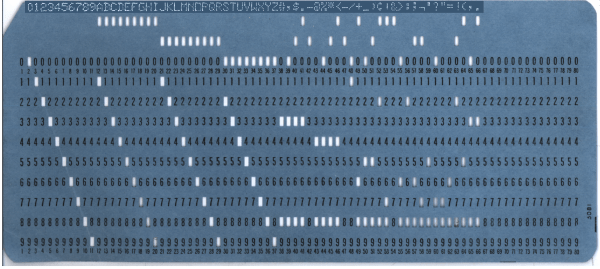
During the hundreds of years since the invention of the first telegraph code, there was no real effort to establish international standardization of such encoding schemes, with even the first decades of the era of teleprinters and home computers bringing little change there. Even as EBCDIC (IBM’s 8-bit character encoding demonstrated in the punch card above) and finally ASCII made some headway, the need to encode a growing collection of different characters without having to spend ridiculous amounts of storage on this was held back by elegant solutions.

Development of Unicode began during the late 1980s, when the increasing exchange of digital information across the world made the need for a singular encoding system more urgent than before. These days Unicode allows us to not only use a single encoding scheme for everything from basic English text to Traditional Chinese, Vietnamese, and even Mayan, but also small pictographs called ‘emoji‘, from Japanese ‘e’ (絵) and ‘moji’ (文字), literally ‘picture word’.

Continue reading “Unicode: On Building The One Character Set To Rule Them All”

Inputs Of Interest: Marsback M1 Is A Portable Party Peripheral

Again, let’s just get this out of the way up front: I got this lovely little 75% keyboard for free from a gaming accessories company called Marsback. It’s a functioning prototype of a keyboard that they have up on Kickstarter as of March 2nd. It comes in three color schemes: dark, white and sakura pink, which is white and pink with cherry blossoms.

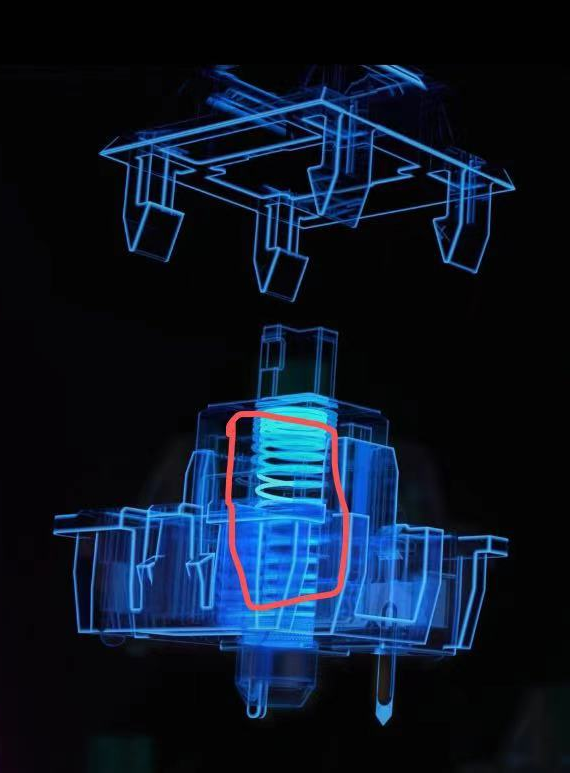
This illustration of the lube points is from my email string with Marsback.

Marsback found me through my personal website and contacted me directly to gauge my interest in this keyboard. I’ll admit that I wasn’t too excited about it until I scrolled further in the email and saw that they are producing their own switches in-house.

I think that’s a really interesting choice given that Cherry MX and other switches exist, and there so many Cherry MX clones out there already. Naturally, I had to investigate, so following a short review, I’ll take it apart.

Continue reading “Inputs Of Interest: Marsback M1 Is A Portable Party Peripheral”

Design Solutions For The Heat Crisis In Cities Around The World

It was 1999 when Smash Mouth dropped the smash hit All Star, stating “The ice we skate is getting pretty thin, the water’s getting warm so you might as well swim.” Since then, global temperatures have continued to rise, with no end in sight. Political will has been unable to make any grand changes, and the world remains on track to blow through the suggested hard limits set by scientists.

As a result, heatwaves have become more frequent, and of greater intensity, putting many vulnerable people at risk and causing thousands of deaths each year. This problem is worse in cities, where buildings and roads absorb more heat from the sun than natural landscapes do. This is referred to as the heat island effect, with cities often being several degrees warmer than surrounding natural areas. It’s significant enough that experts are worried some cities could become uninhabitable within decades. Obviously, that’s highly inconvenient for those currently living in said cities. How bad is the problem, and what can be done?

Continue reading “Design Solutions For The Heat Crisis In Cities Around The World”