One Hundred Weeks Of Legal Car Hacking

There is a scene in the movie “Magic Mike” where the lead character — a male stripper — explains to a room of women the laws against having physical contact with a performer. Then he intones, “… but I see a lot of lawbreakers up in this house.”

We know if we could look out through the Web browser, we could say the same thing. There’s a lot of gray zone activities considered commonplace. Have you ever ripped a CD or DVD to take with your on your phone? Gray; we won’t judge. A lot of the legal issues involved are thorny (and I should point out, I’m not a lawyer, so take what I say with a grain of salt).

Do you own your car? Well, probably you and the bank, but certainly the deal you made involves the idea that you own the car. If it is paid off, you can do what you like with it, including — if you wanted to — stripping it bare for parts. Back in the day, your car was some wheels and some mechanical devices. These days, it is a computer (actually, a few computers) and some I/O devices that process gasoline into rotary motion. Computers have software. Do you own that software?

The answer has, legally, been no. However, a recent decision by the US Copyright office allows car owners to legally analyze and modify their vehicle software (with some limitations) for the next two years. After that? We’ll see.

Continue reading “One Hundred Weeks Of Legal Car Hacking”

DIY Coprocessors For The Game Boy Color

Back in the olden days, when video games still came on cartridges, the engineers and programmers making these carts had a lot of options. One of the most inventive, brilliant, and interesting cartridges to come out of the 90s was Star Fox for the Super Nintendo. Star Fox featured a coprocessor chip, the Super FX, that was effectively a GPU used to draw polygons in the frame buffer. Without this, Star Fox wouldn’t be 3D, Yoshi’s Island wouldn’t be as cute, and there wouldn’t be an always-on processor in your computer with the potential to spy on everything you do.

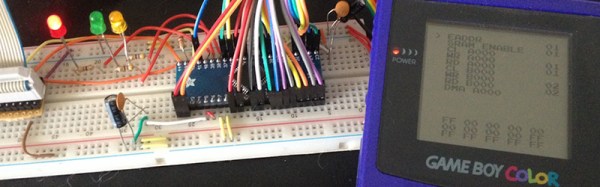
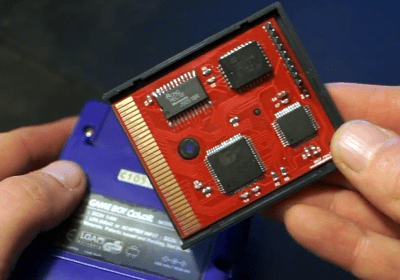
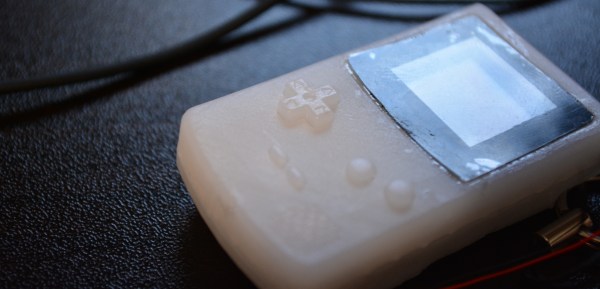
gameboy-coprocessor-cartridgeThe Super FX chip, the Capcom-developed Cx4 coprocessor, and the Nintendo DSP all lived in a cartridge, but the technology to put a better computer in a cartridge never made it to Nintendo’s handheld devices. Cheap, powerful microcontrollers are everywhere now, and it’s not that hard to make a board with card edge connectors, leading [Anders] to build a Super FX for the Game Boy Color.

Game Boy cartridges are simple — just a memory controller and some memory is all you need. Drop in a microcontroller, and you have a Game Boy coprocessor. This cartridge features the MBC1 memory bank controller, 512kB of Flash, and 8KB SRAM. These are fairly standard parts, but there’s one last trick up the sleeve of this board: a KE04 from NXP, an ARM Cortex-M0+ microcontroller running at 48MHz . This microcontroller is, effectively, the GPU for the Game Boy.

This ARM-powered coprocessor is able to convert the framebuffer into tiles in just 2ms, giving the system plenty of time for image processing and rendering. Due to the limitations of the Game Boy, the best resolution offered by this coprocessor is either 160×96 or 128×128 pixels, short of the complete 160×144 pixel display in the Game Boy Color.

Even though [Anders] is still working on programming this thing to show off the power of his Game Boy coprocessor, he has a few demos to show off. The most impressive is a Wolfenstein-like clone. That’s extremely impressive and categorically impossible on a stock Game Boy Color.

Continue reading “DIY Coprocessors For The Game Boy Color”

Anti-Drone Fence: Science Or Snakeoil?

Remember when it was laser pointers? Well, now it’s drones.

[Thinkerer] sent us this link to what’s essentially a press release for a company called Sensofusion that makes a UAV detector and (they claim) smart jammer, and apparently one is being installed at Denver International airport.

We buy that the “Airfence” system will be able to detect known systems by signature, and possibly even take them over. We’ve seen two exploits of quadcopter radio protocols (one a timing attack and the other a controller ID spoof) that would allow them to do just that. But is that the problem? Don’t most of the major manufacturers fence off airports in software these days anyway? And are drones really the droids that you’re looking for?

They also make some claims about being able to detect and stop DIY copters, but we don’t see how. Imagine that your copter ran encrypted on 2.4 GHz. How is this different from any other WiFi signal? Or imagine that it sends and receives infrequent data in the congested pager bands? And short of jamming, we don’t see how they’re going to take down anything that they don’t already understand.

So, commenteers, how would you do it? Detect and even take over an arbitrary drone? Possible or snakeoil?

Crossing Wheatstone Bridges

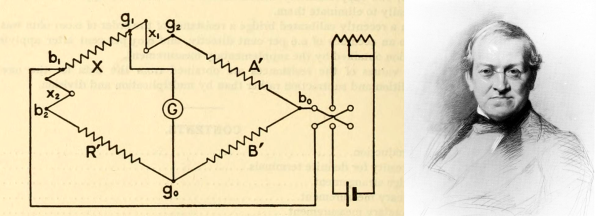
The Wheatstone bridge is a way of measuring resistance with great accuracy and despite having been invented over 150 years ago, it still finds plenty of use today. Even searching for it on Hackaday brings up its use in a number of hacks. It’s a fundamental experimental device, and you should know about it.

Continue reading “Crossing Wheatstone Bridges”

NASA Puts Its 3D Models Up On GitHub

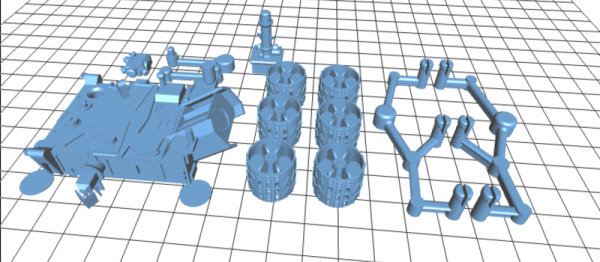
NASA has a bunch of its 3D models up on GitHub, and if you didn’t know about it before, you do now. It’s a ridiculously large download, at over one and a half jiggabytes, but it’s full of textures and high-resolution models of spacecraft, landing sites, and other random NASA ephemera.

Continue reading “NASA Puts Its 3D Models Up On GitHub”

Orange Pi Releases Two Boards

A few years ago, someone figured out small, cheap ARM Linux boards are really, really useful, extremely popular, sell very well, blink LEDs, and are able to open the doors of engineering and computer science to everyone. There is one giant manufacturer of these cheap ARM Linux boards whose mere mention guarantees us a few thousand extra clicks on this article. There are other manufacturers of these boards, though, and there is no benevolent monopoly; the smaller manufacturers of these boards should bring new features and better specs to the ARM Linux board ecosystem. A drop of water in a tide that lifts all boats. Something like that.

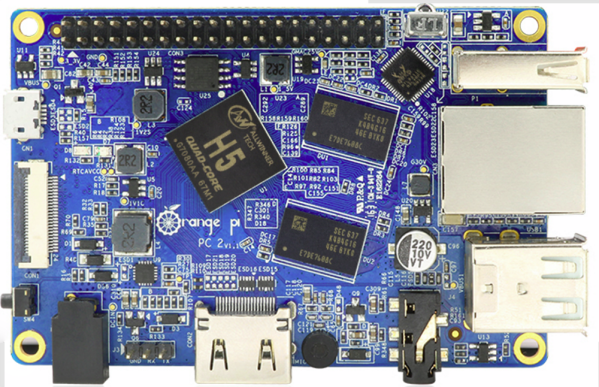
This week, Orange Pi, not the largest manufacturer of these small ARM Linux boards, has released two new boards. The Orange Pi Zero is an inexpensive, quad-core ARM Cortex A7 Linux board with 256 MB or 512 MB of RAM. The Orange Pi PC 2 is the slightly pricier quad-core ARM Cortex-A53 board with 1 GB of RAM and a layout that can only be described as cattywampus. We all know where the inspiration for these boards came from. The price for these boards, less shipping, is $6.99 USD and $19.98 USD, respectively.

The Orange Pi Zero uses the Allwinner H2 SoC, and courageously does not use the standard 40-pin header of another very popular line of single board computers, although the 26-pin bank of pins is compatible with the first version of the board you’re thinking about. Also on board the Orange Pi Zero is WiFi provided by an XR819 chipset, Ethernet, a Mali400MP2 GPU, USB 2.0, a microSD card slot, and a pin header for headphones, mic, TV out, and two more USB ports.

The significantly more powerful Orange Pi PC 2 sports a quad-core ARM Cortex-A53 SoC coupled to 1 GB of RAM. USB OTG, a trio of USB 2.0 ports, Ethernet, camera interface, and HDMI round out the rest of the board.

Both of Orange Pi’s recent offerings are Allwinner boards. This family of SoCs have famously terrible support in Linux, and the last Allwinner Cortex-A53, that we couldn’t really review, was terrible. Although the Orange Pi Zero and Orange Pi PC 2 are new boards and surely software is still being written, history indicates the patches written for this SoC will not be sent upstream, and these boards will be frozen in time.

If you’re looking for a cheap Linux board with a WiFi chipset that might work, The Orange Pi Zero is very interesting. The Orange Pi PC 2 does have slightly impressive specs for the price. When you buy a single board, though, you’re buying into a community dedicated to improving Linux support on the board. From what I’ve seen, that support probably won’t be coming but I will be happy to be proven wrong.


Tiny Game Boy (That Plays Witcher 3) And Other Things That Blew My Mind

For years Sprite_TM has been my favorite hacker, and yet he continues to have an uncanny ability to blow my mind with the hacks that he pulls off even though I’m ready for it. This weekend at the Hackaday SuperConference he threw down an amazing talk on his tiny, scratch-built, full-operational Game Boy. He stole the badge hacking show with a Rick Roll, disassembled the crypto challenge in one hour by cutting right to the final answer, and managed to be everywhere at once. You’re a wizard Harry Sprite!

Here’s what’s crazy: these are the antics of just one person of hundreds who I found equally amazing at the conference. It feels impossible to convey to you the absolute sincerity I have when I say that SuperCon was far and away the best conference I’ve ever been to or have even heard about. It managed to outpace any hyperbole I constructed leading up to the weekend. This morning felt like I was waking up from a dream and desperately wanted to fall asleep again.

Continue reading “Tiny Game Boy (That Plays Witcher 3) And Other Things That Blew My Mind”