The CD Is 40, The CD Is Dead

The Compact Disc is 40 years old, and for those of us who remember its introduction it still has that sparkle of a high-tech item even as it slides into oblivion at the hands of streaming music services.

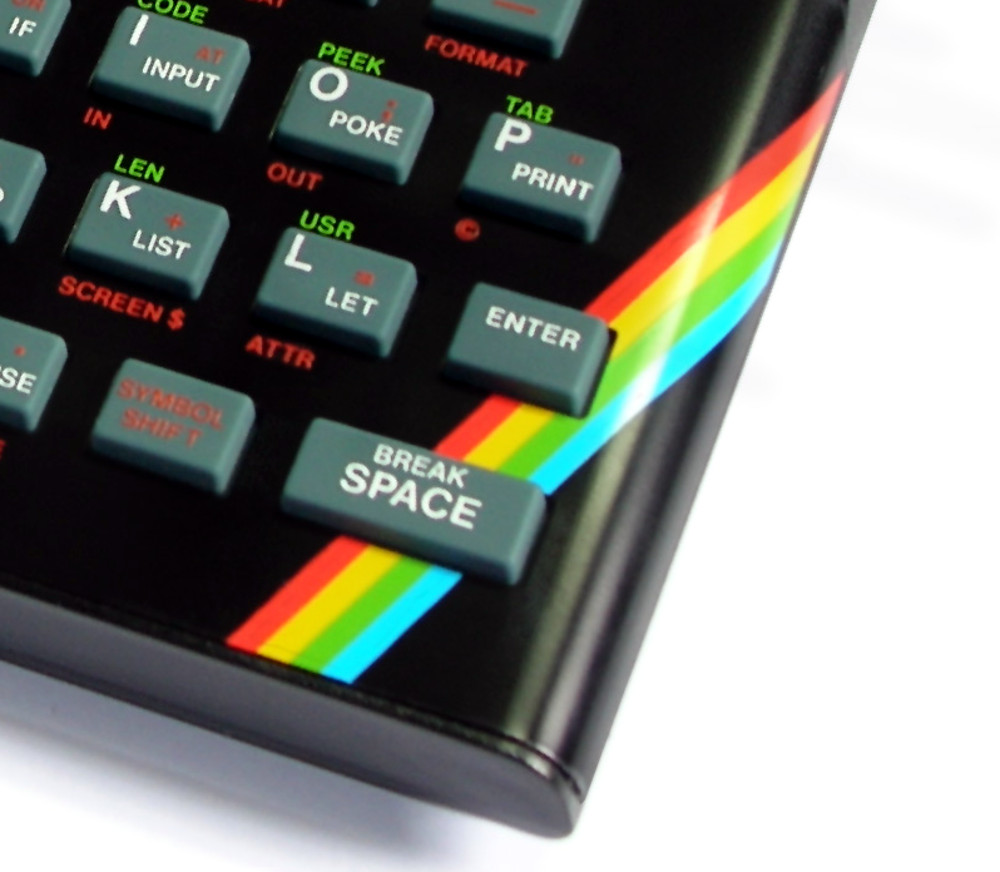
There was a time when a rainbow motif was extremely futuristic. Bill Bertram (CC BY-SA 2.5)

If we could define a moment at which consumers moved from analogue technologies to digital ones, the announcement of the CD would be a good place to start. The public’s coolest tech to own in the 1970s was probably an analogue VCR or a CB radio, yet almost overnight they switched at the start of the ’80s to a CD player and a home computer. The CD player was the first place most consumers encountered a laser of their own, which gave it an impossibly futuristic slant, and the rainbow effect of the pits on a CD became a motif that wove its way into the design language of the era. Very few new technologies since have generated this level of excitement at their mere sight, instead today’s consumers accept new developments as merely incremental to the tech they already own while simultaneously not expecting them to have longevity.
Continue reading “The CD Is 40, The CD Is Dead”

Hands-On: New Nvidia Jetson Nano Is More Power In A Smaller Form Factor

Today, Nvidia released their next generation of small but powerful modules for embedded AI. It’s the Nvidia Jetson Nano, and it’s smaller, cheaper, and more maker-friendly than anything they’ve put out before.

The Jetson Nano follows the Jetson TX1, the TX2, and the Jetson AGX Xavier, all very capable platforms, but just out of reach in both physical size, price, and the cost of implementation for many product designers and nearly all hobbyist embedded enthusiasts.

The Nvidia Jetson Nano Developers Kit clocks in at $99 USD, available right now, while the production ready module will be available in June for $129. It’s the size of a stick of laptop RAM, and it only needs five Watts. Let’s take a closer look with a hands-on review of the hardware.

Continue reading “Hands-On: New Nvidia Jetson Nano Is More Power In A Smaller Form Factor”

Es’hail-2: Hams Get Their First Geosynchronous Repeater

In the radio business, getting the high ground is key to covering as much territory from as few installations as possible. Anything that has a high profile, from a big municipal water tank to a roadside billboard to a remote hilltop, will likely be bristling with antennas, and different services compete for the best spots to locate their antennas. Amateur radio clubs will be there too, looking for space to locate their repeaters, which allow hams to use low-power mobile and handheld radios to make contact over a vastly greater range than they could otherwise.

Now some hams have claimed the highest of high ground for their repeater: space. For the first time, an amateur radio repeater has gone to space aboard a geosynchronous satellite, giving hams the ability to link up over a third of the globe. It’s a huge development, and while it takes some effort to use this new space-based radio, it’s a game changer in the amateur radio community.

Continue reading “Es’hail-2: Hams Get Their First Geosynchronous Repeater”

Hitchhiking To The Moon For Fun And Profit

On February 22nd, a Falcon rocket lifted off from Cape Canaveral carrying the Indonesian communications satellite Nusantara Satu. While the satellite was the primary payload for the mission, as is common on the Falcon 9, the rocket had a couple of stowaways. These secondary payloads are generally experiments or spacecraft which are too small or light to warrant a rocket of their own such as CubeSats. But despite flying in the economy seats, one of the secondary payloads on this particular launch has a date with destiny: Israel’s Beresheet, the first privately-funded mission to attempt landing on the Moon.

But unlike the Apollo missions, which took only three days to reach our nearest celestial neighbor, Beresheet is taking a considerably more leisurely course. It will take over a month for the spacecraft to reach the Moon, and it will be a few weeks after that before it finally makes a powered descent towards the Sea of Serenity, not far from where Apollo 17 landed 47 years ago. That assumes everything goes perfectly; tack a few extra weeks onto that estimate if the vehicle runs into any hiccups on the way.

At first glance, this might seem odd. If the trip only took a few days with 1960’s technology, it seems a modern rocket like the Falcon 9 should be able to make better time. But in reality, the pace is dictated by budgetary constraints on both the vehicle itself and the booster that carried it into space. While one could argue that the orbital maneuvers involved in this “scenic route” towards the Moon are more complicated than the direct trajectory employed by the manned Apollo missions, it does hold promise for a whole new class of lunar spacecraft. If you’re not in any particular hurry, and you’re trying to save some cash, your Moon mission might be better off taking the long way around.

Continue reading “Hitchhiking To The Moon For Fun And Profit”

Expert Says Don’t Teach Kids To Code

I was a little surprised to see a news report about Andreas Schleicher, the director of education and skills at OECD — the Organization for Economic Cooperation and Development. Speaking at the World Innovation Summit for Education in Paris, Schleicher thinks that teaching kids to code is a waste of time. In particular, he seems to think that by the time a child today grows up, coding will be obsolete.

I can’t help but think that he might be a little confused. Coding isn’t going away anytime soon. It could, of course, become an even deeper specialty, and thus less generally applicable. But the comments he’s made seem to imply that soon we will just tell smart computers what we want and they will just do that. Somewhat like computers work on Star Trek.

What is more likely is that most people will be able to find specific applications that can do what they want without traditional coding. But someone still has to write something for the foreseeable future. What’s more, if you’ve ever tried to tease requirements out of an end user, you know that you can’t just blurt out anything you want to a computer and expect it to make sense. It isn’t the computer’s fault. People — especially untrained people — don’t always make sense or communicate unambiguously.

Continue reading “Expert Says Don’t Teach Kids To Code”

MCAS And The 737: When Small Changes Have Huge Consequences

When the first 737 MAX entered service in May of 2017, it was considered a major milestone for Boeing. For nearly a decade, the aerospace giant had been working on a more fuel efficient iteration of the classic 737 that first took to the skies in 1967. Powered by cutting-edge CFM International LEAP engines, and sporting modern aerodynamic improvements such as unique split wingtips, Boeing built the new 737 to have an operating cost that was competitive with the latest designs from Airbus. With over 5,000 orders placed between the different 737 MAX variants, the aircraft was an instant success.

But now, in response to a pair of accidents which claimed 346 lives, the entire Boeing 737 MAX global fleet is grounded. While the investigations into these tragedies are still ongoing, the preliminary findings are too similar to ignore. In both cases, it appears the aircraft put itself into a dive despite the efforts of the crew to maintain altitude. While the Federal Aviation Administration initially hesitated to suspend operations of the Boeing 737 MAX, they eventually agreed with government regulatory bodies all over the world to call for a temporary ban on operating the planes until the cause of these accidents can be identified and resolved.

For their part, Boeing maintains their aircraft is safe. They say that grounding the fleet was done out of an “abundance of caution”, rather than in direct response to a particular deficiency of the aircraft:

Boeing continues to have full confidence in the safety of the 737 MAX.  However, after consultation with the U.S. Federal Aviation Administration (FAA), the U.S. National Transportation Safety Board (NTSB), and aviation authorities and its customers around the world, Boeing has determined — out of an abundance of caution and in order to reassure the flying public of the aircraft’s safety — to recommend to the FAA the temporary suspension of operations of the entire global fleet of 371 737 MAX aircraft.

Until both accident investigations are completed, nobody can say with complete certainty what caused the loss of the aircraft and their passengers. But with the available information about what changes were made during the 737 redesign, along with Boeing’s own recommendations to operators, industry insiders have started to point towards a fault in the plane’s new Maneuvering Characteristics Augmentation System (MCAS) as a likely culprit in both accidents.

Despite the billions of dollars spent developing these incredibly complex aircraft, and the exceptionally stringent standards their operation is held to, there’s now a strong indication that the Boeing 737 MAX could be plagued with two common issues that we’ve likely all experienced in the past: a software glitch and poor documentation.

Continue reading “MCAS And The 737: When Small Changes Have Huge Consequences”

Proposed NASA Budget Signals Changes To Space Launch System

The White House’s proposed budget for 2020 is out, and with it comes cuts to NASA. The most important item of note in the proposed budget is a delay of the Space Launch System, the SLS, a super-heavy lifting launch vehicle designed for single use. The proposed delay would defer work on the enhanced version of the SLS, the Block 1B with the Exploration Upper Stage.

The current plans for the Space Launch System include a flight using NASA’s Orion spacecraft in June 2020 for a flight around the moon. This uncrewed flight, Exploration Mission 1, or EM-1, would use the SLS Block 1 Crew rocket. A later flight, EM-2, would fly a crewed Orion capsule around the moon in 2022. A third proposed flight in 2023 would send the Europa Clipper to Jupiter. The proposed 2020 budget puts these flights in jeopardy.

Continue reading “Proposed NASA Budget Signals Changes To Space Launch System”