Bluetooth Gun Safe Cracked By Researchers

Believe it or not, there are quite a few people out there who have purchased gun safes that can be remotely unlocked by Bluetooth. Now we can understand why somebody might think this was a good idea: the convenience of being able to hit a button on your phone and have your weapon available in the heat of the moment is arguably a big selling point for people who are purchasing something like this for home defense. But those with a more technical mind will likely wonder if the inherent risks of having your firearm (or other valuables) protected by a protocol that often relies on security by obscurity outweighs the convenience of not needing to enter in a combination on the keypad.

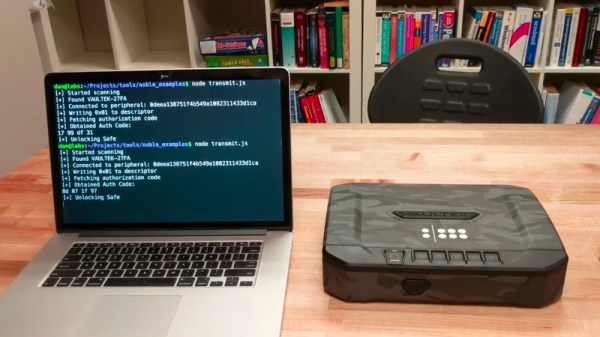
Well, you can wonder no more, as researchers at [Two Six Labs] have recently published a detailed document on how they managed to remotely unlock the Vaultek VT20i with nothing more exotic than an Ubertooth. In the end, even the Ubertooth wasn’t actually required, as this particular device turned out to be riddled with security issues.

[Two Six Labs] has not publicly released the complete source code of the software demonstrated in their YouTube video for very obvious reasons, but the page on their site does go into fantastic detail on how they uncovered the multiple vulnerabilities that allowed them to write it. Even if you’re not the kind of person who would ever need a gun safe, the information contained in their documentation about analyzing Bluetooth communications is fascinating reading.

It was discovered that the PIN for the safe was actually being transmitted by the accompanying smartphone application in plain-text, which would be bad enough normally. But after further analysis, it became clear that the safe wasn’t even bothering to check the PIN code anyway.

Scripting app interactions with ADB and Python

For extra style points, [Two Six Labs] also show a way to brute force the PIN using the Vaultek Android application by writing a Python script that punches in codes sequentially until it hits on the right one; the developers didn’t even bother to put in limits on failed attempts.

For a device that is ostensibly designed to contain a deadly weapon, the security flaws the team at [Two Six Labs] discovered are absolutely inexcusable. But there is a positive outcome, as the manufacturer has vowed to update the vulnerable safes and make a better effort in the future to more rigorously design and test their Bluetooth implementation. This is the goal of responsible disclosure, and we’re encouraged to see the manufacturer doing the right thing

The security concerns of Bluetooth controlled locks are well known, so it’s a bit disappointing that devices like this are still slipping through the cracks. We suggest you remain skeptical of any security device utilizing Bluetooth until the industry starts taking things a little more seriously.

Continue reading “Bluetooth Gun Safe Cracked By Researchers”

Smart Station Runs Entertainment, Is Entertainment

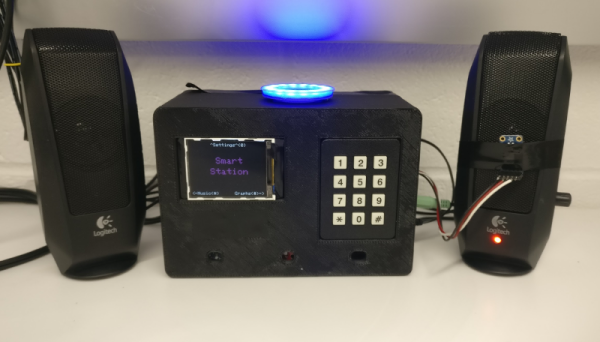
It’s that special time of year—time for the parade of student projects from [Bruce Land]’s embedded microcontroller design course at Cornell. [Timothy], [Dhruv], and [Shaurya] are all into remote sensing and control applications, so they built a smart station that combines audiovisual entertainment with environmental sensing.

As with the other projects in this course, the smart station is built on a PIC32 dev board. It does Bluetooth audio playback via RN-52 module and has a beat-matching light show in the form of a NeoPixel ring mounted atop the 3D-printed enclosure. But those blinkenlights aren’t just there to party. They also provide visual feedback about the environment, which comes from user-adjustable high and low trigger values for the mic, an accelerometer, a temperature and humidity sensor, and a luminosity sensor.

The group wanted to add an ultrasonic wake-up feature, but it refused to work with the 3.3V from the PIC. The NeoPixel ring wanted 5V too, but isn’t as picky. It looks to be plenty bright at 3.3V. Another challenge came from combining I²C, UART, analog inputs, and digital outputs. They had to go to the chip’s errata to verify it, but it’s there: whenever I²C1 is enabled, the first two analog pins are compromised, and there’s no official solution. The team got around it by using a single analog pin and a multiplexer. You can check out those blinkenlights after the break.

Maybe you prefer working in wood. If so, you might like this hexagonal take on audio-visualization.

Continue reading “Smart Station Runs Entertainment, Is Entertainment”

A Bluetooth Speaker For Babies

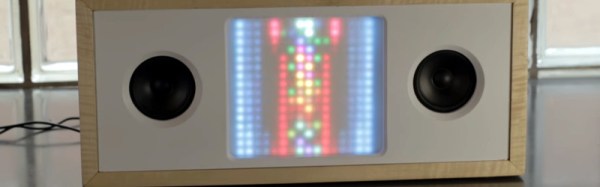
[Mike Clifford] of [Modustrial Maker] had not one, not two, but five friends call him to announce that their first children were on the way, and he was inspired to build them a Bluetooth speaker with a unique LED matrix display as a fitting gift. Meant to not only entertain guests, but to audio-visually stimulate each of their children to promote neurological development.

Picking up and planing down rough maple planks, [Clifford] built a mitered box to house the components before applying wood finish. The brain inside the box is an Arduino Mega — or a suitable clone — controlling a Dayton Bluetooth audio and 2x15W amp board. In addition to the 19.7V power supply, there’s a step down converter for the Mega, and a mic to make the LED matrix sound-reactive. The LED matrix is on a moveable baffle to adjust the distance between it and a semi-transparent acrylic light diffuser. This shifts the light between sharp points or a softer, blended look — perfect for the scrolling Matrix text and fireplace effects! Check it out!

Continue reading “A Bluetooth Speaker For Babies”

Light Switch For The Lazy

[Will Donaldson] has whipped up a quick hack for anyone thinking of dipping their toe into home automation — or otherwise detest flicking off the bedroom light before navigating their way to their bed: a remote control light switch!

This remote switch uses a sg90 servo, an Arduino Uno, and pairs of ATtiny85s with HC-05 Bluetooth modules assembled on protoboards. The 3D printed mount screws easily on top of a standard light switch cover while still allowing the switch to be flipped the old-fashioned way. It’s also perfect as a temporary solution — [Donaldson] is presently renting his apartment — or for those unwilling to mess with the mains power of their abode.

Continue reading “Light Switch For The Lazy”

Spice Up Your Dice With Bluetooth

There’s no shortage of projects that replace your regular board game dice with an electronic version of them, bringing digital features into the real world. [Jean] however goes the other way around and brings the real world into the digital one with his Bluetooth equipped electronic dice.

These dice are built around a Simblee module that houses the Bluetooth LE stack and antenna along with an ARM Cortex-M0 on a single chip. Adding an accelerometer for side detection and a bunch of LEDs to indicate the detected side, [Jean] put it all on a flex PCB wrapped around the battery, and into a 3D printed case that is just slightly bigger than your standard die.

While they’ll work as simple LED lighted replacement for your regular dice as-is, their biggest value is obviously the added Bluetooth functionality. In his project introduction video placed after the break, [Jean] shows a proof-of-concept game of Yahtzee displaying the thrown dice values on his mobile phone. Taking it further, he also demonstrates scenarios to map special purposes and custom behavior to selected dice and talks about his additional ideas for the future.

After seeing the inside of the die, it seems evident that getting a Bluetooth powered D20 will unfortunately remain a dream for another while — unless, of course, you take this giant one as inspiration for the dimensions.

Continue reading “Spice Up Your Dice With Bluetooth”

Bluetooth Speaker In A Bag

[VanTourist] — irked by what he sees as complicated project videos — has demonstrated that you can build a high quality, multi-function Bluetooth speaker inside three hours.

Using simple hand tools — primarily a crimper, wire stripper, razor cutter and some glue — he’s packed this repurposed GoPro accessory bag with quite a bit of tech. The main components are a Bluetooth amplifier with a spiffy knob, and a pair of 15W speakers, but he’s also added a 1W LED flashlight, 1A and 2.1A charging ports, a battery charge monitor display, and pilot cover toggle switches for style points. Despite all that crammed into the bag, there’s still a bit of room left to pack in a few possessions! You can check out the build pictures here, or the video after the break.

Continue reading “Bluetooth Speaker In A Bag”

Spoof A Skimmer For Peace Of Mind

It’s a sad commentary on the state of the world when it becomes a good practice to closely inspect the card reader on every ATM and gas pump for the presence of a skimmer. The trouble is, even physically yanking on the reader may not be enough, as more sophisticated skimmers now reside safely inside the device, sipping on the serial comms output of the reader and caching it for later pickup via Bluetooth. Devilishly clever stuff.

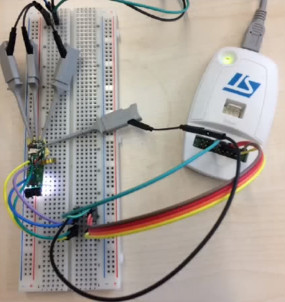
Luckily, there’s an app to detect these devices, and the prudent consumer might take solace when a quick scan of the area reveals no skimmers in operation. But is that enough? After all, how do you know the smartphone app is working? This skimmer scammer scanner — or is that a skimmer scanner scammer? — should help you prove you’re being as safe as possible.

The basic problem that [Ben Kolin] is trying to solve here is: how do you prove a negative? In other words, one could easily write an app with a hard-coded “This Area Certified Zebra-Free” message and market it as a “Zebra Detector,” and 99.999% of the time, it’ll give you the right results. [Ben]’s build provides the zebra, as it were, by posing as an active skimmer to convince the scanner app that a malicious Bluetooth site is nearby. It’s a quick and dirty build with a Nano and a Bluetooth module and a half-dozen lines of code. But it does the trick.

Need a primer on the nefarious world of skimming? Here’s an overview of how easy skimming has become, and a teardown of a skimmer captured in the wild.