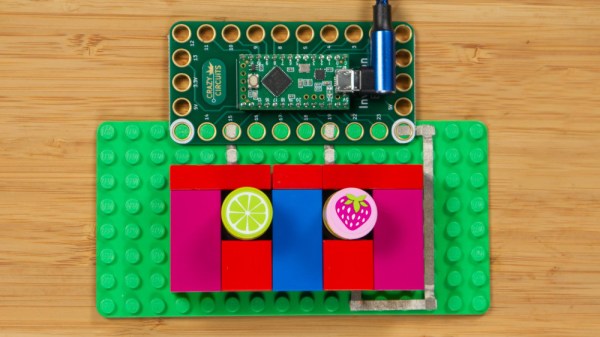
3D Print Your Way To A Modular MIDI Playset

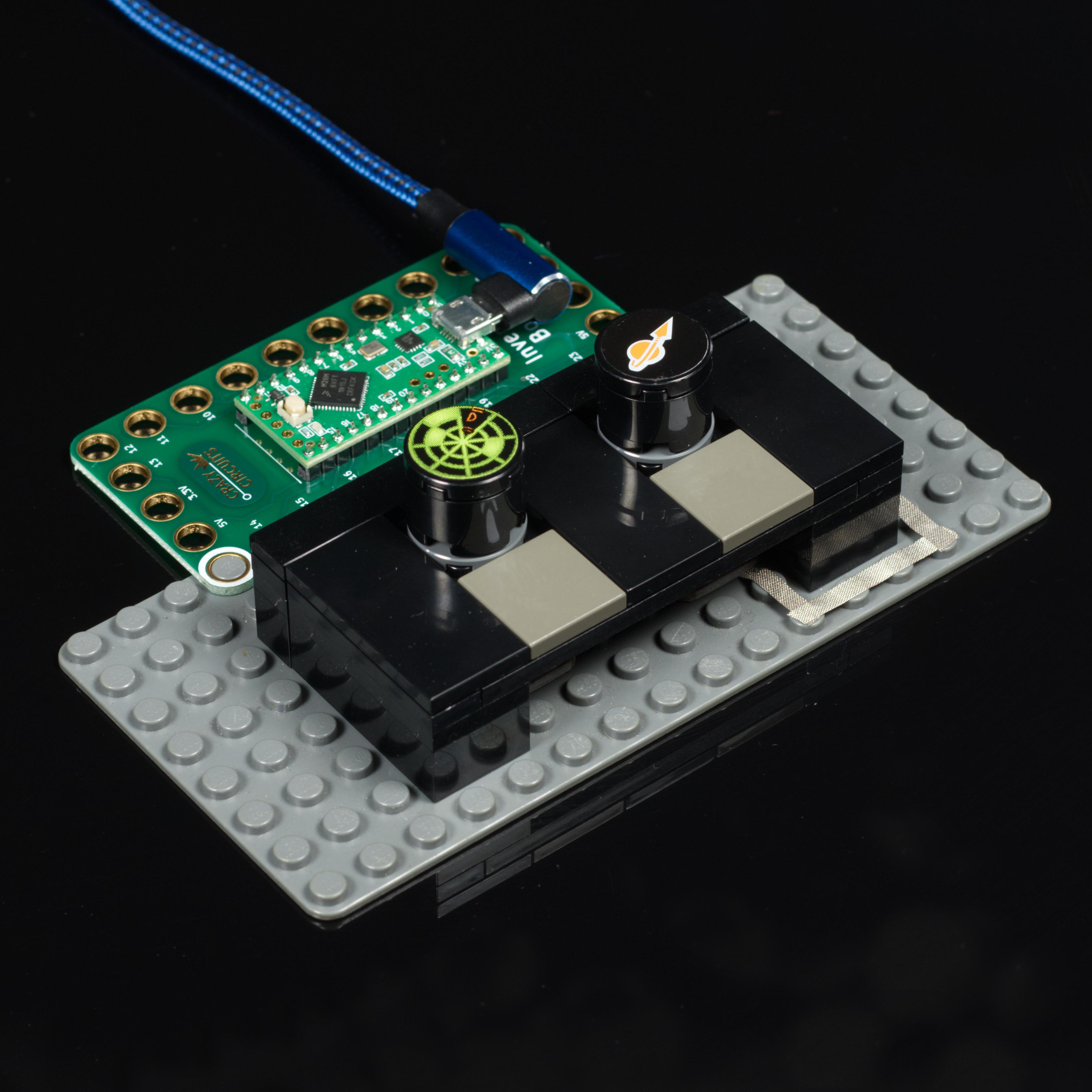
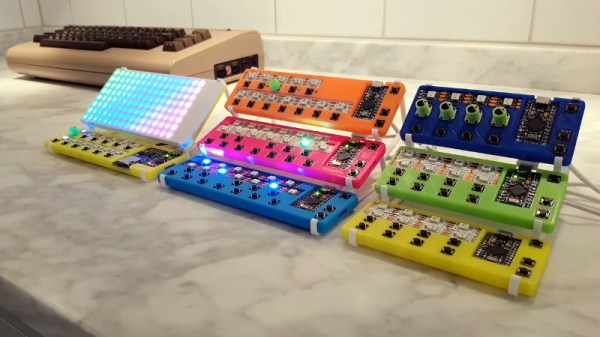
Have you ever wanted to experiment with MIDI, but didn’t know where to start? Or perhaps you didn’t think you could afford to properly outfit your digital beat laboratory, especially given the average hacker’s penchant for blinkenlights? Well worry no more, as [Johan von Konow] has unveiled a collection of DIY MIDI devices that anyone with a 3D printer can build on the cheap.

The LEET modular synthesizer is made up of a keyboard, drum pad, chord keyboard, arpeggiator and a step sequencer that plug into your computer and interface with industry standard digital audio workstation (DAW) programs. The down side is that they don’t do anything on their own, but this simplification allowed [Johan] to really streamline the design and bring the cost of the build down to the bare minimum.

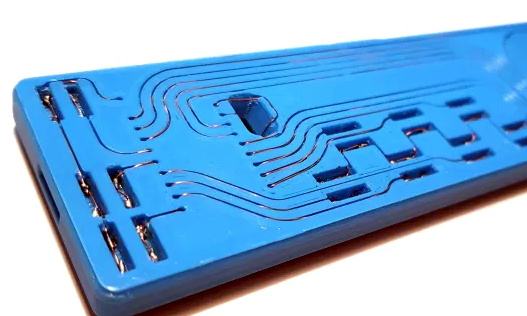
Integrated wire channels mean no PCB is required.

You don’t need to build all the components either, especially if you’re just testing the waters. The keyboard is a great starting point, and even if you have to buy all the components new from eBay, [Johan] says it shouldn’t cost you more than $10 USD to build. You just need an Arduino Pro Micro, some tact switches, and a section of WS2812 RGB LED strip. There’s an excellent chance you’ve already got some of that in the parts bin, which will make it even cheaper.

There is one missing element though: the PCB. But not because you have to source it yourself. Like his clever Arduboy clone we covered earlier in the year, the 3D printed bodies for all of the LEET devices have integrated wiring channels that serve as a stand-in for a traditional circuit board. Simply place all your components, push some stiff 0.3 mm diameter wire down into the channels, and solder the ends. It’s a very neat approach, and something we could see becoming more popular as desktop 3D printers become an increasingly common sight in the home workshop.

Continue reading “3D Print Your Way To A Modular MIDI Playset”

Reel In The Years With A Cassette Player Synth

Variable-speed playback cassette players were already the cool kids on the block. How else are you going to have any fun with magnetic tape without ripping out the tape head and running it manually over those silky brown strips? Sure, you can change the playback speed on most players as long as you can get to the trim pot. But true variable-speed players make better synths, because it’s so much easier to change the speed. You can make music from anything you can record on tape, including monotony.

[schollz] made a tape synth with not much more than a variable-speed playback cassette player, an Arduino, a DAC, and a couple of wires to hook it all up. Here’s how it works: [schollz] records a long, single note on a tape, then uses that recording to play different notes by altering the playback speed with voltages from a MIDI synth.

To go from synth to synth, [schollz] stood up a server that translates MIDI voltages to serial and sends them to the Arduino. Then the DAC converts them to analog signals for the tape player. All the code is available on the project site, and [schollz] will even show you where to add Vin and and a line in to the tape player. Check out the demo after the break.

There’s more than one way to hack a cassette player. You can also force them to play full-motion, color video.

Continue reading “Reel In The Years With A Cassette Player Synth”

Adding MIDI To A Mini Synth Is Easy As Pi

There are a handful of relatively dirt cheap synths out there like the KORG Monotron, but many of them use ribbon controllers that aren’t very precise.  Ribbon controllers basically slide pots that you operate with your finger or a stylus.  They’re painted to look like piano keys in order to show you approximately where the notes are supposed to be. The Stylophone is another extremely affordable synth that does even less as a synthesizer and uses this type of input. It’s a fun input if you don’t mind imprecision, but can be annoying otherwise.

[schollz] isn’t satisfied to synth this way, so they added MIDI input to their KORG Monotron using a Raspberry Pi and a DAC. Fortunately, the Monotron is quite the hackable little synth, with nice, big, labelled pads on the PCB.

All it really took was a couple of solder joints in the right places, plus a clever Python script. The script listens for MIDI input from a keyboard, and then controls an MCP4725 DAC, which sends voltages to the Monotron. [schollz] wrote a tuning function that computes the FFT of the MIDI tones to find the fundamental frequencies of each to send along to the Monotron. Check it out after the break.

If liquid control is what you’re after but all you have is a keyboard, try making your own ribbon controller.

Continue reading “Adding MIDI To A Mini Synth Is Easy As Pi”

Controlling A Broken Super Nintendo With MIDI

A Super Nintendo that has trouble showing sprites doesn’t make for a very good game system. As it turns out, Super Mario World is a lot less fun when the titular hero is invisible. So it’s no surprise that [jwotto] ended up tossing this partially functional SNES into the parts bin a few years back.

But he recently came up with a project that may actually benefit from its unusual graphical issues; turning the glitched console into a circuit bent video synthesizer. The system was already displaying corrupted visuals, so [jwotto] figured he’d just help things along by poking around inside and identifying pins that created interesting visual effects when shorted out.

Installing the new electronics into the SNES.

Once he mapped out the pins, he wired them all up to a transistor switching board that he’d come up with for a previous project. That would let an Arduino short out the pins on command while still keeping the microcontroller relatively isolated from the SNES. Then it was just a matter of writing some code that would fire off the transistors based on MIDI input.

The end result is a SNES that creates visual glitches along with the music, which [jwotto] can hook up to a projector when he does live shows. A particularly neat feature is that each game responds in its own way, so he can swap out the cartridge to show completely different visuals without having to change any of the MIDI sequencing.

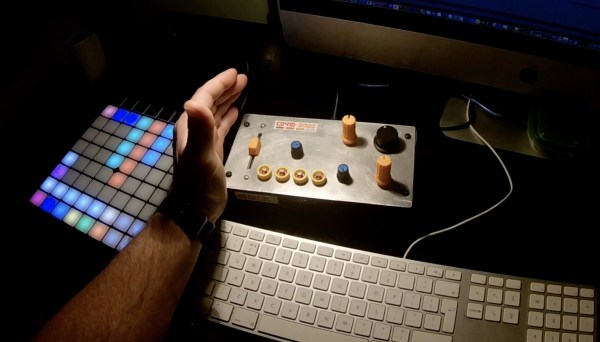
A project like this serves as a nice introduction to both circuit bending and MIDI hacking for anyone looking to get their digital feet wet, and should pair nicely with the MIDI Game Boy Advance.

Continue reading “Controlling A Broken Super Nintendo With MIDI”

Circle Guitar Creates Wall Of Sound

In the 60s a musical recording technique called the “wall of sound” came to prominence which allowed artists to create complex layers of music resulting in a novel, rich orchestral feeling. While this technique resulted in some landmark albums (Pet Sounds by the Beach Boys for example) it took entire recording studios and many musicians to produce. This guitar, on the other hand, needs only a single musician but can create impressive walls of sound on its own thanks to some clever engineering.

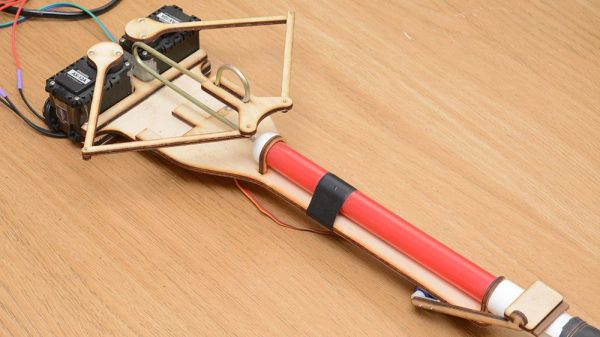
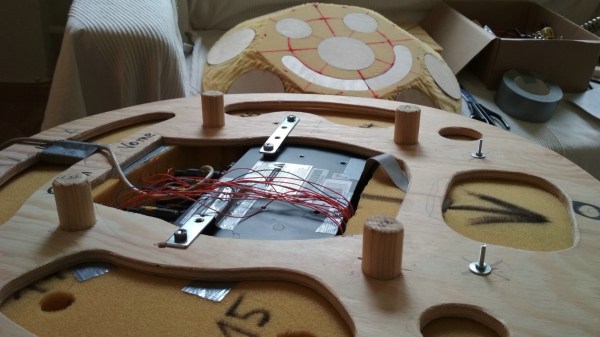
Called the Circle Guitar and created by [Anthony Dickens], the novel instrument features a constantly-rotating wheel around the guitar’s pickups in the body. Various picks can be attached in different ways to the wheel which pluck the strings from behind continuously. This exceeds what a normal guitar player would be able to do on their own, but the guitarist is able to control the sounds by using several switches and pushbuttons which control a hexaphonic humbucker and are able to mute individual strings at will. Of course, this being the 21st century, it also makes extensive use of MIDI and [Anthony] even mentions the use of a Teensy.

While details on this project are admittedly a little fleeting, the videos linked below are well worth a watch for the interesting sounds this guitar is able to produce. Perhaps paired with a classic-sounding guitar amplifier it could produce other impressive walls of sound as well. Either way, we could expect someone like [Brian Wilson] to be interested in one once it is in production.

Thanks to [Mel] for the tip!

Continue reading “Circle Guitar Creates Wall Of Sound”

Four Steppers Make A Four-Voice MIDI Instrument

Any owner of a budget 3D printer will tell you that they can be pretty noisy devices, due to their combinations of stepper motors and drives chosen for cost rather than quiet. But what if the noise were an asset, could the annoying stepper sound be used as a musical instrument? It’s a question [David Scholten] has answered with the Stepper Synth, a device that takes an Arduino Uno and four stepper motors to create a four-voice MIDI synthesiser.

Hardware-wise it’s as simple as you’d expect, a box with four stepper motors each with a red 3D-printed flag on its shaft to show rotation. Underneath there is the Arduino, plus a robot control shield and a set of stepper driver boards. On the software side it uses MIDI-over-serial, so as a Windows user his instructions for the host are for that operating system only. The Arduino makes use of the Arduino MIDI library, and he shares tips on disabling the unused motors to stop overheating.

You can hear it in action in the video below the break, and we’re surprised to say it doesn’t sound too bad. There’s something almost reminiscent of a church organ in there somewhere, it would be interesting to refine it with an acoustic enclosure of some kind.

This isn’t the first such instrument we’ve brought you, for a particularly impressive example take a look at the Floppotron.

Continue reading “Four Steppers Make A Four-Voice MIDI Instrument”

The Game Boy As A Midi Synthesiser

In the world of chiptune music there are many platforms to choose from, each with their own special flavour tot heir sound. The Game Boy has a particular following, but it differs from some of its contemporary platforms in having a custom sound chip built into the same silicon as its processor. You can’t crank open a Game Boy and lift out the sound chip for your own synth project, instead you must talk to it through the Game Boy’s Z80 processor. This is something [Adil Soubki] knows well, as he’s completed a project that turns the handheld console into a MIDI synthesiser.

A Game Boy was designed to play games and not as a developer’s toy, so it doesn’t exactly roll out the red carpet for the hacker. He’s got under the console’s skin by mapping a section of its memory address map to the pins on a Teensy microcontroller board, and running some Game Boy code that reads the vaues there and uses them to configure the sound hardware. The Teensy handles the translation between MIDI and these byte values, turning the whole into a MIDI synthesiser. It’s a succesful technique, as can be seen in the video below the break. Best of all, the code is available, so you can have a go for yourself.

We’ve featured Game Boy synths before here at Hackaday, but usually they have been of the more conventional variety.

Continue reading “The Game Boy As A Midi Synthesiser”