Spend All Day On The Lake

Solar vehicles are getting more and more common as the price of solar panels comes down, and the availability of motors and controllers for all of these vehicles rises. Making a solar-electric bike from a kit is one thing, but this solar-powered boat is a master class in hacking at all levels, from the solar drive train to the pontoons, and even the anchor.

[J Mantzel] has many videos about his boat on his channel, and watching them all will likely leave you wanting to build your own. He builds almost everything on his boat from scratch from things he has lying around. For example, the anchor was hand-built from fiberglass and then filled with concrete, and his steering system is a semi-complex system of ropes, pulleys, and shafts. Most of the boat’s shell was hand-built from fiberglass as well, and everything that can be repurposed is saved for later use.

The ten panels, batteries, inverter, and other miscellaneous part of the system were about half of the cost of the whole vessel, but he reports that he also uses the boat as a backup power source for his house, and can use the system to run other things like an electric chainsaw for example. He also uses the boat for camping and construction, and without having to worry about fuel it has been very useful to him.

If you get into the videos on the channel, you’ll find that this isn’t his only solar-powered boat. He recently completed a solar speedboat as well with a custom-built propeller that can really move across the water. His videos are apparently very popular as well, since they have been linked to repeatedly by readers in some of the recent solar vehicle write-ups we’ve published.

Continue reading “Spend All Day On The Lake”

A Portal Port Programmed For Platforms Of The Past

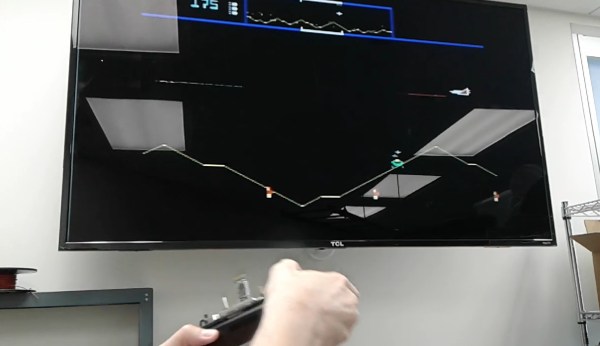
If you still have a Commodore 64 and it’s gathering dust, don’t sell it to a collector on eBay just yet. There’s still some homebrew game development happening from a small group of programmers dedicated to this classic system. The latest is a Portal-like game from [Jamie Fuller] which looks like a blast.

The Commodore doesn’t have quite the same specs of a Playstation, but that’s no reason to skip playing this version. It has the same style of puzzles where the player will need to shoot portals and manipulate objects in order to get to the goals. GLaDOS even makes appearances. The graphics by [Del Seymour] and music by [Roy Widding] push the hardware to its limits as well.

If you don’t have a C64 laying around, there are some emulators available such as VICE that can let you play this game without having to find a working computer from the 80s. You can also build your own emulator if you’re really dedicated, or restore one that had been gathering dust. And finally, we know it’s not, strictly speaking, a port of Portal, but some artistic license in headlines can be taken on occasion.

Continue reading “A Portal Port Programmed For Platforms Of The Past”

Many Uses For A Single Button

When building projects with a simple goal in mind, it’s not unheard of for us to add more and more switches, buttons, and complexity as the project goes through its initial prototyping stages. Feature creep like this tends to result in a tangled mess rather than a usable project. With enough focus, though, it’s possible to recognize when it’s happening and keep to the original plans. On the other hand, this single-button project with more than one use seems to be the opposite of feature creep. (YouTube, embedded below.)

[Danko]’s project has one goal: be as useful as possible while only using a single button and a tiny screen. Right now the small handheld device can be used as a stopwatch, a counter, and can even play a rudimentary version of flappy bird. It uses an Arduino Pro Mini, a 64×48 OLED screen running on I2C, and has a miniscule 100 mAh 3.7V battery to power everything. The video is worth watching if you’ve never worked with this small of a screen before, too.

Getting three functions out of a device with only one button is a pretty impressive feat, and if you can think of any other ways of getting more usefulness out of something like this be sure to leave it in the comments below. [Danko] is no stranger to simple projects with tiny screens, either. We recently featured his homebrew Arduino calculator that uses an even smaller screen.

Continue reading “Many Uses For A Single Button”

Replace Legacy CNC PCs With A Gerbil

There are lots of laser cutters and other CNC machines available for a decent price online, but the major hurdle to getting these machines running won’t be the price or the parts. It’s usually the controller PC, which might be running Windows XP or NT if you’re lucky, but some of them are still using IBM XT computers from the ’80s. Even if the hardware in these machines is working, it might be impossible to get the software, and even then it will be dated and lacking features of modern computers. Enter the Super Gerbil.

[Paul] was able to find a laser cutter with one of these obsolete controllers, but figured there was a better way to getting it running again. As the name suggests, it uses GRBL, a G-Code parser and CNC controller software package that was originally made to run on an 8-bit AVR microcontroller, but [Paul] designed the Super Gerbil to run on a 32 bit ARM platform. He also added Z-axis control to it, so it now sports more degrees of freedom than the original software.

By way of a proof of concept, once he was finished building the Super Gerbil he ordered a CNC machine from China with an obsolete controller and was able to get it running within a day. As an added bonus, he made everything open so there are no license fees or cloud storage requirements if you want to use his controller. [Paul] also has a Kickstarter page for this project as well. Hopefully controllers haven’t been the only thing stopping you from getting a CNC machine for your lab, though, but if they have you now have a great solution for a 3040 or 3020 CNC machine’s controller, or any other CNC machine you might want to have. Continue reading “Replace Legacy CNC PCs With A Gerbil”

Go Up A Creek Without A Paddle

Kayaks are a some of the most versatile watercraft around. You can fish from them, go on backpacking trips, or just cruise around your local lake for a few hours. They’re inexpensive, lightweight, don’t require fuel, and typically don’t require a license or insurance to operate. They also make a great platform for a solar-powered boat like this one with only 150 watts of panels and a custom-built motor with parts from an RC airplane.

[William Frasier] built his solar-powered kayak using three solar panels, two mounted across the bow of the boat using pontoons to keep them from dipping into the water, and the other mounted aft. Separating the panels like this helps to prevent all three of them being shaded at once when passing under bridges. They’re all wired in parallel to a 12V custom-built motor which is an accomplishment in itself. It uses custom-turned parts from teak, a rot-resistant wood, is housed in an aluminum enclosure, and uses an RC airplane propeller for propulsion.

Without using the paddles and under full sun, the kayak can propel itself at about 4 knots (7 kmh) which is comparable to a kayak being propelled by a human with a paddle. With a battery, some of the shading problems could be eliminated, and adding an autopilot to it would make it almost 100% autonomous.

Continue reading “Go Up A Creek Without A Paddle”

Extreme Pi Overclocking With Mineral Oil

Liquid cooling is a popular way to get a bit of extra performance out of your computer. Usually this is done in desktops, where a special heat sink with copper tubing is glued to the CPU, and the copper tubes are plumbed to a radiator. If you want dive deeper into the world of liquid cooling, you can alternatively submerge your entire computer in a bath of mineral oil like [Timm] has done.

The computer in question here is a Raspberry Pi, and it’s being housed in a purpose-built laser cut acrylic case full of mineral oil. As a SoC, it’s easier to submerge the entire computer than it is to get a tiny liquid-cooled heat sink for the processor. While we’ve seen other builds like this before, [Timm] has taken a different approach to accessing the GPIO, USB, and other connectors through the oil bath. The ports are desoldered from the board and a purpose-built header is soldered on. From there, the wires can be routed out of the liquid and sealed off.

One other detail used here that  we haven’t seen in builds like this before was the practice of “rounding” the flat ribbon cable typically used for GPIO. Back in the days of IDE cables, it was common to cut the individual wires apart and re-bundle them into a cylindrical shape. Now that SATA is more popular this practice has been largely forgotten, but in this build [Timm] uses it to improve the mineral oil circulation and make the build easier to manage.

Continue reading “Extreme Pi Overclocking With Mineral Oil”

Pedal Far With A Solar Powered Tricycle

More and more electric bikes have been rolling out into the streets lately as people realize how inexpensive and easy they are to ride and use when compared to cars. They can also be pedaled like a normal bike, so it’s still possible to get some exercise with them too. Most have a range somewhere around 10-30 miles depending on battery size, weight, and aerodynamics, but with a few upgrades such as solar panels it’s possible to go much, much further on a charge.

[The Rambling Shepherd] had a tricycle (in the US, generally still considered a bicycle from a legal standpoint) that he had already converted to electric with a hub motor and battery, and was getting incredible range when using it to supplement his manual pedaling. He wanted to do better, though, and decided to add a few solar panels to his build. His first attempt didn’t fare so well as the 3D-printed mounts for the panel failed, but with a quick revision his second attempt survived a 50-mile trip. Even more impressive, he only had his battery half charged at the beginning of the journey but was still able to make it thanks to the added energy from the panels.

If you’re thinking that this looks familiar, we recently featured a tandem tricycle that was making a solar-powered trip from Europe to China with a similar design. It has the advantage of allowing the rider to pedal in the shade, and in a relatively comfortable riding position compared to a normal bike. Future planned upgrades include an MPPT charge controller to improve the efficiency of the panels.

Continue reading “Pedal Far With A Solar Powered Tricycle”