HOPE 2020 Delivers Historic Marathon Of Hacking

Anyone who’s ever attended a hacker conference knows that the talks and workshops are only part of the reason that people travel from all over the country (and indeed, the world) to be there. The social and extracurricular aspects of these events are just as important as the scheduled content, if not more so. After all, you can always watch the recorded version of any presentation you missed when you get back home; but there’s only a relatively short window for drinking Club-Mate, driving a Segway at unreasonable speeds, and hanging out with other people in the community.

So I don’t mind admitting that I was extremely skeptical when it was announced that the Hackers On Planet Earth (HOPE) conference was going virtual due to the COVID-19 pandemic. Especially since the decision came just a few months before the event was set to kick off in New York. Trying to recreate the experience of a large scale hacker con as an online-only event is hard enough, but doing it on such short notice seemed like a recipe for disaster. Particularly for an event like HOPE that had always crammed the historic Hotel Pennsylvania to the rafters (and sometimes, above) with content and activities.

Which is not to say they didn’t have some interesting ideas. Since so many people were stuck at home anyway, they decided there wasn’t much point limiting HOPE to a single weekend. For 2020, the event would instead run for nine continuous days. Prerecorded talks and interactive workshops would start at 9 AM Eastern and run right up until the wee hours of the morning, often concluding with a live musical performance.

As founder Emmanuel Goldstein described it, the idea was to turn this year’s HOPE into a 24 hour hacker television channel that could beam a diverse array of ideas and opinions into homes all over the planet. Rather than pretending that the classic hacker convention experience could be fully replicated online, they would fully embrace the possibilities offered by the Internet and create something completely different. But could they pull it off?

Continue reading “HOPE 2020 Delivers Historic Marathon Of Hacking”

Building A YouTube Remote Control Worthy Of 2020

Back in 2018, [Gryo] built a remote control specifically for watching YouTube videos on his computer. It worked perfectly, but it didn’t quite fit the expectation one has for a modern media remote — it was a bit chunky, the buttons weren’t very responsive, and it didn’t feel as nice as the remotes that ship with consumer streaming devices. Looking to improve on things, he’s recently unveiled a far more svelte version of his scratch built media streaming remote includes a scrollwheel, color feedback, and a UI for customizing how it works.

It might not look the part, but technically [Gyro] categorizes his creation as a wireless keyboard since that’s what the operating system sees it as. This makes it easy to use with whatever media playback software or service might be running on the computer, as button presses on the remote are picked up as standard keyboard events. And the software easily sets which key each button on the remote will be associated with.

Inside the 3D printed case there’s a custom PCB that pulls together the ATmega328P, NRF24L01 radio, and TP4056 charger that tops off the 500 mAh Li-Po battery via USB-C. The receiver is also a custom creation, using a second NRF24L01 chip but swapping out the microcontroller for the ATmega32U4.

[Gyro] has done a fantastic job documenting this build in the write-up, and provides everything you need should you want to spin up your own copy. As much as we liked the unique approach used in the first version of the remote, we’ve got to admit this iteration is much more likely to end up sitting on our living room table.

Continue reading “Building A YouTube Remote Control Worthy Of 2020”

Boom Hopes To Reignite Supersonic Travel With XB-1

Since the last Concorde rolled to a stop in 2003, supersonic flight has been limited almost exclusively to military aircraft. Many have argued that it’s an example of our civilization seeming to slip backwards on the technological scale, akin to returning to the Age of Sail. There’s no debating that we have the capability of moving civilian passengers and cargo at speeds above Mach 1 safely, it’s just something that isn’t done anymore.

Concorde on its final flight, November 2003

Of course to be fair, there’s plenty of good reasons why the sky isn’t filled with supersonic aircraft. For one, they’ve historically been more drastically expensive to build and operate than their slower peers. The engineering that goes into an aircraft that can operate for an extended period of time at supersonic speeds doesn’t come cheap, nor do the materials required. But naturally, the same could have been said for commercial jet aircraft at one time. With further development, the cost would eventually come down.

The real problem holding supersonic aircraft back is much more practical: they are just too loud. From the roar of their powerful engines on takeoff to the startling and sometimes even dangerous “sonic boom” they leave in their wake, nobody wants them flying over their homes or communities. In fact, civilian flight above Mach 1 over land has been outlawed in the United States for exactly this reason since 1973 under the Federal Aviation Administration’s regulation 91.817.

For any commercial supersonic aircraft to be viable, it needs to not only be much cheaper to build and operate than older designs, but it also needs to be far quieter. Which is exactly what Boom hopes to demonstrate with their XB-1 prototype. The sleek craft will never enter into commercial service itself, but if all goes according to plan during its 2021 test flights, it may prove that the state-of-the-art in aircraft design is ready to usher in a new era of supersonic civilian transport.

Continue reading “Boom Hopes To Reignite Supersonic Travel With XB-1”

Recreating Early Apple Mice For The Modern Era

At a time when practical graphical user interfaces were only just becoming a reality on desktop computers, Apple took a leap of faith and released one of the first commercially available mice back in 1983. It was criticized as being little more than a toy back then, but we all know how that particular story ends.

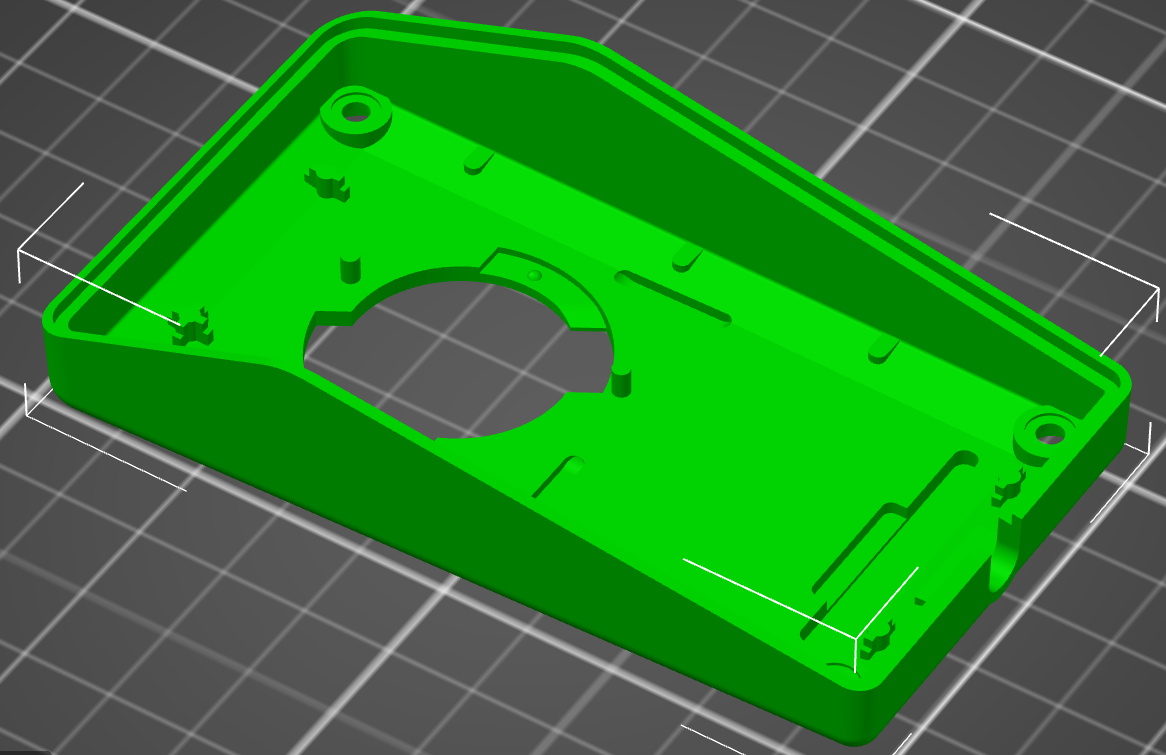
While the Apple G5431 isn’t that first mouse, it’s not too far removed. So much so that [Stephen Arsenault] believed it was worthy of historic preservation. Whether you want to print out a new case to replace a damaged original or try your hand at updating the classic design with modern electronics, his CAD model of this early computer peripheral is available under the Creative Commons license for anyone who wants it.

The model is exceptionally well detailed.

[Stephen] tells us that he was inspired to take on this project after he saw new manufactured cases for the G5431 popping up online, including a variant made out of translucent plastic. Realizing that a product from 1986 is old enough that Apple (probably) isn’t worried about people cloning it, he set out to produce this definitive digital version of the original case components for community use.

With these 3D models available, [Stephen] hopes that others will be inspired to try and modify the iconic design of the G5431. Perhaps by creating a Bluetooth version, or adding the ability to right-click. Considering we’ve already seen custom PCBs for mice, it’s hardly a stretch. We’d love to see somebody take him up on the offer, but even if not, the digital preservation of computer history is always welcome.

Vintage Gauges Turned Classy Weather Display

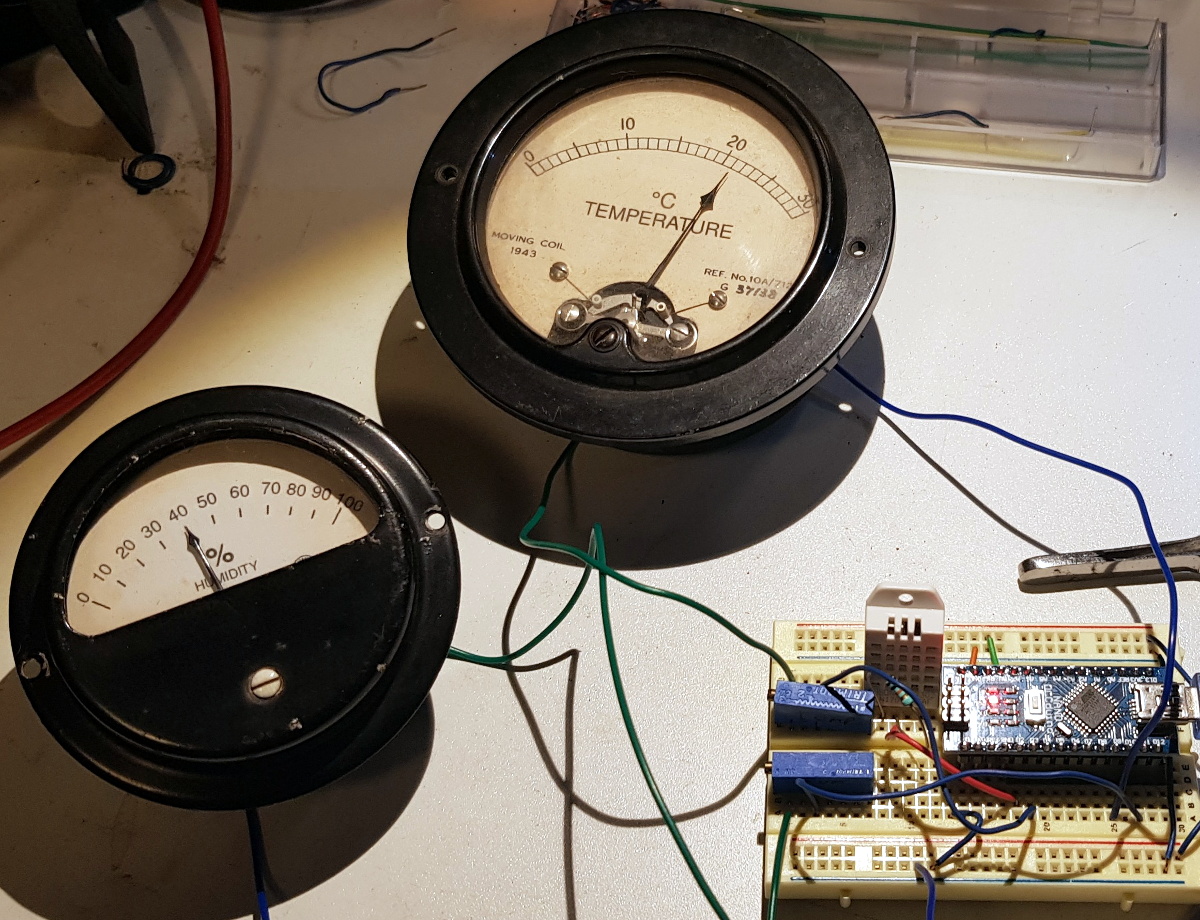
It’s always good to see old hardware saved from the junk pile, especially when the end result is as impressive as this analog gauge weather display put together by [Build Comics]. It ended up being a truly multidisciplinary project, combing not only restoration work and modern microcontroller trickery, but a dash of woodworking for good measure.

Naturally, the gauges themselves are the real stars of the show. They started out with rusted internals and broken glass, but parts from a sacrificial donor and some TLC from [Build Comics] got them back in working order. We especially like the effort that was put into making the scale markings look authentic, with scans of the originals modified in GIMP to indicate temperature and humidity while retaining the period appropriate details.

To drive the 1940s era indicators, [Build Comics] is using an Arduino Nano and a DHT22 sensor that can detect temperature and humidity. A couple of trimmer pots are included for fine tuning the gauges, and everything is mounted to a small scrap of perfboard hidden inside of the custom-made pine enclosure.

This is hardly the first time we’ve seen analog gauges hooked up to modern electronics, but most of the projects are just that: modern. While the end look might be somewhat polarizing, we think maintaining the hardware’s classic style was the right call.

The Redesigned CNC Scroll Saw Rides Again

When [Andrew Consroe] tried to build a CNC scroll saw, he quickly learned how tricky of a design problem it is. With a blade that only cuts in one direction, you can’t simply move the tool in the X and Y dimensions like you can with a laser or router; either the work piece or the blade itself needs to continuously rotate towards the direction of the cut.

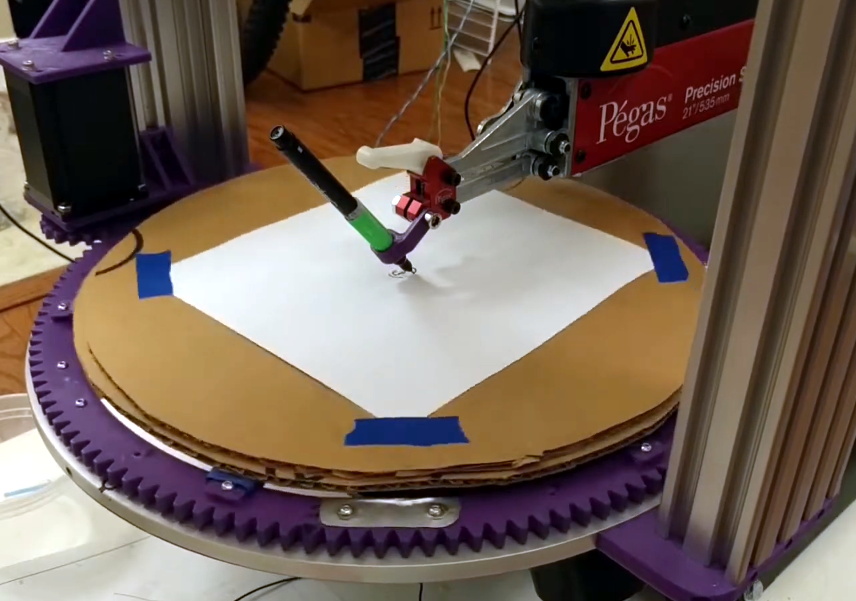
He’s recently shown off the third version of the machine, and while it’s still not exactly a practical tool, there’s no question it’s a brilliantly designed one, or that it works, slowly. Earlier attempts used a rotating table to spin the work piece, but [Andrew] found this to be an imperfect solution. Building a mechanism heavy duty enough to spin the material being cut while remaining accurate enough not to break the blade was a tall order, though he did get pretty close.

The earlier version used a rotating table.

This time around he’s decided to simply rotate the blade itself. This can be accomplished with a single stepper motor and some suitably sized pulleys, while maintaining an exceptionally high degree of accuracy. The whole blade assembly moves up and down on an aluminum extrusion rail with a motor and crank arrangement. By synchronizing the rotation of the blade with the vertical movement of the saw, the software can be sure that everything is where it needs to be before the cutting stroke actually happens.

Judging by the video after the break, the system works quite well. The complex rounded shapes he cuts out of the piece of plywood look essentially perfect, and it sounds like this new version of the machine isn’t breaking blades due to positional errors like the previous one did. Unfortunately, it’s also very slow. There’s so many moving parts and careful positioning required that even when the video is sped up 10x, the saw still appears to only be creeping its way through the  material.

On the back half of the video, [Andrew] details another approach to rotating the blade that would reduce the amount of moving mass in the saw. This would give the machine a considerable speed boost, and we’d love to see him implement it. By the way, before anyone says it: using a spiral blade is cheating.

Continue reading “The Redesigned CNC Scroll Saw Rides Again”

Scratch Built Subnautica Sub Explores The Pool

In Subnautica, players explore an alien underwater landscape with the help of a number of futuristic tools and vehicles. [Robert Cook] found himself particularly enamored with the large submarine you unlock towards the later parts of the game, so much so that he decided to build his own real-life version.

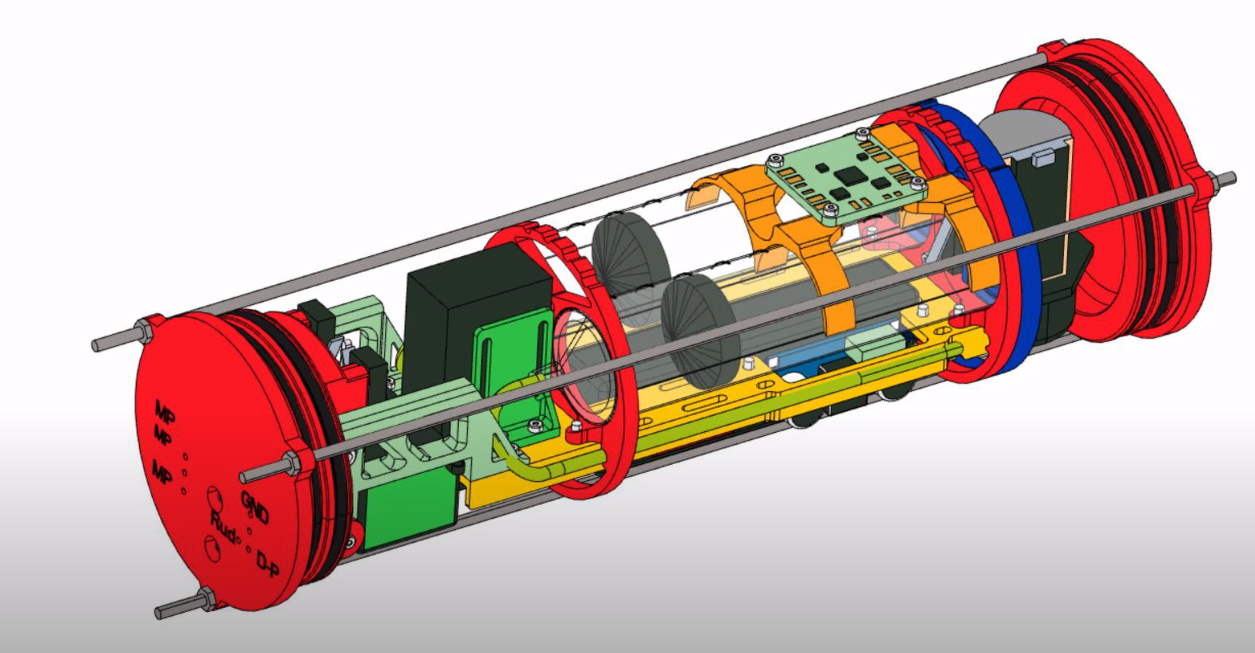
Even though the RC version of the Cyclops [Robert] has designed is only big enough to explore swimming pool sized alien landscapes, it’s by no means a simple build. In fact, the sub’s internal watertight compartment holds an impressive array of electronics and systems that are arguably overkill for what’s essentially a toy. Not that we’re complaining, of course.

Beyond the electronics and a few key components, almost every part of the RC Cyclops has been 3D printed. From the bulkheads that cap off the internal watertight acrylic tube to the hull itself, there’s a lot of plastic aboard this ship. Which might explain why it takes nearly two kilograms of lead weight to get the sub close to neutral buoyancy. From there, a clever ballast tank arrangement made from a syringe and peristaltic pump allow the vehicle to dive and surface on command.

[Robert] is in the process of releasing the STL files for all the submarine’s 3D printed components, and has done an excellent job of documenting the roughly four months he’s spent working on the project in a series of videos on his YouTube channel. The videos contain a wealth of fascinating tips and tricks regarding DIY submersible vehicles, such as selecting the proper radio frequencies for maximum penetration through water and counteracting the permeability of 3D printed parts with a generous coating of epoxy.

Modern RC hardware makes it easier than ever to cobble together a “submarine”, but there’s still something to be said for a project that takes the long way around and actually implements features like a functioning ballast system.

Continue reading “Scratch Built Subnautica Sub Explores The Pool”