Why Satellites Of The Future Will Be Built To Burn

There’s no shortage of ways a satellite in low Earth orbit can fail during the course of its mission. Even in the best case scenario, the craft needs to survive bombardment by cosmic rays and tremendous temperature variations. To have even a chance of surviving the worst, such as a hardware fault or collision with a rogue piece of space garbage, it needs to be designed with robust redundancies which can keep everything running in the face of systemic damage. Of course, before any of that can even happen it will need to survive the wild ride to space; so add high-G loads and intense vibrations to the list of things which can kill your expensive bird.

After all the meticulous engineering and expense involved in putting a satellite into orbit, you might think it would get a hero’s welcome at the end of its mission. But in fact, it’s quite the opposite. The great irony is that after all the time and effort it takes to develop a spacecraft capable of surviving the rigors of spaceflight, in the end, its operators will more than likely command the craft to destroy itself by dipping its orbit down into the Earth’s atmosphere. The final act of a properly designed satellite will likely be to commit itself to the same fiery fate it had spent years or even decades avoiding.

You might be wondering how engineers design a spacecraft that is simultaneously robust enough to survive years in the space environment while at the same time remaining just fragile enough that it completely burns up during reentry. Up until fairly recently, the simple answer is that it wasn’t really something that was taken into account. But with falling launch prices promising to make space a lot busier in the next few years, the race is on to develop new technologies which will help make sure that a satellite is only intact for as long as it needs to be.

Continue reading “Why Satellites Of The Future Will Be Built To Burn”
“Vintage” Radio Gets A Modern Makeover

Taking an old piece of gear and cramming it full of modern hardware is a very popular project. In fact, it’s one of the most common things we see here at Hackaday, especially in the Raspberry Pi era. The appeal is obvious: somebody has already done the hard work of designing and building an attractive enclosure, all you need to do is shoehorn your own gear into it. That being said, we know some of our beloved readers get upset when a vintage piece of gear gets sacrificed in the name of progress.

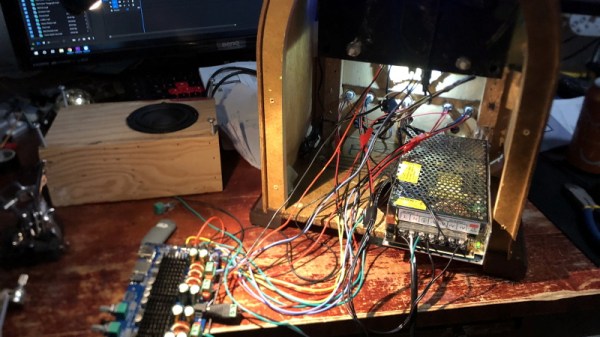
Thankfully, you can put your pitchforks down for this one. The vintage radio [Freshanator] cannibalized to build this Bluetooth speaker is actually a replica made to invoke the classic “cathedral” look. Granted it may still have been older than most of the people reading this right now, but at least it wasn’t actually from the 1930’s.

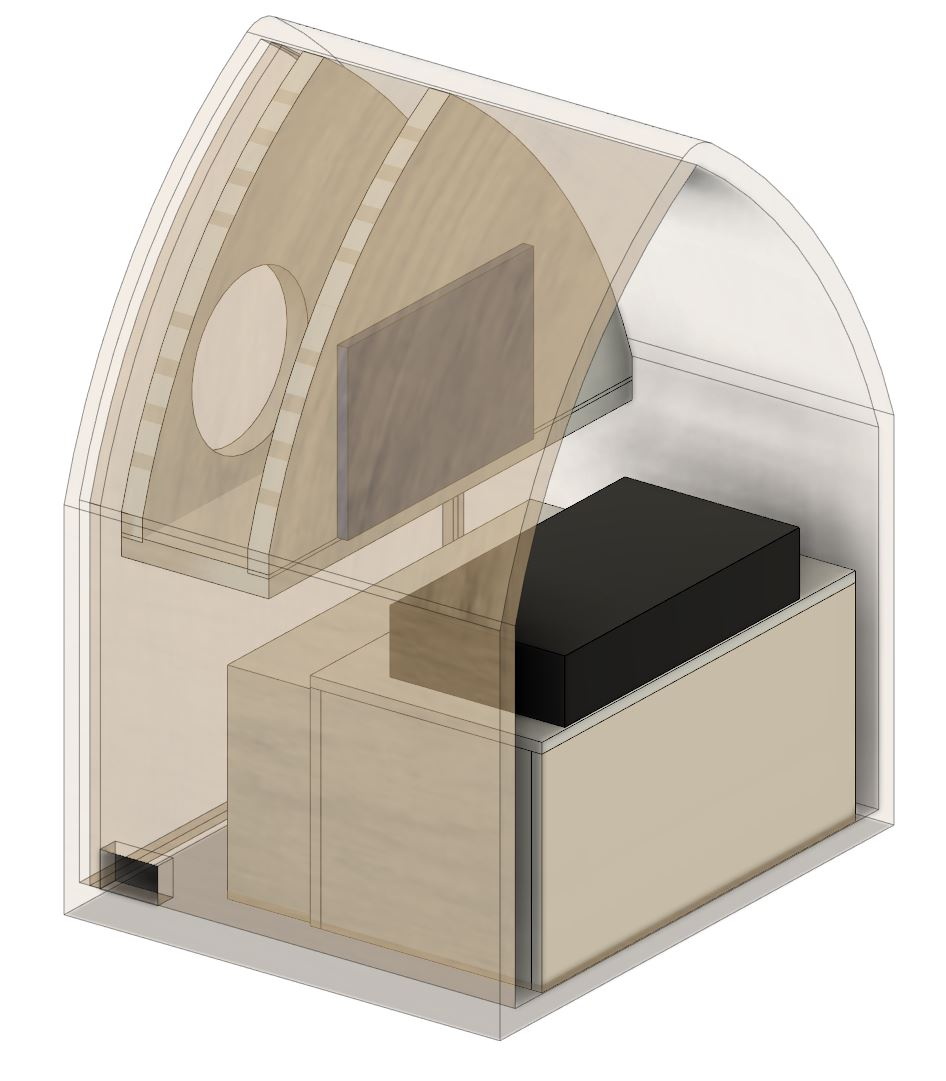
To start the process, [Freshanator] created a 3D model of the inside of the radio so all the components could be laid out virtually before anything was cut or fabricated. This included the design for the speaker box, which was ultimately 3D printed and then coated with a spray-on “liquid rubber” to seal it up. The upfront effort and time to design like this might be high, but it’s an excellent way to help ensure you don’t run into some roadblock halfway through the build.

Driving the speakers is a TPA3116-based amplifier board with integrated Bluetooth receiver, which has all of its buttons broken out to the front for easy access. [Freshanator] even went the extra mile and designed some labels for the front panel buttons to be made on a vinyl cutter. Unfortunately the cutter lacked the precision to make them small enough to actually go on the buttons, so they ended up getting placed above or next to them as space allowed.

The build was wrapped up with a fan installed at the peak of the front speaker grille to keep things cool. Oh, and there are lights. Because there’s always lights. In this case, some blue LEDs and strategically placed EL wire give the whole build an otherworldly glow.

If you’re interested in a having a frustrating quasi-conversation with your vintage looking audio equipment, you could always cram an Echo Dot in there instead. Though if you go that route, you can just 3D print a classic styled enclosure without incurring the wrath of the purists.

A Nearly Practical 6502 Breadboard Computer

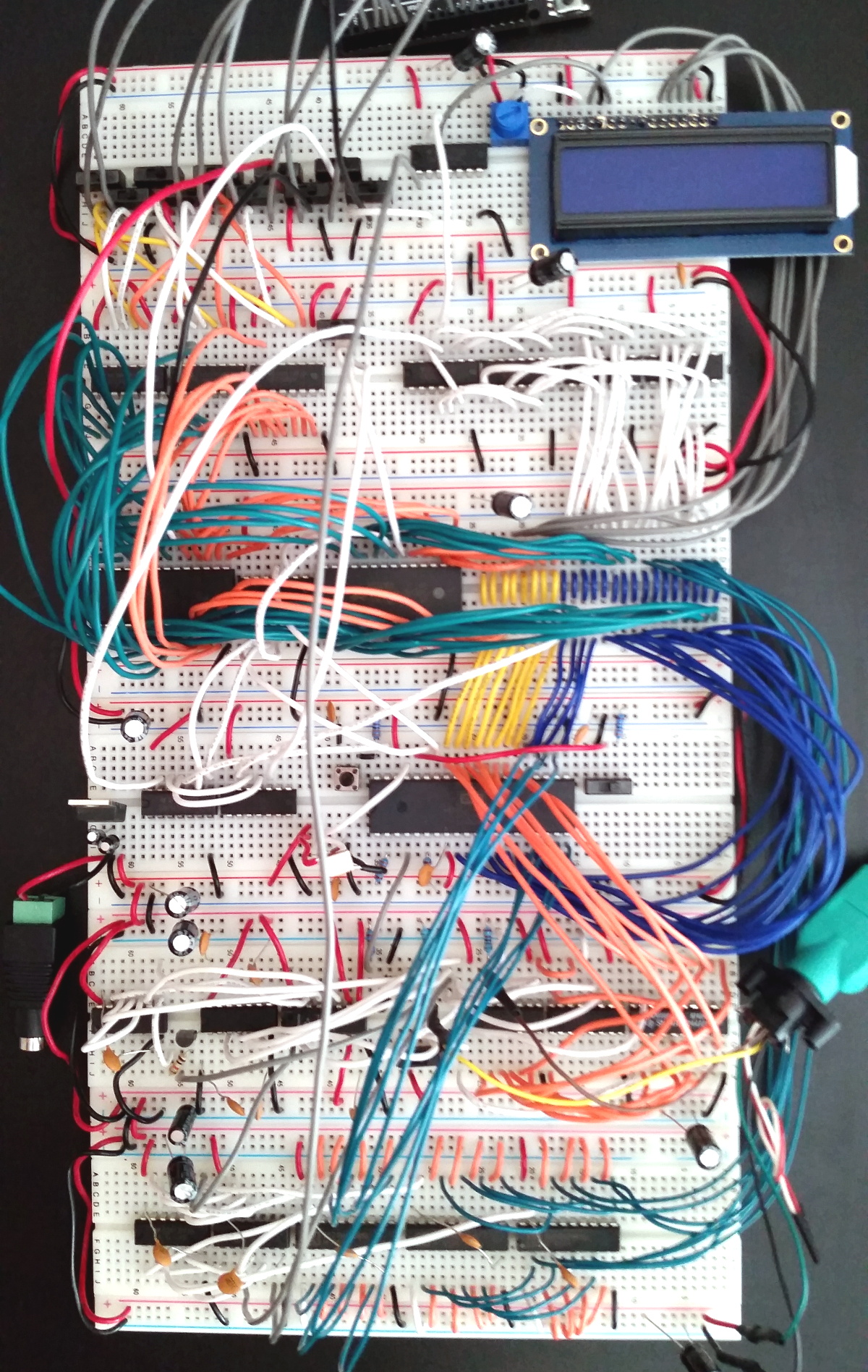
Over the years we’ve seen a number of homebrew 6502 computers assembled with little more than a breadboard, a sack full of jumper wires, and an otherworldly patience that would make a Buddhist Monk jealous. Anyone who takes the time to assemble a fully functional computer on a half-dozen breadboards lined up on their workbench will always be a superstar in our book.

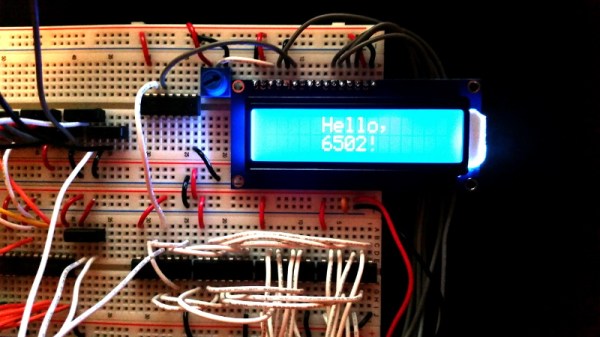
While we’re still too lazy to attempt one of these builds ourselves, we have to admit that the Vectron 64 by [Nick Bild] looks dangerously close to something you might be able to pull off within a reasonable amount of time. It’s still an incredible amount of work, but compared to some of the other projects we’ve seen, this one manages to keep the part count relatively low thanks to the use of a simple 16×2 LCD for output and user input provided by a PS/2 keyboard. You won’t be playing Prince of Persia on it, but at least you might be able to finish it in a weekend.

The computer is clocked at 1 MHz, and features 32KB RAM
along with 32KB EEPROM. That should be enough for anyone. [Nick] also points out he tried to use era-appropriate 7400 series ICs wherever possible, so no worries about historical revisionism here. If you’re looking for a design that somebody could have potentially knocked together back in the 1970s, this one would get you fairly close.

The astute reader might notice there’s no removable media in this build, and may be wondering how one loads programs. For that, [Nick] allowed himself a bit of modern convenience and came up with a scheme that allows an Arduino (or similar microcontroller) to connect up to the computer’s 28C256-15 EEPROM. With a Python script running on your “real” computer, you can write a new ROM image directly to the chip. He’s included the source code for a simple program which will write whatever you type on the keyboard out on the LCD, which should give you a good framework for writing additional software.

If you’re looking for a bigger challenge, don’t worry. We’ve covered 6502 breadboard computers that will make your eyes water. Incidentally, this isn’t the first time we’ve seen a similar LCD used for one of these computers, so looks like there’s no shame in sneaking in modern parts where it makes sense.

Vintage Camera Flash Turned OLED Desk Clock

After covering a few of his builds at this point, we think it’s abundantly clear that [Igor Afanasyev] has a keen eye for turning random pieces of antiquated hardware into something that’s equal parts functional and gorgeous. He retains the aspects of the original which give it that unmistakable vintage look, while very slickly integrating modern components and features. His work is getting awfully close to becoming some kind of new art form, but we’re certainly not complaining.

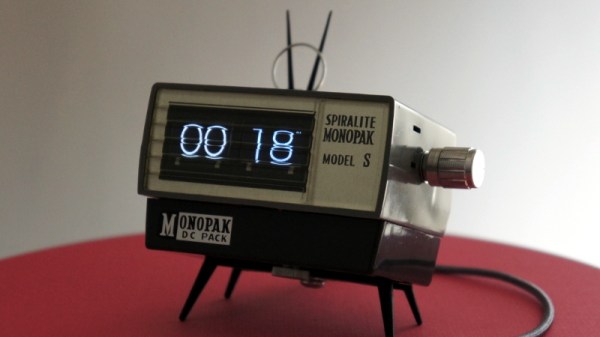
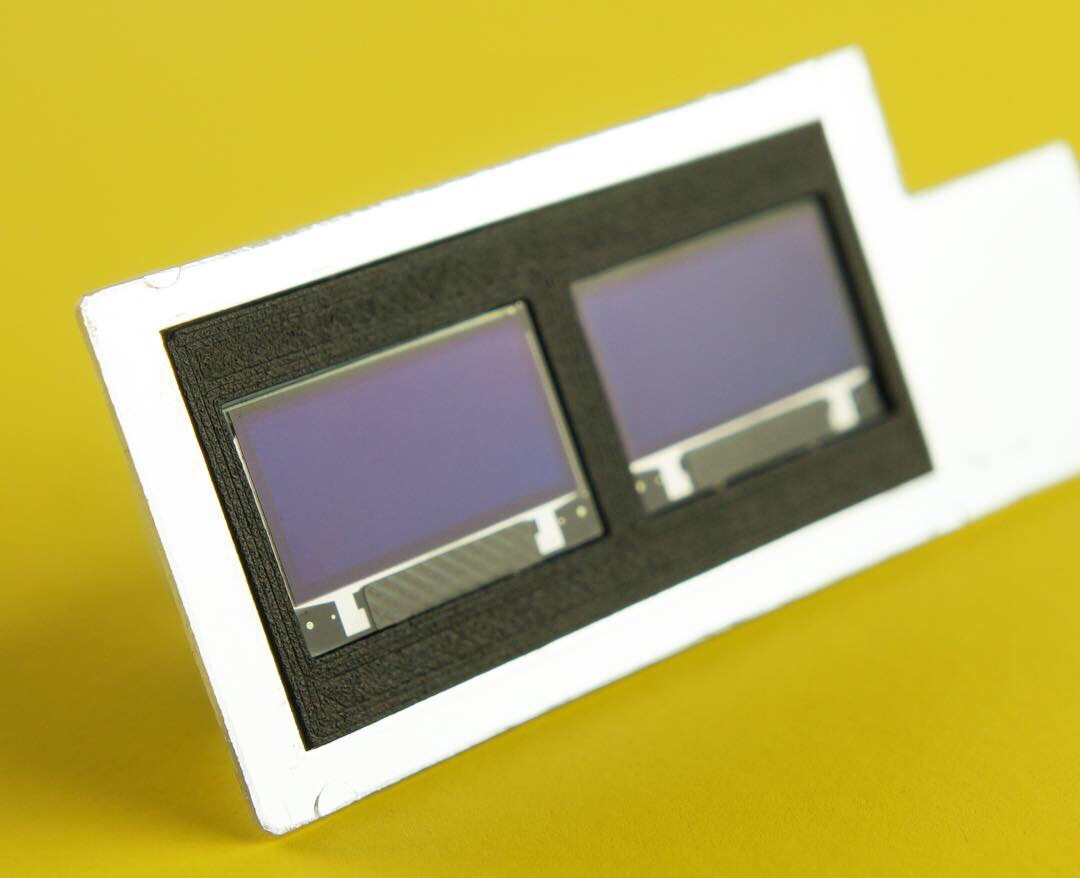
His latest creation takes an old-school “Monopak” electronic flash module and turns it into a desk clock that somehow also manages to look like a vintage television set. The OLED displays glowing behind the original flash diffuser create an awesome visual effect which really sells the whole look; as if the display is some hitherto undiscovered nixie variant.

On the technical side of things, there’s really not much to this particular build. Utilizing two extremely common SSD1306 OLED displays in a 3D printed holder along with an Arduino to drive them, the electronics are quite simple. There’s a rotary encoder on the side to set the time, though it would have been nice to see an RTC module added into the mix for better accuracy. Or perhaps even switch over to the ESP8266 so the clock could update itself from the Internet. But on this build we get the impression [Igor] was more interested in playing with the aesthetics of the final piece than fiddling with the internals, which is hard to argue with when it looks this cool.

Noticing the flash had a sort of classic TV set feel to it, [Igor] took the time to 3D print some detail pieces which really complete the look. The feet on the bottom not only hold the clock at a comfortable viewing angle, but perfectly echo the retro-futuristic look of 50s and 60s consumer electronics. He even went through the trouble of printing a little antenna to fit into the top hot shoe, complete with a metal ring salvaged from a key-chain.

Late last year we were impressed with the effort [Igor] put into creating a retro Raspberry Pi terminal from a legitimate piece of 1970’s laboratory equipment, and more recently his modern take on the lowly cassette player got plenty of debate going. We can’t wait to see what he comes up with next.

Continue reading “Vintage Camera Flash Turned OLED Desk Clock”

Pano Logic FGPA Hacking Just Got Easier

When Pano Logic went out of business in 2012, their line of unique FPGA-based thin clients suddenly became a burden that IT departments didn’t want anything to do with. New and used units flooded the second-hand market, and for a while you could pick these interesting gadgets up for not much more than the cost of shipping. Thanks to considerable interest from the hacking community the prices for these boxes have climbed a bit on eBay, but they’re still a great way to get your feet wet with FPGA hacking.

Especially now, as Pano Logic fanatic [Skip Hansen] has figured out how to flash a new firmware on them without having to crack open the case and break out the JTAG or SPI programmer. For the seasoned hardware hacker that might not seem like a big deal, but if you’re new to the game or just more interested in the software side of the equation, this trick makes things considerably more accessible. Having an external programmer is still a good idea if things go south, but if you’re just looking to flash some demos and see what the hardware is capable of this is a huge quality of life improvement.

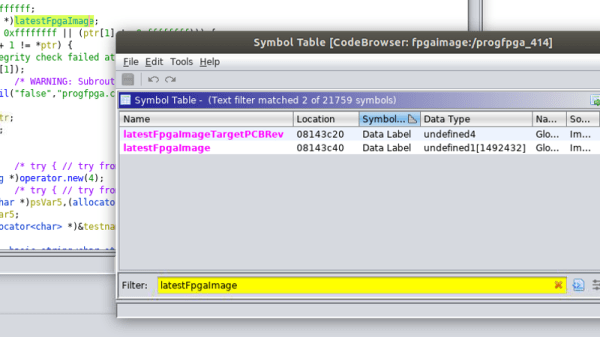
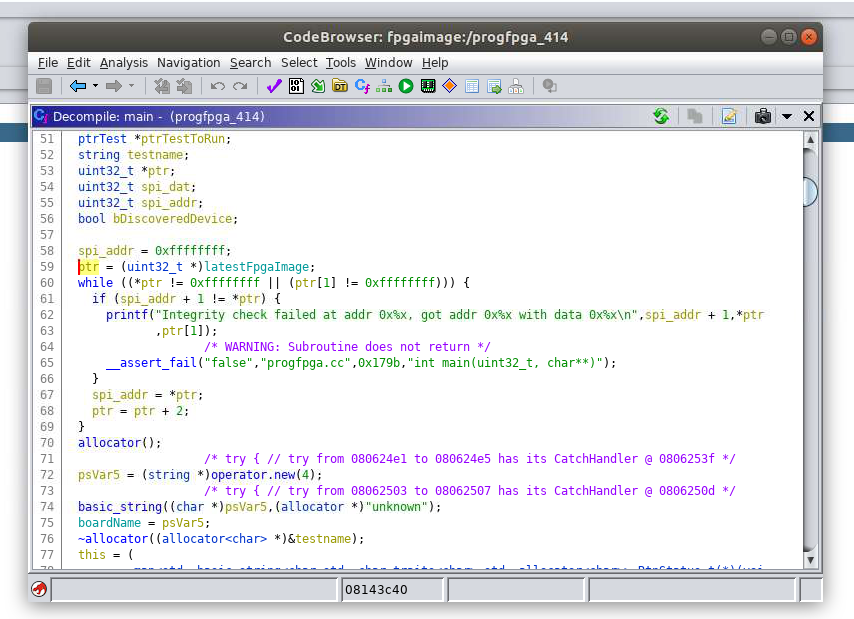
Even if you aren’t interested in fiddling with the orphaned products of a defunct Bay Area startup, the write-up is a fascinating look at practical software reverse engineering. As it turns out, [Skip] didn’t create this new firmware update tool from scratch. He actually opened up the official Linux update utility from Pano Logic in Ghidra and was able to figure out where the firmware image actually lived inside the program. He then wrote his own tool in C which will patch the update tool with a user-supplied firmware image.

After patching, all you need to do is follow the official update procedure, which Pano Logic helpfully documented in the YouTube video after the break. [Skip] mentions he didn’t find any clear license information in the official software he was fiddling with, and of course with the company out of business it’s not too likely anyone is going to come knocking down his door anyway. Still, he says the downloads for the Pano Logic updater are still floating around on the tubes out there for you to find, so he’s not distributing anyone’s code but his own in this project.

There are a number of hackers out there working to turn the Pano Logic thin clients into useful general purpose FPGA platforms, such as [Tom Verbeure], who’s incredible graphics demos got [Skip] inspired to grab his own unit off eBay. With support for USB and SDRAM added by [Wenting Zhang] while getting his FPGA GBA emulator running on the hardware, it seems there’s never been a better time to get on the Pano Logic train.

Continue reading “Pano Logic FGPA Hacking Just Got Easier”

The Drones And Robots That Helped Save Notre Dame

In the era of social media, events such as the fire at Notre Dame cathedral are experienced by a global audience in real-time. From New York to Tokyo, millions of people were glued to their smartphones and computers, waiting for the latest update from media outlets and even individuals who were on the ground documenting the fearsome blaze. For twelve grueling hours, the fate of the 850 year old Parisian icon hung in the balance, and for a time it looked like the worst was inevitable.

The fires have been fully extinguished, the smoke has cleared, and in the light of day we now know that the heroic acts of the emergency response teams managed to avert complete disaster. While the damage to the cathedral is severe, the structure itself and much of the priceless art inside still remain. It’s far too early to know for sure how much the cleanup and repair of the cathedral will cost, but even the most optimistic of estimates are already in the hundreds of millions of dollars. With a structure this old, it’s likely that reconstruction will be slowed by the fact that construction techniques which have become antiquated in the intervening centuries will need to be revisited by conservators. But the people of France will not be deterred, and President Emmanuel Macron has already vowed his country will rebuild the cathedral within five years.

It’s impossible to overstate the importance of the men and women who risked their lives to save one of France’s most beloved monuments. They deserve all the praise from a grateful nation, and indeed, world. But fighting side by side with them were cutting-edge pieces of technology, some of which were pushed into service at a moments notice. These machines helped guide the firefighters in their battle with the inferno, and stood in when the risk to human life was too great. At the end of the day, it was man and not machine that triumphed over nature’s fury; but without the help of modern technology the toll could have been far higher.

Continue reading “The Drones And Robots That Helped Save Notre Dame”

Teardown: Nihon Kenko Magnetic Wave Tester

You never know what kind of wonders you’ll find on eBay, especially when you have a bunch of alerts configured to go off when weird electronic devices pop up. You may even find yourself bidding on something despite not being entirely sure what it is. Perhaps you’re a collector of unusual gadgets, or maybe it’s because you’ve committed to doing monthly teardowns for the hacker blog you work for. In any event, you sometimes find yourself in possession of an oddball device that requires closer inspection.

Case in point, this “Magnetic Wave Tester” from everyone’s favorite purveyor of high-end electronics, Nihon Kenko Zoushin Kenkyukai Corporation. The eBay listing said the device came from an estate sale and the seller didn’t know much about it, but with just a visual inspection we can make some educated guesses. When a strong enough magnetic field is present, the top section on the device will presumably blink or light up. As it has no obvious method of sensitivity adjustment or even a display to show specific values, it appears the unit must operate like an electromagnetic canary in a coal mine: if it goes off, assume the worst.

If you’re wondering what the possible use for such a gadget is, you’re not the only one. I wasn’t able to find much information about this device online, but the few mentions I found didn’t exactly fill me with confidence. It seems two groups of people are interested in this type of “Magnetic Wave Tester”: people who believe strong magnetic fields have some homeopathic properties, or those who think it will allow them to converse with ghosts. In both cases, these aren’t the kind of users who want to see a microtesla readout; they want a bright blinking light to show their friends.

So without further ado, let’s align our chakras, consult with the spirits, and see what your money gets you when you purchase a pocket-sized hokum detector.

Continue reading “Teardown: Nihon Kenko Magnetic Wave Tester”