ESP8266 And Alexa Team Up To Tend Bar

After a hard day of soldering and posting memes online, sometimes you just want to yell at the blinking hockey puck in the corner and have it pour you out a perfectly measured shot of your favorite libation. It might not be the multi-purpose robot servant we were all hoping to have by the 21st century, but [Jake Lee] figures it’s about as close as we’re likely to get for under fifty bucks or so (Jake’s security certificate seems to have expired a few days ago so your browser may warn you, here’s an archived version).

From the hardware to the software, his Alexa-enabled drink pouring machine is an exercise in minimalism. Not that there’s anything wrong with that, of course. The easiest solutions are sometimes the best ones, and we think the choices [Jake] made here strike a perfect balance between keeping things simple and getting the job done. It’s by no means the most complete or capable robotic bartender we’ve ever seen, but it’s perhaps the one most likely to be duplicated by others looking to get in on the voice-controlled drinking game.

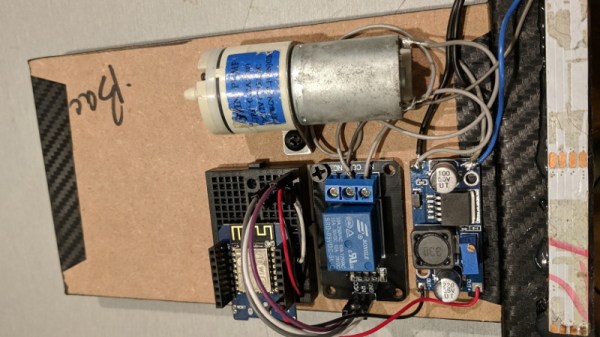
So how does it work? For one, [Jake] didn’t go through the trouble of creating a “proper” Alexa skill, that’s quite a bit of work just to pour a shot of rum. Instead, he took the easy way out and used the FauxMo library on his ESP8266 to emulate a few WeMo smart switches. Alexa (and pretty much every other home automation product) has native support for turning these on and off, so with the proper code you can leverage it as an easy way to toggle the chip’s digital pins.

Using the Alexa’s “Routines” capability, these simple toggles can be chained together and associated with specific phrases to create more complex actions. For example, you could chain the dispensing alcohol, lowering the room lighting, and playing music all to a single voice command. Something like “I give up”, perhaps.

When Alexa tells the drink dispenser to turn on, the ESP8266 fires a relay which starts up a small 12 V air pump. This is connected to the bottle of rum though a glass tube that [Jake] bent with a blow torch, and starts to pressurize it. With the air at the top of the bottle pushing down on it, a second glass tube gives the liquid a way to escape. This method of dispensing liquid is not only easy to implement, but saves you from having to drink something that’s passed through some crusty eBay pump.

If you prefer the “right” way of getting your device talking to Amazon’s popular home surveillance system, our very own [Al Williams] can get you headed in the right direction. On the other hand, if the flowing alcohol is the part of this project that caught your attention, well we’ve got more than a few projects that cover that topic as well.

The Thrill Of Building Space Hardware To Exceptionally High Standards

It’s fair to say that the majority of Hackaday readers have not built any hardware that’s slipped the surly bonds of Earth and ventured out into space proper. Sure we might see the occasional high altitude balloon go up under the control of some particularly enterprising hackers, but that’s still a far cry from a window seat on the International Space Station. Granted the rapid commercialization of space has certainly added to that exclusive group of space engineers over the last decade or so, but something tells us it’s still going to be quite some time before we’re running space-themed hacks with the regularity of Arduino projects.

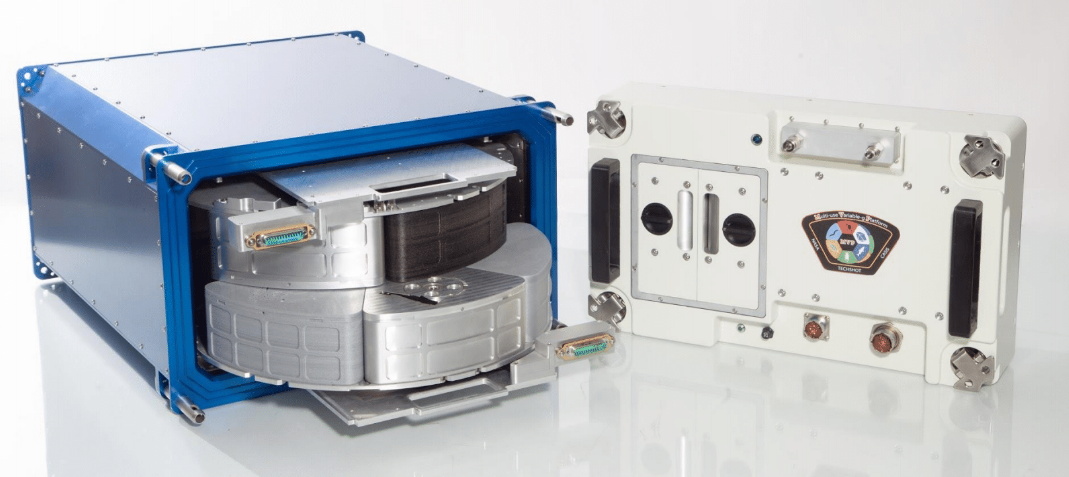
Multi-use Variable-G Platform

That being the case, you might assume the protocols and methods used to develop a scientific payload for the ISS must seem like Latin to us lowly hackers. Surely any hardware that could potentially endanger an orbiting outpost worth 100+ billion dollars, to say nothing of the human lives aboard it, would utilize technologies we can hardly dream of. It’s probably an alphabet soup of unfamiliar acronyms up there. After all, this is rocket science, right?

There’s certainly an element of truth in there someplace, as hardware that gets installed on the Space Station is obviously held to exceptionally high standards. But Brad Luyster is here to tell you that not everything up there is so far removed from our Earthly engineering. In fact, while watching his 2018 Hackaday Superconference talk “Communication, Architecture, and Building Complex Systems for SPAAACE”, you might be surprised just how familiar it all sounds. Detailing some of the engineering that went into developing the Multi-use Variable-G Platform (MVP), the only centrifuge that’s able to expose samples to gravitational forces between 0 and 1 g, his talk goes over the design considerations that go into a piece of hardware for which failure isn’t an option; and how these lessons can help us with our somewhat less critically important projects down here.

Check out Brad’s newly published talk video below, and then join me after the break for a look at the challenges of designing hardware that will live in space.

Continue reading “The Thrill Of Building Space Hardware To Exceptionally High Standards”

FAA Proposes Refined Drone Regulations

The wheels of government move slowly, far slower than the pace at which modern technology is evolving. So it’s not uncommon for laws and regulations to significantly lag behind the technology they’re aimed at reigning in. This can lead to something of a “Wild West” situation, which could either be seen as a good or bad thing depending on what side of the fence you’re on.

In the United States, it’s fair to say that we’ve officially moved past the “Wild West” stage when it comes to drone regulations. Which is not to say that remotely controlled (RC) aircraft were unregulated previously, but that the rules which governed them simply couldn’t keep up with the rapid evolution of the technology we’ve seen over the last few years. The previous FAA regulations for remotely operated aircraft were written in an era where RC flights were lower and slower, and long before remote video technology moved the operator out of the line of sight of their craft.

To address the spike in not only the capability of RC aircraft but their popularity, the Federal Aviation Administration was finally given the authority to oversee what are officially known as Unmanned Aerial Systems (UAS) with the repeal of Section 336 in the FAA Reauthorization Act of 2018. Section 336, known as the “Special Rule for Model Aircraft” was previously put in place to ensure the FAA’s authority was limited to “real” aircraft, and that small hobby RC aircraft would not be subject to the same scrutiny as their full-size counterparts. With Section 336 gone, one could interpret the new FAA directives as holding manned and unmanned aircraft and their operators to the same standards; an unreasonable position that many in the hobby strongly rejected.

At the time, the FAA argued that the repealing Section 336 would allow them to create new UAS regulations from a position of strength. In other words, start with harsh limits and regulations, and begin to whittle them down until a balance is found that everyone is happy with. U.S. Secretary of Transportation Elaine L. Chao has revealed the first of these refined rules are being worked on, and while they aren’t yet official, it seems like the FAA is keeping to their word of trying to find a reasonable middle ground for hobby fliers.

Continue reading “FAA Proposes Refined Drone Regulations”

Open Source Biological Gear For The Masses

At the risk of putting too fine a point on it, Hackaday exists because people are out there building and documenting open source gadgets. If the person who built a particular gizmo is willing to show the world how they did it, consider us interested. Since you’re reading this, we’ll assume you are as well. Over the years, this mentality has been spreading out from the relatively niche hacker community into the greater engineering world, and we couldn’t be happier.

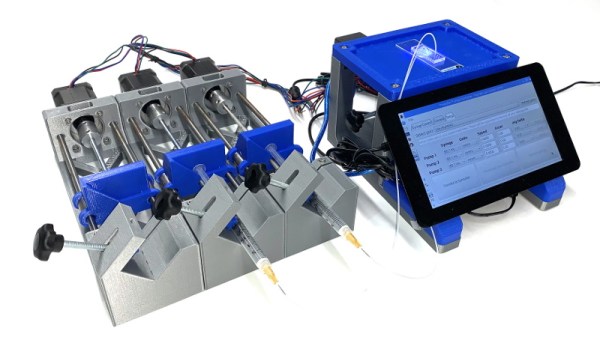
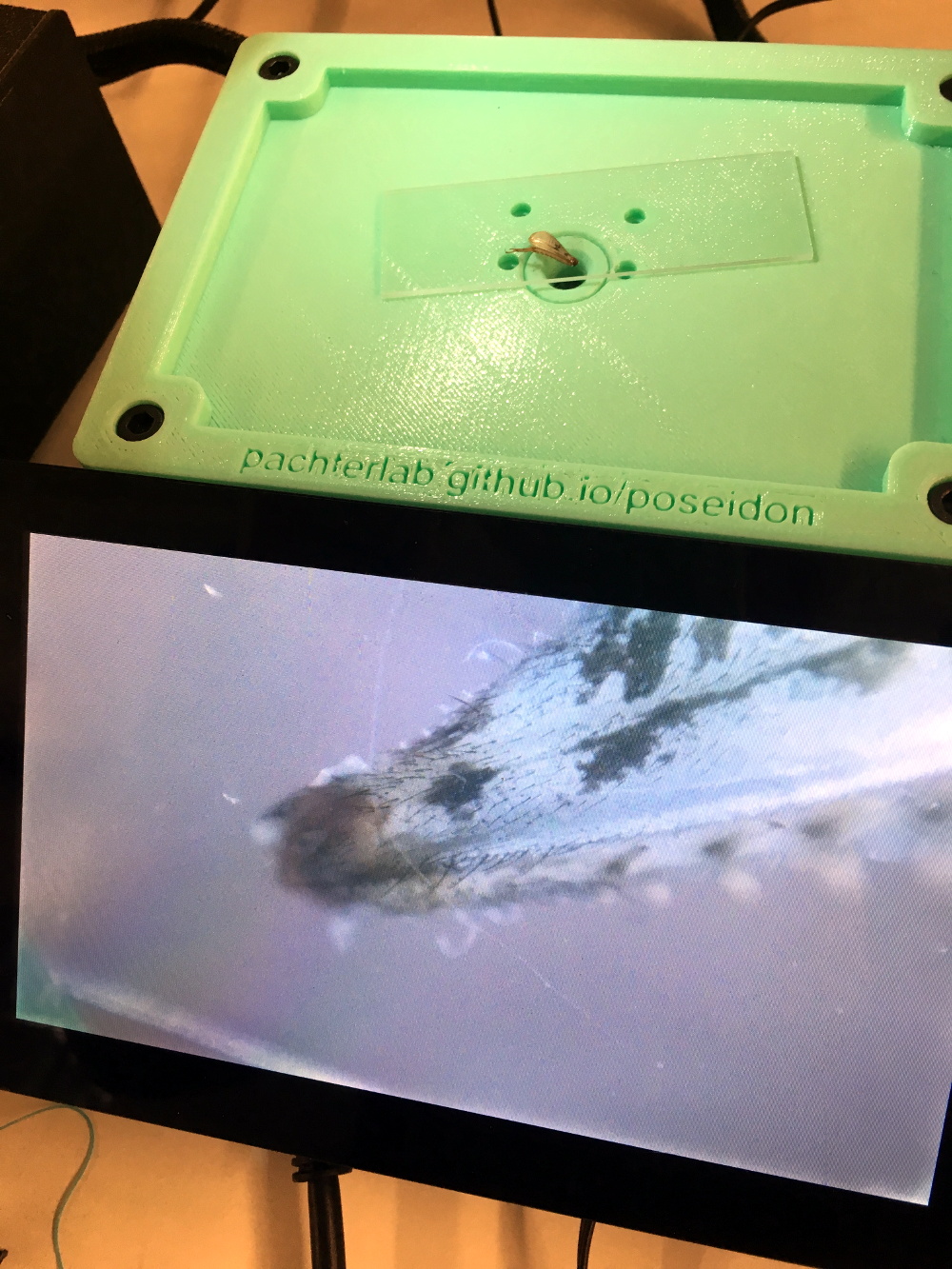
Case in point, the Poseidon project created at the California Institute of Technology. Developed by students [Sina Booeshaghi], [Eduardo Beltrame], and [Dylan Bannon], along with researcher [Jase Gehring] and professor [Lior Pachter], Poseidon consists of an open source digital microscope and syringe pump which can be used for microfluidics experiments. The system is not only much cheaper than commercial offerings, but is free from the draconian modification and usage restrictions that such hardware often comes with.

Of course, one could argue that major labs have sufficient funding to purchase this kind of gear without having to take the DIY route. That’s true enough, but what benefit is there to limiting such equipment to only the established institutions? As in any other field, making the tools available to a wider array of individuals (from professionals to hobbyists alike) can only serve to accelerate progress and move the state of the art forward.

The Poseidon microscope consists of a Raspberry Pi, touch screen module, and commercially available digital microscope housed in a 3D printed stage. This device offers a large and clear view of the object under the microscope, and by itself makes an excellent educational tool. But when running the provided Python software, it doubles as a controller for the syringe pumps which make up the other half of the Poseidon system.

Almost entirely 3D printed, the pumps use commonly available components such as NEMA 17 stepper motors, linear bearings, and threaded rods to move the plunger on a syringe held in the integrated clamp. Controlled by an Arduino and CNC shield, these pumps are able to deliver extremely precise amounts of liquid which is critical for operations such as Single-cell RNA sequencing. All told a three pump system can be built for less than $400 USD, compared to the tens of thousands one might pay for commercially available alternatives.

The Poseidon project joins a relatively small, but very exciting, list of DIY biology projects that we’ve seen over the years. From the impressive open source CO2 incubator we saw a few years ago to the quick and dirty device for performing polymerase chain reaction experiments, there’s little doubt about it: biohacking is slowly becoming a reality.

Continue reading “Open Source Biological Gear For The Masses”

A 3D Printed Robotic Chariot For Your Phone

As we’ve said many times in the past, the wide availability of low-cost modular components has really lowered the barrier to entry for many complex projects which previously would have been nigh-on impossible for the hobbyist to tackle. The field of robotics has especially exploded over the last few years, as now even $100 can put together a robust robotics experimentation platform which a decade ago might have been the subject of a DARPA grant.

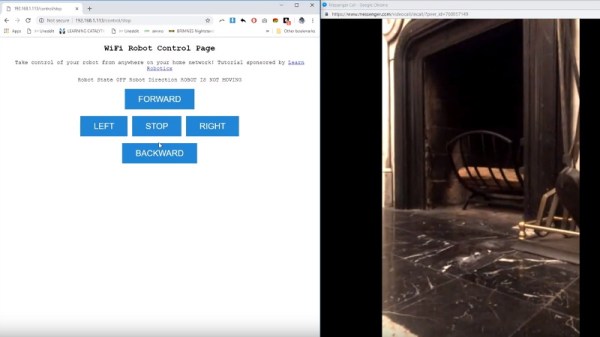
But what if you want to go even lower? What’s the cheapest and easiest way to put together something like a telepresence robot? That’s exactly what [Advance Robotics] set out to determine with their latest project, and the gadget’s final form might be somewhat surprising. Leveraging the fact that nearly everyone has a device capable of video calls in their pocket, the kit uses simple hardware and 3D printed components to produce a vehicle that can carry around a smartphone. With the phone providing the audio and video link, the robot only needs to handle rolling around in accordance with the operators commands.

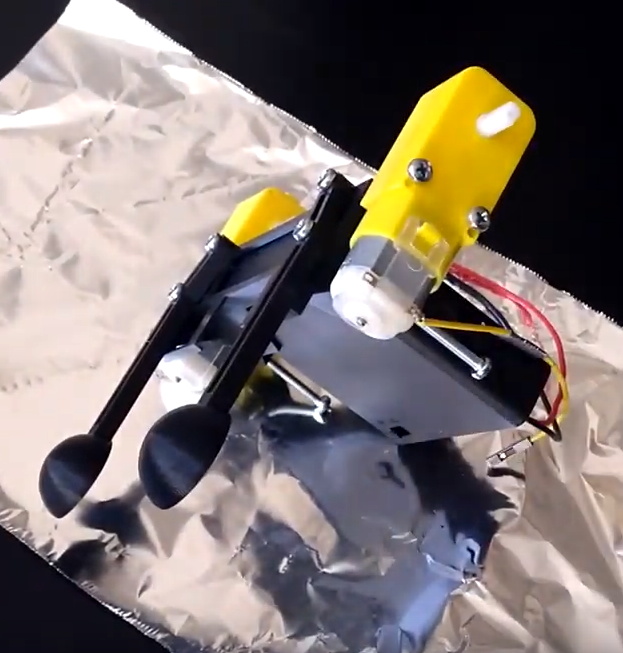
The robot chassis consists of a few simple 3D printed components, including the base which holds the phone and electronics, the wheels, and the two rear “spoons” which are used to provide a low-friction way of keeping the two-wheeled device vertical. To get it rolling, two standard DC gear motors are bolted to the sides. With the low cost of printer filament and the fact that these motors can be had for as little as $2 online, it’s hard to imagine a cheaper way to get your electronics moving.

As for the electronics, [Advance Robotics] is using the Wemos D1 Mini ESP8266 development board along with L298N motor controller, another very low-cost solution. The provided source code pulls together a few open source libraries and examples to provide a simple web-based user interface which allows the operator to connect to the bot from their browser and move it around with just a few clicks of the mouse.

If you like the idea of printing a rover to explore your living room but want something a bit more advanced, we’ve seen printable robotics platforms that are sure to meet your needs, no matter what your skill level is.

Continue reading “A 3D Printed Robotic Chariot For Your Phone”

Digital License Plates Are Here, But Do We Need Them?

It’s a story as old as time: you need to swap between your custom license plates, but you can’t find a screwdriver and you’re already running late for a big meeting at the Business Factory. You called AAA to see if they could come out and do it for you, but as luck would have it something must be wrong with your phone because the line was disconnected as soon as you explained the situation. As if life in the First World couldn’t get any more difficult.

Luckily, a company called Reviver Auto has come up with a thoroughly modern solution to this age old problem. Assuming you live in Arizona, California, and Michigan and are willing to pay $800 USD (plus a small monthly service fee), you can join the Rplate revolution! Less a license plate and more of a “cool-looking, multi-functional digital display and connected vehicle platform”, the Rplate will ensure you never again find yourself stuck on the side of the road with an unfashionable license plate.

What’s that? You’ve had the same license plate for years, possibly decades, and have never given it much thought? Well, in that case the Rplate might be sort of a tough sell. Did we mention that someday you might be able to display the current weather on it while your car is parked? Of course, if you can see the license plate you’re already outside, so…

This all might sound like an out of season April Fool’s joke, but as far as I can tell from reading the Reviver Auto site and watching their promotional videos, this is essentially the value proposition of their line of Rplate digital license plates. There are some admittedly interesting potential extensions of the technology if they can convince other companies and systems to plug into their ecosystem, but given the cost of the Rplate and the few states in which it’s currently legal to use, that seems far from a given at this point.

But of course we’re fans of weird and wonderful technology here at Hackaday, so we should give this device a fair shake. On the surface it might seem to be a solution looking for a problem, but that’s often said of technology ahead of its time. So what exactly is the Rplate, how does it work, and where does it go from here?

Continue reading “Digital License Plates Are Here, But Do We Need Them?”

This Tiny Router Could Be The Next Big Thing

It seems like only yesterday that the Linksys WRT54G and the various open source firmware replacements for it were the pinnacle of home router hacking. But like everything else, routers have gotten smaller and faster over the last few years. The software we run on them has also gotten more advanced, and at this point we’ve got routers that you could use as a light duty Linux desktop in a pinch.

But even with no shortage of pocket-sized Linux devices in our lives, the GL-USB150 “Microrouter” that [Mason Taylor] recently brought to our attention is hard to ignore. Inside this USB flash drive sized router is a 400 MHz Qualcomm QCA9331 SoC, 64 MB of RAM, and a healthy 16 MB of storage; all for around $20 USD. Oh, and did we mention it comes with OpenWRT pre-installed? Just plug it in, and you’ve got a tiny WiFi enabled Linux computer ready to do your bidding.

On his blog [Mason] gives a quick rundown on how to get started with the GL-USB150, and details some of the experiments he’s been doing with it as part of his security research, such as using the device as a remote source for Wireshark running on his desktop. He explains that the diminutive router works just fine when plugged into a USB battery bank, offering a very discreet way to deploy a small Linux box wherever you may need it. But when plugged into a computer, things get really interesting.

If you plug the GL-USB150 into a computer, it shows up to the operating system as a USB Ethernet adapter and can be used as the primary Internet connection. All of the traffic from the computer will then be routed through the device to whatever link to the Internet its been configured to use. Depending on how you look at it, this could be extremely useful or extremely dangerous.

For one, it means that something that looks all the world like a normal USB flash drive could be covertly plugged into a computer and become a “wiretap” through which all of the network traffic is routed. That’s the bad news. On the flip side, it also means you could configure the GL-USB150 as a secure endpoint that lets you quickly and easily funnel all the computer’s traffic through a VPN or Tor without any additional setup.

We’ve seen all manner of hacks and projects that made use of small Linux-compatible routers such as the TP-Link TL-MR3020, but we expect the GL-USB150 and devices like it will be the ones to beat going forward. Let’s just hope one of them doesn’t show up uninvited in your network closet.