They’re back! The San Francisco autonomous vehicle hijinks, that is, as Waymo’s fleet of driverless cars recently took up the fun new hobby of honking their horns in the wee hours of the morning. Meat-based neighbors of a Waymo parking lot in the South Market neighborhood took offense at the fleet of autonomous vehicles sounding off at 4:00 AM as they shuffled themselves around in the parking lot in a slow-motion ballet of undetermined purpose. The horn-honking is apparently by design, as the cars are programmed to tootle their horn trumpets melodiously if they detect another vehicle backing up into them. That’s understandable; we’ve tootled ourselves under these conditions, with vigor, even. But when the parking lot is full of cars that (presumably) can’t hear the honking and (also presumably) know where the other driverless vehicles are as well as their intent, what’s the point? Luckily, Waymo is on the case, as they issued a fix to keep the peace. Unfortunately, it sounds like the fix is just to geofence the lot and inhibit honking there, which seems like just a band-aid to us.
Using Bluetooth on a desktop computer is now such a seamless process; it’s something built-in and just works. Behind that ubiquity is a protocol layer called HCI, or Host Controller Interface, a set of commands allowing a host computer to talk to a Bluetooth interface. That interface doesn’t have to be special, and [Dakhnod] is here to show us that it can be done with an ESP32 microcontroller through its USB interface.
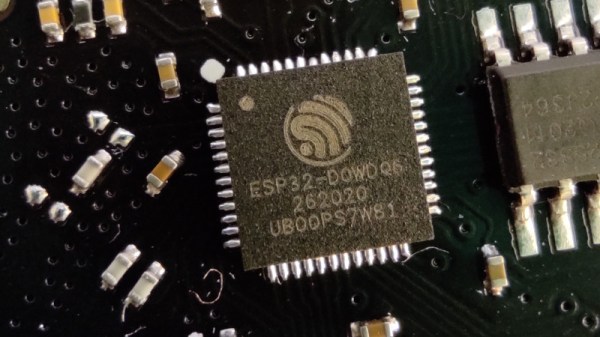
The linked repository doesn’t tell us which of the ESP32 variants it works with, but since not all of them have a USB peripheral we’re guessing one of the newer variety. It works with Linux computers, and we’re told it should work with Windows too if a HCI driver is present. We might ask ourselves why such a project is necessary given the ubiquity of Bluetooth interfaces, but for us it’s provided the impetus to read up on how it all works.
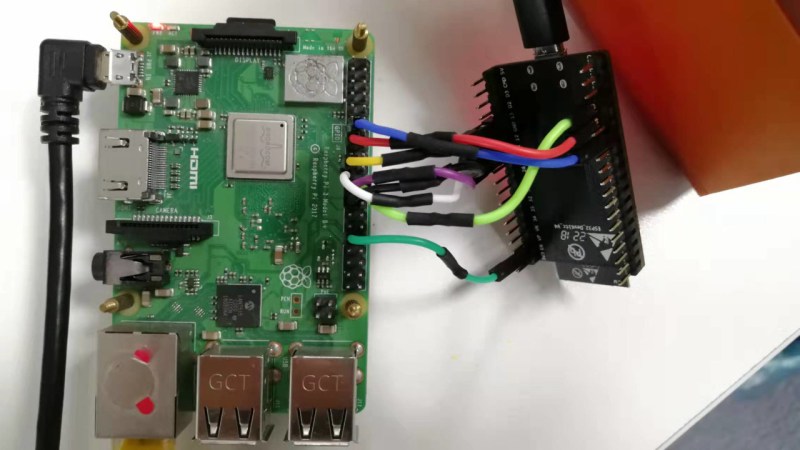
While we are used to USB WiFi adapters, embedded devices typically use SDIO WiFi cards, and for good reasons – they’re way more low-power, don’t take up a USB port, don’t require a power-sipping USB hub, and the SDIO interface is widely available. However, SDIO cards and modules tend to be obscure and proprietary beyond reason. Enter ESP-Hosted – Espressif’s firmware and driver combination for ESP32 (press release)(GitHub), making your ESP32 into a WiFi module for either your Linux computer (ESP-Hosted-NG) or MCU (ESP-Hosted-FG). In particular, ESP-Hosted-NG his turns your SPI- or SDIO-connected ESP32 (including -S2/S3/C2/C3/C6 into a WiFi card, quite speedy and natively supported by the Linux network stack, as opposed to something like an AT command mode.
We’ve seen this done with ESP8266 before – repurposing an ESP8089 driver from sources found online, making an ESP8266 into a $2 WiFi adapter for something like a Pi. The ESP-Hosted project is Espressif-supported, and it works on the entire ESP32 lineup, through an SDIO or even SPI interface! It supports 802.11b/g/n and even Bluetooth, up to BLE5, either over an extra UART channel or the same SDIO/SPI channel; you can even get BT audio over I2S. If you have an SPI/SDIO port free and an ESP32 module handy, this might just be the perfect WiFi card for your Linux project!
There are some limitations – for instance, you can’t do AP mode in the NG (Linux-compatible) version. Also, part of the firmware has blobs in it, but a lot of the firmware and all of the driver are modifiable in case you need your ESP32 to do even more than Espressif has coded in – this is not fully open-source firmware, but it’s definitely way more than the Broadcom’s proprietary onboard Raspberry Pi WiFi chip. There’s plenty ofdocumentation, and even some fun features like raw transport layer access. Also, of note is that this project supports ESP32-C6, which means you can equip your project with a RISC-V-based WiFi adapter.
Don’t pack your bags for the trip to exoplanet K2-18b quite yet — it turns out that the James Webb Space Telescope may not have detected signs of life there after all. Last year, astronomers reported the possible presence of dimethyl sulfide there, a gas that (at least on Earth) is generally associated with phytoplankton in the ocean. Webb used its infrared spectrometer instruments to look at the light from the planet’s star, a red dwarf about 111 light-years away, as it passed through the hydrogen-rich atmosphere. The finding was sort of incidental to the discovery of much stronger signals for methane and carbon dioxide, but it turns out that the DMS signal might have just been overlap from the methane signal. It’s too bad, because K2-18b seems to be somewhat Earth-like, if you can get over the lack of oxygen and the average temperature just below freezing. So, maybe not a great place to visit, but it would be nice to see if life, uh, found a way anywhere else in the universe.
Attention Fortran fans: your favorite language isn’t quite dead yet. In fact, it cracked the top ten on one recent survey, perhaps on the strength of its numerical and scientific applications. The “Programming Community Index” is perhaps a bit subjective, since it’s based on things like Google searches for references to particular languages. It’s no surprise then that Python tops such a list, but it’s still interesting that there’s enough interest in a 67-year-old programming language to make it onto the list. We’d probably not advise building a career around Fortran, but you never know.
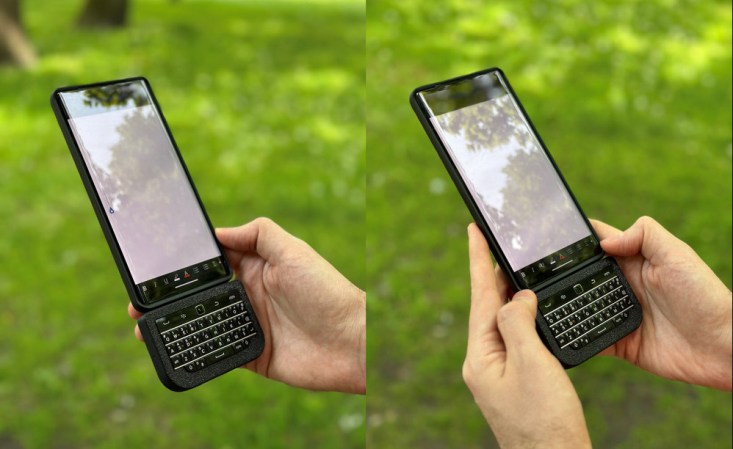
If you’re anything like us, you really, really miss having a physical keyboard on your phone. Well, cry no more, because [Joe LiTrenta] has made it possible for any modern smartphone whatsoever to have a detachable, physical keyboard and mouse at the ready. [Joe] calls this creation the BlueBerry.
The keyboard/mouse combo in question is a little BlackBerry Bluetooth number from ZitaoTech which is available on Tindie, ready to go in a 3D printed case. What [Joe] has done is to create a custom ZMK-based firmware that allows the keyboard be device-agnostic.
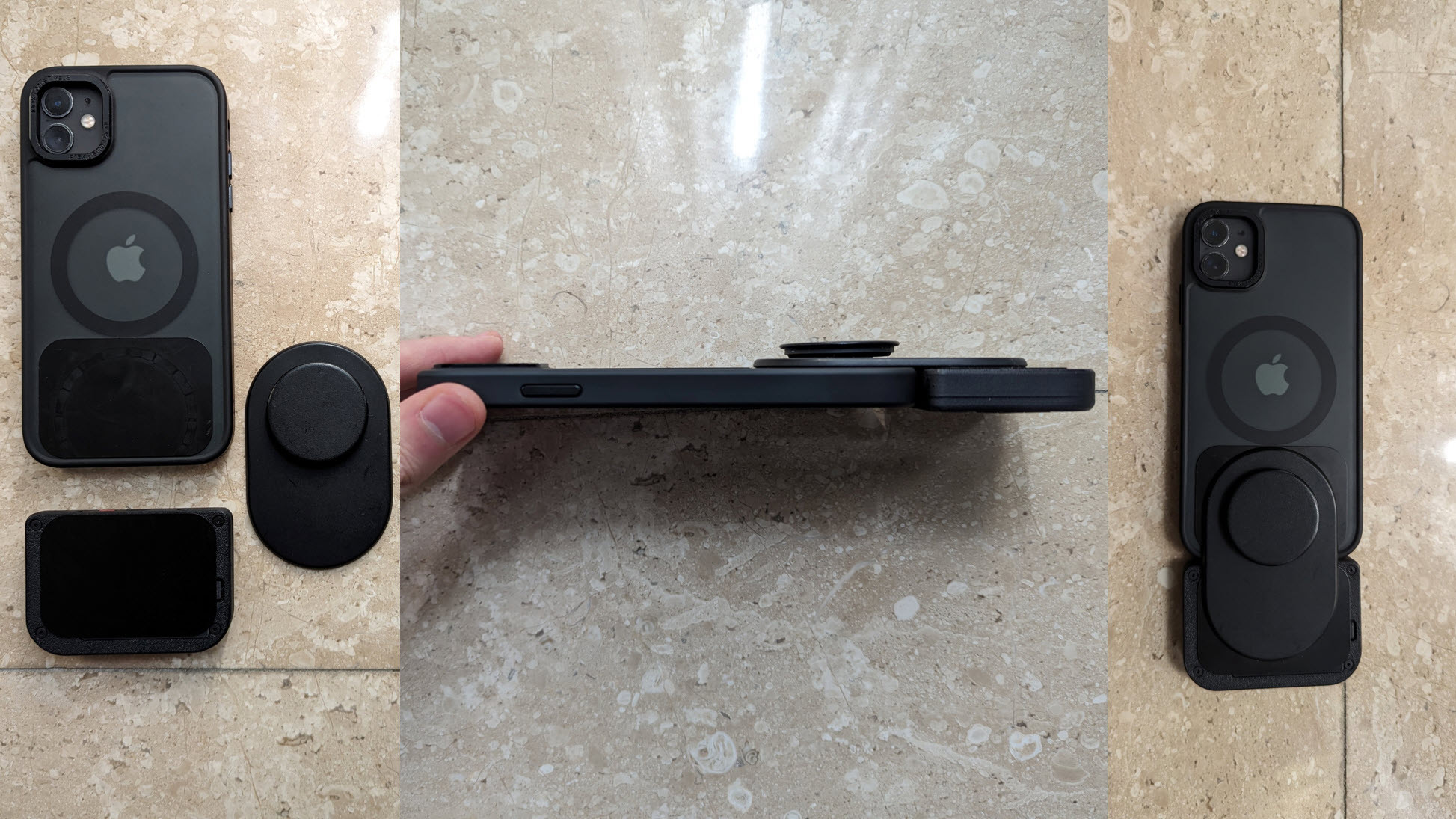
In order to easily mount the keyboard to the phone and make it detachable, [Joe] used adhesive-backed metal mounting plates on both the phone and the keyboard, and a mag-safe pop socket to connect the two. The firmware makes use of layers so everything is easily accessible.
Check out the demo video after the break, which shows the board connected to a Google Pixel 7. It makes the phone comically long, but having a physical keyboard again is serious business, so who’s laughing now? We’d love to see a keyboard that attaches to the broad side of the phone, so someone get on that. Please?
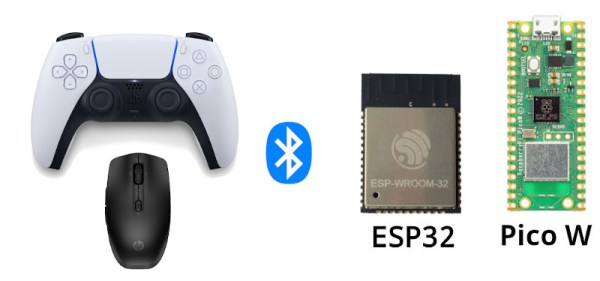
As much as we enjoy spinning up our own solutions, there are times when you’ve got to look at what’s on the market and realize you might be out of your league. For example, take Bluetooth game controllers. Sure, you could make your own with a microcontroller, some buttons, and a couple joysticks. But between the major players like Microsoft, Nintendo, and Sony, as well as independent peripheral companies like 8BitDo, there’s some seriously impressive hardware out there that can be easily repurposed.
How, you ask? Well, Bluepad32 by [Ricardo Quesada] would be a great place to start. This Apache v2.0 licensed project allows you to easily interface with a wide array of commercially available BT controllers, and supports an impressive number of software and hardware platforms. Using the Arduino IDE on the ESP32? No problem. CircuitPython on Adafruit’s PyPortal? Supported. There’s even example code provided for using it on Linux and Mac OS. Sorry Windows fans — perhaps there’s a sassy paperclip or sentient dog built into your OS that can instruct you further.
A few of the controllers supported by Bluepad32.
The nature of the Bluetooth Human Interface Device (HID) protocol means that, at least in theory, pretty much all modern devices should be supported by Bluepad32 automatically. But even still, it’s hard not to be impressed by the official controller compatibility list. There’s also separate lists for Bluetooth mice and keyboards that are known to work with the project.
While it’s somewhat unlikely to be a problem in this particular community, there is an unusual quirk to this project which we think should at least be mentioned. Although Bluepad32 itself is free and open source software (FOSS), it depends on the BTstack library, which in turn uses a more ambiguous licensing scheme. BTstack is “open” in the sense that you can see the source code and implement it in your own projects, but its custom license precludes commercial use. If you want to use BTstack (and by extension, Bluepad32) in a commercial product, you need to contact the developers and discuss terms.
While there’s an argument to be made that retro games should be experienced with whatever input device they were designed around, there’s no debating that modern game controllers are a lot more ergonomic and enjoyable to use than some of those early 8-bit entries.
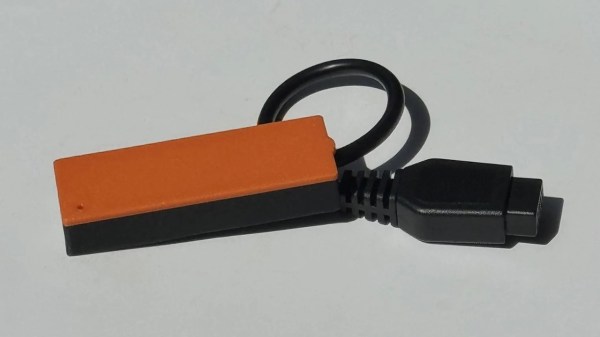
Now, thanks to the PicoNtrol project from [Reogen], you can use the latest Xbox and PlayStation controllers with the Atari 2600 via Bluetooth. Looking a bit farther down the road the project is aiming to support the Nintendo Entertainment System, and there’s work being done to bring the Switch Pro Controller into the fold as well.