Open-Source Laser Cutter Software Gets Major Update, New Features

The LaserWeb project recently released version 3, with many new features and improvements ready to give your laser cutter or engraver a serious boost in capabilities! On top of that, new 3-axis CNC support means that the door is open to having LaserWeb do for other CNC tools what it has already done for laser cutting and engraving.

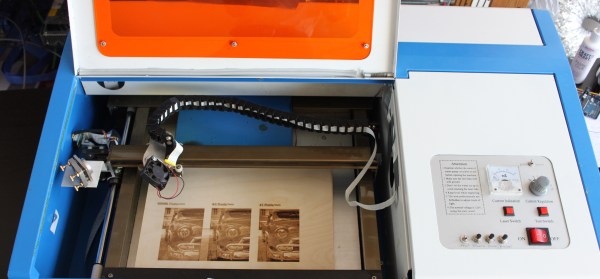
LaserWeb BurnsLaserWeb3 supports different controllers and the machines they might be connected to – whether they are home-made systems, CNC frames equipped with laser diode emitters (such as retrofitted 3D printers), or one of those affordable blue-box 40W Chinese lasers with the proprietary controller replaced by something like a SmoothieBoard.

We’ve covered the LaserWeb project in the past but since then a whole lot of new development has been contributed, resulting in better performance with new features (like CNC mode) and a new UI. The newest version includes not only an improved ability to import multiple files and formats into single multi-layered jobs, but also Smoothieware Ethernet support and a job cost estimator. Performance in LaserWeb3 is currently best with Smoothieware, but you can still save and export GCODE to use it with Grbl, Marlin, EMC2, or Mach3.

The project is open to contributions from CNC / Javascript / UX developers to bring it to the next level. If you’re interested in helping bring the project even further, and helping it do for 3-axis CNC what it did for Laser Cutting, project coordinator [Peter van der Walt] would like you to head to the github repository!

We recently shared a lot of great information on safe homebrew laser cutter design. Are you making your own laser cutting machine, or retrofitting an existing one? Let us know about it in the comments!

Baby Monitor Rebuild Is Also ESP8266 Audio Streaming How-To

[Sven337]’s rebuild of a cheap and terrible baby monitor isn’t super visual, but it has so much more going on than it first seems. It’s also a how-to for streaming audio via UDP over WiFi with a pair of ESP8266 units, and includes a frank sharing of things that went wrong in the process and how they were addressed. [Sven337] even experimented with a couple of different methods for real-time compression of the transmitted audio data, for no other reason than the sake of doing things as well as they can reasonably be done without adding parts or spending extra money.

receiverThe original baby monitor had audio and video but was utterly useless for a number of reasons (French).  The range and quality were terrible, and the audio was full of static and interference that was just as loud as anything the microphone actually picked up from the room. The user is left with two choices: either have white noise constantly coming through the receiver, or be unable to hear your child because you turned the volume down to get rid of the constant static. Our favorite part is the VOX “feature”: if the baby is quiet, it turns off the receiver’s screen; it has no effect whatsoever on the audio! As icing on the cake, the analog 2.4GHz transmitter interferes with the household WiFi when it transmits – which is all the time, because it’s always-on.

Small wonder [Sven337] decided to go the DIY route. Instead of getting dumped in the trash, the unit got rebuilt almost from the ground-up.

Continue reading “Baby Monitor Rebuild Is Also ESP8266 Audio Streaming How-To”

Highlights From Robotic Shipwreck Exploration

DIY Research Vessel in use, while ROV is busy below. [Source: NYT]
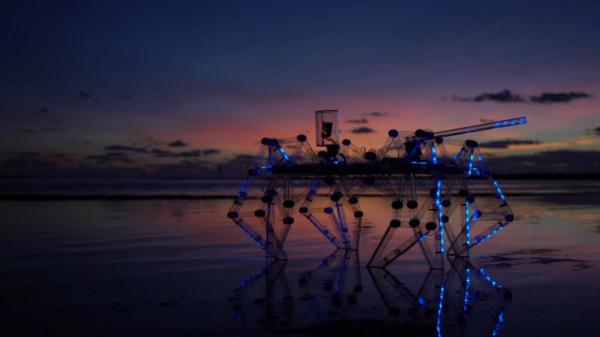
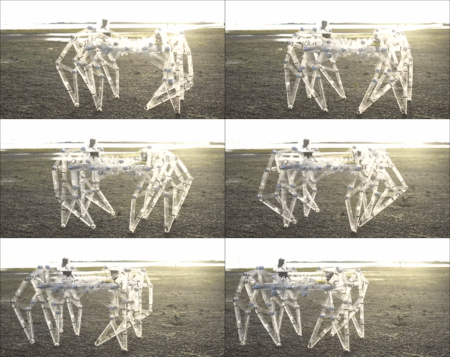
OpenROV shared the results of their June 2016 underwater expedition to locate and robotically explore the wreck of the S.S. Tahoe, currently sitting at a depth of 150m in Lake Tahoe. Back in 1940 the ship was intentionally scuttled in shallow water, but unexpectedly slid to a much deeper depth. OpenROV used a modified version of their new Trident design to dive all the way down to the wreck and take a good look at things, streaming it over the internet in the process.

We previously covered the DIY research vessel that was designed and created as a floating base station for the ROV while it located and explored the wreck, and now the results are in! The video highlights of the expedition are below, as is a video tour of the ROV used and the modifications required to enable it to operate at 150m.

Continue reading “Highlights From Robotic Shipwreck Exploration”

Seeing The Truly Invisible With DIY Shortwave UV Imaging

We’ve all seen how to peel IR filters off digital cameras so they can see a little better in the dark, but there’s so much more to this next project than that. How about being able to see things normally completely outside the visual spectrum, like hydrogen combustion or electrical discharges?

UV Electrical Discharge

[David Prutchi] has just shared his incredible work on making his own shortwave ultraviolet viewers for imaging entirely outside of the normal visible spectrum – in other words, seeing the truly invisible. The project has not only fascinating application examples, but provides detailed information about how to build two different imagers – complete with exact part numbers and sources.

UV-Viewer-SmallIf you’re thinking UV is a broad brush, you’re right. [David Prutchi] says he is most interested in Solar Blind UV (SBUV):

Solar radiation in the 240 nm to 280 nm range is completely absorbed by the ozone in the atmosphere and cannot reach Earth’s surface…

Without interference from background light, even very weak levels of UV are detectable. This allows ultraviolet-emitting phenomena (e.g. electrical discharges, hydrogen combustion, etc.) to be detectable in full daylight.

There is more to the process than simply slapping a UV filter onto a camera, but happily he addresses all the details and the information is also available as a PDF whitepaper. [David Prutchi] has been working with imaging for a long time, and with his sharing of detailed build plans and exact part numbers maybe others will get in on the fun. He’s also previously shared full build plans for a Raspberry Pi based multispectral imager, [David’s] DOLPHi Polarization Camera was a finalist in the 2015 Hackaday Prize, and he spoke at the Hackaday SuperConference about the usefulness of advanced imaging techniques for things like tissue analysis in medical procedures, and landmine detection for the purposes of cleaning up hazardous areas.

Improving 3D Printed Gears With… Hot Water

Being able to print out custom gears is one area where 3D printing can really shine, and [Karl Lew] has been busy doing exactly that with pinion gears printed in PLA and mounted to stepper motor shafts, but there are tradeoffs. Pinion gears need to grip a motor shaft tightly – normally done with a screw through the gear and onto the motor shaft. But a motor and its shaft can get quite warm when doing a lot of work, and a tight screw on a hot motor’s shaft will transmit that heat into the PLA, which can then deform.

[Karl Lew] managed to improve things in an unusual way: using a hot water bath to anneal the gear while it is attached to the stepper shaft. Annealing PLA has the effect of increasing the crystallinity of the material, which – according to an article going into some detail about the process of annealing PLA – increases stiffness, strength, and heat deflection. The annealing process also shrinks the part slightly, which happens to result in a very tight joint made between the gear and the slotted stepper shaft if the gear is annealed while connected to the motor.

Continue reading “Improving 3D Printed Gears With… Hot Water”

3D Printed Zoetrope Sculpture Squashes 4 Dimensions Into 3

This fascinating project manages to be both something new and something old done in a new way. Artist [Akinori Goto] has used 3D printing to create a sort of frameless zoetrope. It consists of a short animation of a human figure, but the 3D movements of that figure through time are “smeared” across a circular zone – instead of the movements of the figure being captured as individual figures or frames, they are combined into a single object, in a way squashing 4 dimensions into 3.

zoetrope-1“Slices” of that object, when illuminated by a thin shaft of light, reveal the figure’s pose at a particular moment in time. When the object is spun while illuminated in this way, the figure appears to be animated in a manner very similar to a zoetrope.

There are two versions from [Akinori Goto] that we were able to find. The one shown above is a human figure walking, but there is a more recent and more ambitious version showing a dancer in motion, embedded below.

Since a thin ray of light is used to illuminate a single slice of the sculpture at a time, it’s also possible to use multiple points of illumination – or even move them – for different visual effects. Check out the videos below to see these in action.

Continue reading “3D Printed Zoetrope Sculpture Squashes 4 Dimensions Into 3”

Homemade Smart Glasses Shows Why Smart Glasses Are Hard

[Harris Shallcross] decided to build a pair of smart glasses and recently completed a first prototype of his project ‘Ochi’ – an STM32 based, BLE-connected, OLED eyeglass display. There are of course several homebrew smart glasses projects out there; many are more polished-looking and nearly all of them also display information from a smartphone over Bluetooth. This one is interesting partly because it highlights many of the design challenges that smart glasses and other near-eye displays face. It also demonstrates the iterative development process: begin by getting something working to learn what does and doesn’t cut it at a basic level, and don’t optimize prematurely; let the process bring problems to the surface.

Ochi-1 Smart Glasses BBC feed SquareFor his project, [Harris Shallcross] used a small 0.95″ diagonal 96×64 color OLED as the display. The lens is from a knockoff Google Cardboard headset, and is held in a 3D printed piece that slides along a wire rail to adjust focus. The display uses a custom font and is driven by an STM32 microcontroller on a small custom PCB, with an HM11 BLE module to receive data wirelessly. Power is provided by a rechargeable lithium-ion battery with a boost converter. An Android app handles sending small packets of data over Bluetooth for display. The prototype software handles display of time and date, calendar, BBC news feed, or weather information.

Devices like these have a lot to deal with. Weight and distribution of that weight is a concern, the size and comfort of the optics is important, and displaying data on a small OLED is only part of the battle – choosing what information to display and when are vital to the device being actually useful in any way, otherwise it’s just a tech demo.

This project set out to show whether it was possible to use the parts listed to make a glasses mounted smart display that was at least somewhat functional, and the software to support it. Clearly, [Harris Shallcross] succeeded at that, but what really showcases the development process is his list of improvements – what he decided needs to go into a second version, and why. One of those goals is to improve the optics; perhaps there’s something to learn from The $60 Bluetooth Head Mounted Display project, which used a similar OLED and a prism to locate the display off to the side instead of in front.