Robot Hand Goes Wireless

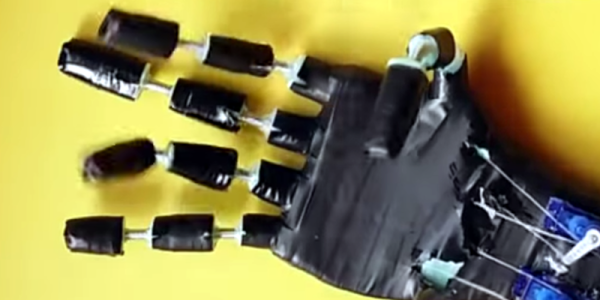
We can’t decide if [MertArduino’s] robotic hand project is more art or demonstration project. The construction using springs, fishing line, and servo motors isn’t going to give you a practical hand that could grip or manipulate anything significant. However, the project shows off a lot of interesting construction techniques and is a fun demonstration for using nRF24L01 wireless in a project. You can see a video of the contraption, below.

A glove uses homemade flex sensors to send wireless commands to the hand. Another Arduino drives an array of servo motors that make the fingers flex. You don’t get fine control, nor any real grip strength, but the hand more or less will duplicate your movements. We noticed one finger seemed poorly controlled, but we suspect that was one of the homemade flex sensors going rouge.

Continue reading “Robot Hand Goes Wireless”

Pulse Oximeter Is A Lot Of Work

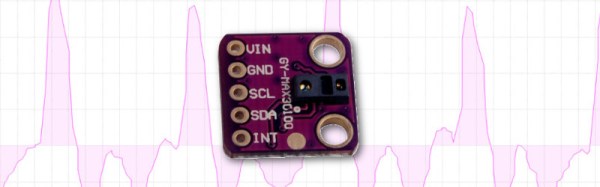
These days we are a little spoiled. There are many sensors you can grab, hook up to your favorite microcontroller, load up some simple library code, and you are in business. When [Raivis] got a MAX30100 pulse oximeter breakout board, he thought it would go like that. It didn’t. He found it takes a lot of processing to get useful results out of the device. Lucky for us he wrote it all down with Arduino code to match.

A pulse oximeter measures both your pulse and the oxygen saturation in your blood. You’ve probably had one of these on your finger or earlobe at the doctor’s office or a hospital. Traditionally, they consist of a red LED and an IR LED. A detector measures how much of each light makes it through and the ratio of those two quantities relates to the amount of oxygen in your blood. We can’t imagine how [Karl Matthes] came up with using red and green light back in 1935, and how [Takuo Aoyagi] (who, along with [Michio Kishi]) figured out the IR and red light part.

The MAX30100 manages to alternate the two LEDs, regulate their brightness, filter line noise out of the readings, and some other tasks. It stores the data in a buffer. The trick is: how do you interpret that buffer? Continue reading “Pulse Oximeter Is A Lot Of Work”

So Long, And Thanks For All The Crystals

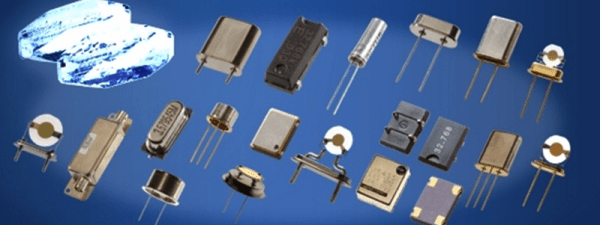
There was a time when anyone involved with radio transmitting — ham operators, CB’ers, scanner enthusiasts, or remote control model fans — had a collection of crystals. Before frequency synthesis, became popular, this was the best way to set an accurate frequency. At one time, these were commonly available, and there were many places to order custom cut crystals.

One of the best-known US manufacturers of quartz crystals still around is International Crystal Manufacturing (ICM). Well, that is, until now. ICM recently announced they were ceasing operations after 66 years. They expect to completely shut down by May.
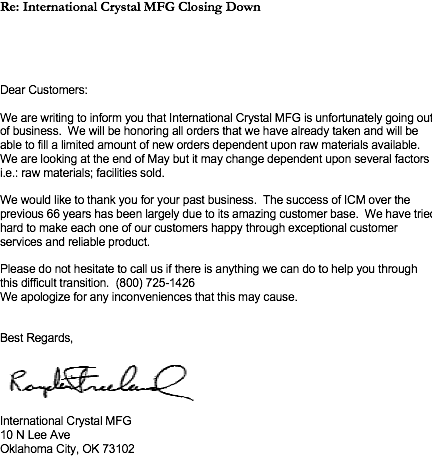
In a letter on their website, Royden Freeland Jr. (the founder’s son), committed to fulfilling existing orders and possibly taking some new orders, raw materials permitting. The company started making products out of Freeland’s father’s garage in 1950.

Another big name that might still be around is Jan Crystals. We say might, because although their website is live, there’s not much there and the phone number is not quite disconnected but it is “parked.” There are also some posts on the Internet (where everything is true) indicating they are out of business.

Even if you didn’t do radio work, crystals are a staple in digital systems where an accurate clock is necessary and some types of filters, too. Of course, you can still get them, you just may not be able to get them made in the United States soon.

If you want to know more about the technology behind crystals [Jenny] has you covered. Crystals are one of those things that have not changed much in a long time, so you might enjoy the very 1960’s vintage U. S. Air Force training film below.

Continue reading “So Long, And Thanks For All The Crystals”

Save ESP8266 RAM With PROGMEM

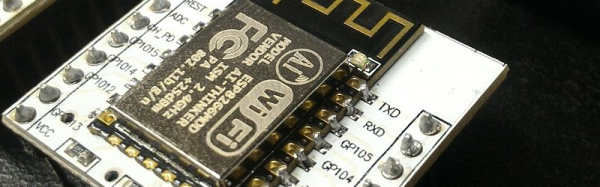
When [sticilface] started using the Arduino IDE to program an ESP8266, he found he was running out of RAM quickly. The culprit? Strings. That’s not surprising. Strings can be long and many strings like prompts and the like don’t ever change. There is a way to tell the compiler you’d like to store data that won’t change in program storage instead of RAM. They still eat up memory, of course, but you have a lot more program storage than you do RAM on a typical device. He posted his results on a Gist.

On the face of it, it is simple enough to define a memory allocation with the PROGMEM keyword. There’s also macros that make things easier and a host of functions for dealing with strings in program space (basically, the standard C library calls with a _P suffix).

Continue reading “Save ESP8266 RAM With PROGMEM”

Linux-Fu: Keeping Things Running

If you’ve used Linux from the early days (or, like me, started with Unix), you didn’t have to learn as much right away and as things have become more complex, you can kind of pick things up as you go. If you are only starting with Linux because you are using a Raspberry Pi, became unhappy with XP being orphaned, or you are running a cloud server for your latest Skynet-like IoT project, it can be daunting to pick it all up in one place.

Recently my son asked me how do you make something run on a Linux box even after you log off. I thought that was a pretty good question and not necessarily a simple answer, depending on what you want to accomplish.

There’s really four different cases I could think of:

  1. You want to launch something you know will take a long time.
  2. You run something, realize it is going to take a long time, and want to log off without stopping it.
  3. You want to write a script or other kind of program that detaches itself and keeps running (known as a daemon).
  4. You want some program to run all the time, even if you didn’t log in after a reboot.

Continue reading “Linux-Fu: Keeping Things Running”

3D Printing Gets Cheesy

Has it ever crossed your mind that everything you see for sale–no matter how mundane–is someone’s life passion? Or, at least, their work passion. Somewhere as we speak two or three people are in a room trying to figure out how to make a whoopie cushion for two cents less than before. Someone is touting the virtues of the newest design in egg cartons. The guys that make the tube that carries your money to the bank teller at the drive through window? They exist, too.

It is natural for us to think about improving 3D printers but most of us print plastic. We might wish we could print metal. But researchers in a few places are printing cheese. We didn’t say hackers with the muchies, we said researchers. There’s a colorful slide show from the University College Cork in Ireland, for example. They printed cheese at two different speeds and used a laser scanning microscope and a rheometer to analyze the results. We’ve seen rheometers in plastic factories, but never in the kitchen. Meanwhile on the hacker front, apparently spray cheese cans work as an easy cold extruder (see video below).

Continue reading “3D Printing Gets Cheesy”

Arduino + Geometry + Bicycle = Speedometer

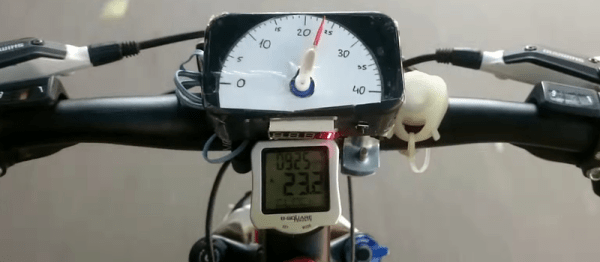
It is pretty easy to go to a big box store and get a digital speedometer for your bike. Not only is that no fun, but the little digital display isn’t going to win you any hacker cred. [AlexGyver] has the answer. Using an Arduino and a servo he built a classic needle speedometer for his bike. It also has a digital display and uses a hall effect sensor to pick up the wheel speed. You can see a video of the project below.

[Alex] talks about the geometry involved, in case your high school math is well into your rear view mirror. The circumference of the wheel is the distance you’ll travel in one revolution. If you know the distance and you know the time, you know the speed and the rest is just conversions to get a numerical speed into an angle on the servo motor. The code is out on GitHub.

Continue reading “Arduino + Geometry + Bicycle = Speedometer”