
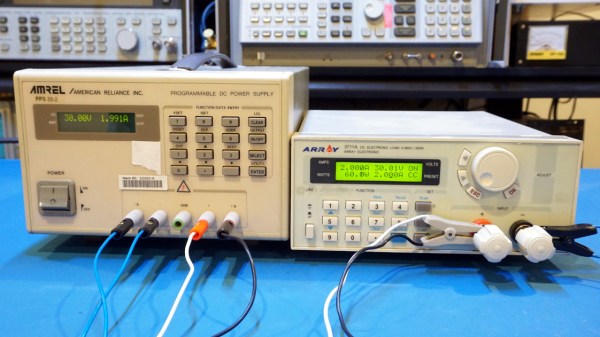
When [Kerry Wong] found an Amrel PPS 35-2 Programmable Power Supply from the late 90s on eBay, he recognized it as the single-channel version of another unit he owned, the dual-channel Amrel PPS-2322. Naturally, he purchased it and did a compare and contrast of the two models.
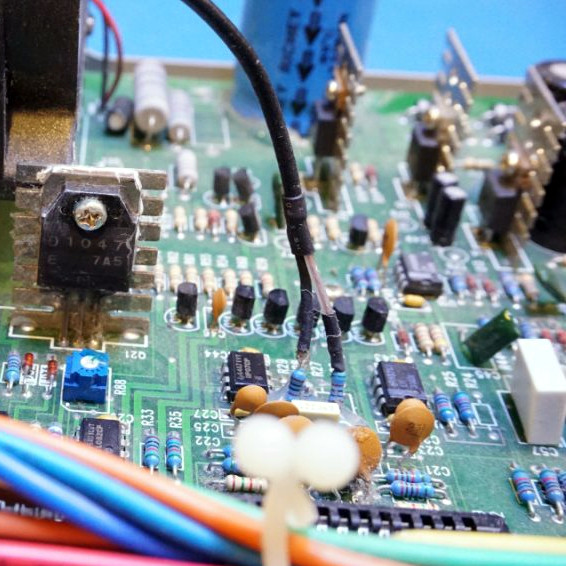 From the outside, they look fairly different but weigh about the same. But the similarities on the inside make it quite clear that they share a common design. There are a few things that grab your eye and the 35-2 doesn’t seem quite as well thought out, with some components being soldered into awkward-looking places. Capacitors bristle like barnacles where they are soldered directly to a connector, and a blob of hot glue anchors two resistors that rise up out of the board like a couple of weeds.
The link above shows some high resolution side-by-side photos between the two models, and [Kerry] thoughtfully provides a link to the manual for the PPS series as well as a dump of the firmware (.zip) for the 35-2. A teardown video is embedded below.
Benchtop power supplies are important tools, but we’ve also seen how modern breadboard power supplies are remarkably full-featured.
Continue reading “Peek Inside These Same-But-Different Power Supplies”



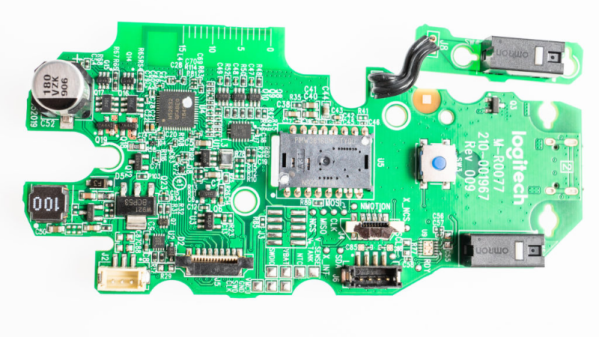
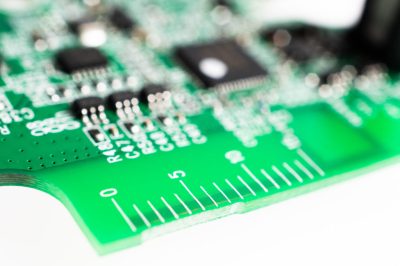 [Eric] points out several incremental changes in design which have resulted in improved ergonomics. He also uncovers a few nuggets of useful information. The use of interchangeable mold inserts help make molds last longer while still offering the flexibility to make changes in the molded part. It’s interesting to see special components being used for withstanding vibration and high-G forces. Some of these insights can be useful for those moving from prototyping to production. There’s one puzzling feature on the new PCB that [Eric] cannot figure out. There is a 15 mm scale screen-printed over the blue tooth antenna. If you have an answer on its purpose, let us know in the comments below.








