Retrotechtacular: Teasmade

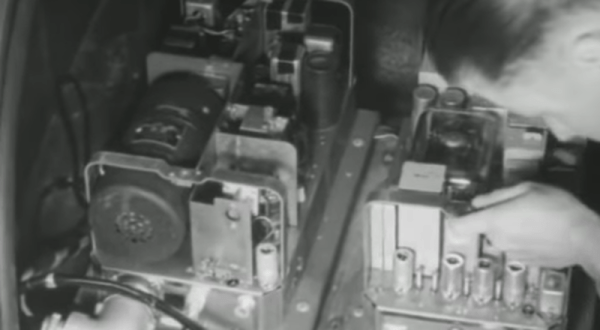
We’re used to our domestic appliances being completely automated in 2020, but not so long ago they were much simpler affairs. Not everything required a human to run it though, an unexpected piece of electromechanical automation could be found in British bedrooms. This is the story of the Goblin Teasmade, an alarm clock with a little bit extra.

Continue reading “Retrotechtacular: Teasmade”

The Spitzer Space Telescope Ends Its Incredible Journey

Today, after 16 years of exemplary service, NASA will officially deactivate the Spitzer Space Telescope. Operating for over a decade beyond its designed service lifetime, the infrared observatory worked in tandem with the Hubble Space Telescope to reveal previously hidden details of known cosmic objects and helped expand our understanding of the universe. In later years, despite never being designed for the task, it became an invaluable tool in the study of planets outside our own solar system.

While there’s been no cataclysmic failure aboard the spacecraft, currently more than 260 million kilometers away from Earth, the years have certainly taken their toll on Spitzer. The craft’s various technical issues, combined with its ever-increasing distance, has made its continued operation cumbersome. Rather than running it to the point of outright failure, ground controllers have decided to quit while they still have the option to command the vehicle to go into hibernation mode. At its distance from the Earth there’s no danger of it becoming “space junk” in the traditional sense, but a rogue spacecraft transmitting randomly in deep space could become a nuisance for future observations.

From mapping weather patterns on a planet 190 light-years away in the constellation Ursa Major to providing the first images of Saturn’s largest ring, it’s difficult to overstate the breadth of Spitzer’s discoveries. But these accomplishments are all the more impressive when you consider the mission’s storied history, from its tumultuous conception to the unique technical challenges of long-duration spaceflight.

Continue reading “The Spitzer Space Telescope Ends Its Incredible Journey”

Alternative Uses For Nuclear Waste

Nuclear power is great if you want to generate a lot of electricity without releasing lots of CO2 and other harmful pollutants. However, the major bugbear of the technology has always been the problem of waste. Many of the byproducts from the operation of nuclear plants are radioactive, and remain so for thousands of years. Storing this waste in a safe and economical fashion continues to be a problem.

Alternative methods to deal with this waste stream continue to be an active area of research. So what are some of the ways this waste can be diverted or reused?

Fast Breeders Want To Close The Fuel Cycle

The Superphénix reactor in France is one of a handful of operational fast-neutron reactor designs.

One of the primary forms of waste from a typical nuclear light water reactor (LWR) is the spent fuel from the fission reaction. These consist of roughly 3% waste isotopes, 1% plutonium isotopes, and 96% uranium isotopes. This waste is high in transuranic elements, which have half-lives measured in many thousands of years. These pose the biggest problems for storage, as they must be securely kept in a safe location for lengths of time far exceeding the life of any one human society.

The proposed solution to this problem is to instead use fast-neutron reactors, which “breed” non-fissile uranium-238 into plutonium-239 and plutonium-240, which can then be used as fresh fuel. Advanced designs also have the ability to process out other actinides, also using them as fuel in the fission process. These reactors have the benefit of being able to use almost all the energy content in uranium fuel, reducing fuel use by 60 to 100 times compared to conventional methods.

Continue reading “Alternative Uses For Nuclear Waste”

Lead-Free Solder Alloys: Their Properties And Best Types For Daily Use

Lead-free solder alloys have been around for as long as people have done soldering, with sources dating back about 5,000 years. Most of these alloys were combinations like copper-silver or silver-gold and used with so-called hard soldering. That’s a technique still used today to join precious and semi-precious metals together. A much more recent development is that of soldering electronic components together, using ‘soft soldering’, which entails much lower temperatures.

Early soft soldering used pure tin (Sn), yet gradually alloys were sought that would fix issues like thermal cycling, shock resistance, electron migration, and the development of whiskers in tin-based alloys. While lead (Pb) managed to fill this role for most soldering applications, the phasing out of lead from products, as well as new requirements for increasingly more fine-pitched components have required the development of new solder alloys that can fill this role.

In this article we’ll be looking at the commonly used lead-free solder types for both hobby and industrial use, and the dopants that are used to improve their properties.

Continue reading “Lead-Free Solder Alloys: Their Properties And Best Types For Daily Use”

CRISPR Could Fry All Cancer Using Newly Found T-Cell

One of the human body’s greatest features is its natural antivirus protection. If your immune system is working normally, it produces legions of T-cells that go around looking for abnormalities like cancer cells just to gang up and destroy them. They do this by grabbing on to little protein fragments called antigens that live on the surface of the bad cells and tattle on their whereabouts to the immune system. Once the T-cells have a stranglehold on these antigens, they can release toxins that destroy the bad cell, while minimizing collateral damage to healthy cells.

CAR T-cell therapy process via National Cancer Institute

This rather neat human trick doesn’t always work, however. Cancer cells sometimes mask themselves as healthy cells, or they otherwise thwart T-cell attacks by growing so many antigens on their surface that the T-cells have no place to grab onto.

Medical science has come up with a fairly new method of outfoxing these crafty cancer cells called CAR T-cell therapy. Basically, they withdraw blood from the patient, extract the T-cells, and replace the blood. The T-cells are sent off to a CRISPR lab, where they get injected with a modified, inactive virus that introduces a new gene which causes the T-cells to sprout a little hook on their surface.

This hook, which they’ve dubbed the chimeric antigen receptor (CAR), allows the T-cell to chemically see through the cancer cells’ various disguises and attack them. The lab multiplies these super soldiers and sends them back to the treatment facility, where they are injected into the patient’s front lines.

Continue reading “CRISPR Could Fry All Cancer Using Newly Found T-Cell”

Advanced Timber Architecture Gives New Life To Wooden Structures

When it comes to building materials, wood doesn’t always draw the most attention as the strongest in the bunch. That honor usually goes to concrete and steel – steel embedded in concrete provides support and a foundation for tall buildings, while concrete increases tensile strength and can be formed into a variety of shapes with the help of rebar. Wood, on the other hand, decays and is vulnerable to moisture damage and fire.

That’s not necessarily the case anymore, thanks to the development of advanced timber. New materials like glulam, or sheets of timber bonded with moisture-resistant structural adhesives, can be produced using two to three times less energy than steel, making them environmentally-friendly alternatives to other building materials. Granted, this requires the beams to be burned at the end of their lifespan, but glulam still has an equivalent or better environmental profile compared to steel, not to mention a lower cost.

Among engineered wood, there are some varieties more commonly used among hobbyists – MDF, plywood, or particle board for instance. Others, like Cross-Laminated Timber (CLT) are more common among building materials. While CLT buildings have existed for decades, recently major cities like Stockholm and Vancouver have seen a resurgence of timber construction. Since wood can theoretically store carbon for the entire length of its lifespan, up to 0.8 tons in a cubic meter of spruce, some architecture firms like Oslotre are building houses with a negative carbon footprint.

Projects like Sidewalk Labs and Masthamnen are proposing entire neighborhoods and skyscrapers built from advanced timber. Compared to International Style architecture, characterized by gray concrete, shiny metal, and glass, this movement could be a step towards returning to natural architectural forms. Given the stress reducing effects of green spaces in cities, engineered wood buildings could bridge the gap between modern architectural styles and natural woodlands.


The Truth Is In There: The Art Of Electronics, The X-Chapters

If you’ve been into electronics for any length of time, you’ve almost certainly run across the practical bible in the field, The Art of Electronics, commonly abbreviated AoE. Any fan of the book will certainly want to consider obtaining the latest release, The Art of Electronics: The x-Chapters, which follows the previous third edition of AoE from 2015. This new book features expanded coverage of topics from the previous editions, plus discussions of some interesting but rarely traveled areas of electrical engineering.

For those unfamiliar with it, AoE, first published in 1980, is an unusually useful hybrid of textbook and engineer’s reference, blending just enough theory with liberal doses of practical experience. With its lively tone and informal style, the book has enabled people from many backgrounds to design and implement electronic circuits.

After the initial book, the second edition (AoE2) was published in 1989, and the third (AoE3) in 2015, each one renewing and expanding coverage to keep up with the rapid pace of the field. I started with the second edition and it was very well worn when I purchased a copy of the third, an upgrade I would recommend to anyone still on the fence. While the second and third books looked a lot like the first, this new one is a bit different. It’s at the same time an expanded discussion of many of the topics covered in AoE3 and a self-contained reference manual on a variety of topics in electrical engineering.

I pre-ordered this book the same day I learned it was to be published, and it finally arrived this week. So, having had the book in hand — almost continuously — for a few days, I think I’ve got a decent idea of what it’s all about. Stick around for my take on the latest in this very interesting series of books.

Continue reading “The Truth Is In There: The Art Of Electronics, The X-Chapters”