What To Do When The Botnet Comes Knocking

“It was a cold and windy night, but the breeze of ill omen blowing across the ‘net was colder. The regular trickle of login attempts suddenly became a torrent of IP addresses, all trying to break into the back-end of the Joomla site I host. I poured another cup of joe, it was gonna be a long night.”

Tech noir aside, there was something odd going on. I get an email from that web-site each time there is a failed login. The occasional login attempt isn’t surprising, but this was multiple attempts per minute, all from different IP addresses. Looking at the logs, I got the feeling they were pulling usernames and passwords from one of the various database dumps, probably also randomly seeding information from the Whois database on my domain.

Continue reading “What To Do When The Botnet Comes Knocking”

Hacker Abroad: A Very Long Way To China

It turns out that Shanghai is a very long way from my home in Wisconsin. I’ve traveled here for Electronica China, and although it made for an incredibly long travel “day”, it turned out to be quite enjoyable. I hacked some hardware on the plane ride, I took a maglev to my hotel, met up with Sophi for drinks, and explored the neighborhood for some Shanghai breakfast. Continue reading “Hacker Abroad: A Very Long Way To China”

The Joy Of Properly Designed Embedded Systems

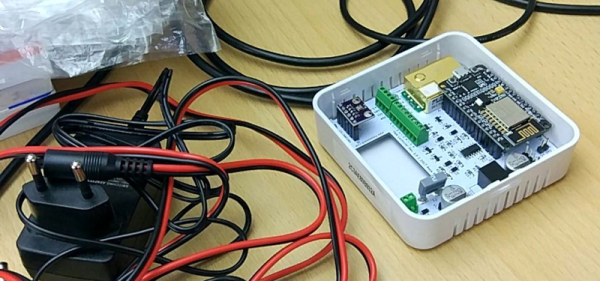
The ages-old dream of home automation has never been nearer to reality. Creating an Internet of Things device or even a building-wide collection of networked embedded devices is “easy” thanks to cheap building blocks like the ESP8266 WiFi-enabled microcontroller. Yet for any sizable project, it really helps to have a plan before getting started. But even more importantly, if your plan is subject to change as you work along, it is important to plan for flexibility. Practically, this is going to mean expansion headers and over-the-air (OTA) firmware upgrades are a must.

I’d like to illustrate this using a project I got involved in a few years ago, called BMaC, which grew in complexity and scope practically every month. This had us scrambling to keep up with the changes, while teaching us valuable lessons about how to save time and money by having an adaptable system architecture.

Continue reading “The Joy Of Properly Designed Embedded Systems”

The CD Is 40, The CD Is Dead

The Compact Disc is 40 years old, and for those of us who remember its introduction it still has that sparkle of a high-tech item even as it slides into oblivion at the hands of streaming music services.

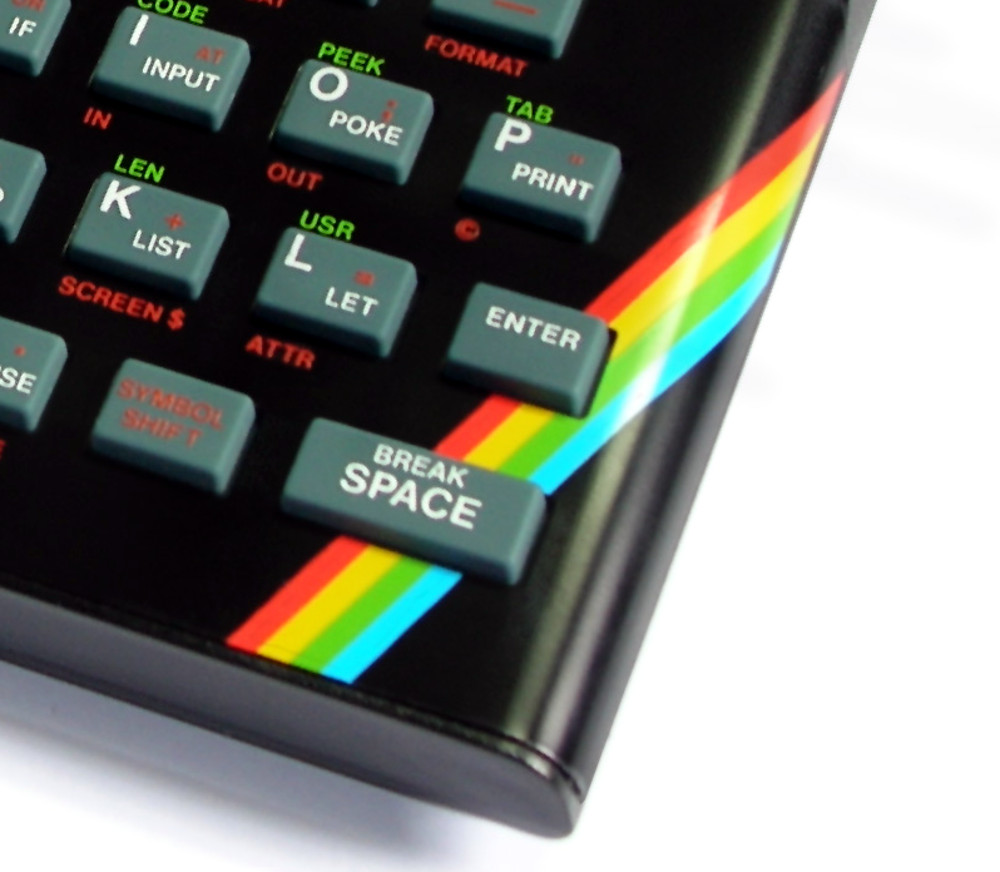
There was a time when a rainbow motif was extremely futuristic. Bill Bertram (CC BY-SA 2.5)

If we could define a moment at which consumers moved from analogue technologies to digital ones, the announcement of the CD would be a good place to start. The public’s coolest tech to own in the 1970s was probably an analogue VCR or a CB radio, yet almost overnight they switched at the start of the ’80s to a CD player and a home computer. The CD player was the first place most consumers encountered a laser of their own, which gave it an impossibly futuristic slant, and the rainbow effect of the pits on a CD became a motif that wove its way into the design language of the era. Very few new technologies since have generated this level of excitement at their mere sight, instead today’s consumers accept new developments as merely incremental to the tech they already own while simultaneously not expecting them to have longevity.
Continue reading “The CD Is 40, The CD Is Dead”

Es’hail-2: Hams Get Their First Geosynchronous Repeater

In the radio business, getting the high ground is key to covering as much territory from as few installations as possible. Anything that has a high profile, from a big municipal water tank to a roadside billboard to a remote hilltop, will likely be bristling with antennas, and different services compete for the best spots to locate their antennas. Amateur radio clubs will be there too, looking for space to locate their repeaters, which allow hams to use low-power mobile and handheld radios to make contact over a vastly greater range than they could otherwise.

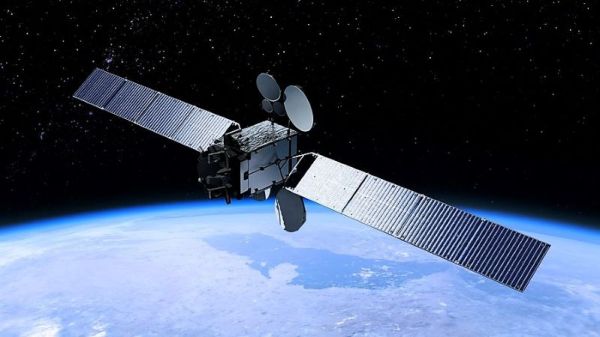
Now some hams have claimed the highest of high ground for their repeater: space. For the first time, an amateur radio repeater has gone to space aboard a geosynchronous satellite, giving hams the ability to link up over a third of the globe. It’s a huge development, and while it takes some effort to use this new space-based radio, it’s a game changer in the amateur radio community.

Continue reading “Es’hail-2: Hams Get Their First Geosynchronous Repeater”

Hitchhiking To The Moon For Fun And Profit

On February 22nd, a Falcon rocket lifted off from Cape Canaveral carrying the Indonesian communications satellite Nusantara Satu. While the satellite was the primary payload for the mission, as is common on the Falcon 9, the rocket had a couple of stowaways. These secondary payloads are generally experiments or spacecraft which are too small or light to warrant a rocket of their own such as CubeSats. But despite flying in the economy seats, one of the secondary payloads on this particular launch has a date with destiny: Israel’s Beresheet, the first privately-funded mission to attempt landing on the Moon.

But unlike the Apollo missions, which took only three days to reach our nearest celestial neighbor, Beresheet is taking a considerably more leisurely course. It will take over a month for the spacecraft to reach the Moon, and it will be a few weeks after that before it finally makes a powered descent towards the Sea of Serenity, not far from where Apollo 17 landed 47 years ago. That assumes everything goes perfectly; tack a few extra weeks onto that estimate if the vehicle runs into any hiccups on the way.

At first glance, this might seem odd. If the trip only took a few days with 1960’s technology, it seems a modern rocket like the Falcon 9 should be able to make better time. But in reality, the pace is dictated by budgetary constraints on both the vehicle itself and the booster that carried it into space. While one could argue that the orbital maneuvers involved in this “scenic route” towards the Moon are more complicated than the direct trajectory employed by the manned Apollo missions, it does hold promise for a whole new class of lunar spacecraft. If you’re not in any particular hurry, and you’re trying to save some cash, your Moon mission might be better off taking the long way around.

Continue reading “Hitchhiking To The Moon For Fun And Profit”

Expert Says Don’t Teach Kids To Code

I was a little surprised to see a news report about Andreas Schleicher, the director of education and skills at OECD — the Organization for Economic Cooperation and Development. Speaking at the World Innovation Summit for Education in Paris, Schleicher thinks that teaching kids to code is a waste of time. In particular, he seems to think that by the time a child today grows up, coding will be obsolete.

I can’t help but think that he might be a little confused. Coding isn’t going away anytime soon. It could, of course, become an even deeper specialty, and thus less generally applicable. But the comments he’s made seem to imply that soon we will just tell smart computers what we want and they will just do that. Somewhat like computers work on Star Trek.

What is more likely is that most people will be able to find specific applications that can do what they want without traditional coding. But someone still has to write something for the foreseeable future. What’s more, if you’ve ever tried to tease requirements out of an end user, you know that you can’t just blurt out anything you want to a computer and expect it to make sense. It isn’t the computer’s fault. People — especially untrained people — don’t always make sense or communicate unambiguously.

Continue reading “Expert Says Don’t Teach Kids To Code”