I was splitting wood one day a few years back, getting next winter’s firewood ready on my hydraulic splitter. It normally handled my ash and oak with ease, but I had a particularly gnarly piece of birch queued up, and the splitter was struggling. The 20-ton cylinder slowed as the wedge jammed in the twisted grain, the engine started to bog down, then BANG! I jumped back as something gave way and the engine revved out of control; I figured a hydraulic hose gave out. Whatever it was, I was done for the day.
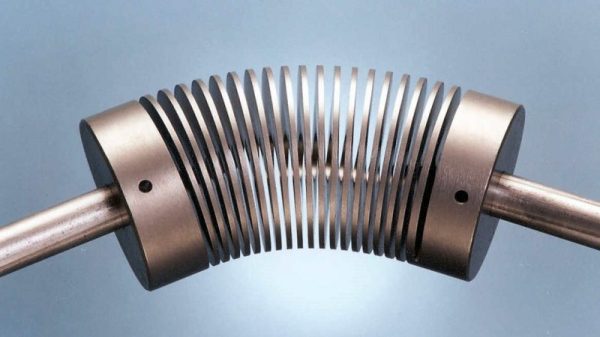
I later discovered that a coupler between the engine shaft and the hydraulic pump failed dramatically. It was an easy fix once I ordered the right part, and I’ve since learned to keep extras in stock. Couplings are useful things, and they’re the next up in our series on mechanisms.
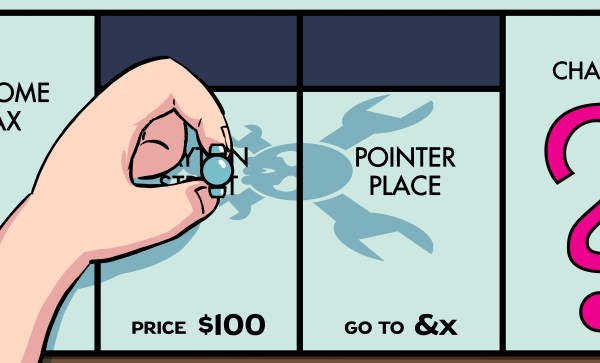
Pointers — you either love them, or you haven’t fully understood them yet. But before you storm off to the comment section now, pointers are indeed a polarizing subject and are both C’s biggest strength, and its major source of problems. With great power comes great responsibility. The internet and libraries are full of tutorials and books telling about pointers, and you can randomly pick pretty much any one of them and you’ll be good to go. However, while the basic principles of pointers are rather simple in theory, it can be challenging to fully wrap your head around their purpose and exploit their true potential.
So if you’ve always been a little fuzzy on pointers, read on for some real-world scenarios of where and how pointers are used. The first part starts with regular pointers, their basics and common pitfalls, and some general and microcontroller specific examples.
On a balmy September evening in 1998, Swissair flight 111 was in big trouble. A fire in the cockpit ceiling had at first blinded the pilots with smoke, leaving them to rely on instruments to divert the plane, en route from New York to Geneva, to an emergency landing at Halifax Airport in the Canadian province of Nova Scotia. But the fire raging above and behind the pilots, intense enough to melt the aluminum of the flight deck, consumed wiring harness after wiring harness, cutting power to vital flight control systems. With no way to control the plane, the MD-11 hit the Atlantic ocean about six miles off the coast. All 229 souls were lost.
It would take months to recover and identify the victims. The 350-g crash broke the plane into two million pieces which would not reveal their secrets until much later. But eventually, the problem was traced to a cascade of failures caused by faulty wiring in the new in-flight entertainment system that spread into the cockpit and doomed the plane. A contributor to these failures was the type of insulation used on the plane’s wiring, blamed by some as the root cause of the issue: the space-age polymer Kapton.
No matter where we are, we’re surrounded by electrical wiring. Bundles of wires course with information and power, and the thing that protects us is the thin skin of insulation over the conductor. We trust these insulators, and in general our faith is rewarded. But like any other engineered system, failure is always an option. At the time, Kapton was still a relatively new wonder polymer, with an unfortunate Achilles’ heel that can turn the insulator into a conductor, and at least in the case of flight 111, set a fire that would bring a plane down out of the sky.
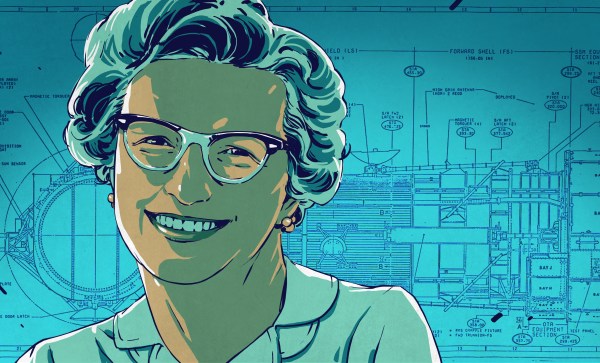
When she was four years old, Nancy Grace Roman loved drawing pictures of the Moon. By the time she was forty, she was in charge of convincing the U.S. government to fund a space telescope that would give us the clearest, sharpest pictures of the Moon that anyone had ever seen. Her interest in astronomy was always academic, and she herself never owned a telescope. But without Nancy, there would be no Hubble.
Goodnight, Moon
A view of the Milky Way from Reno, Nevada. Via Lonely Speck
Nancy was born May 16, 1925 in Nashville, Tennessee. Her father was a geophysicist, and the family moved around often. Nancy’s parents influenced her scientific curiosities, but they also satisfied them. Her father handled the hard science questions, and Nancy’s mother, who was quite interested in the natural world, would point out birds, plants, and constellations to her.
For two years, the family lived on the outskirts of Reno, Nevada. The wide expanse of desert and low levels of light pollution made stargazing easy, and Nancy was hooked. She formed an astronomy club with some neighborhood girls, and they met once a week in the Romans’ backyard to study constellations. Nancy would later reminisce that her experience in Reno was the single greatest influence on her future career.
By the time Nancy was ready for high school, she was dead-set on becoming an astronomer despite a near-complete lack of support from her teachers. When she asked her guidance counselor for permission to take a second semester of Algebra instead of a fifth semester of Latin, the counselor was appalled. She looked down her nose at Nancy and sneered, “What lady would take mathematics instead of Latin?”
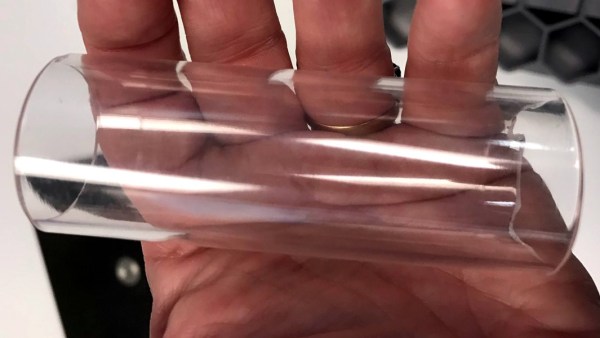
It looks like a tube made of glass but it’s actually aluminum. Well, aluminum with an asterisk beside it — this is not elemental aluminum but rather a material made using it.
We got onto the buzz about “transparent aluminum” as a result of a Tweet from whence the image above came. This Tweet was posted by [Jo Pitesky], a Science Systems Engineer at the Jet Propulsion Lab in Pasadena. [Jo] reported that at a recent JPL technology open house she had the chance to handle a tube of material that looks for all the world like a section of glass tubing, but was billed as transparent aluminum. [Jo] tweeted this because it was an interesting artifact that few people get to play with and she’s right, this is fascinating!
The the material itself is intriguing, and I immediately had practical questions like what is this stuff? What is it good for? How is it made? And is it really aluminum rendered transparent by some science fiction process?
I print something nearly every day, and over the last few years, I’ve created hundreds of practical items. Parts to repair my car, specialized tools, scientific instruments, the list goes on and on. It’s very difficult for me to imagine going back to a time where I didn’t have the ability to rapidly create and replicate physical objects at home. I can say with complete honesty that it has been an absolutely life-changing technology for me, personally.
But to everyone else in my life, my friends and family, 3D printers are magical boxes which can produce gadgets, weapons, and characters from their favorite games and movies. Nobody wants to see the parts I made to get my girlfriend’s 1980’s Honda back on the road before she had to go to work in the morning, they want to see the Minecraft block I made for my daughter. I can’t get anyone interested in a device I made to detect the algal density of a sample of water, but they all want me to run off a set of the stones from The Fifth Element for them.
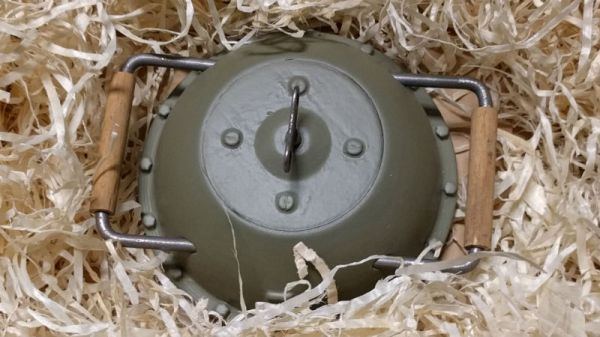
As I recently finished just such a project, a 3D printed limpet mine from Battlefield 1, I thought I would share some thoughts on the best practices for turning fiction into non-fiction.
Self-driving cars have been in the news a lot in the past two weeks. Uber’s self-driving taxi hit and killed a pedestrian on March 18, and just a few days later a Tesla running in “autopilot” mode slammed into a road barrier at full speed, killing the driver. In both cases, there was a human driver who was supposed to be watching over the shoulder of the machine, but in the Uber case the driver appears to have been distracted and in the Tesla case, the driver had hands off the steering wheel for six seconds prior to the crash. How safe are self-driving cars?
Trick question! Neither of these cars were “self-driving” in at least one sense: both had a person behind the wheel who was ultimately responsible for piloting the vehicle. The Uber and Tesla driving systems aren’t even comparable. The Uber taxi does routing and planning, knows the speed limit, and should be able to see red traffic lights and stop at them (more on this below!). The Tesla “Autopilot” system is really just the combination of adaptive cruise control and lane-holding subsystems, which isn’t even enough to get it classified as autonomous in the state of California. Indeed, it’s a failure of the people behind the wheels, and the failure to properly train those people, that make the pilot-and-self-driving-car combination more dangerous than a human driver alone would be.
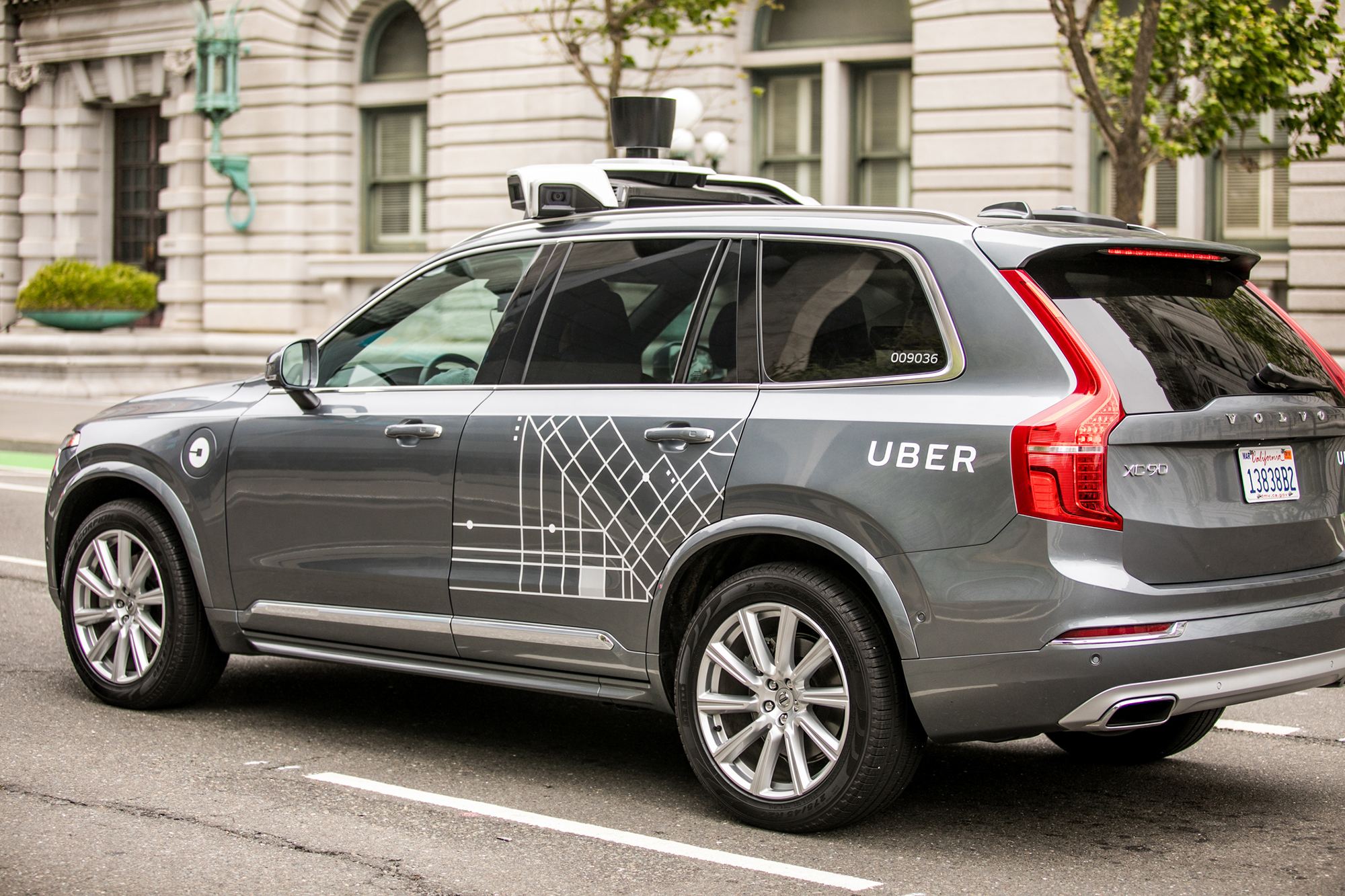
A self-driving Uber Volvo XC90, San Francisco.
You could still imagine wanting to dig into the numbers for self-driving cars’ safety records, even though they’re heterogeneous and have people playing the mechanical turk. If you did, you’d be sorely disappointed. None of the manufacturers publish any of their data publicly when they don’t have to. Indeed, our glimpses into data on autonomous vehicles from these companies come from two sources: internal documents that get leaked to the press and carefully selected statistics from the firms’ PR departments. The state of California, which requires the most rigorous documentation of autonomous vehicles anywhere, is another source, but because Tesla’s car isn’t autonomous, and because Uber refused to admit that its car is autonomous to the California DMV, we have no extra insight into these two vehicle platforms.
Nonetheless, Tesla’s Autopilot has three fatalities now, and all have one thing in common — all three drivers trusted the lane-holding feature well enough to not take control of the wheel in the last few seconds of their lives. With Uber, there’s very little autonomous vehicle performance history, but there are leaked documents and a pattern that makes Uber look like a risk-taking scofflaw with sub-par technology that has a vested interest to make it look better than it is. That these vehicles are being let loose on public roads, without extra oversight and with other traffic participants as safety guinea pigs, is giving the self-driving car industry and ideal a black eye.
If Tesla’s and Uber’s car technologies are very dissimilar, the companies have something in common. They are both “disruptive” companies with mavericks at the helm that see their fates hinging on getting to a widespread deployment of self-driving technology. But what differentiates Uber and Tesla from Google and GM most is, ironically, their use of essentially untrained test pilots in their vehicles: Tesla’s in the form of consumers, and Uber’s in the form of taxi drivers with very little specific autonomous-vehicle training. What caused the Tesla and Uber accidents may have a lot more to do with human factors than self-driving technology per se.
You can see we’ve got a lot of ground to cover. Read on!