We’re Using The Word Firmware Wrong

I had an interesting discussion the other day about code written for an embedded system. I was speaking with Voja Antonic about ‘firmware’. The conversation continued forward but I noticed that he was calling it ‘software’. We later discussed it and Voja told me he thought only the parts of the code directly interacting with the microcontroller were firmware; the rest falls under the more generic term of software. It really had me wondering where firmware stops being firmware and is merely software?

The topic has remained on my mind and I finally got around to doing some dictionary searches. I’m surprised that I’ve been using the word differently and I think most of the people I’ve heard use it are doing the same — at least as far as dictionary definitions are concerned. My go to sources are generally Merriam-Webster and Oxford English dictionaries and both indicate that firmware is a type of software that is indelible:

Permanent software programmed into a read-only memory.

computer programs contained permanently in a hardware device (such as a read-only memory)

According to this definition, I have never written a single bit of firmware. Everything I have written has been embedded software. But surely this is a term that must change with the times as technology progress so I kept digging.

Continue reading “We’re Using The Word Firmware Wrong”

The Hackers And The Hurricane

When natural disasters strike, particularly if they are in some of the less remote parts of the world, we see them unfolding in real-time on our television screens. They become a 24-hour rolling news exercise in disaster titillation, each fresh horror ghoulishly picked over by breathless reporters live-telecasting from windswept streets, and endlessly rehashed by a succession of in-studio expert guests.

Then once the required image of a dusty child being pulled from the rubble or a tearful mother describing her daughter being swept away is in the can, a politician somewhere is found in bed with a model or a tinpot dictator rattles his sabre, and the world moves on. The BAFTA or the Emmy is a certainty for this one, did you see the anguish!

Meanwhile on the ground, the situation remains the same. There is no power, no sanitation, no communications, no food, and help seems very far away. In the wake of the recent hurricane season across the Caribbean, there are millions of people whose worlds have been wrecked, and several international governments have faced significant criticism for their lethargic response.

In our world of hardware hackers and makers, we are on the whole practical people. We exist to make, and do, rather than to endlessly talk. Seeing the plight of the victims of Irma, Jose, or Maria leaves us wanting to do practical things to help, because that’s what we do. But of course, we can do nothing, because we’re thousands of miles away and probably lack whatever skills or training are in demand on the islands.

It’s heartening then to hear of just a few moments when our wider community has managed to be in the right place at the right time to offer some help. We’ve had a couple in our tips line lately we’d like to share.

[Csp3r] writes about the Derbycon conference held in Louisville, at which [Carlos Perez] and [Jose Quinones Borreros], information security specialists from Puerto Rico, were in attendance. They mentioned a need for emergency radios, and the community at the conference came together to raise money for much more than just a few radios. $15,000 was raised in all, spent on radios, solar chargers, generators, flashlights, USB battery packs, and tools. This amounted to a significant bulk, so Hackers For Charity helped secure some space on an aid flight to the island.

Then [Bruce Perens, K6BP] writes about a request from the American Red Cross to the ARRL for 50 radio amateurs to help with their relief efforts in Puerto Rico. They will perform the role you might expect of enabling essential communications, as well as to quote the ARRL: “help record, enter, and submit disaster-survivor information into the ARC Safe and Well system”. This is a request unprecedented in its scale, and reflects the level of damage across the island.

For most of us, the best we can do when helping out with these events will be to drop coins into an OXFAM or Red Cross collecting tin and leave it to the experts. But as we’ve noted above, for just a few of us the opportunity to do something a bit more useful presents itself. If you find yourself in that position, make it count!

We’ve looked at the role of amateur radio in public service before, and we’ve even featured it in one or two projects. This emergency box for example has all you’d need to provide this type of service.

Cyclone Catarina image from the ISS, [Public domain].

Calculus In 20 Minutes

If you went to engineering school, you probably remember going to a lot of calculus classes. You may or may not remember a lot of calculus. If you didn’t go to engineering school, you will find that there’s an upper limit to how much electronics theory you can learn before you have to learn calculus. Now imagine Khan Academy, run by an auctioneer and done without computers. Well, you don’t have to imagine it. Thinkwell has two videos that purport to teach you calculus in twenty minutes (YouTube, embedded below).

We are going to be honest. If you need a refresher, these videos might be useful. If you have no idea how to do calculus, maybe these are going to whiz by a little fast. However, either way, the videos have some humor value both from the FedEx commercial-style delivery to the non-computerized graphics (not to mention the glass-breaking sound effects). Of course, the video is about ten years old, but that’s part of its charm.

Continue reading “Calculus In 20 Minutes”

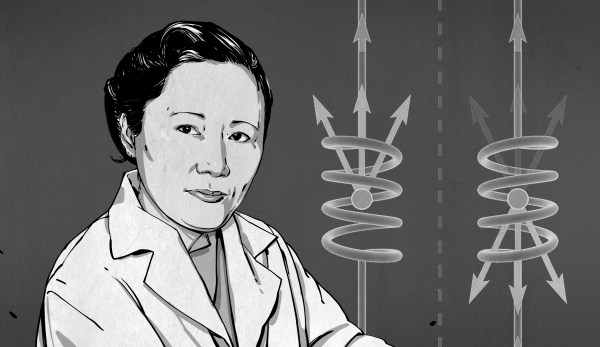
There Is No Parity: Chien-Shiung Wu

Hold out your hands in front of you, palms forward. They look quite similar, but I’m sure you’re all too aware that they’re actually mirror images of each other. Your hands are chiral objects, which means they’re asymmetric but not superimposable. This property is quite interesting when studying the physical properties of matter. A chiral molecule can have completely different properties from its mirrored counterpart. In physics, producing the mirror image of something is known as parity. And in 1927, a hypothetical law known as the conservation of parity was formulated. It stated that no matter the experiment or physical interaction between objects – parity must be conserved. In other words, the results of an experiment would remain the same if you tired it again with the experiment arranged in its mirror image. There can be no distinction between left/right or clockwise/counter-clockwise in terms of any physical interaction.

Dr. Wu working with a particle accelerator via Biography.

The nuclear physicist, Chien-Shiung Wu, who would eventually prove that quantum mechanics discriminates between left- and right-handedness, was a woman, and the two men who worked out the theory behind the “Wu Experiment” received a Nobel prize for their joint work. If we think it’s strange that quantum mechanics works differently for mirror-image particles, how strange is it that a physicist wouldn’t get recognized just because of (her) gender? We’re mostly here to talk about the physics, but we’ll get back to Chien-Shiung Wu soon.

The End of Parity

Conservation of parity was the product of a physicist by the name of Eugene P. Wigner, and it would play an important role in the growing maturity of quantum mechanics. It was common knowledge that macro-world objects like planets and baseballs followed Wigner’s conservation of parity. To suggest that this law extended into the quantum world was intuitive, but not more than intuition. And at that time, it was already well known that quantum objects did not play by the same rules as classical objects. Would quantum mechanics be so strange as to care about handedness? Continue reading “There Is No Parity: Chien-Shiung Wu”

The Engineering That Survives Hurricanes

Florida is a great place to live, especially around January when it’s sunny and 24 degrees outside (76F) while all of your friends from back home are dealing with scraping ice off of their windshields every morning. In the late summer, though, this pleasant tropical paradise can sometimes take a turn for the worse, because Florida is one of the handful of places that frequently see some of the worst storms on the planet: hurricanes. As a Floridian myself, perhaps I can shed some light on some of the ways that the various local governments and their residents have taken to mitigate the destruction that usually accompanies these intense tropical storms when it seems that, to outsiders, it might be considered unwise to live in such a place.

Continue reading “The Engineering That Survives Hurricanes”

An Introduction To Solid State Relays

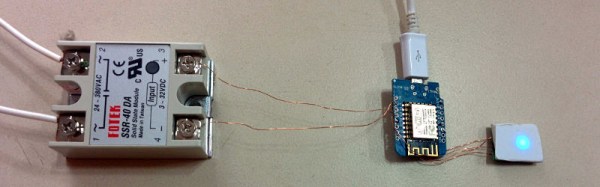
When we think of relays, we tend to think of those big mechanical things that make a satisfying ‘click’ when activated. As nice as they are for relay-based computers, there are times when you don’t want to deal with noise or the unreliability of moving parts. This is where solid-state relays (SSRs) are worth considering. They switch faster, silently, without bouncing or arcing, last longer, and don’t contain a big inductor.

Source Fotek SSR Specifications Sheet

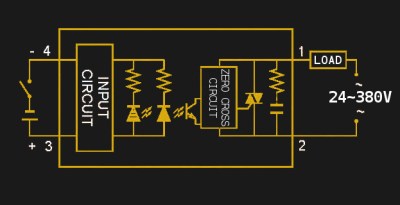
An SSR consists of two or three standard components packed into a module (you can even build one yourself). The first component is an optocoupler which isolates your control circuit from the mains power that you are controlling. Second, a triac, silicon controlled rectifier, or MOSFET that switches the mains power using the output from the optocoupler. Finally, there is usually (but not always) a ‘zero-crossing detection circuit’. This causes the relay to wait until the current it is controlling reaches zero before shutting off. Most SSRs will similarly wait until the mains voltage crosses zero volts before switching on.

If a mechanical relay turns on or off near the peak voltage when supplying AC, there is a sudden drop or rise in current. If you have an inductive load such as an electric motor, this can cause a large transient voltage spike when you turn off the relay, as the magnetic field surrounding the inductive load collapses. Switching a relay during a peak in the mains voltage also causes an electric arc between the relay terminals, wearing them down and contributing to the mechanical failure of the relay.

Continue reading “An Introduction To Solid State Relays”

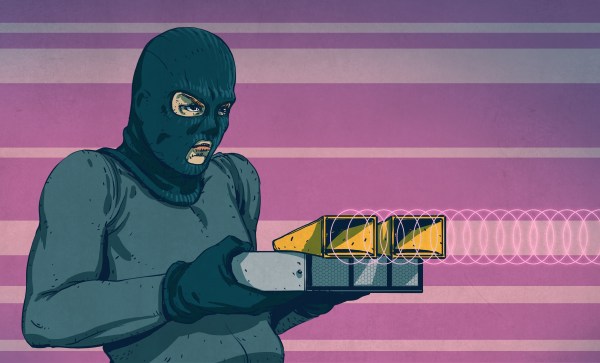
Cuban Embassy Attacks And The Microwave Auditory Effect

If you’ve been paying attention to the news, you may have seen a series of articles coming out about US staffers in Cuba. It seems that 21 staffers have suffered a bizarre array of injuries ranging from hearing loss to dizziness to concussion-like traumatic brain injuries. Some staffers have reported hearing incapacitating sounds in the embassy and in their hotel rooms. The reports range from clicking to grinding, humming, or even blaring sounds. One staffer described being awoken to a horrifically loud sound, only to have it disappear as soon as he moved away from his bed. When he got back into bed, the mysterious sound came back.

Cuba has denied any wrongdoing. However, the US has already started to take action – expelling two Cuban diplomats from the US in May. The question though is what exactly could have caused these injuries. The press has gone wild with theories of sonic weaponry, hidden bugs, and electronic devices, poisons, you name it. Even Julian Assange has weighed in, stating “The diversity of symptoms suggests that this is a pathogen combined with paranoia in an isolated diplomatic corps.”

So what’s going on? Bizarre accidents? Cloak and dagger gone awry? Mass hysteria among the US state department, or something else entirely? Continue reading “Cuban Embassy Attacks And The Microwave Auditory Effect”